Designing for Glacial Flour
In Greenland, climate change isn’t a headline—it’s visible, in real time.
As ice recedes, meltwater carries a fine, mineral-rich sediment known as glacial flour, a powder formed over millennia as glaciers grind bedrock, that collects along the shoreline.
Long dismissed as mere debris, this “magic mud” is now gaining attention for what it could make possible: boosting crop yields as a natural fertilizer, serving as an alternative building material, and even helping remove carbon from the atmosphere.
This spring at the Harvard Graduate School of Design (GSD), glacial flour beame a prompt for the semester-long studio “Arctic Futures: Designing Circular Systems,” led by Dan Stubbergaard, professor in practice of urban design.
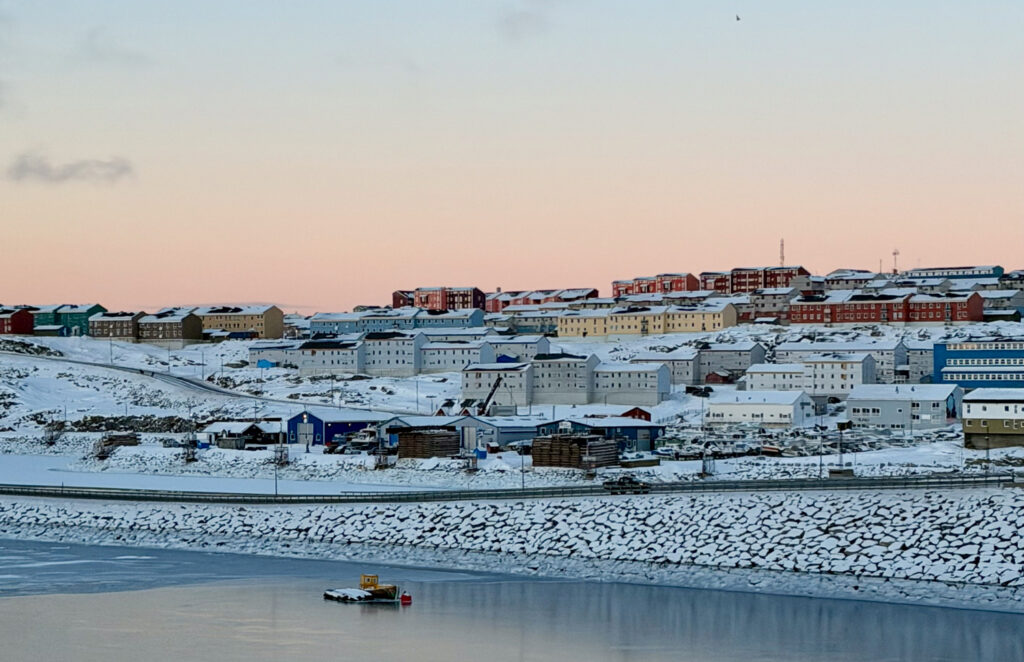
Students look to Nuuk—where much of Greenland’s population and economic activity are concentrated—and ask: how might the city harness an emerging glacial flour industry to build a more resilient future?
Teaching Assistant: Kaitlin Tse (MArch I ’26)
Students: Isabel Adler (MUP ’26), Lucas Holter (MUP ’26), Luna Kim (MAUD ’26), Angel Li (MLA I AP ’26), Chutong Liu (MLA I AP, ’26), Lawrence Liu (MLA I AP ’26), Erin Park (MAUD ’26), Gwanghyeon Park (MAUD ’27), Jeewoo Park (MArch II AP ’27), Sylvia Shi (MLA II ’26), Joe Tu (MAUD ’26), Eric Wang (MArch I ’27), Jinghan Wu (MLA II ’26), Kongxi Zhu (MLA II ’26)
Video: Maggie Janik
Photos: Lucas Holter, Luna Kim, and Chutong Liu