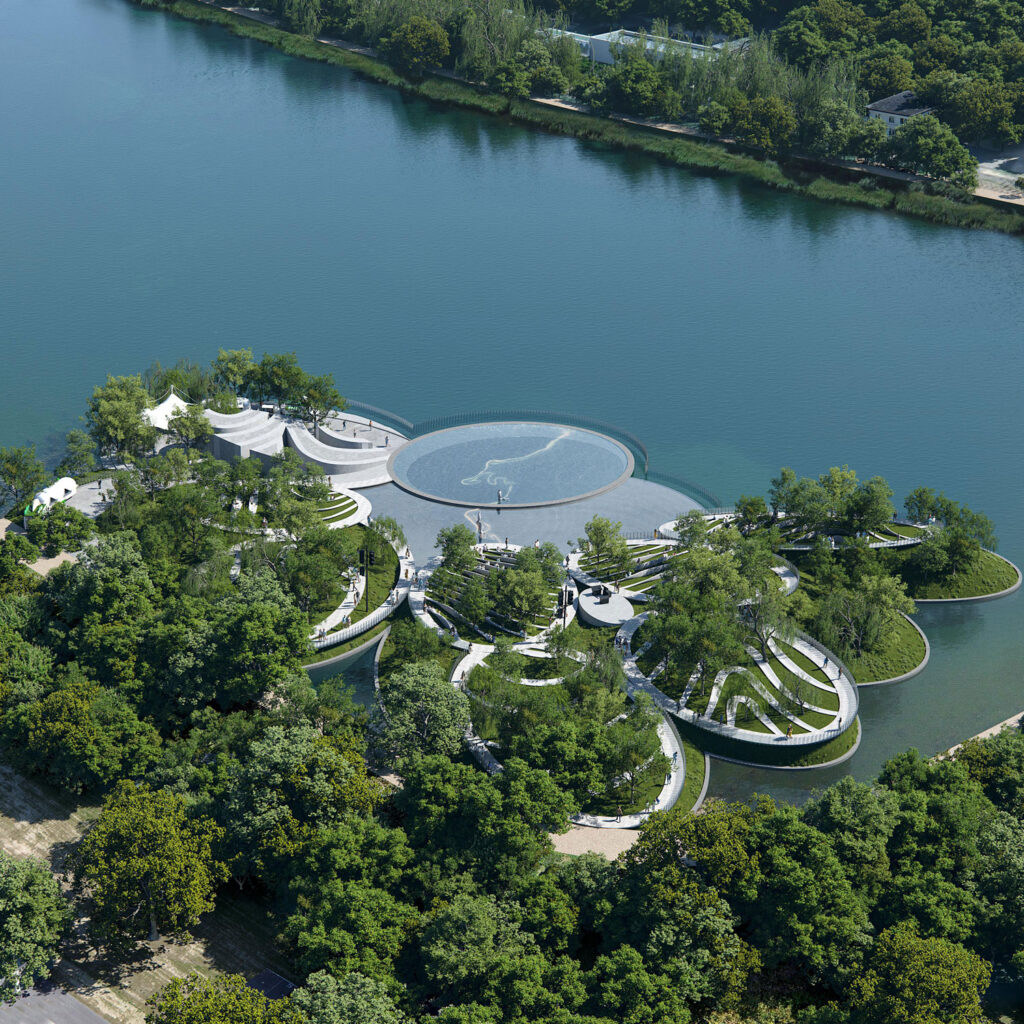
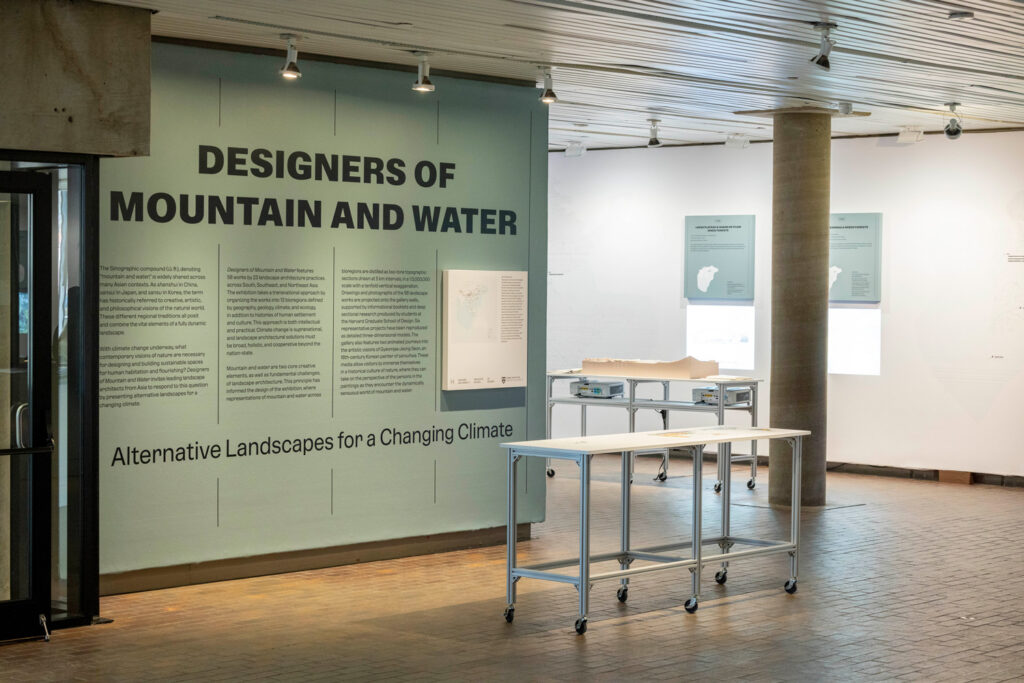
Landscape architecture—the professional practice of designing at the intersection of the natural and built environments—is a relatively new profession in Asia. Yet the relationship between the natural world, design, and philosophy in the region is long-standing and deeply embedded, particularly in China, Japan, and Korea. Designers of Mountain and Water: Alternative Landscapes for a Changing Climate, an exhibition on view through May 15 at the Harvard Graduate School of Design (GSD), explores how landscape architects in Asia engage with regional traditions and conditions while shaping a more resilient contemporary world.
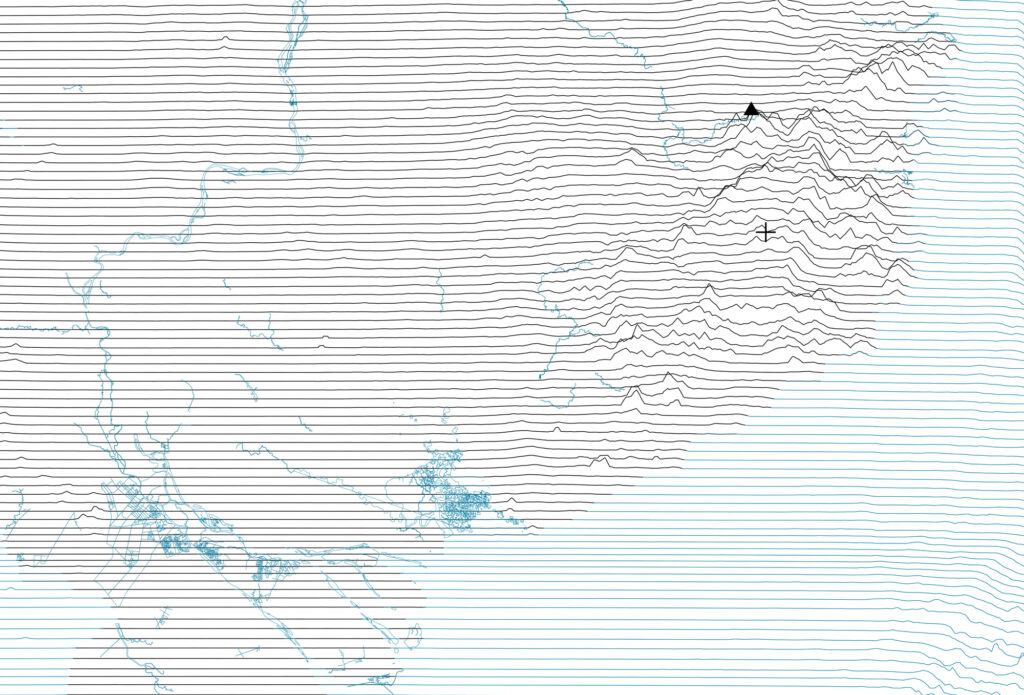
Landscape architecture emerged in Asia in part from post–Second World War nation-building efforts. Yet the exhibition is organized not by country but by “bioregions”: areas defined by shared ecological and climatic conditions as well as patterns of human settlement. Visitors encounter large-scale topographic maps that locate 58 projects by 23 practitioners within these regions, alongside projected images and six detailed models that reveal how designers engage directly with terrain and hydrological systems. Earlier this semester, a related conference at the GSD brought together landscape architects, researchers, and scholars from around the world to examine the ideas behind the exhibition.
As Designers of Mountain and Water reaches the end of its run, Jungyoon Kim, associate professor in practice of landscape architecture at the GSD and co-founder of PARKKIM, who curated the exhibition, and Nicholas Harkness, Modern Korean Economy and Society Professor of Anthropology and director of the Korea Institute at Harvard University, reflect on its significance.
The title of the exhibition refers to the Sinographic compound 山水, literally “mountain and water,” which has deep roots in the culture, aesthetics, and philosophy of China, Japan, and Korea. How does this traditional concept relate to contemporary landscape architecture, and how does it help us understand the experiences of people living in East and Southeast Asia today?
Jungyoon Kim: Just as the Sinographic compound 山水 is pronounced differently as shanshui, sansui, and sansu in China, Japan, and Korea, respectively, it has also carried different connotations in each country and has shaped landscape practice in distinct ways. The commonality shared by those landscape architects featured in the exhibition is that they treated sansu as a systematic structure, not a backdrop, although, traditionally, 山水 was often treated as a poetic relic, a distanced physicality. Through this exhibition, as well as the eponymous conference, we want the viewer to look at the methodologies by which the designers of mountain and water responded to their own bioregion, moving beyond the inherited views.
Nicholas Harkness: One of the most exciting aspects of this project has been to observe how this malleable concept has invited, encouraged, even provoked the participants to foreground the core elements of their own landscape practices. While sansu and its variants belong to East Asian traditions, the combination of “mountain” and “water,” and the many related categories that these two terms evoke, turned out to be a generative starting point for translating different approaches to landscape across both bioregional and sociocultural contexts in Asia-Pacific. We invited Asian practitioners and scholars who are less well known at Harvard, so that our community could encounter different perspectives, and students could sharpen and elevate the significance of their own approaches.
Rather than organizing the exhibition by the national origins of designers or the countries where they work, you group projects by bioregions. These bioregions often extend across national boundaries. What do we learn about landscape design through this approach?
JK: Organizing the exhibition by bioregions was a way to shift the question from “Who are you?” to “What does the ground ask you to do?” National categories tend to fix work in identity and history. Bioregions instead foreground the shared geomorphology, climate, water regimes, and settlement patterns that actually structure design problems.
When we map 58 projects by 23 practices onto 13 bioregions, we begin to see designers in very different political contexts grappling with remarkably similar questions: How do you live with monsoon floods on a soft delta? How do you make public space on steep, eroding slopes? How do you cool dense cities in humid subtropical heat?
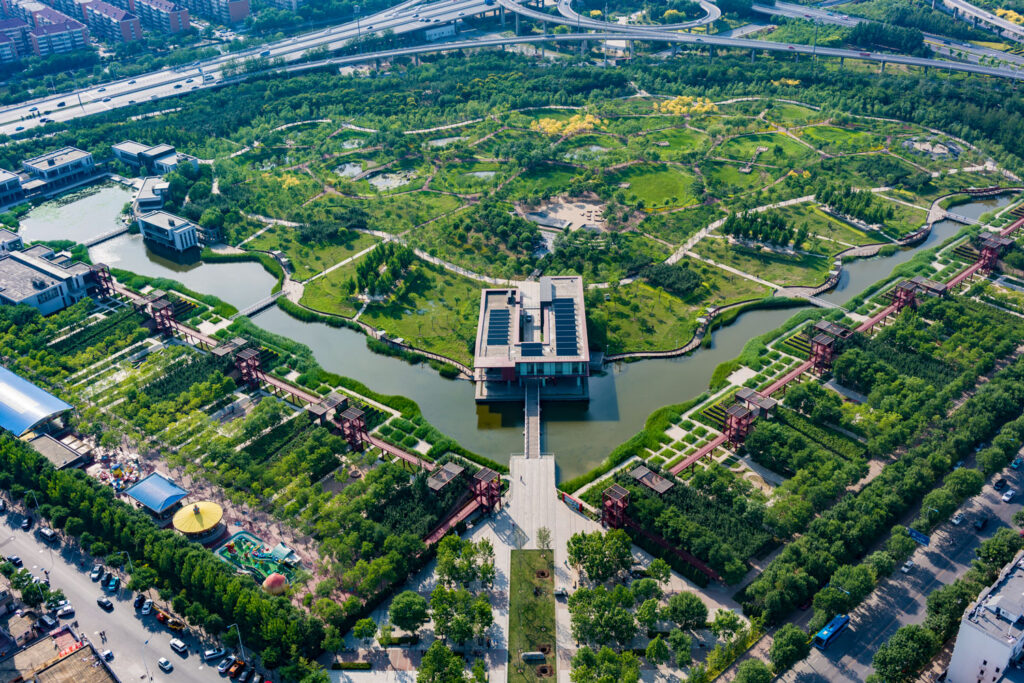
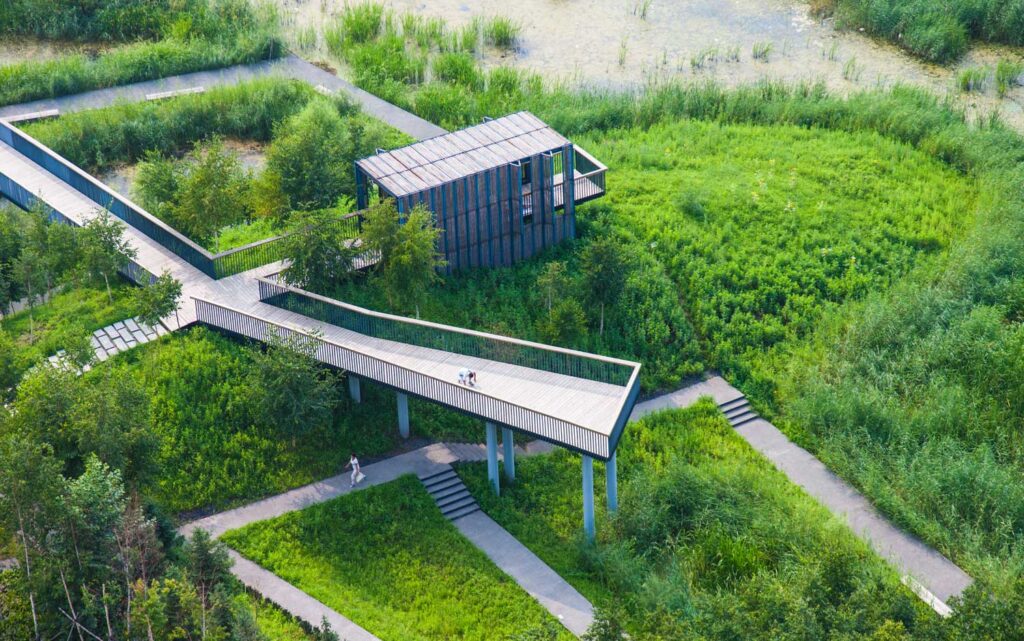
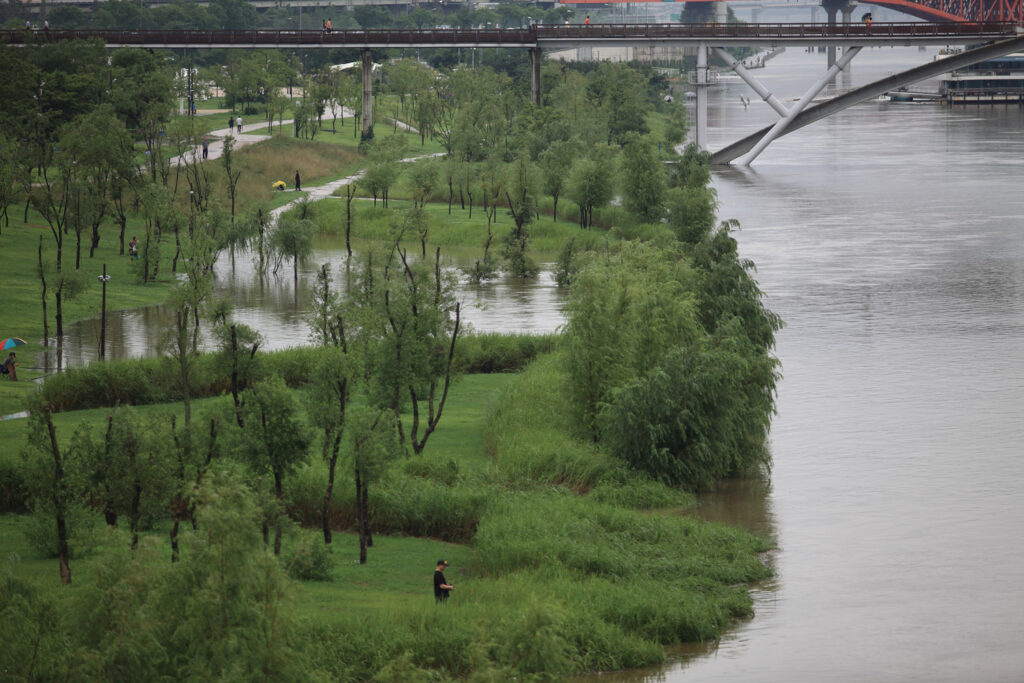
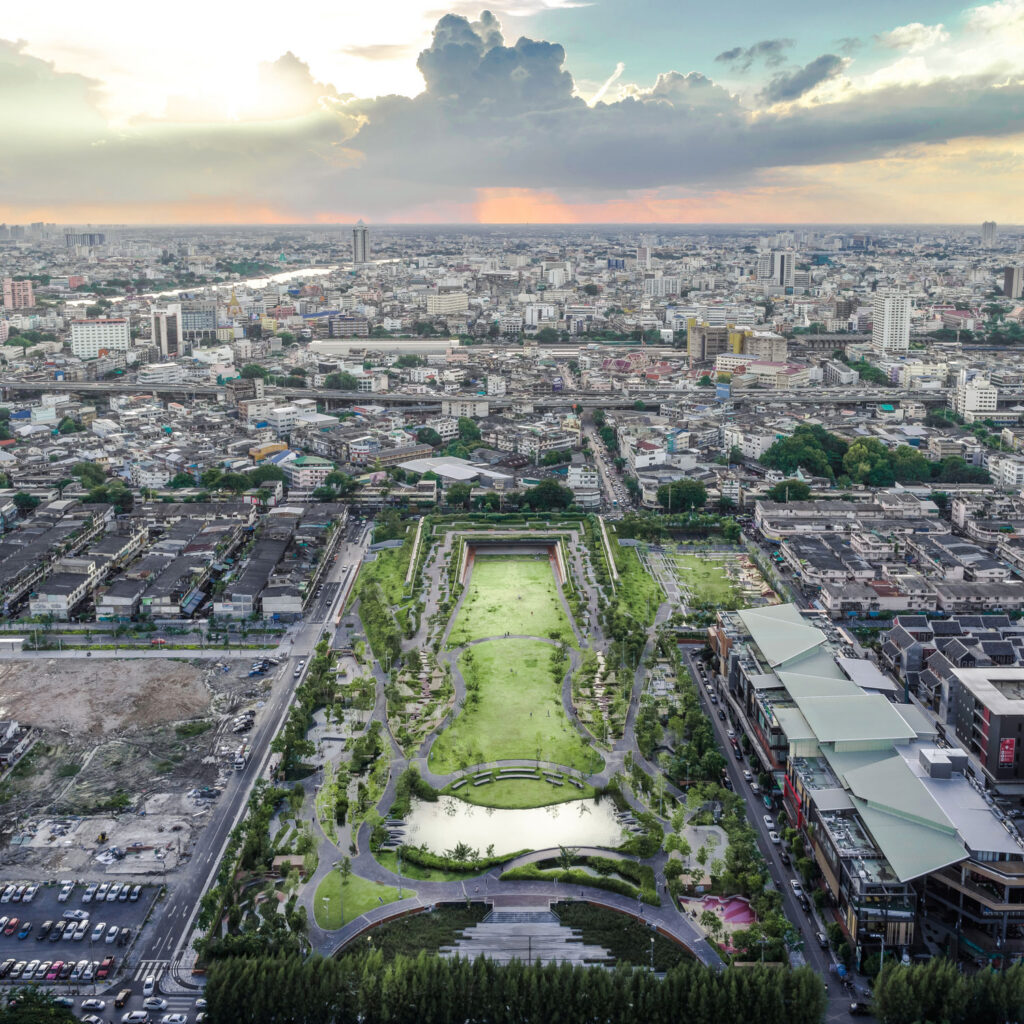
This approach lets us read projects as situated methods rather than as national styles. A flood park in Bangkok, a wetland in Tianjin, and a riverfront in Seoul can be compared as three responses to chronic flooding, each offering techniques that might transfer to Lagos or New Orleans.
Bioregions help us see a built landscape in a region less familiar to us as a form of knowledge production about climate and terrain. They reveal designers of mountain and water not as representatives of “China” or “Japan,” but as practitioners who are inventing replicable ways of working with specific mountain–water systems—knowledge that can travel wherever similar conditions exist.
Why is it important now for the GSD and the Korea Institute to survey landscape architecture practices in Asia?
JK: I wanted to shift our understanding of 山水 from static painting to dynamic system. The exhibition suggests that designers of mountain and water are not just regional specialists. They are producing a body of situated knowledge about floods, slopes, humidity, and desire to modify such phenomena. The designers are firmly situated in their regions, but our aim was to distill their methodologies and make them transferable to other parts of the world. We believe this will be tremendously beneficial in the era of climate change.
NH: Indeed, as Jungyoon suggests, Designers of Mountain and Water is more than a survey—it is a growing body of knowledge. Each project featured in the exhibition is simultaneously a bioregional point of orientation across a vast geographical expanse as well as a local achievement in specific sociocultural contexts. For the Korea Institute in particular, this project’s value has been both comparative and comprehensive. It has helped to elevate knowledge that is very local to the Korean peninsula, while also connecting Korea through people, practices, and the diffusion of ideas to other regions, near and far.
The projects in the exhibition include relatively compact spaces in urban settings, sprawling parks, and even projects that cover entire regions. What principles remain constant for landscape architects when approaching projects of such vastly different scales?
JK: We, landscape architecture professionals, at least those whose works are in the exhibition, begin with the ground, reading mountain and water as structure, an operative system. And we work regionally, even when a project is on a micro-site. A 7-acre corporate landscape in Seoul is still conceived as part of the Korean Peninsula mixed forest system. A park in Bangkok reads as one moment in a particular tropical, peatland hydrology. In short, what remains constant is not a particular aesthetic but a way of working: start from sansu as ground and water system, give that system a legible form, relate each site to its bioregion, and hold engineering performance and cultural experience together—whether the project is a courtyard, a city park, or an entire watershed.
Jungyoon, you’ve been engaged with landscape architecture practices throughout the region for years, researching current work with GSD students. When selecting projects for this show, what characteristics were you looking for?
JK: I was looking less for “good examples from each country” and more for projects that clearly think with their grounds of each bioregion the designers inhabit. Through several years of seminars with GSD students, I encountered far more remarkable practices of Asia than I expected. What the strongest ones shared was an intimate, often long-term engagement with the bioregions in which they work—monsoon deltas, steep forested basins, subtropical coasts—rather than a desire to export a national style. As Nicholas Harkness said in his opening remarks of the conference, “landscape architecture has to meet the earth where it is.” This statement so well captured my curatorial intention and the essence of the profession.
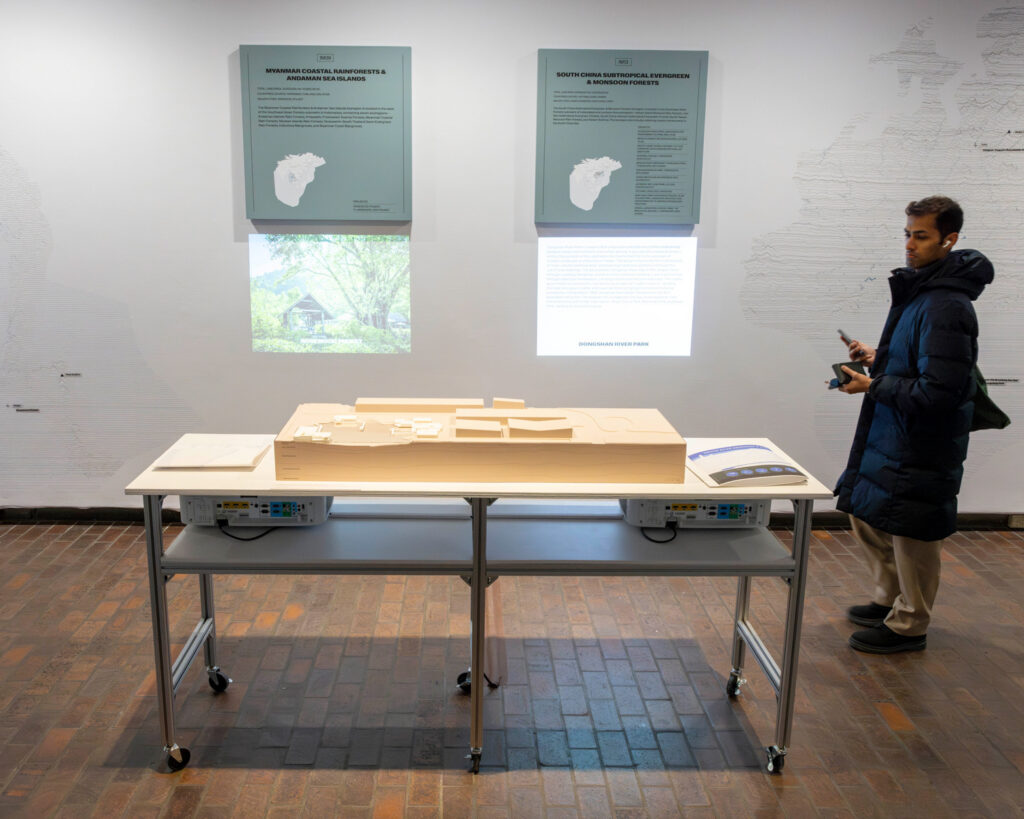
For the exhibition, we therefore chose projects by “designers of mountain and water” who respond precisely to the mountain–water systems they inhabit how they manage flood and drought, choreograph silt, cool dense cities, or rebuild damaged ridges. We were also looking for work where that performance is legible as form—where visitors can see and experience what the landscape is doing. Among the projects on view, none can be simply copied into another context, but all possess a finely tuned sensibility for how they work with topography and water.
These are the projects I consider “alternative landscapes for a changing climate”: not picturesque imitations of nature, but inventive, often hybrid infrastructures that arise from a deep reading of their bioregion and offer methods that might travel wherever similar conditions exist.
Nicholas, as an anthropologist, what perspectives on landscape architecture did you gain through this exhibition and conference? How has this research informed your understanding of Korea and the broader region?
NH: As I learned more about the practice of landscape architecture, I came to realize that landscape architects have a first principle of their practice: they have to meet the earth where it is. This resonated with me as an anthropologist. From the founding of the discipline, anthropologists have studied how societies inhabit, make use of, and transform landscapes. In this sense, anthropology, broadly construed, has the most extensive and comprehensive empirical archive of human interactions with their environments. You can organize these anthropological findings along two extremes: from the most straightforward relation to landscape, such as land use and settlement patterns, to the more indirect and unpredictable, but still deeply intertwined, forms, such as social organization, aesthetics, and language use. Our project’s emphasis on design, and its foregrounding of the problem of climate change, was a fascinating meeting point of these two extremes, where landscape architects confront, and also draw on, the realities of their bioregions through their sociocultural contexts. This meeting point is very exciting. For Korea in particular, the meeting point has shifted, as both the environmental conditions of the Korean peninsula as well as the political, economic, and demographic dimensions of South Korean society have shifted.
What role can landscape architects play in mitigating the effects of climate change?
JK: In this exhibition, climate change is not a separate theme; it is the background condition of every project.
One clear strategy is working with water rather than against it. Many projects accept flooding, drought, and silt as design media: wetland parks detain and clean stormwater, riverfronts are allowed to flood seasonally, and urban plazas double as dispersed catchments.
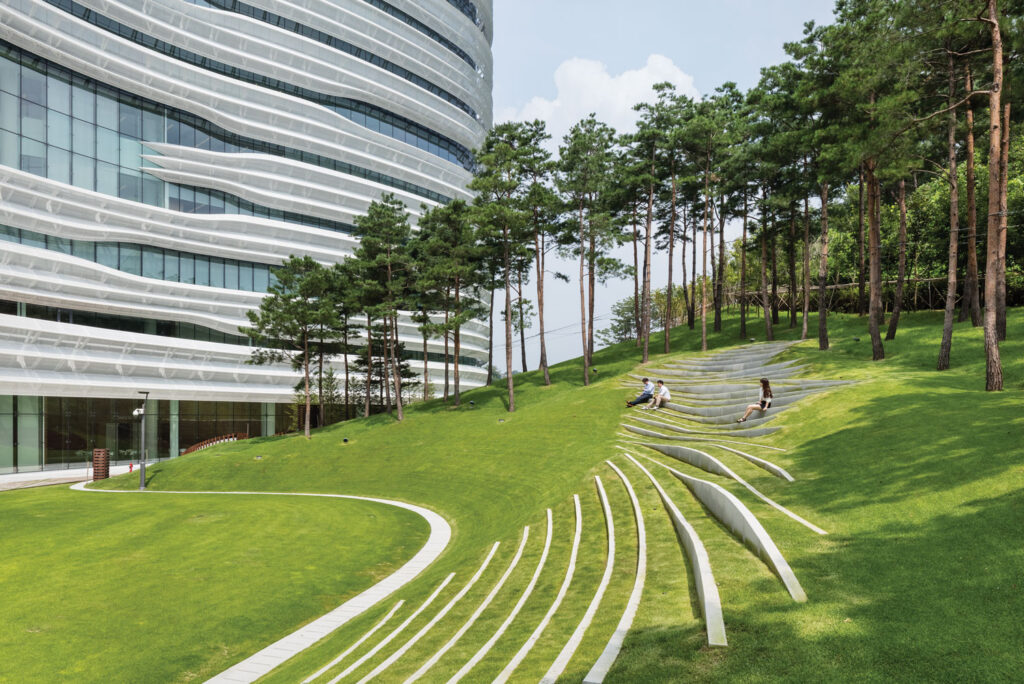
A second strategy is to use topography as climate infrastructure. Landform is redesigned to slow runoff, stabilize slopes, store carbon, and cool cities—through ecological bridges over highways, thickened forest corridors, or shaded slopes and roofs that function as water tanks and urban forests. This is what we call “alternative nature”: highly constructed terrains that still perform as mountain and water.
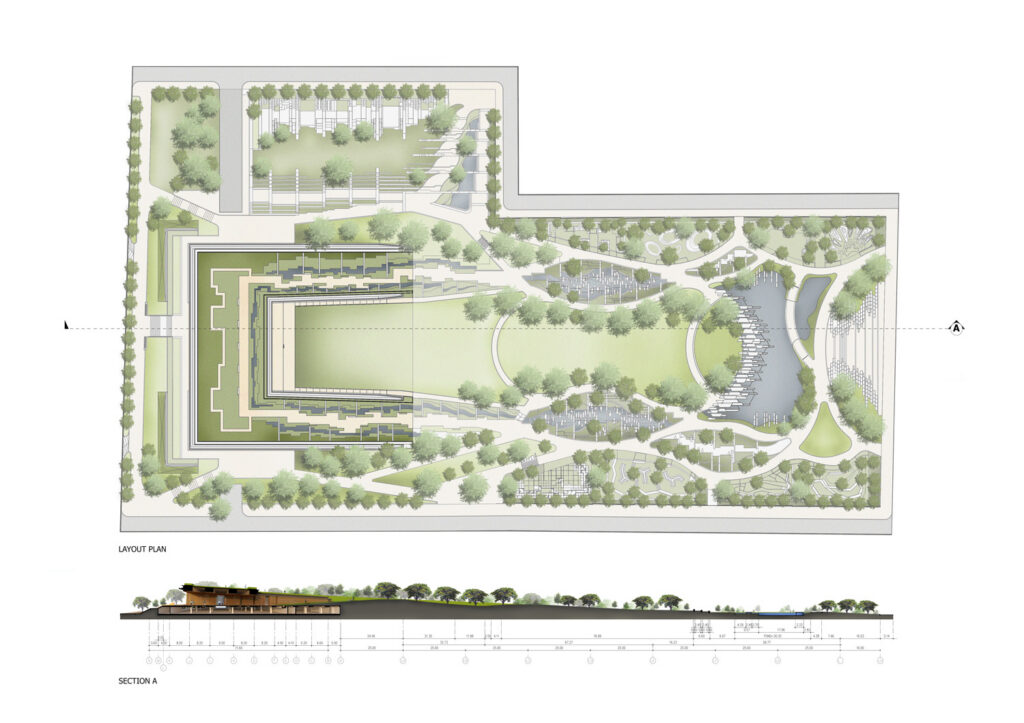
Finally, projects aim to make performance legible. Terraces, basins, and mounds are shaped so visitors can see how they hold water, create shade, or reconnect habitats.
These approaches suggest the specific role of landscape architects: to re-engineer the ground where climate risk is felt, turning abstract climate scenarios into concrete systems and spaces that help communities live with a changing climate.
The New Yorker recently published a feature about “sponge cities,” a concept championed by Kongjian Yu (DDes ’95) and his firm Turenscape. Several Turenscape projects appear in the exhibition. What does Kongjian Yu’s work mean for the field today?
JK: The core principle of modern urban hydrology has been to move surface runoff into underground storm sewer systems as quickly as possible. As a result, every modern city sits atop enormous grey infrastructure networks. But torrential rains we often encounter, which exceed engineers’ assumptions, easily overwhelm these systems. That is why so many “urban floods” do not originate from rivers overtopping their banks, but from storm cisterns hitting capacity and backing up into the city.
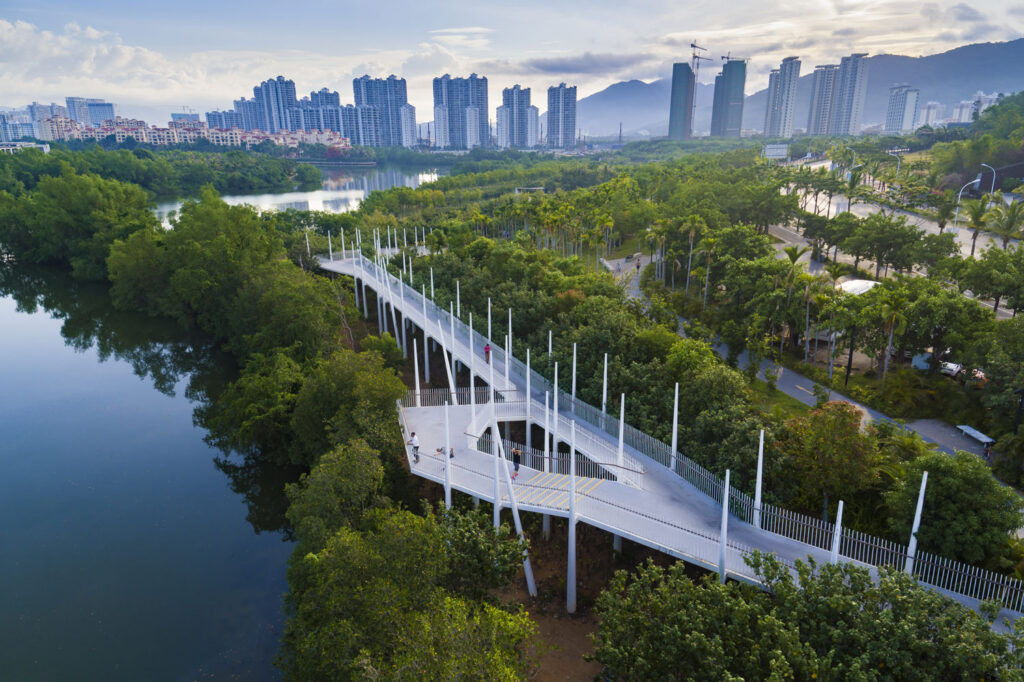
Is the solution simply to keep adding more pipes underground? It is not. Urban underground is as complicated and limited as the above-ground. We now have to hold rainwater on the surface as long as possible and slow its passage into the subsurface. This can only be done through an alliance of blue, green, and grey infrastructure—and, remarkably, this holistic strategy will be visible and spatial, generating public spaces through landscape architectural methodologies, through close collaboration with engineering wisdom.
The sudden passing of Kongjian Yu, the pioneer who articulated and realized the “sponge city,” is a profound loss for landscape architecture and for humanity. The question before us is how we will carry the legacy forward—how we can go beyond sansu and create alternative landscapes for a changing climate. I hope this exhibition and conference will prompt the Harvard community to engage deeply with that question.