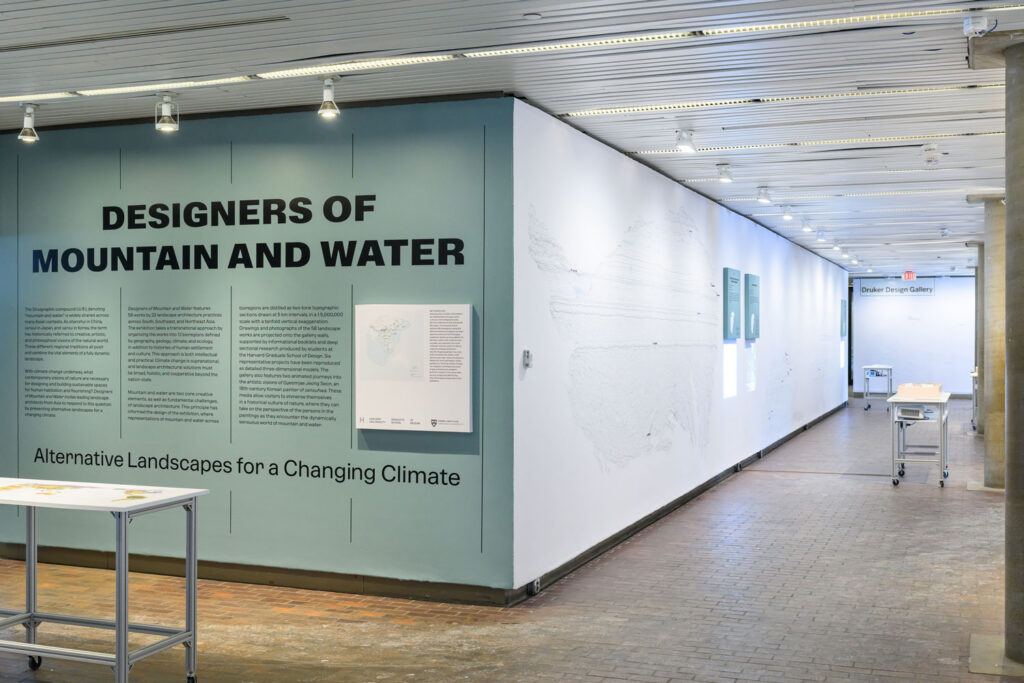
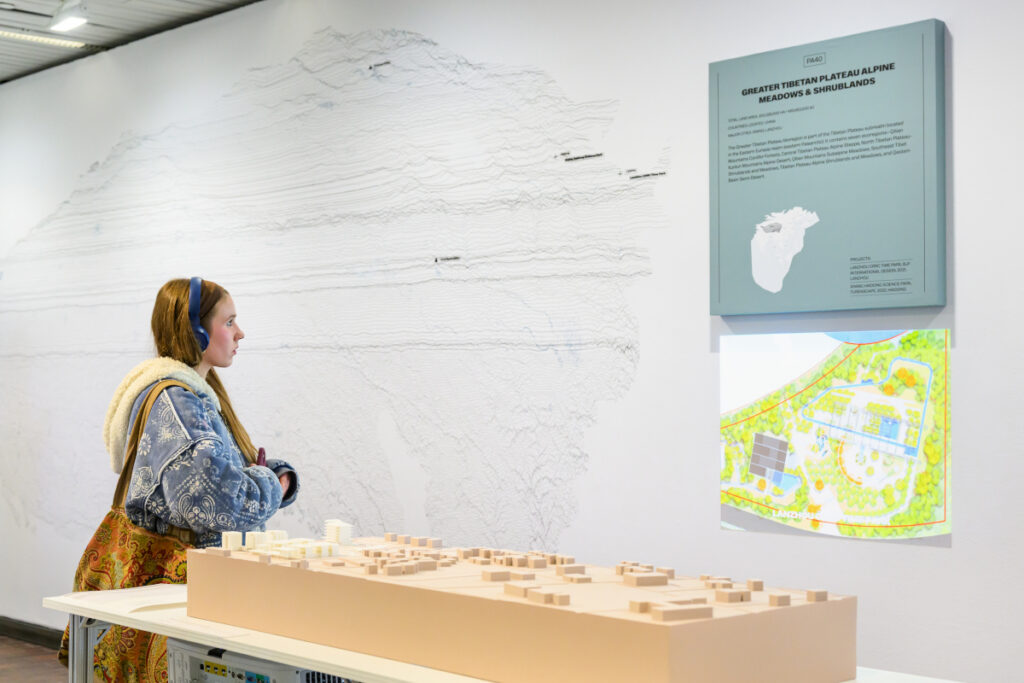
A recent article in The New Yorker brings renewed attention to the work of landscape architect and Harvard Graduate School of Design (GSD) alumnus Kongjian Yu (DDes ’95), whose influential “sponge city” concept anchors the exhibition Designs of Mountains and Water: Alternative Landscapes for a Changing Climate, now on display at the GSD.
Published on April 6, 2026, the piece, “Can Sponge Cities Save Us from the Coming Floods?,” by Eric Klinenberg, places Yu’s ideas within an escalating global climate crisis, underscoring their continued relevance and urgency. The article traces the intellectual roots of sponge cities to landscape architect Ian L. McHarg, who received degrees in landscape architecture and city planning from the GSD in 1949.
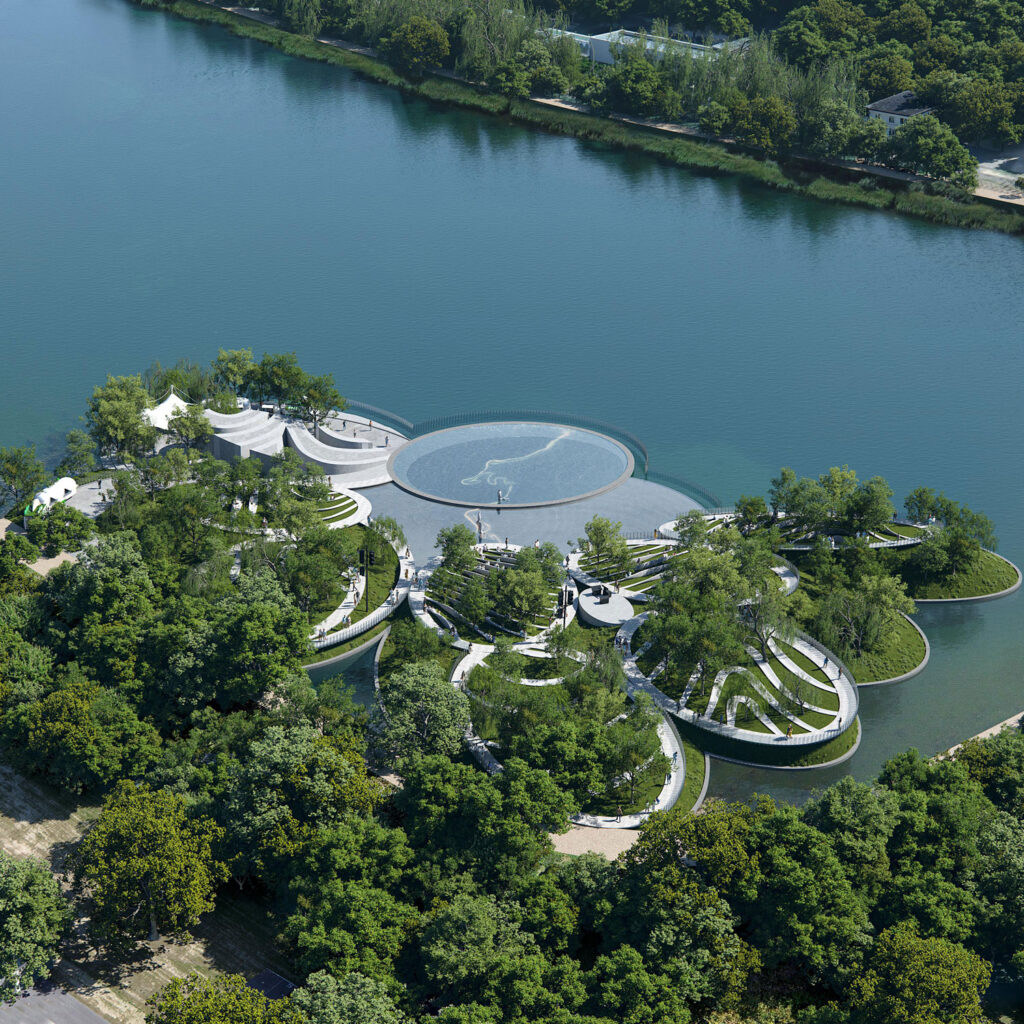
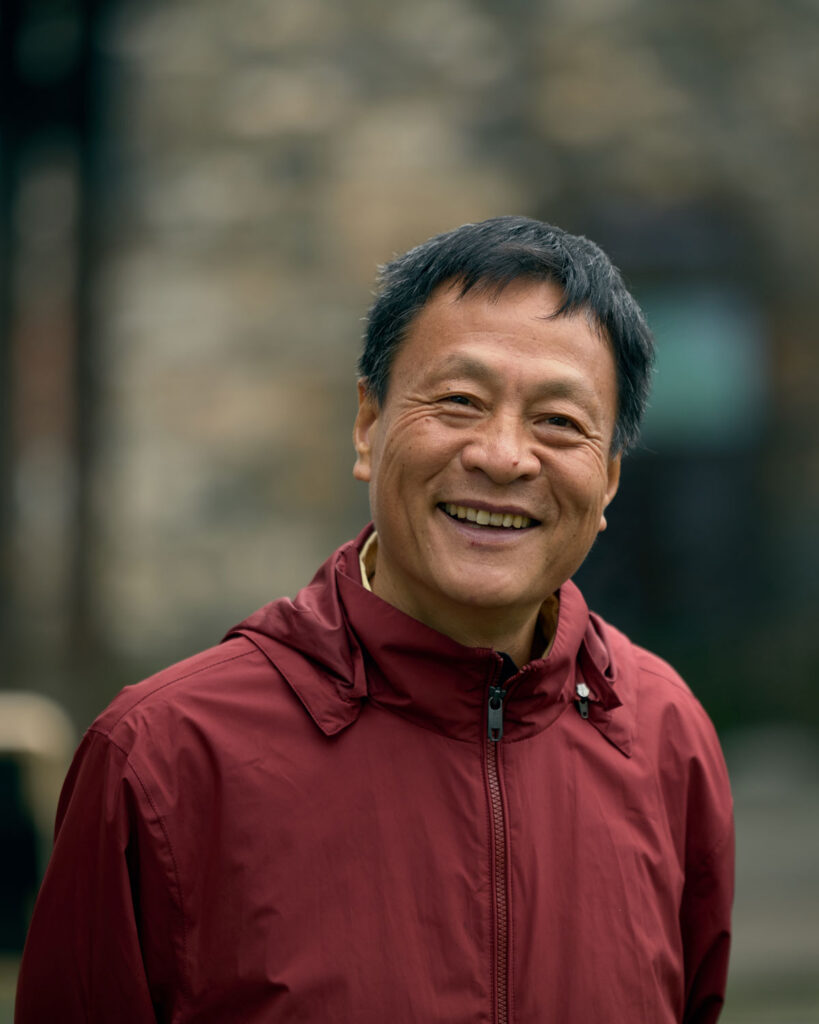
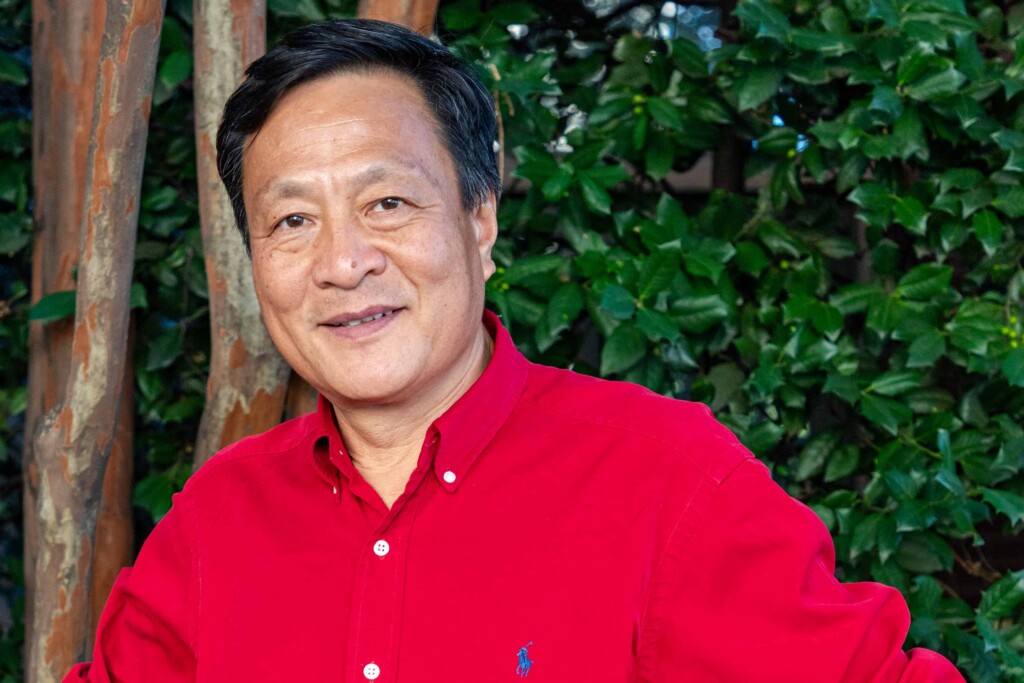
Yu, who died in fall 2025, was among the most important voices in landscape architecture of recent decades. Building on his studies at the GSD, he advanced a design philosophy grounded in ecological resilience, advocating for cities that absorb, store, and reuse stormwater rather than relying on conventional engineering to resist it. His work recast flooding not solely as a threat, but as a design opportunity—one that could regenerate ecological systems while safeguarding urban populations.
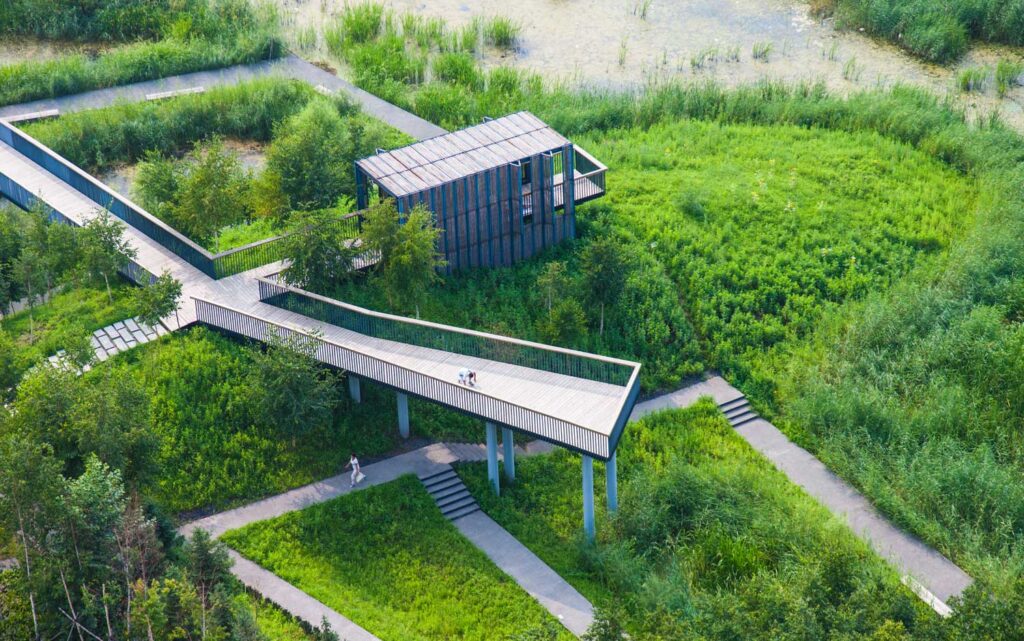
Over the course of his career, Yu’s “sponge city” approach gained international recognition, influencing large-scale planning and policy, particularly in China. By integrating wetlands, parks, permeable surfaces, and restored waterways into dense urban environments, his projects demonstrated how landscape architecture could function as critical infrastructure. Operating across research, practice, and advocacy, his work reshaped prevailing approaches to urban climate risk.
At the Harvard GSD, visitors can encounter this work firsthand in Designs of Mountains and Water, installed in the Druker Design Gallery in Gund Hall through May 15. Situating Yu’s projects within a broader exploration of design-led strategies for climate adaptation, the show positions his contributions as both foundational and forward-looking. The exhibition gives tangible form to these ideas, underscoring the enduring relevance of Yu’s vision of cities designed in concert with natural systems.