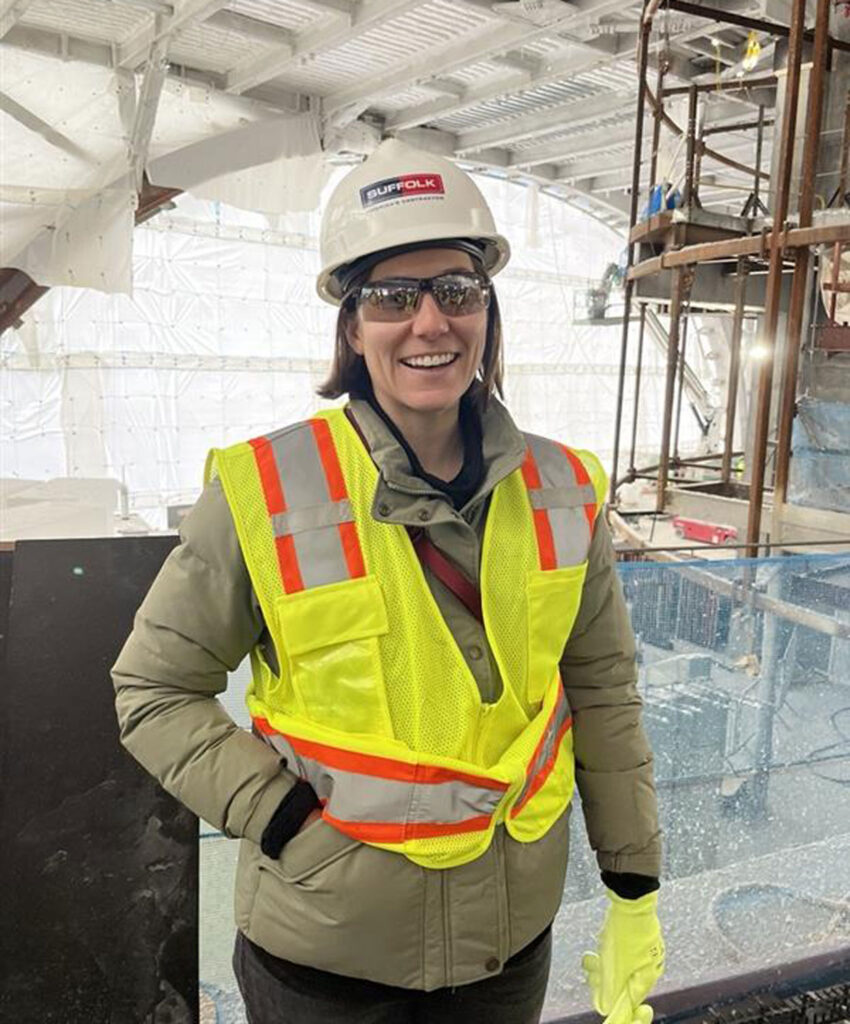
For Allyson Mendenhall (AB ’90, MLA ’99)—a featured speaker at the 2026 Class Day festivities—the practice of landscape architecture encompasses many roles, from intern through principal. She has occupied these positions and more, now operating as Sasaki’s chief practice resources officer. Rather than shaping the exterior landscape, she designs the practice itself, contributing to the tools, systems, and processes that enable strong design to occur.

As she explains, “I like envisioning a desired outcome and then working backward to understand the decisions, adjustments, and resources needed to make it happen. This way of thinking is fundamental to design and problem-solving—and my team and I apply it to the organization as a whole.”
Mendenhall’s instinct to refine and improve predates her involvement with landscape architecture. With an English degree from Harvard College, she began her professional life in publishing at Random House, where close reading and attention to detail were essential. When she later turned to landscape architecture, she initially saw that shift as a clean break, assuming her earlier background had little to do with design. Over time, however, she came to recognize a much larger continuity: the interests that first shaped her career in publishing never disappeared but instead found new expression within a design context.
What emerged was a broader understanding of landscape architecture—one in which practice takes many forms, and in which connection—to ideas, to language, and to other people—remains central to the work.
From Literature to Landscape Architecture
Mendenhall did not arrive at the Harvard Graduate School of Design (GSD) with a long-held ambition to become a landscape architect. As an undergraduate at Harvard, she studied English and graduated without a clear sense of the field she would eventually enter. “I knew of architecture, and of Gund Hall, having passed by it hundreds of times, yet I had never heard of a landscape architect,” she recalls. Only after moving to New York and working in publishing did the discipline come into view—at first not as a field, but as a question.
During breaks from her job in Midtown Manhattan, Mendenhall gravitated toward small open spaces—what she would later recognize as pocket parks, including Greenacre Park. Some felt lively and magnetic; others, only blocks away, sat empty and uninviting. The contrast led her to ask: “Who designs these places? Why are some successful and others not?” Taken together, these questions led her to landscape architecture.
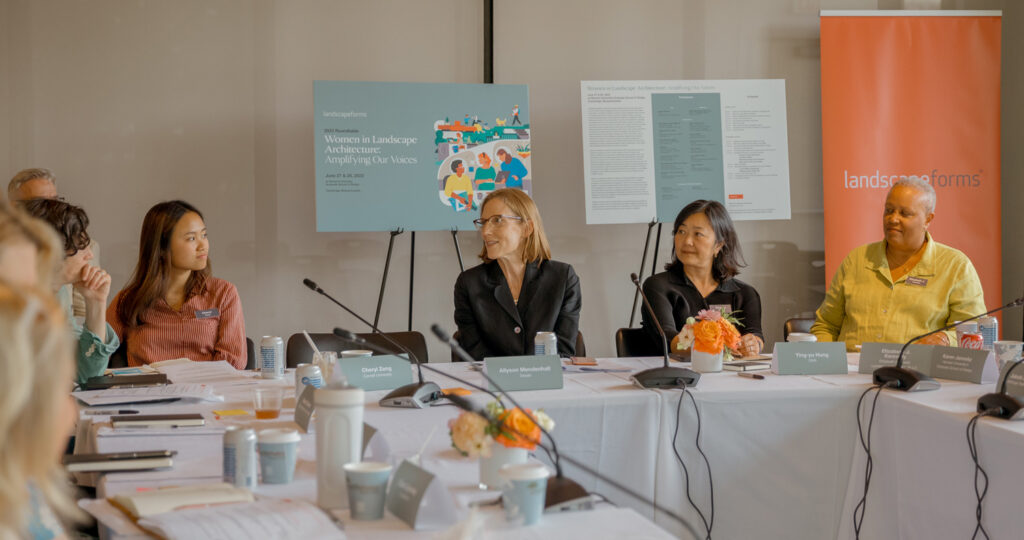
Applying to design school required a rapid recalibration, including a summer in the GSD’s Career Discovery program (now called Design Discovery), where Mendenhall confirmed her desire to pursue a career in design. Back in New York that fall, she took night classes to build her portfolio while continuing to work full time.
After being accepted into the GSD, she saw the school anew. “It felt like such a vibrant hub within the larger university,” she recalls. “And I was completely taken with Gund Hall—the trays, the overlapping disciplines, the whole space.” She returned to Harvard to pursue a master of landscape architecture degree, an experience she describes as “one long adrenaline rush of exploration and production.”
The transition from literary study to design education was disciplinary as well as structural. As an English major, Mendenhall’s work had been solitary; at the GSD, it was continuous and collective. Ideas were tested in real time—through desk critiques and reviews requiring both visual clarity and narrative precision. “We were presenting constantly and receiving real-time feedback that forced rapid iteration,” she says.
A second-year studio led by Carl Steinitz, Alexander and Victoria Wiley Professor of Landscape Architecture and Planning, Emeritus, proved especially formative. Organized around group work at the scale of a community, the course required close collaboration. “Looking back, I see exactly why we were made to work together,” Mendenhall says. “It taught us to collaborate, to rely on one another, and to build a solution out of multiple perspectives. In retrospect, this experience was transformative.”
Practice as Project
That lesson in collaboration carried into Mendenhall’s professional life. After graduating, she eventually landed in Denver, Colorado, at Design Workshop, gaining experience across the full range of practice, from entry-level roles through principal. Over time, she found herself drawn less to individual projects than to firm-wide operational roles: how teams function, how processes evolve, and how organizations support design.
At Sasaki, where she has worked for the past four years, that inclination has taken on a formal shape. As chief practice resources officer, she does not oversee a conventional portfolio. Instead, as she puts it, “the practice is my project.”
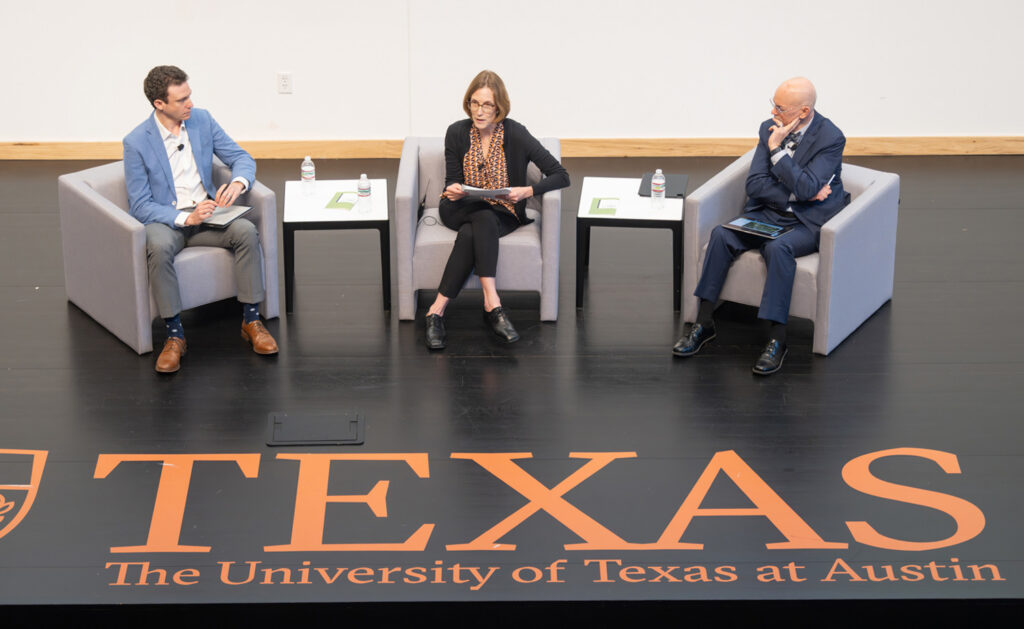
Her team’s work focuses on the systems that structure design outcomes—quality control, workflows, standards, technology, fabrication, and the integration of research into practice. “As a student, professional practice coursework always seemed secondary to studio. Now I see how much the business of design practice—efficiency, profitability, client satisfaction—falls under that umbrella. My role at Sasaki embodies all of that.”
Seen in this light, the role is less a departure than a return. Skills developed through her literary background—once set aside—have reemerged as central to her work. Writing, in particular, has become a key tool in articulating ideas, refining processes, and guiding communication across the firm and the discipline.
In recent years, Mendenhall has been speaking frequently at conferences and pursuing writing opportunities, including the contribution of a book chapter—“Communicating Landscapes of Complexity with Chunks and Comics”—to the Routledge publication Representing Landscapes: Visualizing Climate Action, edited by Nadia Amoroso. “In some ways, it feels like a return to my roots,” she says. “For a long time, I wanted to disregard the English major and the publishing background, as though they had nothing to do with design. But now I see the larger arc much more clearly.” What once seemed like separate paths—publishing and design—have ultimately converged.
Designing Connection
Mendenhall’s engagement extends beyond the firm and even the discipline of landscape architecture. Over the past decade, she has taken on an increasingly active role in alumni leadership at the GSD and across Harvard. Drawn back to Gund Hall nearly a decade after graduation, she joined the GSD Alumni Council (2008–2016). She later served as its chair (2016–2019), discovering in the school an enduring network. “I was drawn in by the community,” she notes. “The relationships span decades, disciplines, and geography. As a student, I thought of myself very narrowly as Allyson, the MLA student from the class of 1999. Once I became involved with the Alumni Council, I realized we are part of a much larger alumni community, and people are eager to connect beyond their usual spheres.”
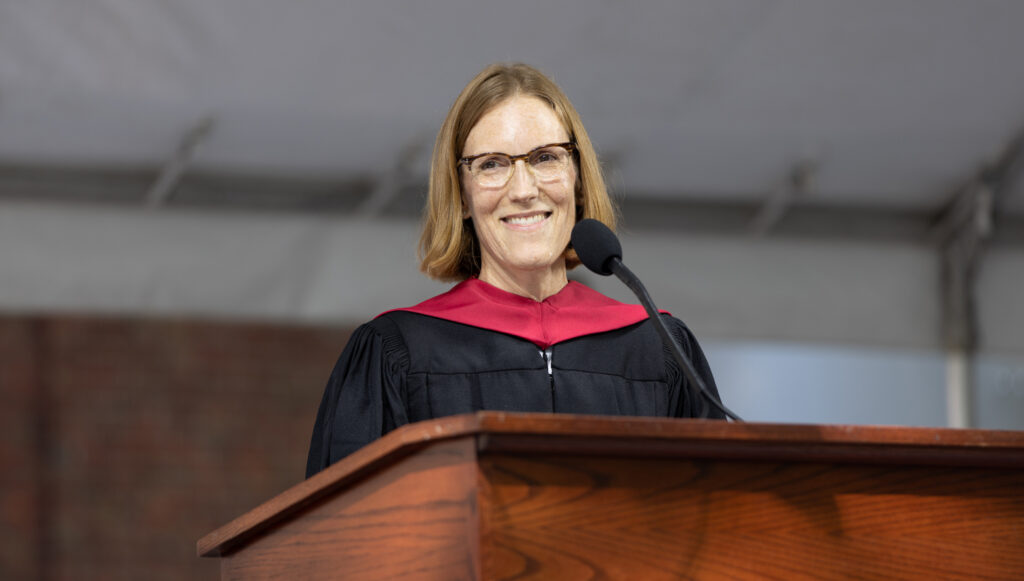
Her involvement later expanded to the Harvard Alumni Association, where she ultimately served as president (2022–2023), the first—and only—GSD alum to do so. “My theme that year was ‘Community by Design.’ I wanted to emphasize that community-building itself can be intentional and designed, and the phrase also let me talk directly about the GSD,” she says, translating design values to a broader university audience. Currently, Mendenhall continues that ambassadorship through her work on the GSD Dean’s Council, which advances the school’s visibility within and beyond Harvard.
Across these roles, a consistent impulse emerges: the desire to convene people around shared ideas. Whether organizing events, such as hardhat tours for alumni in the Denver area, or shaping institutional initiatives through the Dean’s Council, Mendenhall treats community as something constructed through attention and intention. Her approach to community-building mirrors the systems thinking that defines her work at Sasaki.
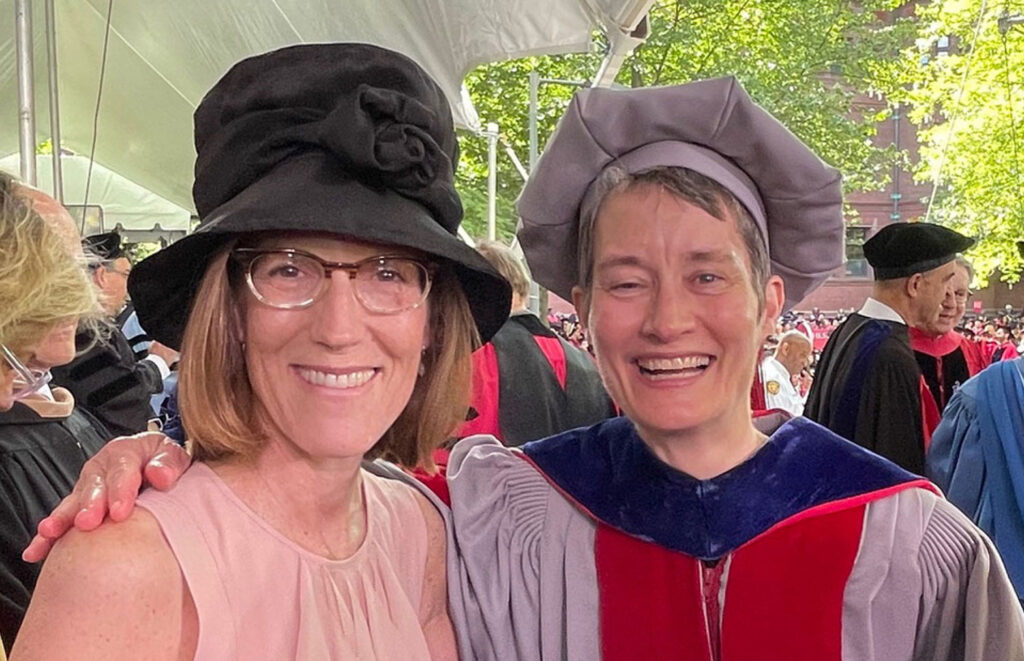
That same perspective informs Mendenhall’s advice to students. Graduate school can encourage reinvention, but she cautions against abandoning earlier identities. “Do not discard prior versions of yourself. . . . Do not throw away what came before.” These interests and skills can be carried forward and reinterpreted.
Mendenhall’s own career makes that principle visible. What began in New York, in the experience of parks that felt “lively and magnetic,” has come full circle. The spaces that first drew her in—including Greenacre Park, designed by Sasaki—prompted questions about how design works. Today, at the firm whose work originally inspired her, she operates at a different scale, shaping the systems and conditions that allow such spaces to be realized by colleagues. What began as a shift from literature to landscape architecture has become an integrated, layered practice in which past and present remain in active conversation.