Redesigning Perceptions of Human Waste Infrastructure on Cape Cod
Nicky Rhodes’s (MArch ’26) thesis project urges us to consider using human waste to power our communities and protect our shores from sewage overflows and cyanoblooms.
Temperatures were in the 90s across New England this Independence Day weekend, and many Cape Cod beaches and ponds were closed due to an excess of e coli bacteria or cyanoblooms. A few hours up the Massachusetts coast, swimming was banned at more than a dozen beaches as the result of a sewer main that burst in a river. These are problems that Nicky Rhodes (MArch ’26) addresses in his thesis project at the Harvard Graduate School of Design (GSD), where he was awarded the Department of Architecture Certificate of Academic Excellence this spring.
Aptly—if irreverently—titled “Good Shit,” Rhodes’s work upends the idea that human waste is a problem to be hidden in sewers and septic systems that repeatedly pollute our waters. Instead, he says, waste is a resource that we can use for fuel and fertilizer, keeping our water clean, if only we can move past our shame and design forward-looking, ecologically-minded homes, public facilities, and infrastructures.
“I’m interested in the social systems required to both implement these systems at scale, and influence the culture our society has around sanitary infrastructure,” says Rhodes. “That’s an architectural concern. Sanitation, even though it’s invisible, is very architectural; we interface with it through our buildings and our cities.”
Entering a resurgent conversation around composting toilets and “closing the loop” of our nutrient system—from food to waste, and back to fertilizer and food again—Rhodes’s project “reimagines sanitation as visible, social, and regenerative infrastructure, connecting bodies, buildings, and landscapes within a renewed cycle of ecological reciprocity.” Achieving this new lens on sanitation systems requires communities in the Western world to engage in frank conversations about waste.
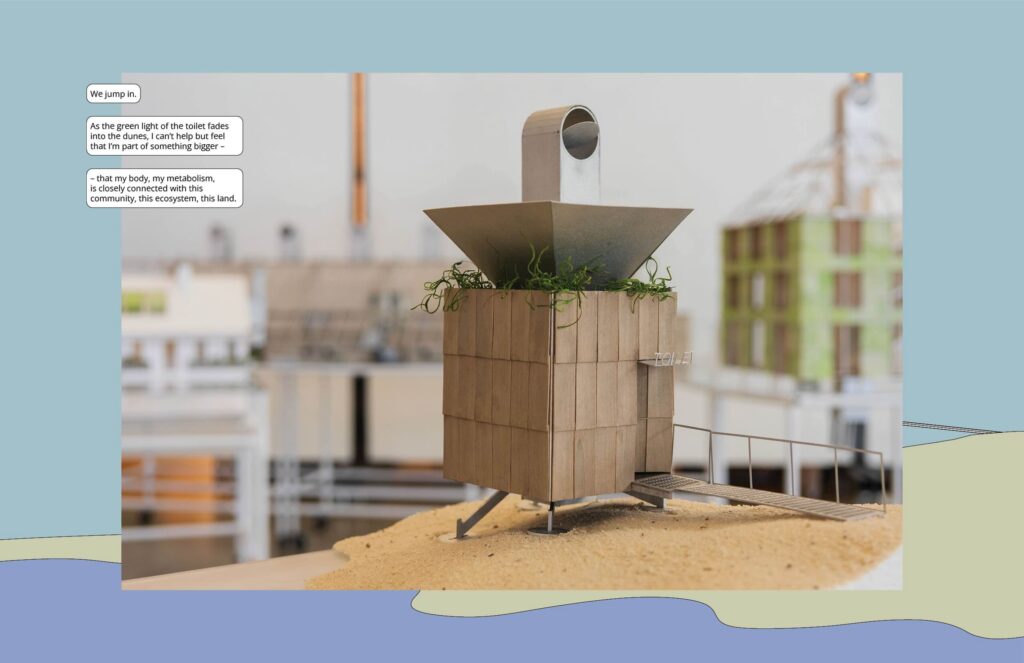
This campaign, dubbed today the “no-flush movement,” was first popularized in the 1960s and ’70s, and advances the idea of making use of “humanure,” rather than flushing it away with precious potable water. Recent proposals for gaining the Western world’s buy-in rebrand waste as “biosolids.” Composting toilets are more frequently installed in private homes and small businesses in the US, and implemented in public settings in England; the collected solid waste, as well as urine (using “urine diversion” systems) is then used for fertilizer and energy.
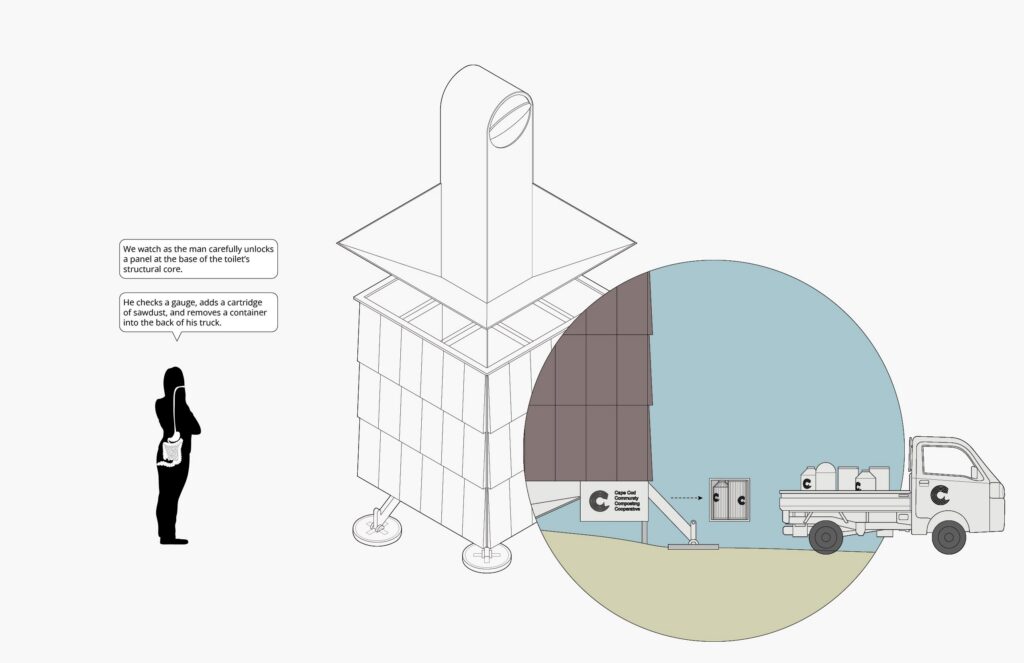
Rhodes explains in his thesis that Japan’s history holds a model for how human waste can benefit our environment and communities, and how our perception of humanure deeply impacts our willingness to make use of it. In 18th and 19th century Japan waste, was a valuable commodity, referred to as “nightsoil,” and collected in curbside toilets and then composted for fertilizer. In contrast, at the same time in Europe, biosolids piled up in the streets and spread diseases, leading to the development of sewage and septic systems that diverted waste underground but polluted the surrounding earth and water sources.
Rhodes notes that he was lucky to have worked with Laila Seewang, who served as GSD design critic in architecture. Seewang and Chris Reed, professor in practice of landscape architecture explored with students in their studio courses, including “FLUSH: Waste and Intimacy in Berlin’s Civic Realm,” how well-designed toilets and other intimate spaces can enhance our everyday lives, and how to close the loop from the body to sewage to food and back to the body again. They studied Japanese toilets and baths, and took students to see the historically significant sewage overflow system in Berlin, which is now being transformed into gardens and other community resources.
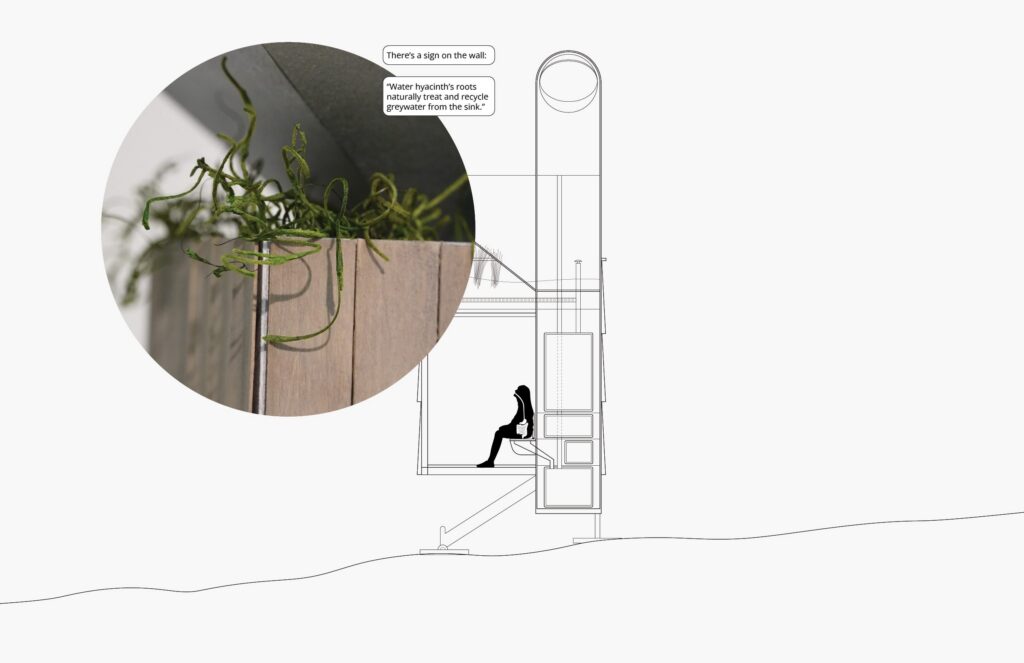
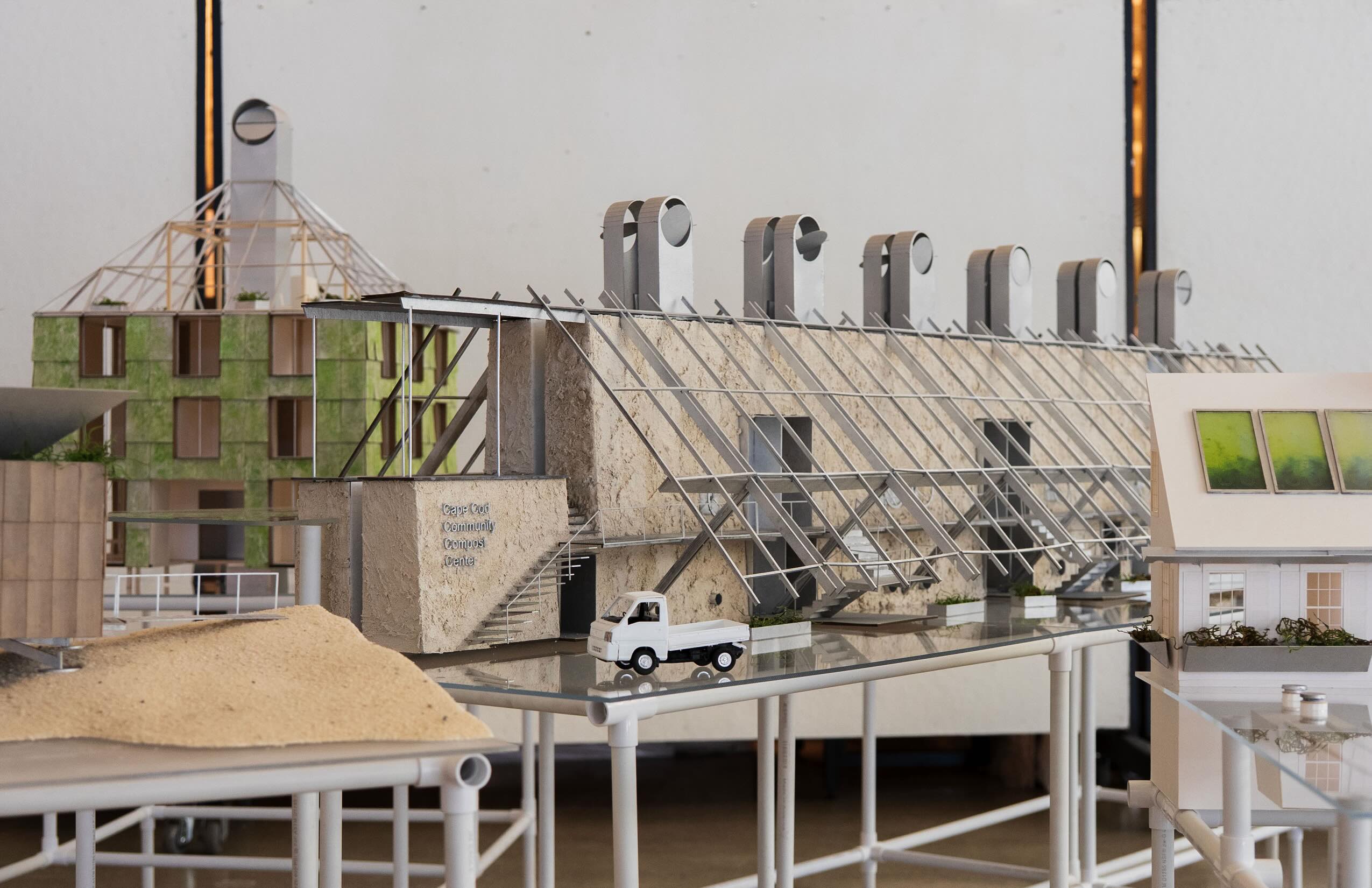
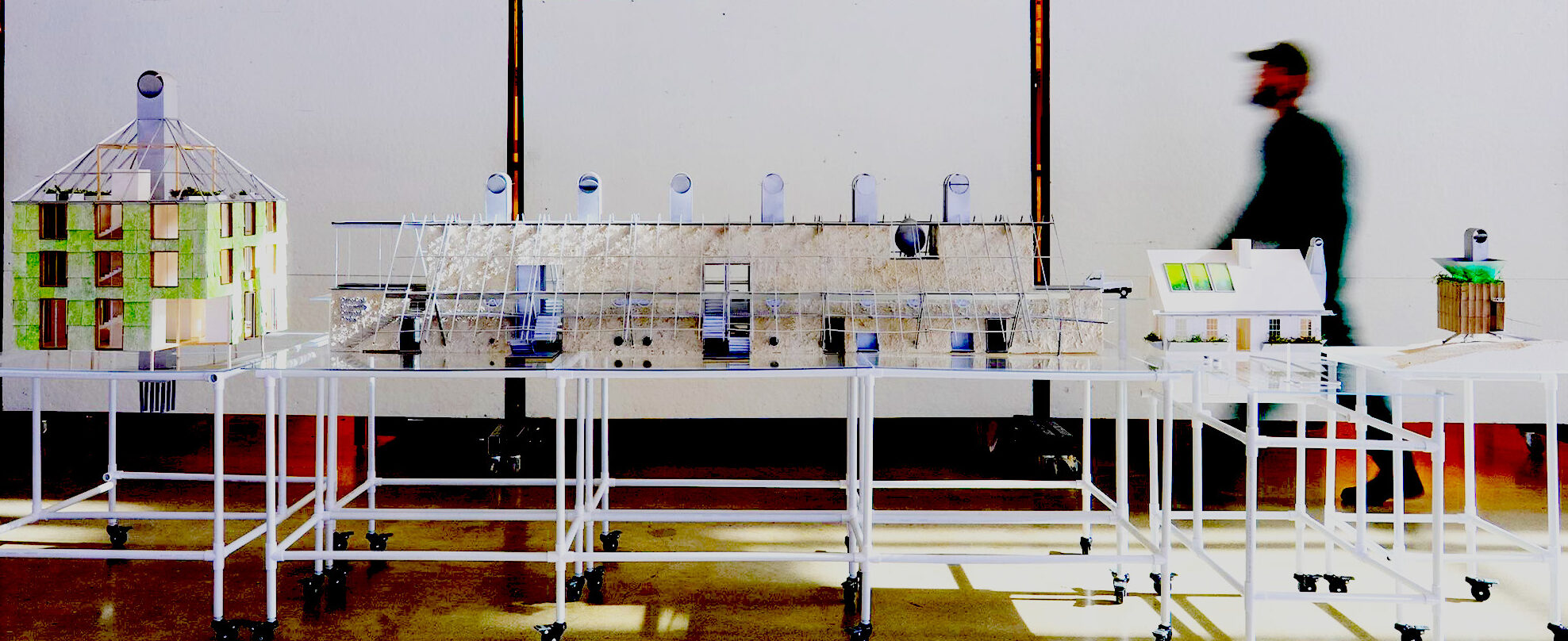
Rhodes draws from these histories to leverage a range of contemporary technologies in a speculative cooperative community in Barnstable, on Cape Cod, ancestral lands of the Wampanoag. The town is largely unsewered, he says, and has a long history of environmental innovation. Rhodes designed a cooperative community that allows for individuals in single family homes or co-housing units to share their waste in a central composting system that provides fertilizer and energy for the whole community. All the adaptive elements of the cooperative are modular and can be easily attached and dismantled. In the dwelling units and recycling center, energy is drawn from solar and algae panels, with the chimneys repurposed to channel heat for warming and cooling. Water is collected from rain runoff, and the sink greywater is cleansed and processed by hyacinth roots in hydroponic pools.
“The project uses architecture to produce a new relationship to our waste and an intervention into our nutrient cycles,” says Rhodes. “The buildings emerged from the workings of the cooperative, and are a vision for what’s possible.”
He hopes that his design offers an architectural relationship to which people can relate. He’s also invested in establishing partnerships with engineers, policy experts, and economists who might collaborate on the project’s implementation. He notes that he was supported in developing the project by his GSD advisors Jenny French, associate professor in practice of architecture (whose sister Anda French has a home on the Cape and suggested the site) and Rahul Mehrotra, GSD John T. Dunlop Professor in Housing and Urbanization, as well as Laila Seewang.
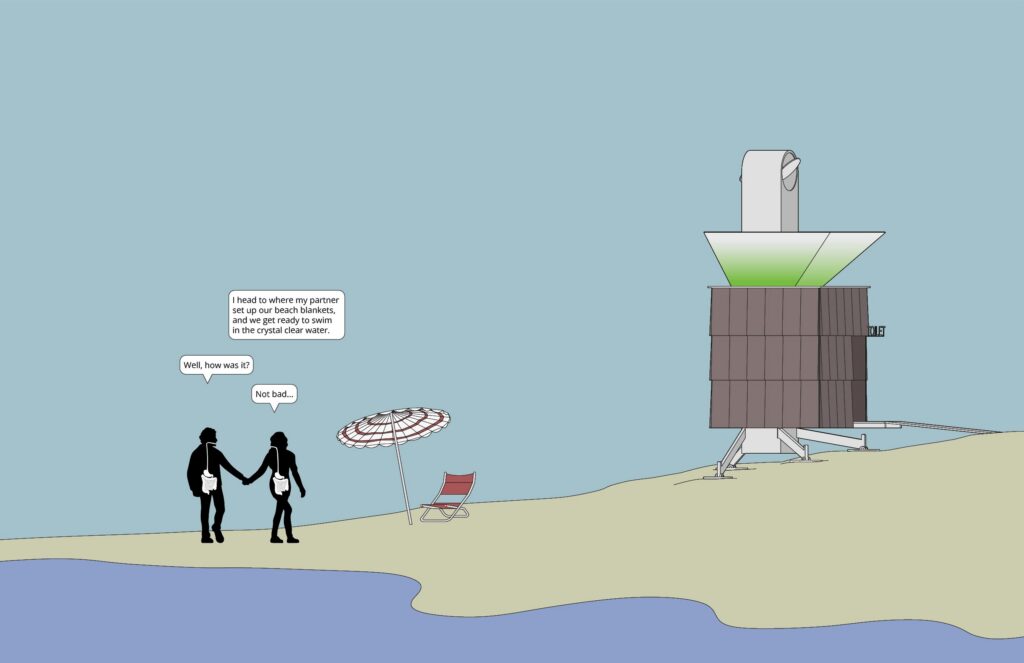
Rhodes’s work has gained traction in the community, with an upcoming exhibition of his thesis at the Massachusetts Alternative Septic System Technology Center (MASSTC) in Barnstable, where alternative septic technologies are tested, researched, and on display for the public. Bryan Horsley, MASSTC project assistant, says that Rhodes’s work is exciting because he’s designed a system that works at different scales, from the home to community to the region, with composting toilets at beaches and roadside rest areas, for example.
“Conventional septic systems are the primary cause of water pollution on Cape Cod,” says Horsley, noting with regret the visible pollution of ponds and the seashore that he’s witnessed over the years. “85 percent of the nitrogen impairing our water bodies comes from on-site septic systems.”
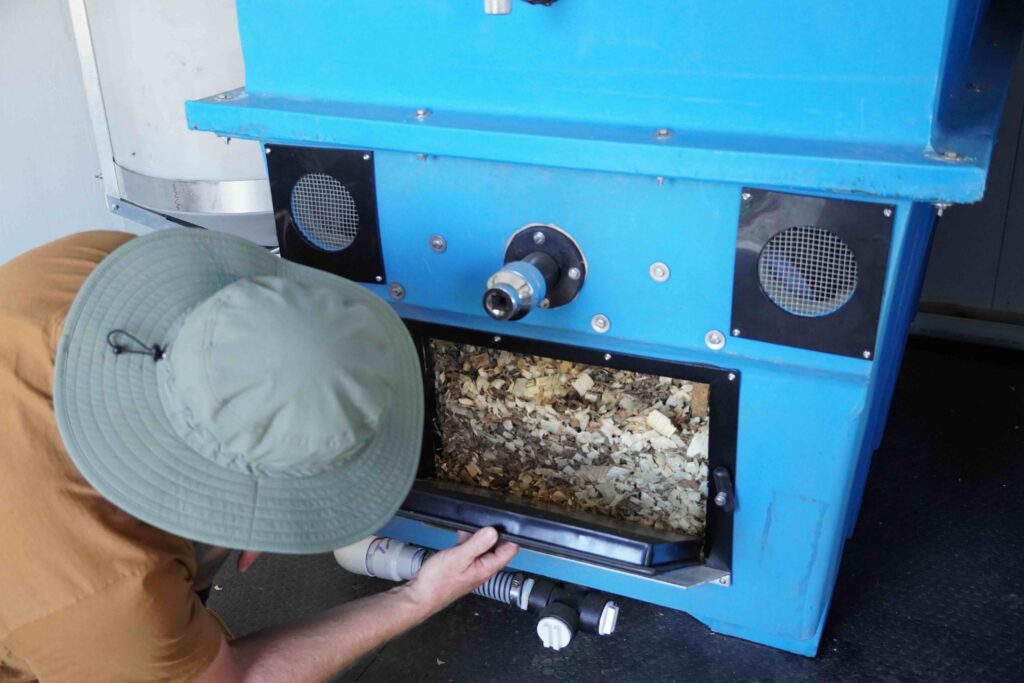
MASSTC, founded in the 1990s, uses a vacuum-flushing composting toilet, waterless urinals, and a graywater collection system that waters their gardens. Horsley has been working with the town of Falmouth on a urine diversion project, for which they have 180 people on a waitlist for home installation. They also work with regulatory agencies to help get approval for various composting and urine toilet systems.
The organization’s work began at about the same time that a local experimental cooperative, New Alchemy Institute, was dispersing. The New Alchemy Institute’s founders Bill McLarney, John Todd, and Nancy Jack Todd, moved to the Cape in the 1970s with their families, aiming to avoid using fossil fuels by creating “ecologically derived human support systems—renewable energy, agriculture, aquaculture, housing, and landscapes.” They published a series of essays about their theories, explaining that “the microcosm always had to be a tiny mirror or image of the larger order.”
Today, New Alchemy’s archives and intention live on in the Green Center, run by Hilda Maingay and Earle Barnhart and a board of directors whose focus is on the “problem of sustainability: the recovery and safe recycling of nutrients from human ‘waste.’” The couple live in a home that they call their “ark,” which relies on composting toilets, recycled human waste as fertilizer and energy, an attached greenhouse where they grow their vegetables, and an aquaponics system. In 2021, the couple designed a neighborhood collaborative, the Greenway, connecting a community-wide system of homes, their “vision of an ecological neighborhood, where basic needs—food, water, shelter, transport, communications—are provided in ecologically sustainable ways with renewable energy.”
The community would rely on composted human waste and solar power that fuels their energy and growing needs, drinking water “gathered from condensation and rainwater collection,” and greenhouses attached to homes that allow for year-round produce through the cold winters—all of which results in cleaner fresh- and saltwater bodies in the region.
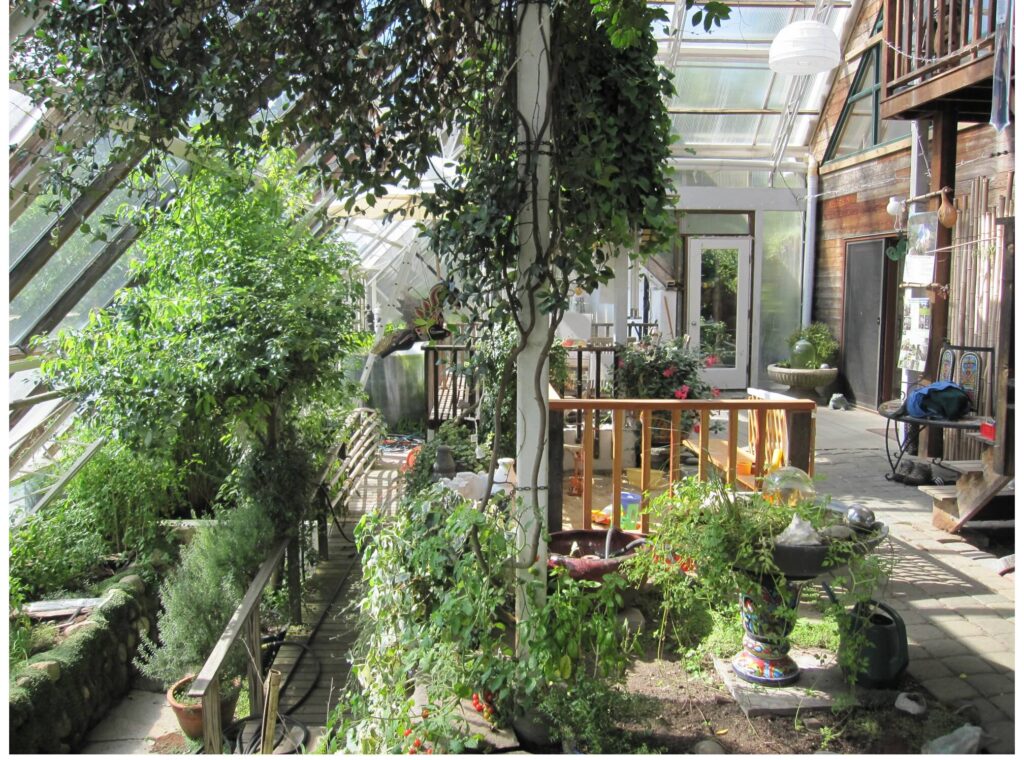
Rhodes notes that the 1970s New Alchemy group’s work on the Cape was part of his inspiration for “Good Shit.” Today, Rhodes and the Barnstable community may finally be on the cusp of realizing the implementation of composting toilet systems and self-sustaining food and energy sources at every scale, with designs for private homes, the cooperative, and at beaches in Barnstable. Rhodes explains that his project does not invent any new technologies but implements all the available tools for the cooperative. As increasingly severe sewage pollution problems continue to pollute our rapidly heating world, the only question that remains is how quickly the public might be convinced to shift our perception of human waste.