Josep Lluís Sert became dean of the Harvard Graduate School of Design (GSD) in 1953, succeeding Joseph F. Hudnut and inheriting a school that was a leader in modern design education. Over the next 16 years, Sert expanded its influence, establishing the GSD as an internationally renowned center for architecture, landscape architecture, planning, and the emerging field of urban design.
To Harvard Sert brought a distinguished career forged through work with Le Corbusier, leadership in Spain’s modern movement, and participation in the Congrès Internationaux d’Architecture Moderne (CIAM). Forced into exile in 1939, he established a practice in New York City before joining Harvard.
Sert believed design education should extend beyond individual buildings to encompass cities, landscapes, infrastructure, and public life. He thus broadened the GSD’s curriculum, expanded its faculty, and strengthened collaboration across architecture, landscape architecture, and planning, reflecting his conviction that complex urban challenges demanded interdisciplinary solutions.
That vision transformed the school. During his tenure, the GSD helped establish the Joint Center for Urban Studies in 1959 (now the Joint Center for Housing Studies), launched the nation’s first graduate program in urban design in 1960, and founded the Laboratory for Computer Graphics and Spatial Analysis in 1965, placing the school at the forefront of emerging digital methods for understanding the built environment.
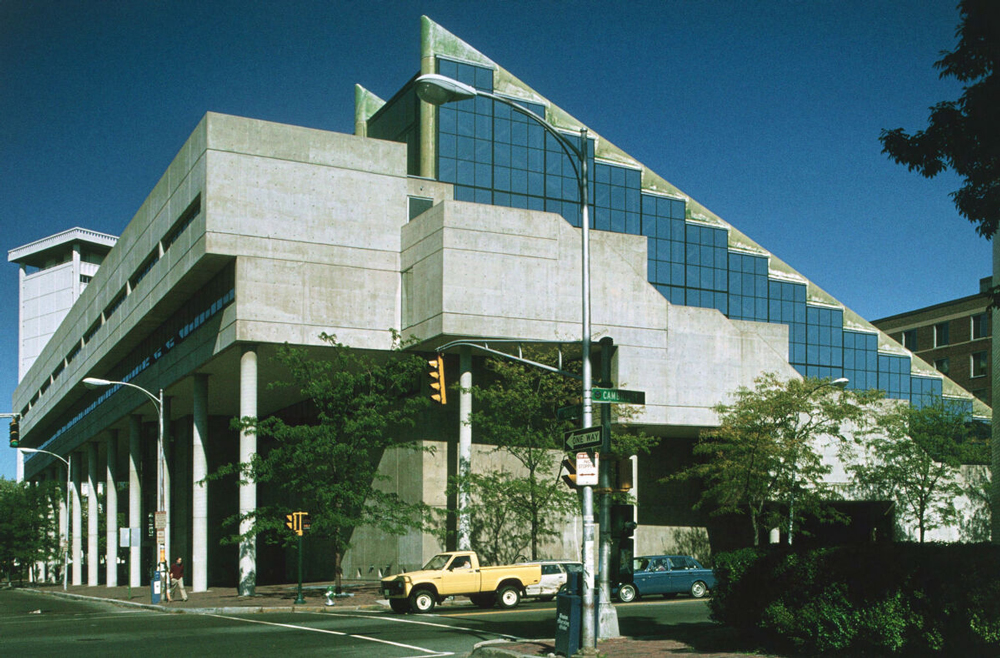
Sert’s influence at Harvard extended well beyond the GSD. He designed several of the university’s defining modern buildings, including Holyoke Center (now the Richard A. and Susan F. Smith Campus Center, 1966), Peabody Terrace (1967), and the Science Center (now Zimmer Hall, 1973). Although completed after he stepped down as dean, the Science Center translated many of the principles he championed at the GSD into built form, combining flexible learning environments with spaces that foster community and interdisciplinary exchange. Sert also helped shape the GSD’s own future home, championing the selection of his former student John Andrews (MArch ’58) to design Gund Hall, which has housed the school since 1972.
After leaving the deanship, Sert continued to practice through his firm in Cambridge. His later work included museums, universities, housing, and urban plans across North America, Europe, and the Middle East until his death in Barcelona in 1983.
Sert’s years as dean left a lasting mark on the GSD and Harvard itself. By expanding the school’s interdisciplinary mission and translating those ideas into some of the university’s most significant modern buildings, he demonstrated how design education and architectural practice could reinforce one another. That relationship continues to define the GSD today.
SUGGESTED RESOURCES
Josep Lluís Sert, Can Our Cities Survive? (Harvard University Press, 1942).
Eric Mumford, Defining Urban Design: CIAM Architects and the Formation of a Discipline, 1937–1969 (Yale University Press, 2009).
Josep Lluís Sert Collection, Frances Loeb Library, Harvard Graduate School of Design.