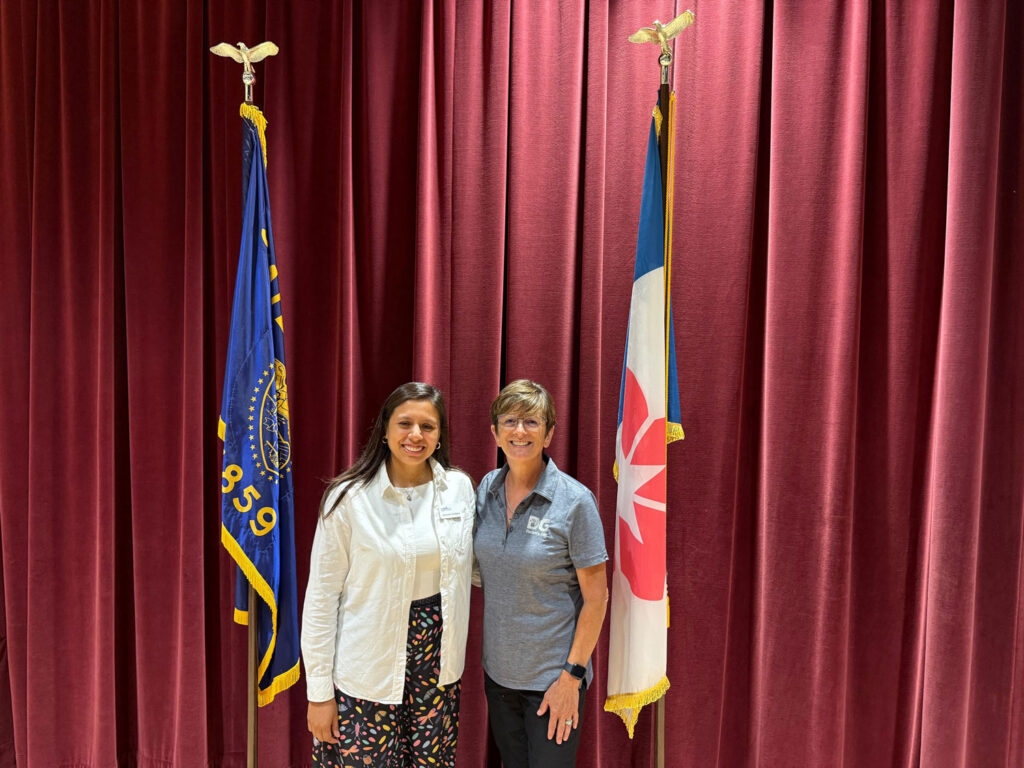
When Alessandra Rodríguez Mercado (MUP ’26) began meeting with residents of Northeast Salem, Oregon, this summer, she heard some expressions of skepticism. She aimed to understand their community’s most important needs as a first step toward creating a roadmap for city government action. Yet some residents of the neighborhood doubted that their concerns about public health and safety would be addressed. “In many meetings at the beginning, they said, ‘Oh, you are trying to reinvent the wheel,’” she recalls.
Ten weeks later, Rodríguez helped Salem generate 339 survey responses from a single part of town, build a new coalition of 30 community leaders, and develop a plan to sustain public engagement while the city addresses its most pressing problems through next year. Rodríguez, a 2026 master in urban planning graduate of the Harvard Graduate School of Design (GSD), spent the summer of 2026 in the City Manager’s Office as a Bloomberg Harvard summer fellow. Her assignment was to help bring the city’s cross-sector collaboration effort, called Northeast United, to an area where many residents feel the city does not listen to them.
A second test of a new method
Rodríguez was among 26 fellows—eight of them GSD students—who took part in the Bloomberg Harvard City Leadership Initiative summer fellowship program and collaborated with city governments around the world. Salem had participated in the initiative previously, and its city leaders learned a methodology called cross-sector collaboration. Residents come together with businesses, service providers, and government officials—representatives of the private, nonprofit, and public sectors—to study a difficult problem before anyone proposes a fix. The city first applied the method to addressing public safety downtown.
The method itself was new to Rodríguez, yet it also built on what she learned in the master in urban planning program at the GSD. “The Bloomberg Initiative complements the mission and curriculum of the Department of Urban Planning and Design,” says Rachel Weber, chair of the department and Emma Bloomberg Professor of Urban Planning. The fellowship program “allows students to apply what they learn in the classroom to real-life situations in dynamic places.”
Both the GSD and the Bloomberg Initiative emphasize community engagement: showing up, listening, and going where people already gather. This commitment to outreach was crucial to the project in Northeast Salem. The area is large and diverse, with many Hispanic residents as well as Pacific Islander communities. “The community has also been claiming that the city doesn’t listen to them,” Rodríguez says.
Going where people are
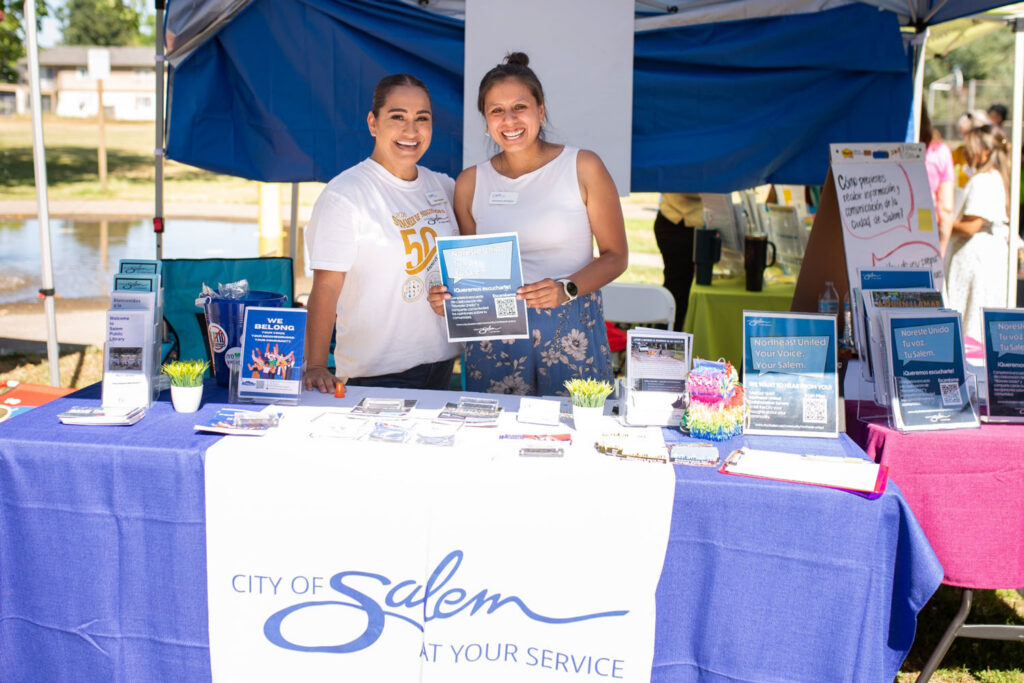
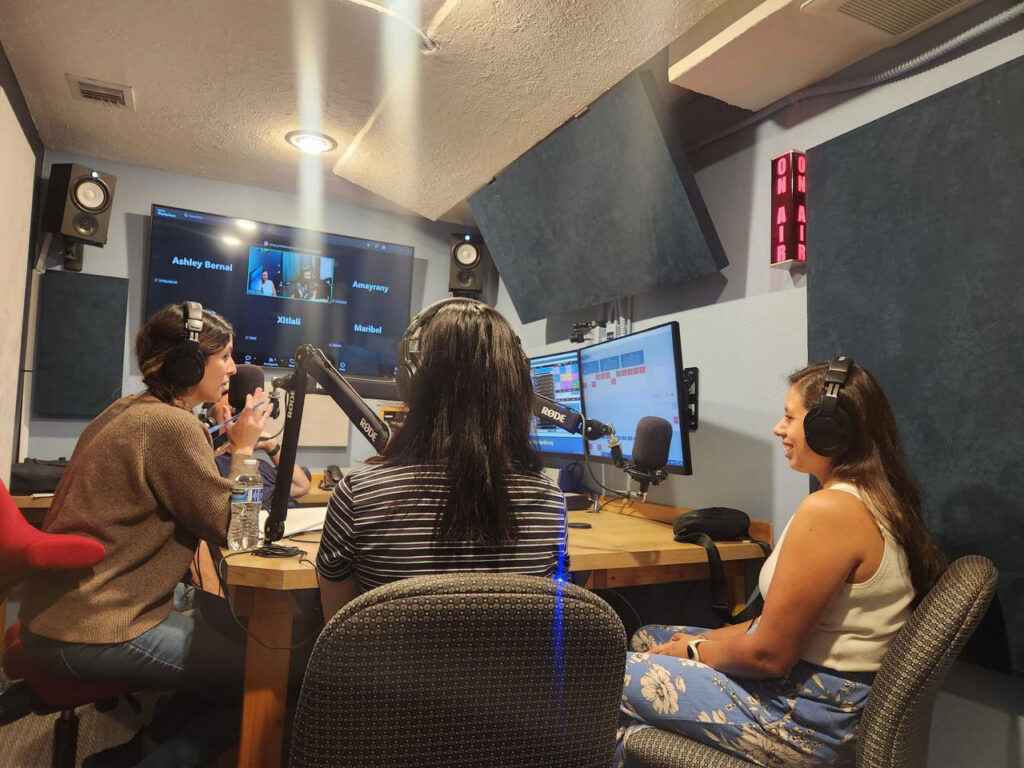
Working with Ashley Dunn, the city’s community engagement manager, Rodríguez identified 60 key local stakeholders and designed two surveys, one for those leaders and one for the wider community, in English, Spanish, Swahili, and Russian. Then they took the surveys into the area: five community events, six park information booths, seven neighborhood association meetings, door-to-door canvassing in about ten neighborhoods, and three interviews on Spanish-language media, including Radio Poder.
Rodríguez learned some practical lessons from her work. Older Spanish-speaking residents responded more readily when staff helped them complete the survey on a city phone than when asked to click on a link. When knocking on doors, it was better to engage in conversation than to simply distribute flyers. Rodríguez also found that the city’s newsletters weren’t reaching Spanish speakers, who get most of their news through social media and WhatsApp, so her report recommends the city adopt WhatsApp as a direct channel.
The effort produced 339 responses, 74 percent of them from people living in Northeast Salem. “I didn’t know what to expect in terms of results, but I was surprised that we collected 339 responses,” she says. The city, she adds, was surprised too.
What residents said
The survey process homed in on a few key takeaways. About two-thirds of respondents raised concerns about public health among unhoused and vulnerable people in their community, and a slightly smaller but still substantial percentage described public safety as a pressing problem. Rodríguez describes those issues, along with housing, as “like a triangle”: when residents talked about one, they talked about the others. At least 41 respondents tied all three together in a single answer.
One crucial insight from the survey was that the city and organizations just aren’t visible to many residents of the neighborhood. When respondents were asked who was working on these problems, the most common answer was that respondents didn’t know, or that no one was. Among Northeast Salem residents, 42.6 percent said so, roughly double the rate in South or West Salem. To address this communication gap, Rodríguez recommended supplying residents with an information kit listing important contacts.
Thirty people in a room
On July 29, Rodríguez and Dunn led a two-hour kickoff for the “group of 30” at Chemeketa Community College in Northeast Salem. Around the tables were participants in the cross-sector collaboration effort: leaders from churches, cultural organizations, youth and mental health groups, schools, the police department, and city government, along with business owners and neighborhood association leaders.
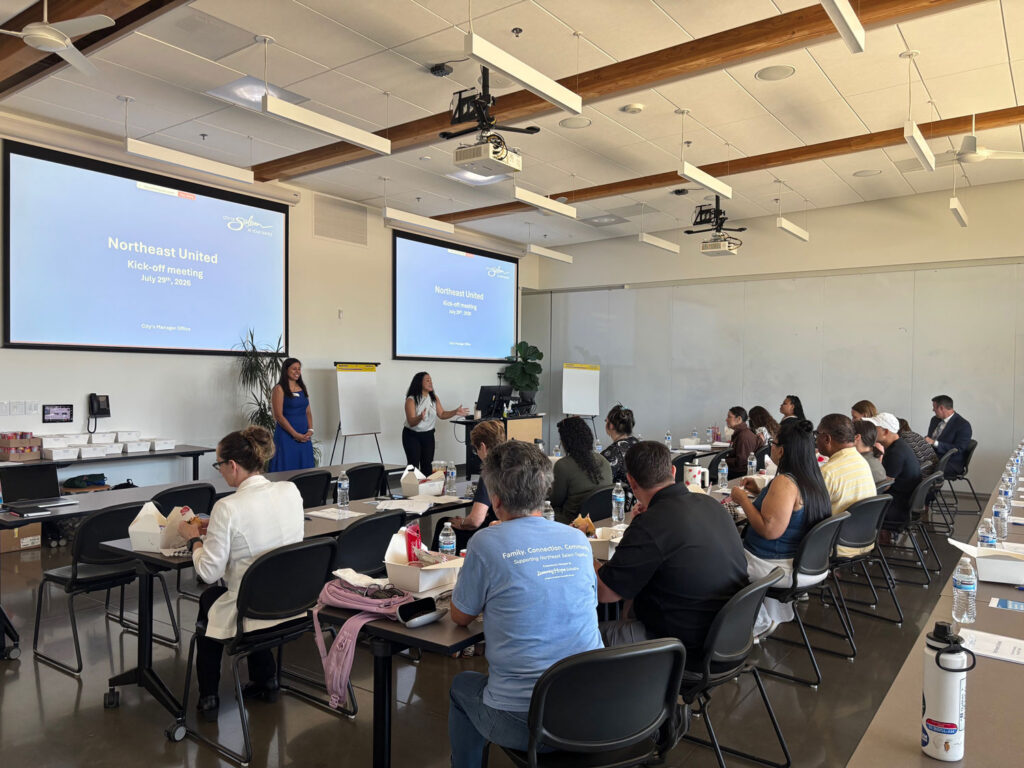
Rather than rushing toward a solution, Rodríguez suggested that the group take the time to think through what the core needs are. “What this methodology really encourages is to stay on the problem,” she explains. “Instead of just thinking, okay, the problem is public safety, the solution should be this, it’s: let’s stay here on understanding the problem, the root cause.” Under the framework, the first problem a group takes on should be meaningful, actionable, acceptable, and provisional—representing a place to start rather than a fixed path.
The group surfaced three candidate priorities: chronic homelessness, youth-focused prevention, and resource navigation and healthcare access. A smaller “group of 7” now leads the work.
The summer was about learning for Rodríguez as well. She had previously worked in local government in Peru, where strong mayors are common. Salem’s council-manager structure, in which authority is more decentralized, took some getting used to. Winning over residents took time. Once people understood how the process differed from earlier initiatives, she says, “they were more approachable.”
Asked what was most rewarding, she doesn’t hesitate: “connecting with the community and listening to their needs.” She also valued seeing city staff commit to working on the collaboration. “It’s not easy to do a cross-sector collaboration,” she says, “because you need other people, other parties.”
A beginning, not a conclusion
The work in Northeast Salem is far from finished, and Rodríguez is staying involved. “It’s a long-term project,” she says. “It cannot be solved just in ten weeks.” Her report closes the same way: “What’s been accomplished so far is, deliberately, a beginning and not a closed conclusion.”
She plans to keep working in government and applying her GSD education to civic engagement. “Through these decisions from the local government, you can have an impact, positive or negative,” she says. “I want to do positive impact in improving people’s quality of life,” by helping make cities more accessible, safe, and livable.