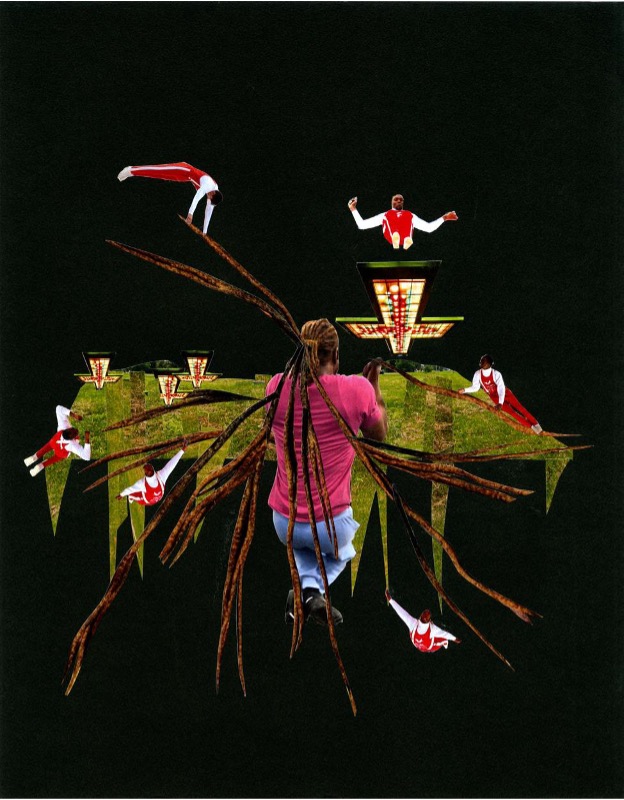
The work of Toni L. Griffin, professor in practice of urban planning, has been recognized in two recent awards. Griffin was awarded a Spring 2027 Virginia Howard Fellowship at the Bogliasco Center, in Italy, to focus on an interconnected collection of essays and photo collages, The Just City We Cannot See. The book “traces two decades of urban design and planning work across several American cities including Chicago, Detroit, Washington, DC, Newark and Pittsburgh—not as memoir, but as an emerging narrative theory of justice-centered city building.” The Bogliasco Center supports artists and scholars from around the world. Griffin was selected from the most competitive applicant pool the center has seen in 30 years, with an acceptance rate of 5 percent.
In addition, the International Downtown Association’s (IDA) Pinnacle Award for “I-375 Peer Review” and related community engagement efforts was given to the Downtown Detroit Partnership, a client of Griffin’s firm, urbanAC.
urbanAC, the lead urban design and planning consultant for the DDP, led a justice-centered peer review to offer a counterproject that more sufficiently addressed urban mobility, walkability, urban design, economic and cultural reparations. The intent of the peer review was to disrupt the anti-urban highway replacement design, improve community ownership and stewardship, and make excess land available for future equitable development that would return value to adjacent neighborhoods and those who suffered the most from cultural and economic loss. urbanAC’s Reconnect, Repair, Restore framework outlined new design and investment strategies for producing more culturally relevant outcomes that return wealth and permanence.
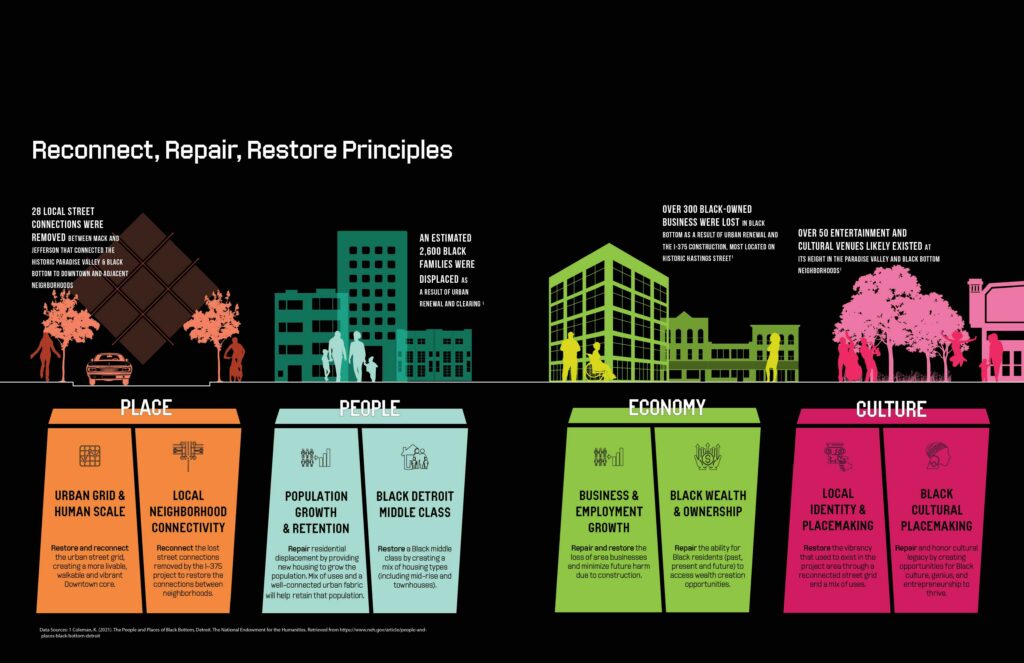
During and since urbanAC’s work, the Michigan Department of Transportation has made significant design changes, including reducing boulevard lanes and interchange design to better accommodate pedestrians and non-motorized modes, bifurcating the interchange reconstruction to revisit a smaller design, and added additional reclaimed land for future reparative development.