FLUSH: Waste and Intimacy in Berlin’s Civic Realm
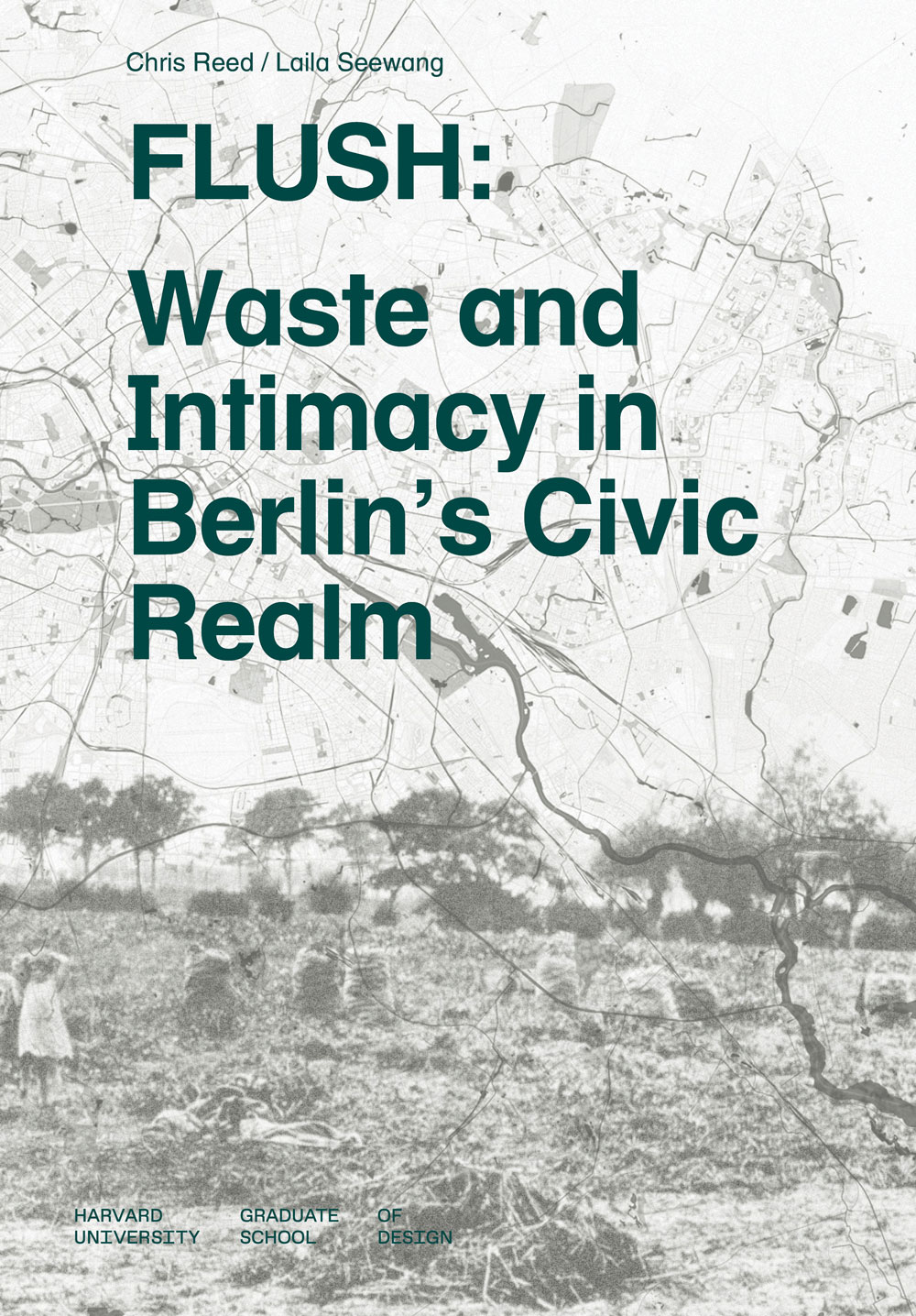
FLUSH: Waste and Intimacy in Berlin’s Civic Realm is a Studio Report from the Fall 2024 semester based on option studio “FLUSH: Waste and Intimacy in Berlin’s Civic Realm” taught by Chris Reed and Laila Seewang.
In the 1870s, the Municipal Council of Berlin initiated the largest experiment in urban circularity with its public water supply and sewer system. Water was located far beyond view of Berliners, was filtered as it was extracted through Berlin’s sandy soil, held in reservoirs that mediated between hydrogeological time and social time in the industrializing city, used by new apparatuses such as WCs and showers, then pumped out to Berlin’s periphery as sewage. Using the Emperor’s rights to Eminent Domain in cases of public good, the Municipality purchased enormous feudal estates in the countryside on which to build its sewage farms, tripling the size of Berlin and making the City the largest agricultural producer in Brandenburg. Sewage percolated back through the sandy soil and returned, theoretically clean, to groundwater. The design and construction of these systems shaped not only views about hygiene, and introduced public toilets and showers in urban space, but left a legacy that defines the city of Berlin to this day.
The FLUSH studio explores this contemporary legacy that this studio will explore. The aim is to make these systems visible in urban space by exploring first the overall metabolic cycle that exists in today’s Berlin, and then by asking students to propose interventions that build upon the relationship between city and water in one of three sites: urban sites of commuter activity that require private spaces for bodily hygiene; sites of bathing in the river which still continues to receive raw sewage at times of heavy rain through the infamous overflow sewers; the semi-toxic sewage farm sites which, today, form a green ‘ring’ of landscape restoration, low-grade agriculture, and exhibition spaces around the city. The aim of the proposals in any of these sites is to make the relationship between the ‘ends’ of the system—the natural resources tapped in the countryside—legible in the center of the system at the scale of the body.
Read full report on issuu.