Remembering Gerald M. McCue (1928–2026)
McCue joined the faculty of the Graduate School of Design in 1976 and served as dean from 1980 to 1992.
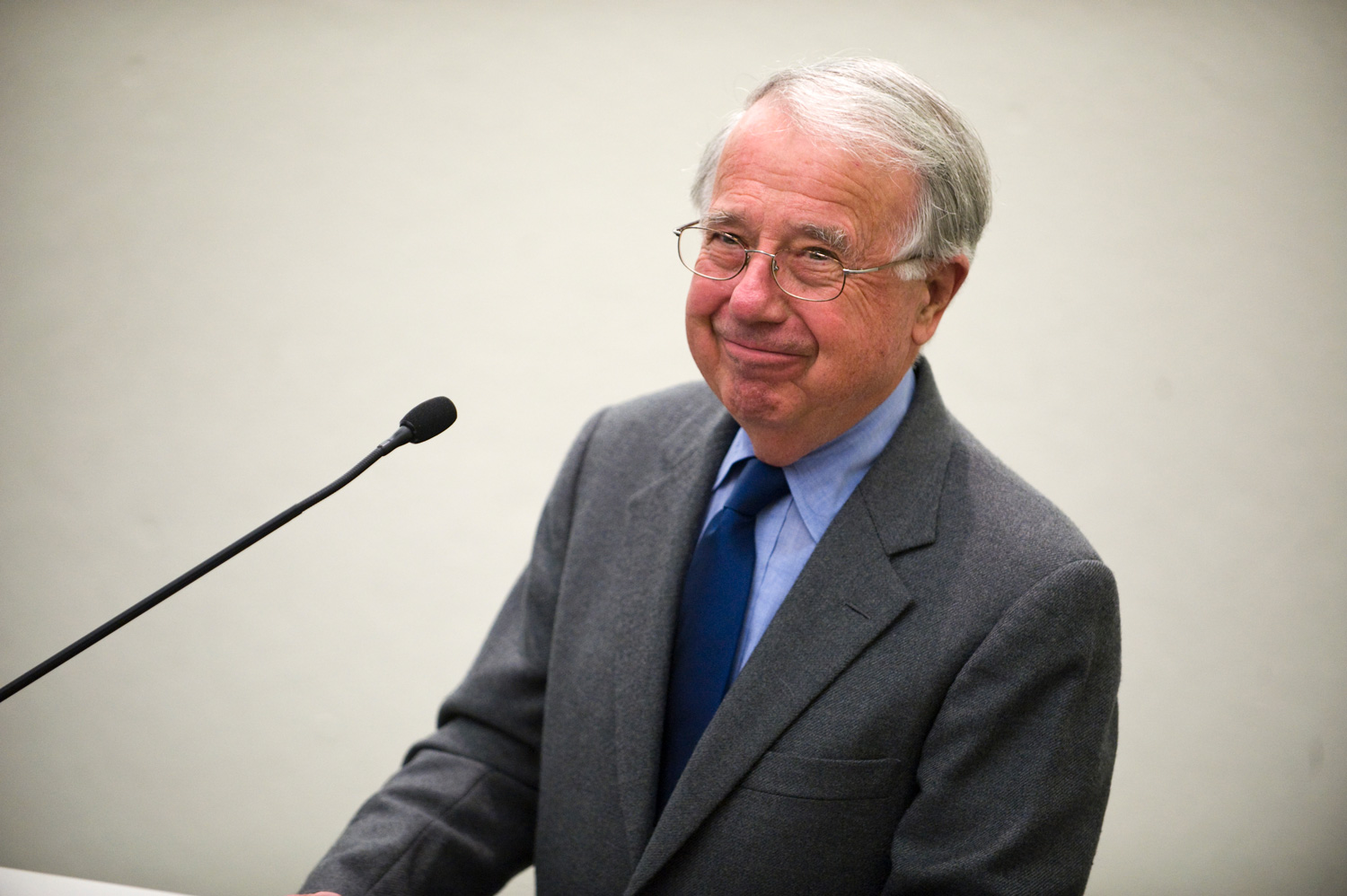
Gerald M. McCue led the Harvard Graduate School of Design (GSD) through a period of far-reaching intellectual and institutional transformation. As dean from 1980 to 1992, he redefined both its internal organization and its place within international architectural, landscape architectural, and urban design discourse. In close collaboration with Harvard President Derek Bok, he established the three-department structure that largely endures today.
McCue’s deeper impact lay in cultivating an intellectual climate that transformed the school from a primarily professional training ground into a central arena of critical thinking and debate worthy of a place in the academy. When he arrived in 1976, he was appointed chair of the Department of Architecture and began actively questioning long-standing, fundamental assumptions about the field in terms of both its relationship to the university and to the profession. Upon becoming dean, McCue appointed Henry N. Cobb to lead architecture and initiate a decisive shift in pedagogy. Persuading Cobb to divide his time between his thriving New York practice and the GSD was no small feat. Educated at the GSD under Walter Gropius and practicing at the forefront of corporate modernism, Cobb was unusual among his peers for his intellectual depth. He was also closely attuned to the critical debates that had coalesced around the Institute for Architecture and Urban Studies (IAUS) in the late 1960s and 1970s. He was thus uniquely positioned to bridge two very different architectural cultures: the rigorously intellectual, avant-garde discourse of the IAUS and the corporate-modernist milieu that the GSD had long prepared its students to serve. Recognizing that the IAUS was in decline by the early 1980s, McCue’s recruitment of Cobb ensured that something of that critical culture would continue and that it would do so at precisely the right moment for Harvard. In this respect, the move was both deft and surreptitious.
The debates of the 1980s were not merely stylistic disagreements between modernists and postmodernists but fundamental disputes over the nature of architectural knowledge itself. McCue and Cobb sought out and brought to the GSD—whether as lecturers, symposium participants, or occasionally as faculty—several of the leading thinkers of the period, including Colin Rowe, one of the most influential theorists of the twentieth century, whose formal and typological readings of the city were grounded in analytic comparisons between classical and modern architectural precedents. They likewise engaged European figures such as Aldo Rossi, Ignazio Gardella, and Rafael Moneo, who advanced alternative conceptions rooted in urban morphology, collective memory, and the theorized autonomy of architectural form. Moneo, who had become renowned through the IAUS, would later succeed Cobb as chair of the Department of Architecture, further consolidating these transatlantic intellectual ties.
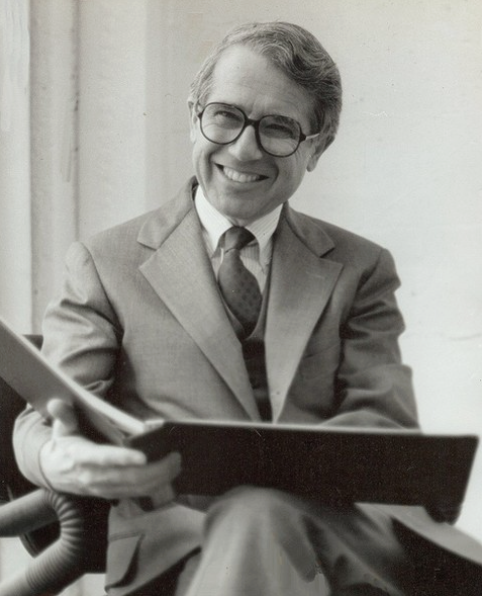
Within the Department of Architecture, Jorge Silvetti, Michael Dennis, Fred Koetter, and Susie Kim led the development of new pedagogical approaches to design, inventively combining modern and premodern sources. Against this, Peter Eisenman and Jeffrey Kipnis advanced sharply opposing perspectives shaped by structuralism, semiotics, and deconstruction, often in dialogue with Harvard historians James Ackerman and Eduard Sekler, as well as visiting scholars including Francesco Dal Co and Giorgio Ciucci—polemics that at times became so fiery they even made McCue himself uncomfortable, while Cobb grinned subtly with pleasure. Meanwhile, Landscape Architecture, chaired by Laurie Olin, moved away from the formulaic, problem-solving methods of the 1970s toward more conceptual, historically grounded, and urban-focused strategies.
By empowering department chairs as intellectual leaders rather than merely administrative figures, he decentralized authority while elevating the scholarly ambitions of each program. Among the many significant transformations to the curriculum was the introduction of the design thesis. Under McCue’s deanship, intellectual commitments were not harmonized but deliberately placed in tension. Studios and reviews became arenas in which architecture was examined alongside philosophy, linguistics, urban theory, and cultural criticism. In cultivating this environment, McCue ensured that critical inquiry became inseparable from design pedagogy.
No less important was his establishment of advanced academic programs. The creation of the Master in Design Studies (MDes) and the Doctor of Design (DDes)—developed with guidance from Peter Rowe, whom McCue appointed chair of UPD and who had previously established a similar program at Rice University—positioned research as a central mission of the school. These initiatives institutionalized sustained inquiry into history, theory, technology, and urbanism. McCue also strengthened the school’s financial base and public profile, succeeding in fundraising efforts that dramatically expanded the endowment and enabled the creation of major prizes and endowed professorships.
In retrospect, McCue’s deanship did not simply coincide with institutional change—it produced it. He laid the groundwork for the GSD’s trajectory into the 21st century: a school defined not only by professional excellence but by its capacity to host global debates, generate advanced research, and engage the three fields of study—architecture, landscape architecture, and urban design—as cultural, political, and environmental disciplines. The pluralism, theoretical sophistication, and international reach that characterize the GSD today are the continuing legacy of the profound renewal he set in motion.
Preston Scott Cohen is the Gerald M. McCue Professor of Architecture at the GSD.