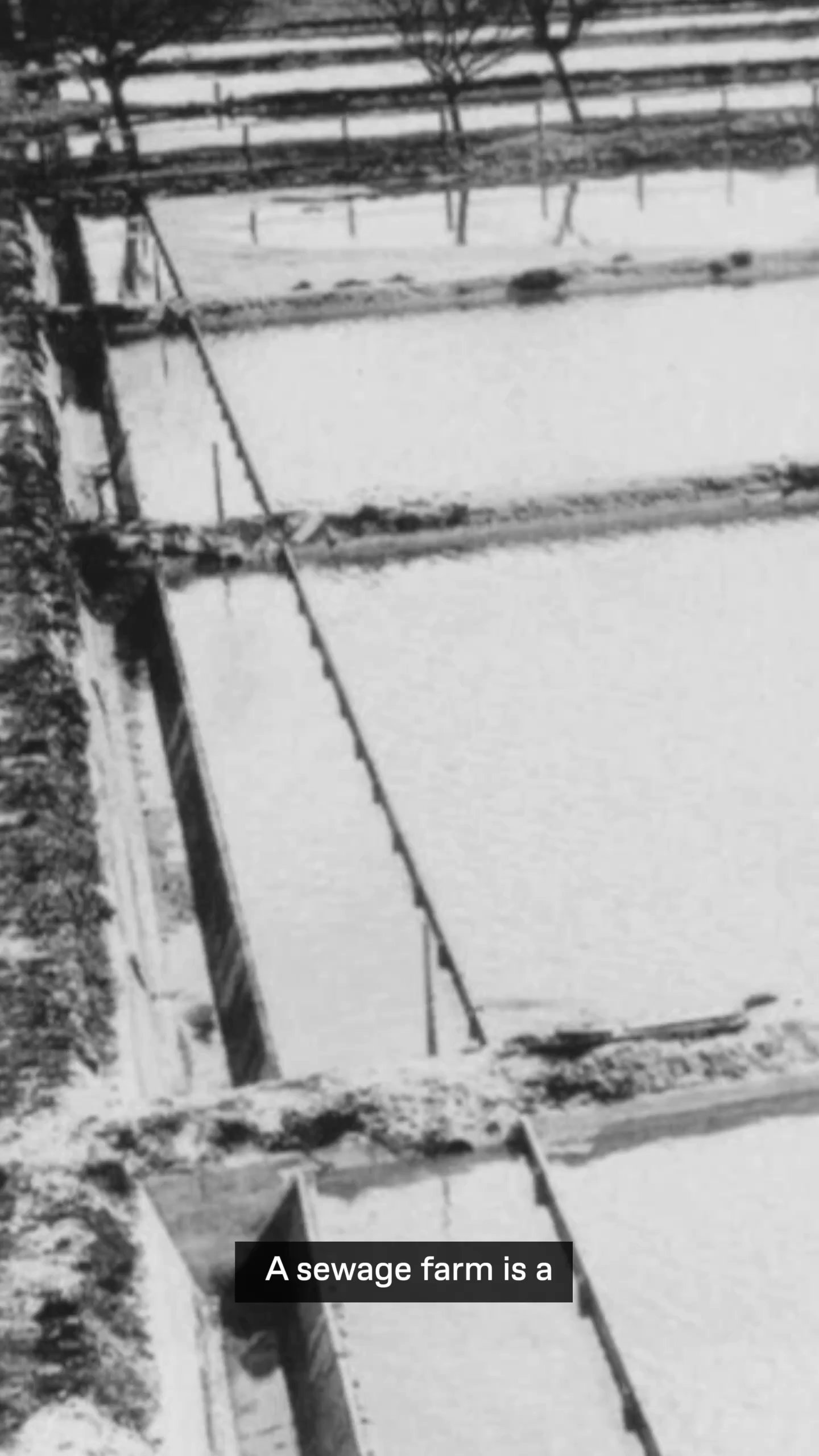
Berlin’s vast 19th-century sewage farms—once engineered to process the city’s waste across thousands of acres of agricultural land—remain one of the largest experiments in urban circularity ever constructed.
This spring, the Harvard Graduate School of Design studio “post FLUSH: Water, Waste and Intimacy in Berlin’s Civic Realm,” taught by Chris Reed and Laila Seewang, invited students to reconsider these overlooked landscapes not as obsolete infrastructure, but as ecological, social, and civic assets for the future.
Moving between Berlin’s expansive sewage fields and the everyday spaces where water and waste are managed—public toilets, baths, transit hubs, and housing—the studio explored how infrastructure quietly shapes urban life. Students proposed new futures for these landscapes, imagining cleaner water systems, renewable energy networks, public gathering spaces, and healthier urban environments. Ultimately, the work asks: What might cities become if the systems that sustain them were designed not to disappear from view, but to more openly support collective and ecological life?
This research was made possible by the Koji Yanai Innovative Infrastructure Initiative Fund.