Marina Otero Verzier on the Struggle for Sustainable Data Centers
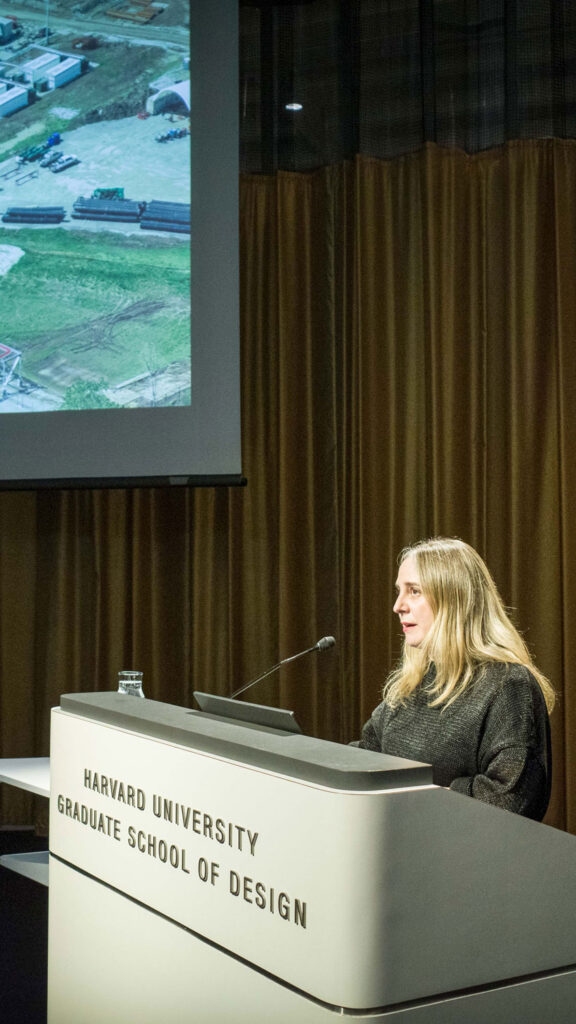
In a public lecture at the Harvard Graduated School of Design (GSD) titled “Feral Clouds,” Marina Otero Verzier, lecturer in architecture at the GSD, examined the “architectures and politics of data processing and storage.” To cool servers running 24/7, data centers require vast amounts of energy and produce harmful emissions. “The cloud is not weightless,” Otero Verzier argued. “It is a vast thermo-political infrastructure reshaping the planet’s climate.” As the AI race drives investment in “hyperscale” data centers, the social and environmental impacts of computing power have come into focus and sparked resistance movements around the world.
In 2022, Otero Verzier received the Wheelwright Prize, which funded two years of research on the future of data storage. She travelled the world studying different models for data storage. In her talk, she contended with the limits of creating “greener” data centers to sustain ever-increasing demand. Instead, she challenged us to more fundamentally rethink our relationship with the data, questioning the need to preserve everything indefinitely and suggesting it may be necessary to let some of it go—a process she calls data mourning.
How Landscape Architects Work with Nature’s Furriest Engineers
Co-Designing with Beavers
At the GSD, faculty and students are rethinking how to address climate change by designing interventions that work with natural processes.
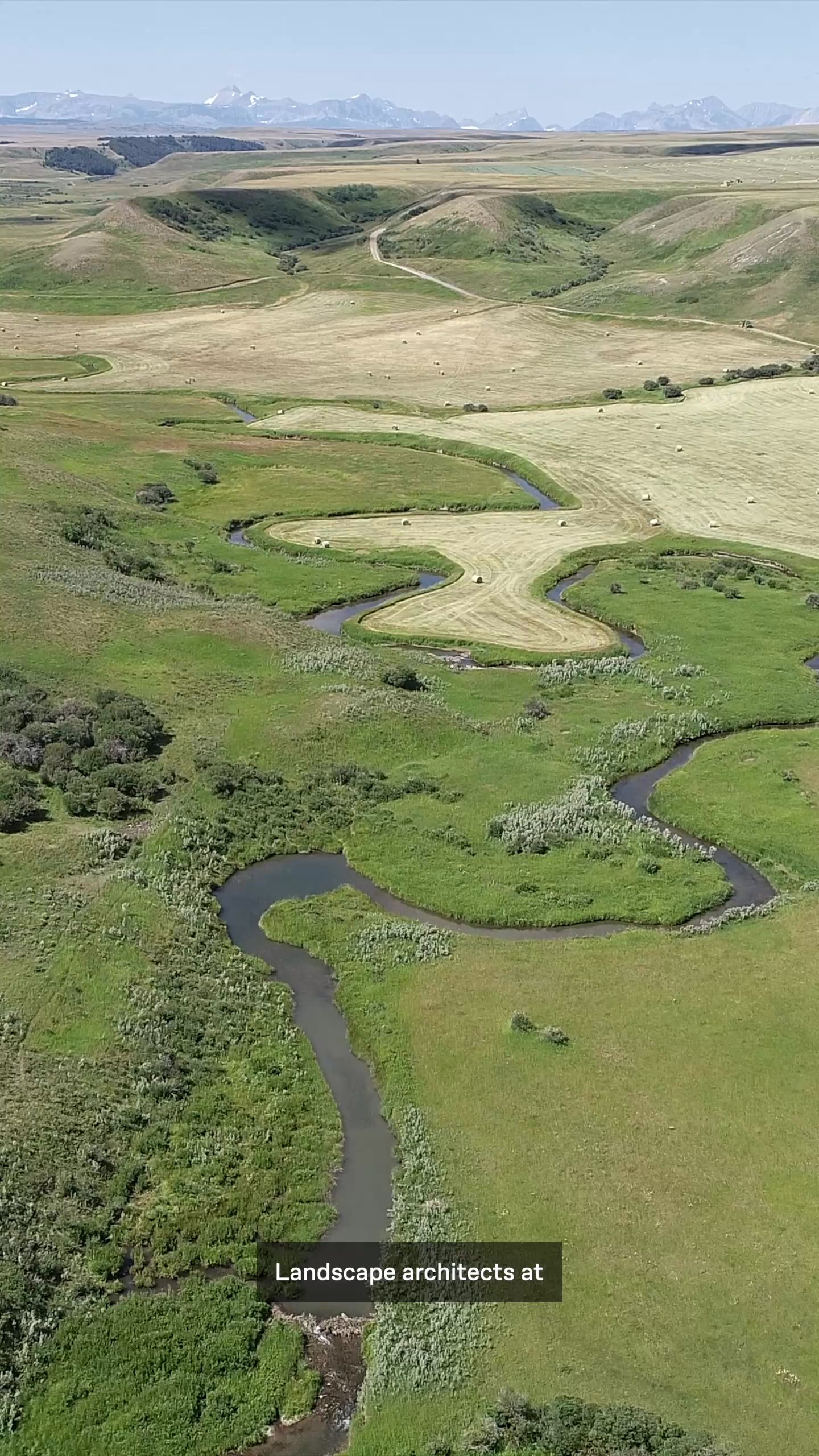
To improve wetland health and biodiversity, Karen Lee Bar-Sinai, assistant professor of landscape architecture, and Jordan Kennedy, a former research fellow, have enlisted an unexpected partner: the beaver. With strategically placed cuts in the landscape, Bar-Sinai and Kennedy encourage beavers to engage in their innate excavating behaviors, creating dams, canals, and ponds that enhance water quality, reshape hydrology, and support a range of wildlife, from birds to bears.
This research lays the groundwork for future interventions—including, potentially, the design and fabrication of a robotic device that mimics beaver behavior and extends the impact of these strategies beyond what living beavers alone can achieve. Together, these investigations represent a bold approach to landscape architecture—one in which humans learn from and collaborate with other species to help heal the planet.
This research was conducted in partnership with the Beaver Institute and made possible by the Center for Green Buildings and Cities Research Grant, GSD Faculty Research Grant, LUMA Foundation Research Grant, and the GSD Brown-McCann Award.
How GSD Students Used AI to Power Sustainable Fashion
At the GSD, faculty, students, and alumni are harnessing AI to design systems that address many of the world’s pressing problems.
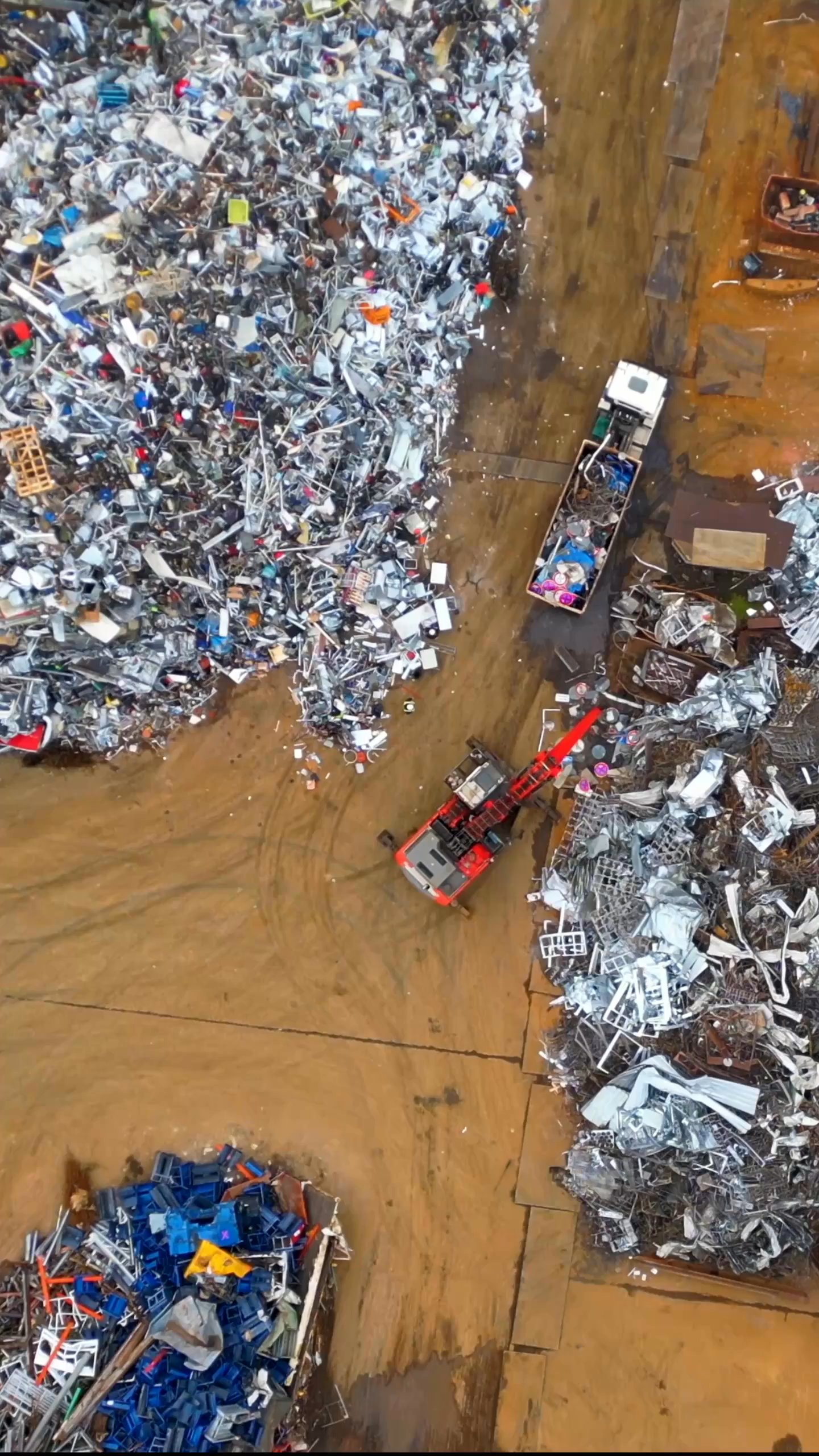
Global textile waste is projected to reach 150 million tons annually by 2030. Driven by the growth of the fast fashion industry, clothing makes up the bulk of these discarded items, which end up in landfills or incinerators.
As students in the Master in Design Engineering program, offered jointly by the GSD and the John A. Paulson School of Engineering and Applied Sciences (SEAS), alumni Yiqi Yan and Wenbo Zhang (both MDE ’24) used generative AI to reimagine fashion as more sustainable and democratic. Working with Karen Korellis Reuther, GSD design critic in architecture, they developed UpStyle, an image-assisted app that lets users create new garments from preowned clothes—reducing waste and extending the life of one’s wardrobe.