Chatpong Chuenrudeemol on “Bangkok Bastards”
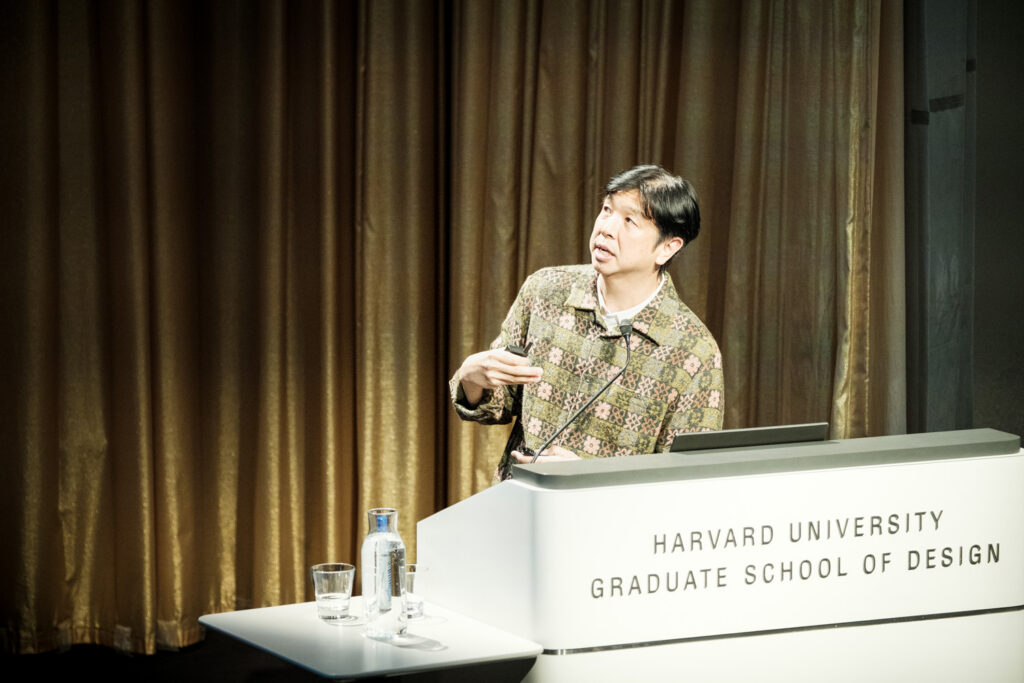
When architect Chatpong Chuenrudeemol spoke at the Harvard Graduate School of Design in spring 2026, he detailed his longstanding fascination with “Bangkok Bastards.” These improvised architectural forms, including improvised canal crossings made of long-tail boats to ad hoc structures of corrugated metal, define his home city’s urban landscape. Such “homegrown concoctions, created by everyday people to solve everyday problems in everyday life,” also inspire Chuenrudeemol’s practice.
Chuenrudeemol discussed projects by his firm Chat Architects in Thailand including Angsila Oyster Pavilion, Na-Eh Bamboo Market for the Indigenous Karen Pwo Community, Indigo Loom House, and Samsen STREET Hotel.
Chuenrudeemol taught a spring 2026 option studio at the GSD, “Shophouse Metropolis,” focused on re-imagining one of the most ubiquitous building types in Bangkok. Introducing Chat’s lecture, Department of Architecture Chair Grace La noted his “ingenuity in creating a living tradition of bottom-up architecture, shaped by necessity and culture.” These overlooked conditions reveal an alternative architectural intelligence rooted in necessity and adaptation. What might it mean to see these informal practices as central to how cities are made? For Chuenrudeemol, “this beautiful underbelly of Bangkok and Thailand” offers a new way to think about—and design—our physical environment.
Building a Sustainable Future with Greenland’s “Magic Mud”

Designing for Glacial Flour
In Greenland, climate change isn’t a headline—it’s visible, in real time.
As ice recedes, meltwater carries a fine, mineral-rich sediment known as glacial flour, a powder formed over millennia as glaciers grind bedrock, that collects along the shoreline.
Long dismissed as mere debris, this “magic mud” is now gaining attention for what it could make possible: boosting crop yields as a natural fertilizer, serving as an alternative building material, and even helping remove carbon from the atmosphere.
This spring at the Harvard Graduate School of Design (GSD), glacial flour beame a prompt for the semester-long studio “Arctic Futures: Designing Circular Systems,” led by Dan Stubbergaard, professor in practice of urban design.
Students look to Nuuk—where much of Greenland’s population and economic activity are concentrated—and ask: how might the city harness an emerging glacial flour industry to build a more resilient future?
Teaching Assistant: Kaitlin Tse (MArch I ’26)
Students: Isabel Adler (MUP ’26), Lucas Holter (MUP ’26), Luna Kim (MAUD ’26), Angel Li (MLA I AP ’26), Chutong Liu (MLA I AP, ’26), Lawrence Liu (MLA I AP ’26), Erin Park (MAUD ’26), Gwanghyeon Park (MAUD ’27), Jeewoo Park (MArch II AP ’27), Sylvia Shi (MLA II ’26), Joe Tu (MAUD ’26), Eric Wang (MArch I ’27), Jinghan Wu (MLA II ’26), Kongxi Zhu (MLA II ’26)
Photos: Lucas Holter, Luna Kim, and Chutong Liu
Barozzi Veiga on Finding a Architecture of Place
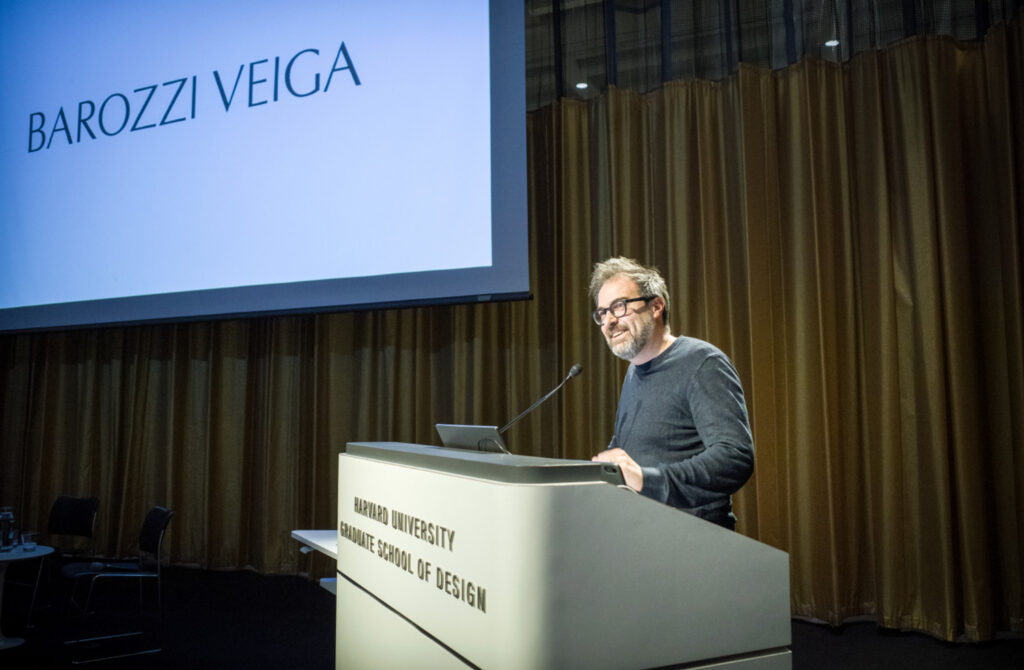
In the recent public program titled “Permanence and Transformation,” Fabrizio Barozzi and Alberto Veiga, founders of Barcelona-based practice Barozzi Veiga, presented their recent work and discussed how contemporary architecture can “grow from what already exists.”
Grace La, professor and chair of the Department of Architecture, introduced Barozzi and Veiga, who are both currently teaching at the GSD as John C. Portman Design Critics in Architecture. “In projects across Europe and beyond, their buildings respond precisely to specific places while retaining a robust and coherent sense of formal autonomy and identity,” said La.
Barozzi spoke from the podium about projects including Abby Kortrijk in Belgium and Villa AG in Dubai, before joining Veiga and La for a discussion. This video recap highlights Barozzi Veiga’s design for Oolite Arts in Miami, a project that aims to cultivate a community of artists.