J-Term
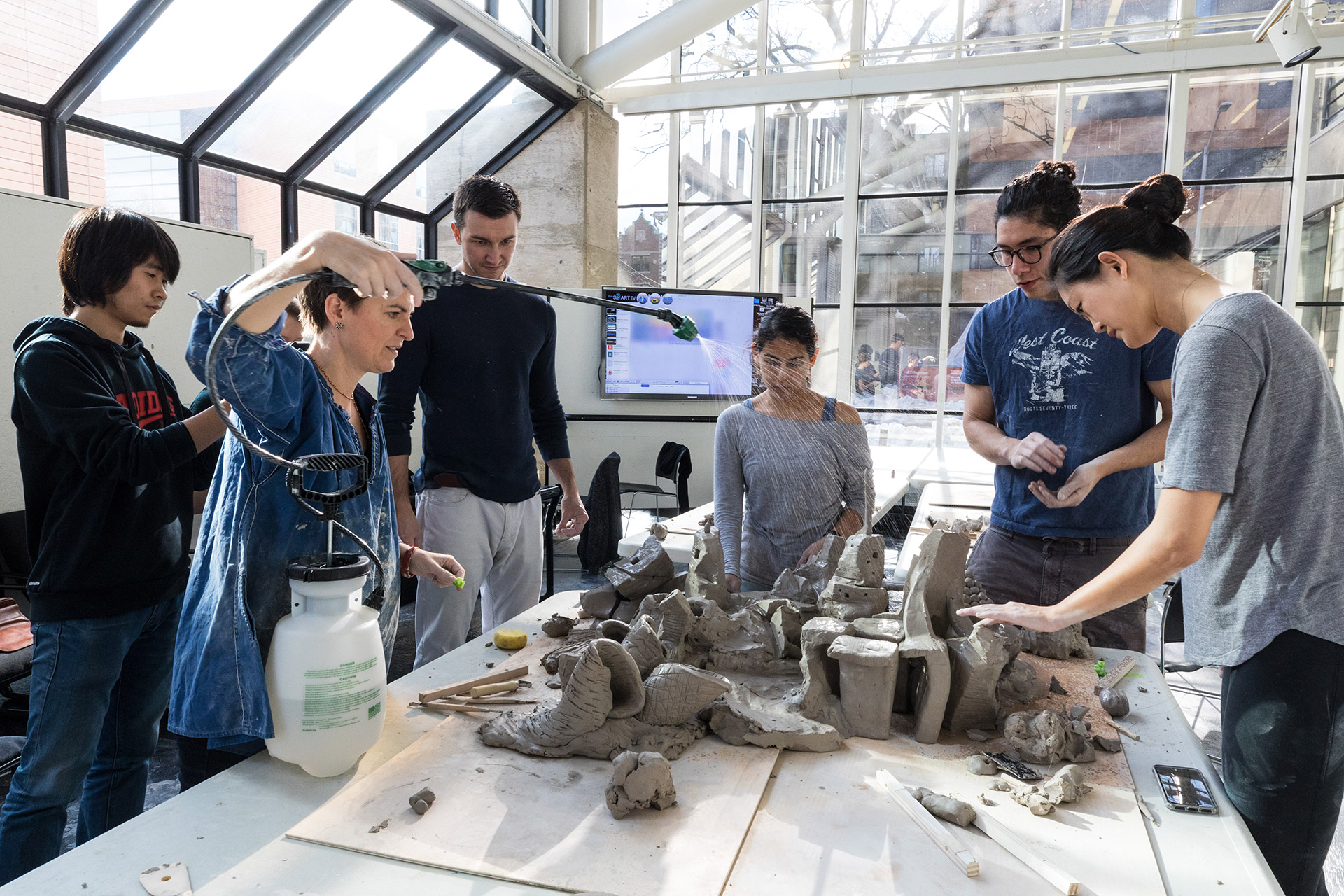
Previous J Term Sessions
J-Term offers GSD students, staff, and faculty the chance to develop skills and explore new interests through non-credit, voluntary workshops. Led by and for the GSD community, these sessions are designed for fun and discovery. Below is an example of sessions from 2026.
Instructor(s): Geri Roa Kim & Chloe Tsui
Format: Hybrid
Location: Gund 520
Max Enrollment: 8
| Date | Wed, Jan 7 | Fri, Jan 9 | Wed, Jan 14 | Fri, Jan 16 |
| Time | 1 – 4pm | 1 – 4pm | 1 – 4pm | 1 – 4pm |
What happens when what remains is barely tangible? This course explores how smoke, a metaphor and material condition, persists after disappearance. Through readings, discussions, and making, students will investigate trace as a form of knowledge—where memory is not preserved in artifacts but in the air, on the surface, and within the act of observation itself. Engaging with thinkers like Walter Benjamin, Rachel Whiteread, and Jacques Derrida, we will examine how artists, architects, and writers have addressed ideas of disappearance, residue, and aura. Students will create a project that embodies the ephemeral—a physical or sensory translation of smoke, scent, shadow, or afterimage—and share their reflections in a final in-person gathering. Enrollment Link
Instructor(s): Irina Gorstein
Format: In Person
Location: Gund L01
Max Enrollment (6): At capacity. Contact [email protected] to be added to the waitlist.
Description: The Weissman Preservation Center is offering a two-day bookmaking seminar. Held in the Conservation Laboratory at Frances Loeb Library, the workshop will cover four non-adhesive binding techniques inspired by historical book structures. Skills gained can be used to create unique portfolios and notebooks. Registration Link.
| Date: | Jan 14, 15 |
| Time: | 9am – 5pm |
Prerequisites: N/A
Cost/Materials: N/A
Instructor(s): Hunter Tura
Format: In Person
Location: Gund 517
Max Enrollment: 20
Description: In today’s global landscape, designers need to clearly communicate what sets them and their work apart. Clients, employers and industry leaders expect design professionals to be mission-driven and guided by core values. This intensive workshop helps students from all design disciplines develop a personal and professional brand through strategy and storytelling. Participants will define their mission, craft a positioning statement, articulate core beliefs, and create a compelling narrative. Through lectures, guided exercises, and collaborative sessions, students will build a cohesive brand platform and action plan. By the end of the course, participants will have a refined statement of purpose, clear positioning, and defined goals to support their careers or practices. *Co-sponsored by the Student Alumni Exchange Committee- a cross collaboration between the GSD Alumni Council, GSD students, GSD Development and Alumni Relations, and GSD Career Services. Enrollment Link.
| Date: | Tues, Jan 6 | Wed, Jan 7 |
| Time: | 2:00 – 4:00pm | 2:00 – 4:00pm |
Prerequisites: N/A
Cost/Materials: N/A
Instructors: Yinqiu Zhu and Christine Yang
Format: In person
Location: Gund 110
Max Enrollment (12): At capacity. Contact [email protected] to be added to the waitlist.
In design, drawing is a way of thinking and exploring ideas—not just a technical skill. This workshop treats drawing as both a critical and imaginative process, linking form, composition, and perception to thought. Through lectures, hands-on exercises, and discussion, students will try analytical and expressive drawing, discovering how drawing and observation inform one another. Open to all levels, the course helps each participant develop a personal visual language that connects seeing, thinking, and making. Registration Link
| Date: | Jan 15 |
| Time: | 9:00am – 11:45am |
Prerequisites: none
Cost/Materials: students are welcome to bring their own drawing supplies.
Instructors: Yinqiu Zhu & Christine Yang
Location: Gund 121
Max Enrollment: 12
This seminar investigates the evolution of perspective as both a geometrical discipline and a cultural apparatus of vision and power. Beginning with the optical foundations of the Renaissance and culminating in the paradoxes of modern digital space, the course traces how geometry shaped not only artistic representation but also architectural thinking, subject formation, and spatial control. Through readings from Piero della Francesca to Michel Foucault, and drawing exercises from diagonal constructions to mirror reflections, students will reconstruct the genealogy of perspective – from its birth as a mathematical order to its critique as an ideological device. Registration Link
| Date: | Jan 16 |
| Time: | 9:00am – 11:45am |
Prerequisites: none
Cost/Materials: students are welcome to bring their own drawing supplies.
Instructor(s): Mingxuan Wei & Yuki Gray
Format: In Person
Location: Gund 109
Max Enrollment: 10
The design process, which requires intuition and precision from the designer, is similar to the act of cooking (“I’m cooking!” as one might say when working on a project). In developing a recipe, tools and ingredients are engaged with precision and technique. To stabilize the result, the dish is translated into numbers and language, with the measurement, timing, and sequence. This course introduces students to technical methods for simulating architectural and landscape materials in model making through systematic sample production. Students will develop a “recipe” for a chosen found material (such as brick, stone, or asphalt), contributing to a collective recipe book that serves as a shared resource. By the end of the project, they will have a clearer understanding of how materiality can inform the design process. Registration Link
| Date: | Tues, Jan 13 | Wed, Jan 14 | Thurs, Jan 15 | Fri, Jan 16 |
| Time: | 2-4pm | 2-4pm | 2-4pm | 2-4pm |
Prerequisites: N/A
Cost/Materials: N/A
Instructor(s): Renzo Marsino Moreno, Bruno Marsino Moreno
Format: Virtual
Max Enrollment: 8
How can generative AI power narrative projects inspired by architecture and urban design? Through a single lecture and discussion session, we’ll examine worldbuilding as a design process by showcasing “Babel,” an MIT-GSD ongoing science-fiction project. The class reflects how image generators, LLMs, and AI-driven 3D tools can shape creative workflows and how designers’ roles are shifting from production toward curation and editing. We’ll offer both conceptual insights and a practical framework for integrating these technologies into design. Registration Link.
| Date: | Friday, Jan 16 |
| Time: | 1 – 3pm EST |
Prerequisites: N/A
Cost/Materials: N/A
Instructors: Matthew Kiefer and Adele Houghton
Format: In person
Location: Gund 520
Max Enrollment: 12
This course explores “architectural epidemiology”—leveraging public health data to inform design—through the redevelopment of Boston’s 5.5-acre, Paul Rudolph–designed Lindemann and Hurley Buildings. Students will work in teams to propose strategies that generate environmental and social value at the building, neighborhood, and community scales, aligning with new LEED v5 standards for climate resilience and social impact. Proposals, including LEED documentation, will be presented to a review panel and integrated into a comprehensive redevelopment vision. Registration Link
| Date: | Tues, Jan 6 | Mon, Jan 12 | Fri, Jan 16 | *Jan 12, 13, 14 |
| Time: | 9-11am | 9-11am | 9-11am | optional office hours online |
Prerequisites: none
Cost/Materials: none
Instructors: Gulai Shen
Format: hybrid
Location: Gund 522
Max Enrollment: 30
Course Description: This course introduces data‑driven methods for optimizing building operations, emphasizing emerging technologies such as machine learning and AI. Participants will learn the basics of building systems, key operational metrics, mechanical components, and occupancy factors, then explore how data and AI can improve performance, prevent failures, reduce carbon emissions, increase energy efficiency, and support occupant comfort. Registration Link.
| Date: | Jan 5, 7, 12, 14 |
| Time: | 10-11am |
Prerequisites: none
Cost/Materials: none
Instructors: Sara Morrison, GSD Academic Coach
Location: Virtual
Max Enrollment: 100
This series led by GSD’s Academic Coach offers practical tools to help students succeed during their time at the GSD. Each session focuses on a core skill area, including time management, organization, goal setting, workload–life balance, and essential executive functioning strategies. Through guided activities and hands‑on practice, students will build habits that support focus, efficiency, and overall well‑being throughout their academic experience. Register here.
| Date: | Jan 5, 6, 7 |
| Time: | 9 – 10:30am |
Prerequisites: N/A
Cost/Materials: N/A
Instructors: Zachary Slonsky and Aisha Cheema
Location: virtual
Max Enrollment: 40
Today, even the most mundane design tasks reticulate across vast networks of software protocols. While these decision-networks reflect and influence how we design, they themselves are often left unobserved and unconsidered. This course explores the creative possibilities of unconventional networking. In order to prioritize process over content, we will be working from a shared archive of flower images. Participants will design experimental digital transformations to the images while simultaneously diagramming their workflow. We will then meet, exchange images, and repeat this process. The final collection of images and diagrams will be compiled into a printed recipe book for all participants. Registration Link.
| Date: | Jan 5, 8, 12, 15 |
| Time: | 12pm – 1pm |
Prerequisites/Cost/Materials: none
Instructors: Jinze Li, Haotian Xu and Tengxin Sun
Location: Gund 122
Max Enrollment: 20
This course explores stone-centered craft in Chinese and Japanese gardens. Students learn stone selection, cutting, placement, and surface treatment, with hands-on samples and reference books illustrating how these techniques shape courtyard design. Register here.
| Date: | Jan 12, 13, 14 |
| Time: | 1:00 – 4:00pm |
Costs/Materials/Prerequisites: none
Instructor(s): Mariana Alegre
Format: hybrid
Location: Gund 318
Max Enrollment: 15
This workshop offers a practical introduction to grant writing, focusing on core principles and strategies rather than lengthy proposal drafting, and drawing on real examples from urban practice, research, and philanthropy. It highlights 5 lessons: apply even if imperfect, fit your audience by reading funder priorities, narrate from the heart with clarity and rigor, follow up after submitting, and use templates and organizational habits to stay efficient. Participants will leave with actionable guidance, insider tips, and a clearer path to stronger future applications. Enrollment Link
| Date: | Jan 6 |
| Time: | 11am – 1pm |
Prerequisites: N/A
Cost/Materials: N/A.
Instructors: Kelvin Hu and Justin Joel Tan
Format: hybrid
Location: Gund 521
Max Enrollment: 20
Everybody knows the Empire State Building, but few know Villa Savoye. Towers are the city’s most blatant acts of self-expression, yet their designs often amount to superficial “outfit changes” of base, shaft, and crown. This course tests what happens when non-tower buildings are forced into tower proportions. We will sample existing buildings and duplicate, stretch, squeeze, rotate, or splice them until they grow tall or slim down, observing how changed proportions alter identity. Using collage, Photoshop, AI, or any method, we will produce unexpected and absurd towers as a new mode of precedent analysis. Enrollment link.
| Date: | Jan 9, 12, 15 |
| Time: | 2:30 – 4:00pm |
Prerequisites: none
Cost/Materials: none
Instructors: Alexander Dragten
Format: in person
Location: Gund 516
Max Enrollment (30): course full, please email [email protected] to be added to the waitlist
This workshop prepares students to succeed in real estate private equity financial modeling tests used in full-time recruiting. Participants will complete a simplified version of the modeling test, learning how to build a professional-quality model under time constraints. The course will focus on best practices, common pitfalls, and strategies to improve efficiency and accuracy. By the end, students will have hands-on experience applying investment assumptions and valuation techniques that reflect the expectations of leading private equity firms.
| Date: | Jan 6, 8 |
| Time: | 2:30 – 4:00pm |
Cost/Materials/Prerequisites: N/A
Instructor(s): Yunnie Tsien
Format: in person
Location: Gund 318
Max Enrollment: 10
This workshop uses food as a lens to explore how design, ecology, and culture interact in everyday spaces. Students will practice sensory mapping, material documentation, and ecological observation. A planting activity will help build awareness of micro‑ecological conditions such as soil, moisture, and light. Using drawing, photography, diagramming, and material testing, participants will create a concise “foodscape atlas” of a chosen environment. The workshop focuses on accessible tools and practical skills that students can apply in studio work or independent research. Enrollment link.
| Date: | Jan 8 | Jan 8-12 | Jan 13 | Jan 13–16 |
| Time: | 10am – 12pm | 4 hrs asynchronous work | 10am – 12pm | 4 hrs asynchronous work |
Cost/Materials/Prerequisites: N/A
Instructors: Victoria Suarez Romera and Ignacio Lira Montes
Location: virtual
Max Enrollment: 30
This seminar explores the sensual as a political and spatial category, examining how architecture, media, and the body shape contemporary publics. Drawing on theories of intimacy, spectatorship, and performance, it asks what it means to design for constant visibility in a techno‑capitalist world, where private and public blur and intimacy becomes infrastructural. Through readings, film and spatial exercises, we study architectures of exposure—from the home to the city to digital platforms—and analyze how perception, identity, and design are shaped by regimes of looking. Students will gain tools to interpret and design spaces through this lens. Enrollment link.
| Date: | Jan 9 |
| Time: | 11am – 2pm |
Cost/Materials/Prerequisites: none
Instructor(s): Ami Mehta
Format: hybrid
Location: Gund 121
Max Enrollment (8): At capacity. Contact [email protected] to be added to the waitlist.
This course draws on speculative and critical design, along with Global South perspectives, to introduce non‑traditional methods for reorienting design toward systemic change and social justice. Through rapid, imagination‑driven practices—such as guerrilla artifacts, provotypes, rituals, scenario mapping, critical fabulation, theatre, and narrative inquiry—students will use design as a tool for dialogue and collective dreaming, moving beyond efficiency and functionality toward new possible worlds.
| Date: | Jan 14, 15, 16 |
| Time: | 1 – 3pm |
Prerequisites: N/A
Cost/Materials: N/A
Instructor(s): Michelle Li and Anson Leung
Format: in person
Location: Gund 318
Max Enrollment: 12
This course explores how botany and the supernatural intersect across science, magic, and material culture. Through hands‑on workshops in potion‑making, divination, and reanimation, participants study botanical symbolism, folklore, mythology, and ritual practices while creating artifacts such as a winter tincture, tarot‑card cyanotypes, and an exquisite‑corpse piece. Open to all skill levels, the course highlights how plant knowledge moves across cultures, seasons, and worldviews. Enrollment link.
| Date: | Jan 12, 14, 16 |
| Time: | 12 – 2pm |
Prerequisites: N/A
Cost/Materials: N/A
Instructor(s): from Jisu Yang & Gabriel Bae
Format: in person
Location: Gund 123
Max Enrollment: 12
This workshop explores urban density and vitality in Boston and Cambridge through the ideas of Kevin Lynch and Jane Jacobs. Using walking as a method, students observe the city through photography, drawing, and writing. Students will slow down, focus on physical and sensory details, and test Jacobs’ and Lynch’s theories through field notes and photos. Each student may focus on areas such as housing, public space, or institutions with optional site visits for added exploration. Enrollment link.
| Date: | Jan 12, 13, 14 * Optional Site Visit Jan 15, 16 |
| Time: | 10am – 1pm |
Prerequisites: N/A
Cost/Materials: N/A
Instructor: Zach Deocadiz
Location: virtual
Max Enrollment: 20
Learn product design for 2D tech interfaces. Students will be designated a specific user flow to design for this class and should focus their work around that, although they will have the option of picking the platform (web, mobile, VR, etc.). Skills covered include: Figma, wire framing, user flows, design decision making, design systems, and interviewing techniques. Monday will focus on UX design, where we will discuss how decisions get made, how to visualize product decisions in wireframes, and how to explain design decisions. Wednesday will focus on visual design, learning about principles of UI design and working with design systems. Friday’s class will introduce interview skills and lead to a critique of each other’s work. Homework will be expected between class sessions. Enrollment link.
| Date: | Jan 5, 7, 9 |
| Time: | 12 – 2pm |
Prerequisites: N/A
Cost/Materials: N/A
Course: Experimental Cartography: Vibe Coding for GIS
Instructor(s): Haozhuo Yang
Format: virtual
Max Enrollment (12): At capacity. Contact [email protected] to be added to the waitlist.
This course introduces computational cartography through vibe coding—a pattern‑based, accessible approach to code‑driven spatial manipulation in ArcGIS Pro. Students use geometric operations, procedural generation, and simple scripting to quickly explore, transform, and visualize urban spatial data. The course treats experimental mapping as both analysis and design while offering an approachable entry into ArcPy, ArcGIS Notebooks, and automated geoprocessing, using templates, intuitive coding patterns, and built‑in tools suitable for beginners.
| Date: | Jan. 8, 13, 15 |
| Time: | 9:30–11am |
Prerequisites: Proficiency in ArcGIS Pro
Cost/Materials: N/A
Instructor(s): Becca Schalip
Format: in person
Location: Gund 124
Max Enrollment (12): course full, please email [email protected] to be added to the waitlist.
Studio work rarely allows time for playful material exploration. This workshop offers a supportive, low‑stakes space for students to experiment with textures and techniques that expand their representational toolkit. Rather than aiming for a single final model, the focus is on building curiosity, confidence, and a deeper understanding of materials at a small scale. Students will leave with a shared physical and digital library of material tests to use in future studio projects. The workshop is highly collaborative, beginning each session with precedents and adapting to students’ individual interests.
| Date: | Jan 12, 14, 16 |
| Time: | 1 – 5pm |
Prerequisites: N/A
Cost/Materials: N/A
Loeb Winter Series
Workshops and discussions led by Loeb Fellows—leaders shaping the built and natural environment for positive social impact. This series offers the community a chance to engage with these inspiring practitioners, explore creative topics, and connect with a network committed to revitalizing communities and advancing innovative ideas.

Previous Series
Instructor(s): Natalia Rudiak, Daniela Chacón Arias and Jeremiah Ellison
Max Enrollment: 20
Designers and planners know how to shape buildings, policies, and master plans—but are less often trained to navigate the hidden dynamics of power that determine what gets built. In this workshop, Loeb Fellows and former elected officials—Natalia Rudiak (Pittsburgh, PA), Jeremiah Ellison (Minneapolis, MN), and Daniela Chacón Arias (Quito, Ecuador)—will introduce students to the realities of governance, where negotiation and trust are as important as design skills. Students will learn stakeholder mapping, coalition-building, communication, and strategies for advancing urban projects—especially in polarized or resource-limited contexts. Registration Link
Instructor(s): Oliver Wainwright
Max Enrollment: 20
Harvard is undergoing its largest expansion in 400 years. In Allston, a multi-billion dollar masterplan is taking shape, with new facilities—including a science and engineering complex, conference center, theater, and housing. What kind of place is being created? Who is it for, and what does it reveal about the university? This course explores how to write about the changing city, from individual buildings to public spaces, streets, and neighborhoods. Together, we will critically examine Harvard’s role as a developer, analyzing the project from various perspectives to better understand its impact on the urban landscape. Registration Link
Instructor(s): Andy Summers
Explore queer conviviality as a lens for understanding how collective social forms, spatial practices, and cultural programming create alternative, intersectional publics. Drawing on queer theory, activism, architecture, and cultural production, the course examines how acts of gathering, hosting, and co‑creating shape organizing, design, and public programming as spaces of care and resistance. Led by Loeb Fellow Andy Summers, the seminar centers inclusion and relationality through discussions, guest provocations, and collaborative idea‑making. Max Enrollment: 18 Registration Link
Instructor(s): Jennifer Hughes and Jenn Chang
Arts and culture help us understand our past, celebrate the present, and imagine new futures, yet they remain underused in community planning. Drawing on experience at the National Endowment for the Arts, Jen Hughes and Jenn Chang examine publicly funded creative placemaking projects that advance health, infrastructure, and climate goals. The seminar explores how planners, artists, and civic leaders can design programs that leverage cultural power to build more equitable, resilient, and healthy communities. Max Enrollment: 26. Registration Link
Instructor(s): Jacek Smolicki
This course explores how urban soundscapes are formed and experienced. Drawing on concepts from acoustic ecology—including soundmark, keynote, biophony, geophony, and anthrophony—students will examine the elements that define a place’s acoustic character. Through discussions and exercises in listening, sound mapping, and field recording across Cambridge and Boston participants will learn to analyze soundscapes using a range of conceptual and recording tools. For the final project, students will create a “sonic scene” or related creative work, contributing to a public map titled “City by Sound”. Cambridge/Boston. Full syllabus. Register here.
Other J-Term Opportunities
Explore what it means to be human—and a humane leader. In Being Human, students will engage with humanistic traditions through readings, music, art, and practice-oriented exercises. The course centers on how to incorporate a humanistic lens into leadership, challenge systems of dehumanization, and foster meaningful relationships. Students will build a vibrant learning community and rediscover the vital role of empathy, creativity, and shared inquiry.
2027 session information will be posted once available.
Join the Kennedy Outdoors Club for a ski trip to Sunday River! Enjoy a day full of skiing, fresh air, and fun—whether you’re an experienced skier or simply want to soak in the mountain vibes, you won’t want to miss this adventure. Information for 2027 will be posted once available.
The HKS/GSD Outdoors Club held an incredible opportunity for Winter Break 2026—a breathtaking 8-day backpacking adventure in Cerro Castillo National Park, Patagonia, Chile. This unforgettable trip went through glacial lakes, dramatic peaks, and stunning scenery. The trek included 8 days of guided backpacking in Patagonia, as well as whitewater rafting, a vineyard tour, and a night out in Santiago. To get started, fill out the Interest Form or for updates, join the group chat.
The GSD Alumni Council will be hosting their 2027 J-Term Regional Gatherings. These events offer opportunities to connect with alumni and students, share experiences, and discover community in your area. Previous participating cities have included:
- Boston, MA
- Chicago, IL
- Los Angeles, CA
- New York City, NY
- Pittsburgh, PA
- Sunnyvale, CA
- Toronto, Canada
- Washington, DC
Questions? Contact [email protected].