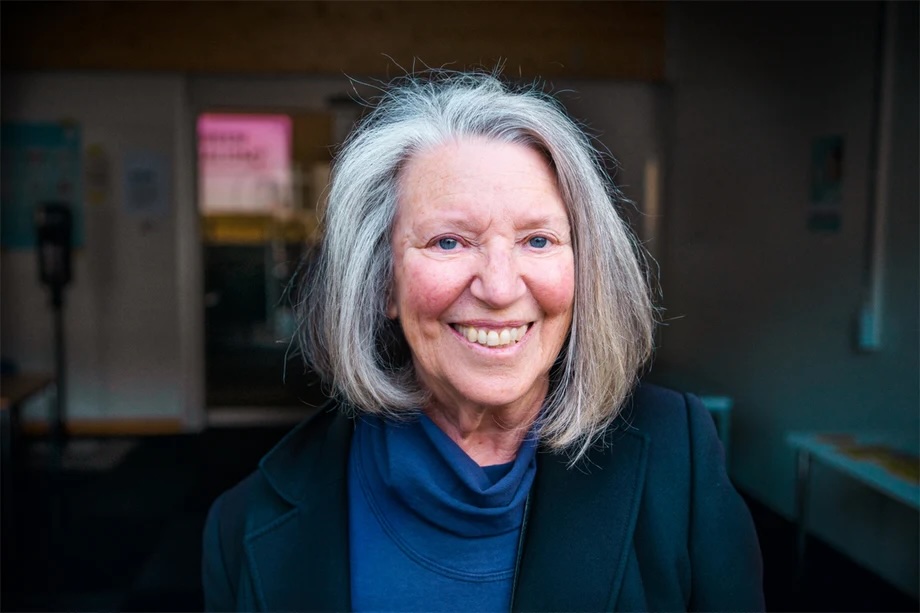
Sarah Whiting Awarded 2026 AIA/ACSA Topaz Medallion for Excellence in Architectural Education
Sarah M. Whiting, dean and Josep Lluís Sert Professor of Architecture at the Harvard Graduate School of Design (GSD), has been named the recipient of the 2026 AIA/ACSA Topaz Medallion for Excellence in Architectural Education , the highest honor in North America for an architectural educator. Presented jointly by the American Institute of Architects (AIA) and the Association of Collegiate Schools of Architecture (ACSA), the Topaz Medallion recognizes individuals whose teaching, scholarship, and leadership have shaped architectural education for at least a decade.

The AIA and ACSA citation highlights Whiting as a “transformative leader in architectural education,” noting her impact on students, institutions, and the discipline through her dual role as educator and practicing architect. As dean of the GSD and previously of the Rice School of Architecture , Whiting has helped redefine how architects are trained, emphasizing a healthier studio culture, a more inclusive and expansive architectural canon, and a stronger sense of architecture’s civic responsibility.
At the GSD, Whiting has championed interdisciplinary collaboration across architecture, landscape architecture, urban planning, and real estate, encouraging students to see design as a form of public engagement and a tool for addressing complex social and environmental challenges. Her scholarship—from the influential 2002 essay “Notes from the Doppler Effect and Other Moods of Modernism ,” co-authored with Robert Somol, to her work as founding editor of the series Point: Essays on Architecture —has reshaped contemporary architectural discourse and inspired generations of students and colleagues.
Whiting’s teaching career has included appointments at Princeton University, the University of Kentucky, and the Illinois Institute of Technology, alongside her practice with WW Architecture , the firm she co-founded with Ron Witte, GSD professor in residence of architecture. Colleagues and former students describe Whiting as a generous mentor and incisive critic whose work has “made all of us better off in architectural education, and in architecture,” as architect Michael Maltzan, FAIA (MArch ’88), observed in his support for her nomination.The GSD community joins the AIA and ACSA in celebrating this recognition of Whiting’s leadership, scholarship, and ongoing commitment to advancing architectural education and the built environment it shapes.

Since 1976, the Topaz Medallion for Excellence in Architectural Education has been awarded annually. Previous GSD faculty recipients include Toshiko Mori, Robert P. Hubbard Professor in the Practice of Architecture, in 2019; and Jorge Silvetti, Nelson Robinson Jr. Professor of Architecture, Emeritus, in 2018.
Ismaili Center, Houston, Inaugurated as a Beacon of Openness and Exchange
The highly anticipated Ismaili Center, Houston was inaugurated in early November during a ceremony attended by leaders from around the world, including the project’s patron, His Highness Prince Rahim Aga Khan V. The first Ismaili civic and cultural complex in the United States, the Center joins seven others built and funded by the Aga Khan across the globe—spaces dedicated to fostering dialogue, understanding, and shared human values.
Encompassing a 150,000-square-foot, five-story structure set within expansive terraced gardens, the Ismaili Center, Houston, was designed by Farshid Moussavi, founder of London-based Farshid Moussavi Architecture and professor in practice of architecture at the Harvard Graduate School of Design (GSD). Selected through an international competition in 2019, the design team also included Hanif Kara, professor in practice of architectural technology and co-founder of engineering firm AKT II , who served as structural design consultant; Paul Westlake of DLR Group, architect of record; and Thomas Woltz of Nelson Byrd Woltz Landscape Architects.

Moussavi revealed the Center’s design in 2022 with construction beginning soon after. She later featured the project’s construction coordination drawings in Architecture as an Instruction-Based Art, an exhibition she curated at the GSD’s Druker Design Gallery in fall 2024.
Set to open to the public in mid-December, the Ismaili Center, Houston, is positioned to become a major cultural and educational hub for the city, offering spaces for meetings, conferences, lectures, performances, and public events. “More than a place of worship or art, the Center stands as a symbol of openness,” a recent press release noted, “a space where communities converge to learn from one another, celebrate shared values, and imagine a more connected world.”
GSD Faculty Appointed to Emma Bloomberg Chairs
Two faculty members at the Harvard Graduate School of Design (GSD) have been appointed to new endowed chairs established with a gift from Bloomberg Philanthropies.
Nestor M. Davidson, Emma Bloomberg Professor of Real Estate, and Rachel Weber, Emma Bloomberg Professor of Urban Planning, are among five Harvard University faculty members to receive the new appointments. Weber is also the director of the Master in Urban Planning program and chair of the Department of Urban Planning and Design. Named for Emma Bloomberg, (MBA ’07; MPA ’07), the chairs support leading scholars who advance the study and practice of city governance. The recipients will hold Emma Bloomberg chairs for the next five years.
“The extraordinary support of Bloomberg Philanthropies acknowledges Nestor, Rachel, and Maurice’s exceptional work,” said Sarah M. Whiting, Dean and Josep Lluís Sert Professor of Architecture. “As researchers and practitioners, they are shaping the future of our cities and communities. This gift helps ensure not only that our students learn from leaders who are redefining how we build, finance, and sustain the urban environments of tomorrow, but also that the Bloomberg Center continues to thrive as a Harvard-wide nexus for exploration of urgent issues related to our urban, designed environments.
In receiving these appointments, Davidson and Weber join Maurice Cox, who was appointed Emma Bloomberg Professor in Residence of Urban Planning and Design in fall 2024. Five other Harvard faculty are current Emma Bloomberg chairs.
“Harvard is a proud partner in the work of building more resilient communities and serving the public good,” said Harvard President Alan M. Garber. “The Emma Bloomberg chairs, supporting talent from across the University, exemplify our commitment to cities and the people who inhabit them. I am grateful, as always, to Bloomberg Philanthropies for supporting academic excellence at Harvard and eager, as ever, to see what my faculty colleagues accomplish in the years to come.”
About Nestor Davidson
In his scholarship and teaching, Davidson explores questions around transactional dynamics in real estate and regulatory frameworks for real estate markets. His work includes influential scholarship on the way local, state, and federal legal and institutional structures interact in shaping policy affecting cities. His career in public service includes leadership roles at the US Department of Housing and Urban Development, the New York State Housing Finance Agency, and the New York City Rent Guidelines Board.
“I am deeply honored to receive this appointment,” said Davidson, “and it will be an inspiration to recommit to research on improving urban governance and our built environment at a moment when cities are at the center of our most important policy challenges.”

Professor Davidson, who is also an affiliated faculty member at Harvard Law School, has published widely in leading law journals. His current book project, Cities in Law: Urbanism as a Legal Phenomenon, is forthcoming from Cambridge University Press.
About Rachel Weber

Weber is an urban planner who explores how finance shapes the urban landscape by changing the ways cities budget, fund infrastructure, and manage their assets. Her professional experience includes helping non-profits to negotiate and implement redevelopment plans and appointments to governmental task forces such as then-mayor Rahm Emanuel’s Tax Increment Financing Reform Task Force. Weber is the author of more than 50 peer-reviewed journal articles, as well as numerous book chapters and published reports. Her latest book, From Boom to Bubble: How Finance Built the New Chicago (University of Chicago Press, 2015), won the Best Book Award from the Urban Affairs Association. She is the co-editor of the Oxford Handbook of Urban Planning (2012), a compilation of 40 essays by leading urban scholars.
“It’s an honor to be recognized with the Emma Bloomberg professorship,” said Weber. “As a scholar of urban development, I have long been interested in how cities evolve and in the forces that drive change in their built environments. This recognition affirms the importance of that work and inspires me to continue exploring how policy, finance, and design can shape more equitable urban futures.”
Weber’s current research spotlights the predictive knowledge practices that allow real estate investors to create and extract value from the built environment, often to the detriment of communities. Titled “The Urban Oracular: Speculating on the Future City,” this book project is based on years of interviews with “quants” and forecasters at global asset managers and investment funds. Focusing on the period from the Global Financial Crisis through the Covid-19 pandemic, Weber is examining the role of ever more complex models, algorithms, and data sources that enable investors to de-risk and convert the future into capital.
GSD Students Win Second Place at APA Student Planning & Design Competition
Students from the 5280 Planning Collective at the Harvard University Graduate School of Design (GSD) won second place at the 2025 American Planning Association Student Planning & Design Competition . The team consisted of Oliver Oglesby (MLA/MUP ’26), Matthew Thibodeau (MUP ’26), Cameron Hull (MUP ’26), Christopher Cahill (MUP ’25), and Lindsay Crockett (MUP ’25).

The competition focuses on a significant development site or an area in the National Planning Conference host city, asking students to consider all the steps planners and designers need to take when developing plans and recommendations. Finalists present their proposals to a jury at a public session of the National Planning Conference.
The 2025 competition site was the Colfax & Federal Clover Leaf, a 46-acre parcel in Denver, CO, this year’s host city. The team’s project, “The Colfax Core,” reimagined the competition site as a new urban center that connects surrounding communities with walkable amenities, diverse housing, cultural spaces, and family necessities.
Inaugural Experimental Postdoctoral Fellows at the GSD Research Health, Wellness, and Sustainable Materials
The Harvard Graduate School of Design (GSD) is pleased to announce the inaugural Experimental Postdoctoral Fellowship for sustainable architecture: Experimental Fellowship—Harvard GSD . Supporting practice-oriented researchers working with the GSD’s Laboratory for Design Technologies (LDT), the year-long fellowship has a thematic focus on health, wellness, and sustainable material systems for buildings, landscapes, and cities.

The two participating fellows, Juan Pablo Ugarte (MArch ’14, DDes ’23) and Noam Attias, are conducting their research in the context of the LDT. Ugarte has begun work with Martin Bechthold, Kumagai Professor of Architectural Technology, and Allen Sayegh, design critic and senior interaction technologies fellow, on a project assessing how workspaces that include wood and other natural materials can alleviate stress and promote wellness. Attias’s research with Karen Lee-Bar Sinai, assistant professor of landscape architecture, focuses on studying new approaches to bio-fabrication with fungi. She recently shared some of her research in a talk at the Arnold Arboretum, “Mycelium Modified Wood: Design for Sustainable Habitats .”
“At the GSD, we are particularly interested in knowledge that is consequential for practice,” says Bechthold of the fellowship’s goal. “We acknowledge that faculty and students must engage in research, discourse, and learning that advance innovations on topics including, but not limited to, material solutions.”

The LDT is a collaborative platform for the GSD’s design technology research units. Areas of specialization include responsive technologies and sensing, sustainable material systems, robotics and additive manufacturing, computational design and modeling, urban data analytics, and transport systems design. In addition to Bar-Sinai, Bechthold, and Sayegh, GSD faculty affiliated with the LDT include Elizabeth Christoforetti, Carole Voulgaris, and Andrew Witt.
The fellowship is supported by the Experimental Foundation , a Berlin-based nonprofit organization founded in 2022 by the architect Prof. Regine Leibinger (MArch ’91). Leibinger co-founded the architectural practice Barkow Leibinger with Frank Barkow. From 2022 to 2025, she was a design critic in architecture at the GSD and currently serves as a member of the Dean’s Council. Experimental provides financial and organizational support to early career practice-oriented researchers who are committed to fostering sustainability while going beyond technical solutions to focus on the spatial quality and aesthetics of the built environment.
Harvard Faculty and Alumni Among Winners of 40 Under 40 North America
Faculty and alumni of Harvard’s Graduate School of Design (GSD) are among the winners of the inaugural 40 Under 40 North America competition. Curated by the World Architecture Festival (WAF) and The Architect’s Newspaper , 40 Under 40 North America recognizes outstanding young architects from the United States, Canada, and Mexico. In addition to receiving a complimentary ticket to WAF, to be held November 12 through 14 in Miami Beach, Florida, the winners’ work will be highlighted in a special exhibition at the festival—on view to the gathering’s nearly 2000 global attendees—and featured in The Architect’s Newspaper.
The winning GSD alumni are Daniel Feldman (MAUD ’15) of ZITA in Long Island City, New York; Armida Fernandez (MDes ’20) of Estudio Ala in Guadalajara, Mexico; Taehyung Park (MLA ’14) of Field Operations in New York City, New York; Juan Sala (MArch ’18) of Sala Hars in Anzures, Mexico; and GSD design critic in architecture Khoa Vu (MArch ’19) of Studio KHOA VU in Cambridge, Massachusetts.
Ts Veil, by studio Khoa vu

Vu’s project, which will be on display at WAF alongside the works of the other 40 Under 40 architects, addresses issues of adaptive reuse and sustainable design—themes that are central to Vu’s teaching and practice. With Ts Veil, Vu transforms an existing villa in Ho Chi Min City into a social dining space, reinterpreting the relationship between old and new through material economy and climatic responsiveness. In addition to being exhibited at WAF, Ts Veil has been shortlisted for the Dezeen Awards 2025 .
Announcing the 2025 GSD Alumni Council Award Winners

The Council is pleased to announce Brenda Levin (MArch ’76), Peter Coombe (MArch ’88), and Wannaporn Phornprapha (MLA ’95) as the winners of the fifth annual Harvard GSD Alumni Award. These extraordinary alumni exemplify the mission, vision, and values of the GSD by working diligently toward a resilient, just, and beautiful world.
“The jury’s goal was to highlight the work of our colleagues that inspires us and would provide hope and energy to other alumni and current students,” shared Zeerak Ahmed (MDE ’18) and Chelina Odbert (MUP ’07), co-chairs of the 2025 Alumni Award jury. “In a time of challenges, we can look to each other to find ways to make the world a better place. And this year we are honored to celebrate the work of Brenda, Peter, and Wannaporn—guiding stars in a moment where their light is desperately needed.”
A distinguished architect and advocate for historic preservation, Brenda Levin, FAIA, has stood at the helm of numerous restorations and adaptive reuse projects for iconic Los Angeles landmarks, from the Griffith Observatory to the Bradbury Building. Her firm, Levin & Associates Architects, ensures these cultural landmarks remain accessible and relevant to the diverse communities they serve. In 2017, Brenda donated the archive of Levin & Associates to the Getty Research Institute .

Former co-chair of the Alumni Council’s Student Alumni Exchange Committee, Brenda encourages the next generation of design leaders to approach their work with technical excellence and social responsibility. Brenda receives this award for her impact on the urban, historic, and cultural landscape of Los Angeles and her generous service to the GSD community.
“To be recognized by my peers whose work I so deeply admire is humbling,” Brenda said. “It affirms how the focus of my career—advancing solutions through the built environment, shaping more livable communities, and aligning design with the broader public good—truly resonates with the GSD community. It feels like a recognition not just of my individual and firm’s work, but of the collective progress we can make when we bring diverse voices together to rethink how cities evolve, to respect the past and imagine the future.”

Peter Coombe is a founding partner of the NYC-based firm Sage and Coombe Architects. Over three decades, Peter has cultivated a diverse portfolio of projects centered on social infrastructure; he is perhaps best known for the three-phase renovation and reimagination of the Noguchi Museum in Long Island City, as well as his continued collaboration with the New York City Department of Parks and Recreation. Only the second architectural studio to successfully unionize , Sage and Coombe Architects almost exclusively serves nonprofit institutions and public agencies, a reflection of Peter’s steadfast commitment to equitable, inclusive, and sustainable design.

Peter is the former chair of the GSD Alumni Council and a current member of the Dean’s Council, where he serves as an ambassador, steward, and advocate for the School. In addition to his leadership within the GSD, Peter actively contributes to the Harvard Alumni Association and AIA New York. A dedicated mentor and gifted connector, the Council recognizes Peter for his efforts to strengthen the alumni community and uplift emerging design professionals.

When asked what advice he’d give to current GSD students, Peter said, “What makes the GSD exceptional is the diversity of disciplines and, more significantly, the people. Whether in your degree program or not, other students will become your future trusted colleagues and some of your closest friends. Please reach out beyond your sections, your degree programs, to get to know as many people as possible.”

Wannaporn Phornprapha is the founder and managing director of P Landscape, a Bangkok-based firm specializing in high-end resort, hotel, and residential projects. Wannaporn leads with creativity and integrity, steered by a belief that landscape architecture is an art that transcends the physical and functional to create meaningful connections between humans and nature. With over two decades of experience, Wannaporn has transformed the urban fabric of Bangkok City through significant projects such as One Bangkok and The King Rama IX Memorial Park.
As a member of the Dean’s Council and Bangkok Art and Culture Centre Foundation Committee, coordinator of the ongoing Bangkok Studio Series, and mentor with Connect GSD Career, Wannaporn is generous with her time and expertise. She receives this award for her inspirational leadership and resolute dedication to fostering environments that celebrate cultural and natural diversity.

“The GSD taught me not to stay within boundaries, but to explore across them,” said Wannaporn. “That philosophy continues to guide me today, in both design thinking and in how I collaborate with others. It’s a way of working, and a way of seeing, that has stayed with me ever since.”
Brenda Levin, Peter Coombe, and Wannaporn Phornprapha will be honored at the next GSD Comeback: Alumni & Friends Celebration, September 25–26, 2026.
Nominations for the 2026 GSD Alumni Award are open now. Learn more.
Harvard Graduate School of Design Students Win 24-hour Hack-a-thon with Creative Solution to Address America’s Housing Crisis
A team of Harvard Graduate School of Design students has won the Ivory Innovations 2025 Hack-A-House competition in the Construction & Design category. Hack-A-House, an annual virtual competition, gives students a chance to win $5,000 while creating novel solutions to tackle America’s housing crisis. The One Block Away team—composed of Justin Joel Tan (MRE ’26), Marko Velazquez (MRE ’26), Noah Garcia (MRE ’26), Tejas S (MRE ’26), and Pranav Subramanian (MDes ’27)—won for their project “NeighborCore ,” which consists of a new housing typology that makes housing more affordable through shared spaces, modular construction, and flexible layouts.
“Hack-A-House uniquely empowers students from colleges and universities nationwide to create real-world solutions to address today’s housing crisis in a 24-hour period,” said Ian Cahoon, director of Innovations at Ivory Innovations. “It is truly amazing to see the innovative ideas and solutions teams like One Block Away can produce in such a short time. In addition to One Block Away’s winning entry, this year’s competitors presented solutions ranging from improving lending to first time buyers to increasing access to affordable housing.”


Combining off- and onsite construction techniques, One Block Away’s “NeighborCore” proposes an alternative to traditional single-family homes, which are often too big and too expensive for today’s changing population demographics. “Together, we explored a new housing typology aimed at bridging the gap between apartment living and home ownership by leveraging innovative design, efficient construction methods, existing distribution, and financial feasibility,” said One Block Away team member Tan. “We believe our solution, ‘NeighborCore,’ delivers a vision that can be scaled, producing densification while still blending into the character of existing neighborhoods.”
The Ivory Innovations 2025 Hack-A-House recognizes winners in three areas—Finance, Policy & Regulatory Reform, Construction & Design. Participants were tasked with addressing specific challenges impacting housing affordability. After selecting a topic, contestants spent the next 24 hours strategizing with their teams, meeting with industry experts, and preparing a short live presentation for judges and other competitors. A panel of judges that included real estate industry experts, startup founders, academics, and leaders of major companies selected winning teams in the three categories.
The Hack-A-House winners will attend the upcoming 2025 Ivory Prize Summit on October 29, at the University of Utah in Salt Lake City, and present their ideas in person. After the teams present, the audience, which includes a live stream , will vote to select the grand prize winner.
Both an operating foundation and an academic center based at the University of Utah’s David Eccles School of Business, Ivory Innovations catalyzes high-impact innovations in housing affordability. They bridge research and industry to support cross-sector solutions, provide recognition and funding for groundbreaking ideas, engage a global student population, and contribute directly to the development of affordable housing.
Joe Russell and Emma Sheffer Win Architizer A+ Vision Award
Harvard Graduate School of Design (GSD) students Joe Russell (MArch ’27) and Emma Sheffer (MArch ’27) have been named as winners of the 2025 Architizer A+ Vision Award . The jury selected Russell and Sheffer’s project “Theseus ” as winner of the Vision for Reuse and Renovation category. The project will be published in Architizer’s How to Visualize Architecture book.
In addition, for the 2025 Vision Awards, “Theseus” has received the special title of “Best of Year” and will be featured in the November/December issue of Metropolis .

Russell and Sheffer developed “Theseus” as part of their Core IV studio. A 150-bed housing project across from the port of Chelsea, MA, “Theseus” adapts cargo holds from decommissioned bulk-carrier ships, which are typically retired after 25 years. The project transforms maritime steel infrastructure into resilient housing superstructures. Suspended floor plates allow the ground to remain open for communal use, creating a floodable, adaptable civic space. The units offer elasticity; residents can open walls to expand or merge households, adapting to shifting domestic needs. Located along Marginal Street, the five-building complex buffers the community from industrial noise while creating east–west public passageways. The project addresses climate adaptation, material scarcity, and long-term housing stability. By reusing locally sourced steel and integrating public programming, “Theseus” reframes housing as civic infrastructure. Scalable to other port cities, it proposes a new architectural typology rooted in industrial heritage, designed not just to shelter but to support life, work, care, and community over time.
Gund Hall Receives 2025 Modernism in America Award From DOCOMOMO US
In 2024, the Harvard Graduate School of Design (GSD) undertook an ambitious renovation to upgrade Gund Hall’s energy performance, sustainability, and accessibility while conserving the building’s original design. This week, Docomomo US —a non-profit organization dedicated to the documentation and conservation of works of the twentieth-century modern movement—announced Gund Hall as the recipient of the 2025 Modernism in America Award for excellence in the civic design category.

“This year’s Modernism in America Awards highlight the enduring power of excellence in design and the ability of historic preservation to respond to the evolving needs of society,” Docomomo explained . Designed by John Andrews (MArch ’58) as a home for the GSD, Gund Hall opened in 1972. Fifty years later, a design team led by Bruner/Cott Architects harnessed innovative technology to renew Gund Hall’s distinctive glass curtain wall. By improving the building’s energy efficiency, thermal performance, and light quality, the renovation created a more functional and comfortable environment for the school’s occupants while offering a model for the stewardship of mid-twentieth-century architecture. As the award announcement noted, “The restoration of Gund Hall’s curtain wall demonstrates how modern landmarks can improve usability and extend building life while meeting the urgent demands of climate responsibility through thoughtful, sustainable interventions.”

Other structures to receive Modernism in America Awards of Excellence this year include Boston City Hall (Kallman, McKinnell, and Knowles, 1968; advocacy award); and Harlem River Houses (by Archibald Manning Brown and funded by the Public Works Administration, 1937; residential design award) in New York City; and the Transamerica Pyramid Center (William Pereria, 1972; commercial design award) in San Francisco, California. The award ceremony will take place on November 6, 2025, in Chicago.
In addition to the 2025 Modernism in America Award of Excellence bestowed by Docomomo US, since the completion of its renovation Gund Hall has also received the 2025 Robert H. Kuehn Award from Preservation Massachusetts and a Preservation Award from the Cambridge Historical Commission .