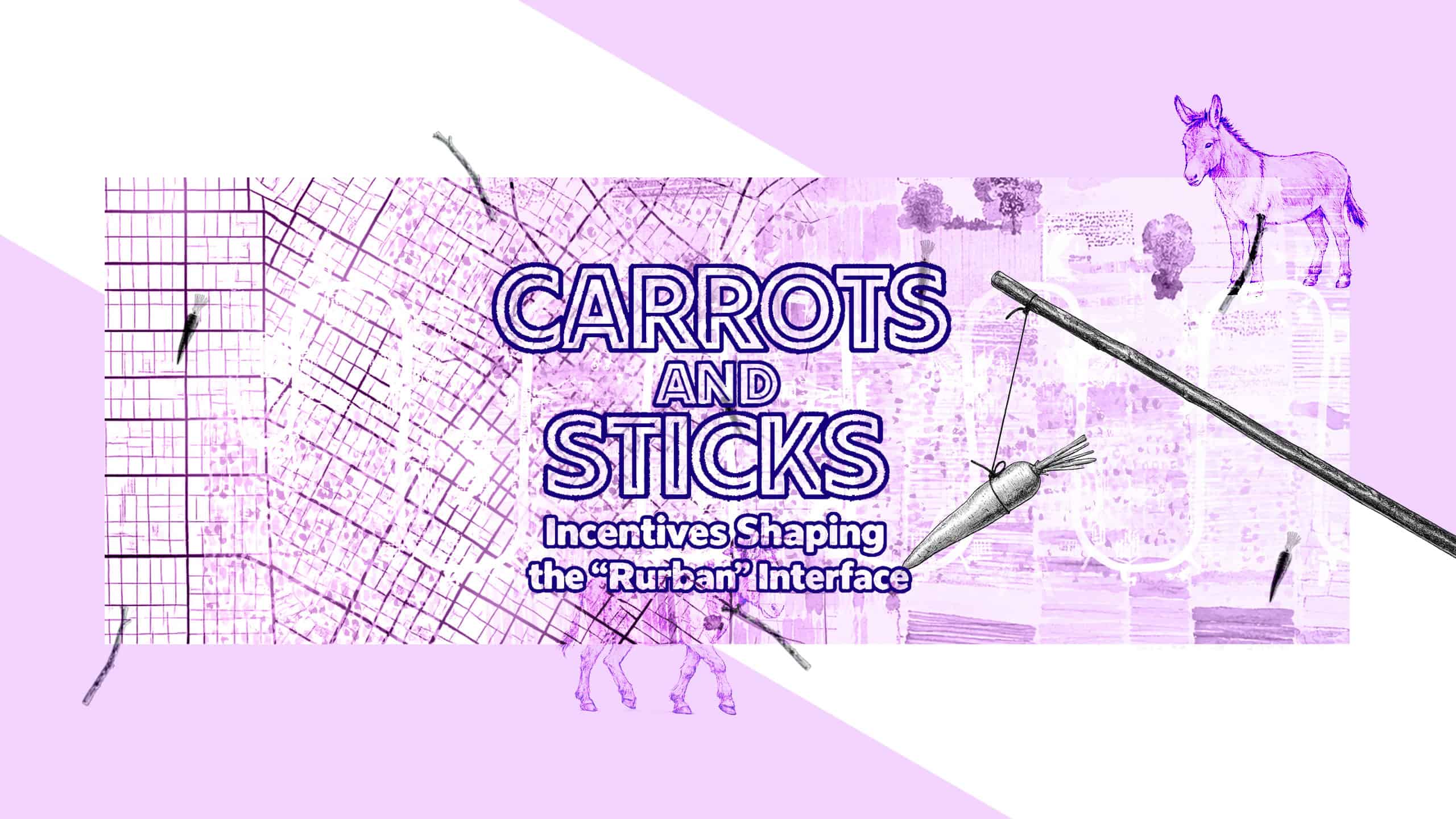
DDes Conference 2026 Carrots and Sticks: Incentives Shaping the “Rurban” Interface
About this Event
Across the Global South, the boundaries between cities and their surrounding countryside are dissolving. What emerges is increasingly contested territory, where the pressures of development and sustainability efforts push against each other, reshaping land, housing, livelihoods, and governance in the process. Yet, the incentives steering these transformations, from subsidies, regulations, and land use changes, often stabilize one condition while unsettling another.
This conference unpacks these dynamics through two lenses: “rurbanity,” the productive co-presence of urban and rural elements within shared territories of land, labor, and resources; and “carrots and sticks,” the incentive mechanisms through which states and markets shape where and how people can live.
Bringing together scholars and researchers across planning, economics, design, and development, the conference spans themes of climate adaptation and environmental governance, social formation and poverty reduction, and the role of data and digital infrastructures in emerging economies. Through keynote lectures, panel discussions, and a participatory workshop, it asks: Whose “sustainability” is being promised, and at whose expense? What spatial forms and institutional arrangements can navigate the tension between growth and ecological resilience? Under what conditions can the “rurban” interface generate inclusive welfare without reproducing new forms of precarity?
Open Call: Glossary of Rurbanity
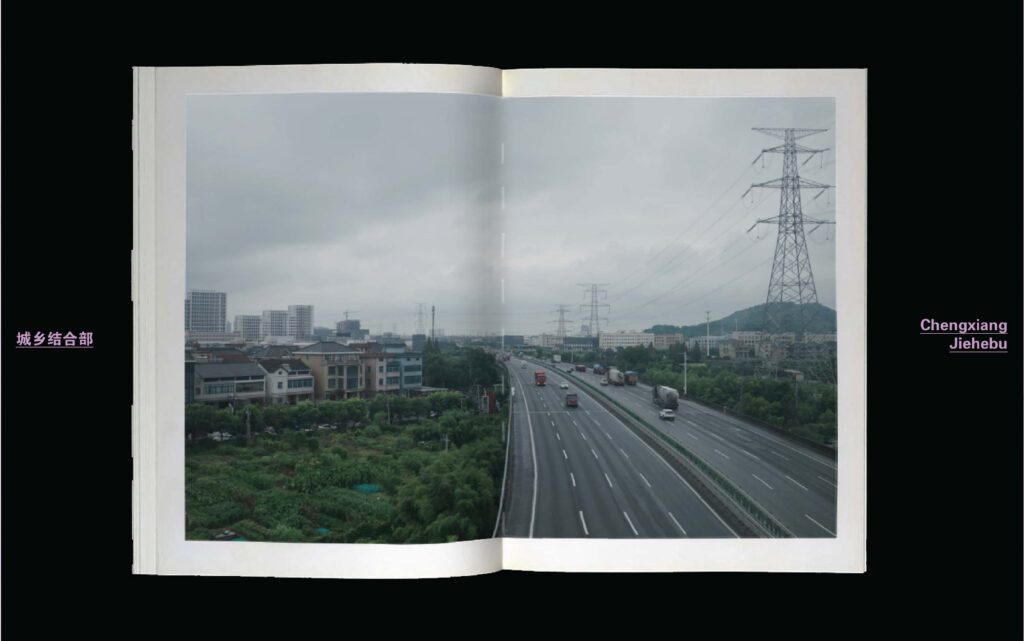
How do people name the spaces, phenomena, processes, and resulting features where city and countryside blend into one another in their own languages?
As part of the conference, we are assembling a collaborative glossary that unfolds how the rurban interface is named, understood, and designed across the world. We invite students, researchers, and practitioners to contribute a keyword in any language, accompanied by a short essay and an image.
Selected contributors will be invited to present at the conference roundtable. All accepted entries will be published in a printed booklet and on a forthcoming open-access website.
August 28 is the deadline for submissions, but entries will be reviewed on a case-by-case basis before the event on September 11. Please contact conference organizers Sophia Xiao, Yihao Wu, and Yunjie Zhang with any questions.
See the full call, submission guidelines, and example entry.Schedule
• Li Hou (DDes ’09), Lecturer in Urban Planning and Design, Harvard GSD
• Chen Chu, PhD Candidate, MIT DUSP
• Rawan Alsaffar (DDes ’24), Research Fellow, Harvard Kennedy School
• Salma Abouelhossein, PhD Candidate, Harvard GSAS
• Dení López, PhD Candidate, MIT DUSP
• Mariana Alegre Escorza, Lecturer in Urban Planning and Design, Harvard GSD
• Aarthi Janakiraman, Assistant Professor of Preservation and Urbanism, Tulane School of Architecture and Built Environment
• Anjali Kaur, Senior Associate (Non-resident), Chair on India and Emerging Asia Economics at Center for Strategic and International Studies
• Tyler Harlan, Associate Professor of Urban and Environmental Studies, Loyola Marymount University
• Ran Ai, PhD Candidate, University of Toronto
Selected contributors to the Glossary of “Rurbanity” Open Call will present and discuss their proposed entries.
Keynote
Gabriella Carolini is an associate professor of urban planning and international development in the Department of Urban Studies and Planning at the Massachusetts Institute of Technology, where she leads the City Infrastructure Equity Lab.
Her teaching and research center on equity in the governance and planning of infrastructure development across urban communities in the Americas and Africa, particularly in the water and sanitation arena. Her work on urban infrastructure and international development has been published as a book, Equity, Evaluation, and International Cooperation, and her articles can be found in leading journals.

Opening Remarks
Diane E. Davis is the Charles Dyer Norton Professor of Regional Development and Urbanism and former Chair of the Department of Urban Planning and Design at Harvard’s Graduate School of Design (GSD), where she coordinates the ‘Publics’ Track in the Master of Design Studies Degree Program. Trained as a sociologist, her research focuses on cities, politics, and development as mediated by spatial structure and social composition. Books include Cities and Sovereignty; Discipline and Development; and Urban Leviathan. In 2023 Davis was named Fellow and Co-Director of the Humanity’s Urban Future program funded by the Canadian Institute for Advanced Research (CIFAR).
Speakers
Panel 1 – Anthropogenic Natures
9:15 AM – 10:55 AM
Discussant

Dr. Spinak is an environmental historian who studies the political economy of infrastructure, particularly energy systems. At the GSD, she teaches environmental history and theory courses in Landscape Architecture and is a longtime affiliated faculty member of the Master in Design Studies program. She is currently writing about electricity ownership and statecraft in the twentieth century United States and the contested afterlives of coal mines in the American west. Recent publications include contributions to How the New Deal Was Run (Chicago, forthcoming) and Building Post-Carbon Futures: Imagining and Implementing Climate Justice in America (Lincoln Institute of Land Policy, 2026).
Panelists

Li Hou (DDes ’09) is a Lecturer in Urban Planning and Design at Harvard GSD, where she also received her Doctor of Design degree. Her work explores planning history, regulation, regional development, and the changing relationship between planning knowledge and urban politics, with a particular interest in China and comparative perspectives. Before returning to the GSD, she taught urban planning at Tongji University, served the Shanghai Planning Commission, and played an active role in the Urban Planning Society of China. She is the author of an award-winning book, Building for Oil: Daqing and the Formation of the Chinese Socialist State.

Chen Chu is a PhD candidate in the Department of Urban Studies and Planning at MIT. His dissertation examines how planning—environmental conservation, rural housing, and rural industrialization—both shapes and is shaped by agricultural trade liberalization, through a comparative study of rice politics in California and Arkansas. Chen holds architecture degrees from MIT and McGill University. Previously, he consulted for the World Resources Institute in Beijing and conducted research for MIT’s Urban Risk Lab and Planning for Peace Initiative.

Salma Abouelhossein is a PhD candidate in Urban Studies and Planning at Harvard University. Her research sits at the intersection of urban and planning history, agrarian studies, and environmental history, with a focus on the historical geographies of urban–rural relations. Her dissertation, Sugar Towns: Urbanization and the Agro-Industrial Sugar Belt of Upper Egypt, 1870–2023, examines how agrarian territories have been transformed through shifting configurations of infrastructure, labor, capital, and environmental change.

Dr. Rawan Alsaffar (DDes ’24) is a landscape architect and urban researcher whose work examines the intersection of water infrastructure, urbanization, and climate adaptation in arid environments. She is a Research Fellow with the Middle East Initiative at the Harvard Kennedy School. Her research investigates how desalination infrastructure has shaped urban landscapes, governance, and resource demands across the Gulf, with a focus on Kuwait’s water future. Her current book project explores how everyday practices of water management are shaped by the social, political, and environmental dimensions of aridity in the Persian Gulf region. She holds a Doctor of Design from Harvard GSD.
Panel 2 – Contested Commons
11:10 AM – 12:30 PM
Discussant

Yue Zhang is an Associate Professor of Political Science and Global Asian Studies at the University of Illinois Chicago. Her research lies at the intersection of comparative and urban politics, with a focus on development, urbanization, and globalization. She is the author of The Fragmented Politics of Urban Preservation: Beijing, Chicago, and Paris (University of Minnesota Press, 2013; Chinese translation, 2018) and Transforming Informality: Redevelopment and Urban Governance in China, India, and Brazil (Oxford University Press, forthcoming 2027). She is Co-Editor of Urban Affairs Review and was a Fellow at the Woodrow Wilson International Center for Scholars in Washington, D.C.
Panelists

Dení López is a Mexican researcher, designer, educator, and PhD candidate in Urban Studies and Planning at MIT, where she studies disaster risk, territorial governance, and collective forms of care and organization.
Since 2017, she has worked alongside local organizations and Indigenous, Afromexican, and queer communities in the Isthmus of Tehuantepec through _Bicheeche Diidxa’_, an academic-community collective she co-founded. Grounded in participatory action research (PAR), they bring community knowledge, research, and design into struggles over disaster risk and territorial governance, challenging institutional power asymmetries and the responsibilities that come with access, resources, and authority through collaborations that currently include WHO/HRP and UNAM’s School of Architecture.
Dení holds an MDes in Risk and Resilience and an MAUD from the Harvard Graduate School of Design, as well as a Bachelor of Architecture from UNAM.
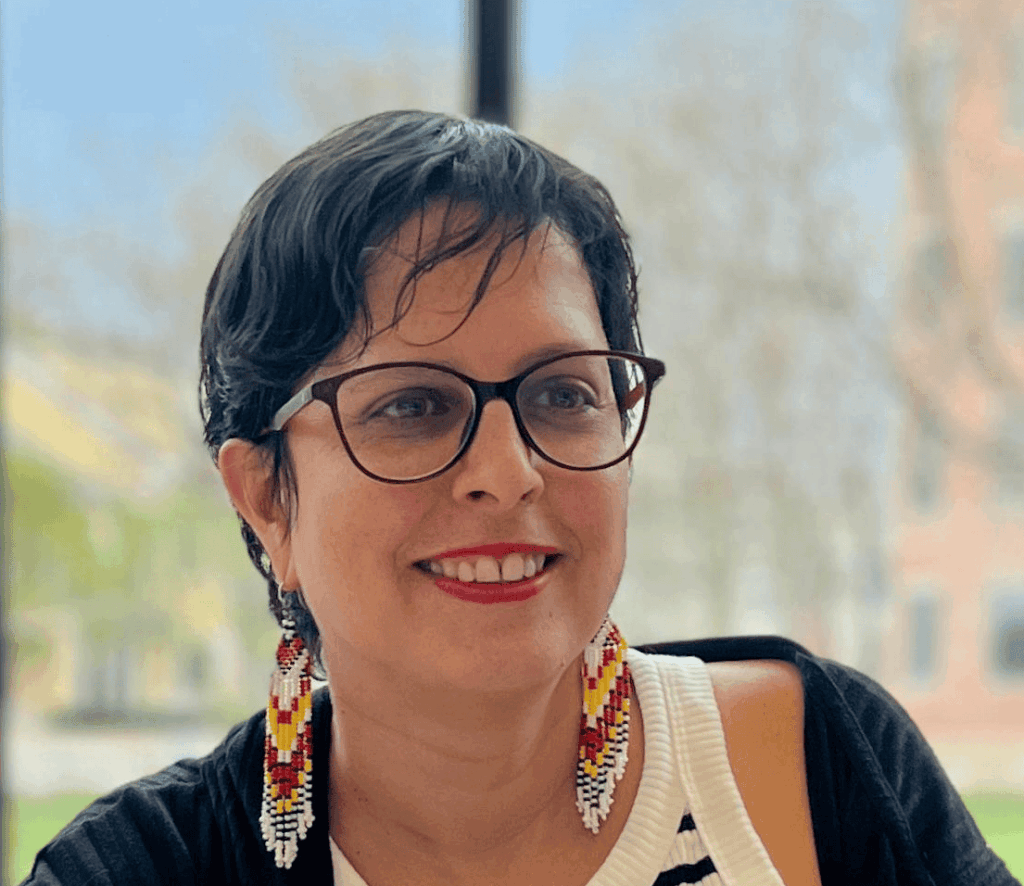
Mariana Alegre Escorza is a Lecturer and Design Critic in Urban Planning and Design at Harvard GSD. She is the founder and Executive Director of Sistema Urbano, a Latin American ecosystem advancing urban transformation through projects including Lima Cómo Vamos and Ocupa Tu Calle. Her work focuses on urban mobility, public space, urban planning, citizen-led urbanism and social movements. She holds a law degree and a master’s degree in Human Rights from the Pontifical Catholic University of Peru (PUCP), where she is a tenured professor, as well as an MSc in City Design and Social Science from the London School of Economics (LSE). A Chevening Scholar and 24-25 Loeb Fellow at Harvard GSD.

Aarthi Janakiraman is Assistant Professor of Preservation and Urbanism at Tulane University. She is a planner, urban designer, and architect, whose work explores the spatial politics of heritage conservation and development in the Global South. Aarthi holds a Ph.D. in Urban and Regional Planning as well as a Master in City Planning from MIT.
Panel 3 – Digital Hinterlands
1:55 PM – 3:15 PM
Discussant

Nikos Katsikis is an urbanist and educator working at the intersection of urbanization theory, design, and geospatial analysis. His work develops a geographical approach to urban metabolism, mapping the biogeographical interdependencies between cities and the wider operational landscapes of production, circulation, and waste disposal that sustain them. He is Assistant Professor of Urbanism at TU Delft, where he co-leads the Critical Environments group, and an affiliated researcher at the Urban Theory Lab, University of Chicago. He holds a Doctor of Design from Harvard GSD.
Panelists

Anjali Kaur is a fractional executive and strategic advisor working at the intersection of technology, geopolitics, health, climate, and inclusive economic development. She previously served as Deputy Assistant Administrator for Asia at USAID, overseeing programs across 34 countries, and has held senior roles with the Bill & Melinda Gates Foundation, UNICEF, and Malaria No More. She is also a Senior Associate with the Center for Strategic and International Studies. Her work focuses on how governments, philanthropy, technology, and civil society can work across traditional sector boundaries to address complex global challenges. She holds a BA and MA from Johns Hopkins University.

Tyler Harlan is Associate Professor and Chair of Urban and Environmental Studies at Loyola Marymount University. He is interested in the spatial politics and uneven socio-environmental impacts of China’s energy transition, and the implications of this transition for the Global South. He has published widely on energy and environmental politics, and his research is regularly featured in public and policy forums. Harlan is also a National Committee on U.S.-China Relations Public Intellectuals Fellow, a Fulbright Fellow, and a Wilson Center Fellow. He received his PhD in Geography from UCLA, an MPhil from the University of Melbourne, and a BA from Vanderbilt University.

Ran Ai is a PhD candidate in Architecture, Landscape, and Design at the Daniels Faculty, University of Toronto. Her research centers on urban informality, the informal economy, commodity chains, and bottom-up urban interventions. Her dissertation traces production spaces, labour relations, and their links to global capitalism in the Pearl River Delta’s garment clusters since 1978. Alongside her research, she brings experience from her work with grassroots organizations and her artistic practice. Her recent creative and community work examines female labour, trauma and scars, and cross-border supply chains.
Sponsors
This event is generously supported by the Advanced Studies Program, the Joint Center for Housing Studies of Harvard University, the Harvard Office for Sustainability, the David Rockefeller Center for Latin American Studies, the Fairbank Center for Chinese Studies at Harvard University, and Harvard University Asia Center, in collaboration with the Building & Infrastructure Club at Harvard Graduate School of Design; the conference is advised by Diane E. Davis, Charles Dyer Norton Professor of Regional Planning and Urbanism at Harvard GSD.


Harvard University welcomes individuals with disabilities to participate in its programs and activities. If you would like to request accommodations or have questions about the physical access provided, please contact the Public Programs Office at (617) 496-2414 or [email protected] in advance of your participation or visit. Requests for American Sign Language interpreters and/or CART providers should be made at least two weeks in advance. Please note that the University will make every effort to secure services, but that services are subject to availability.
#GSDEVENTS