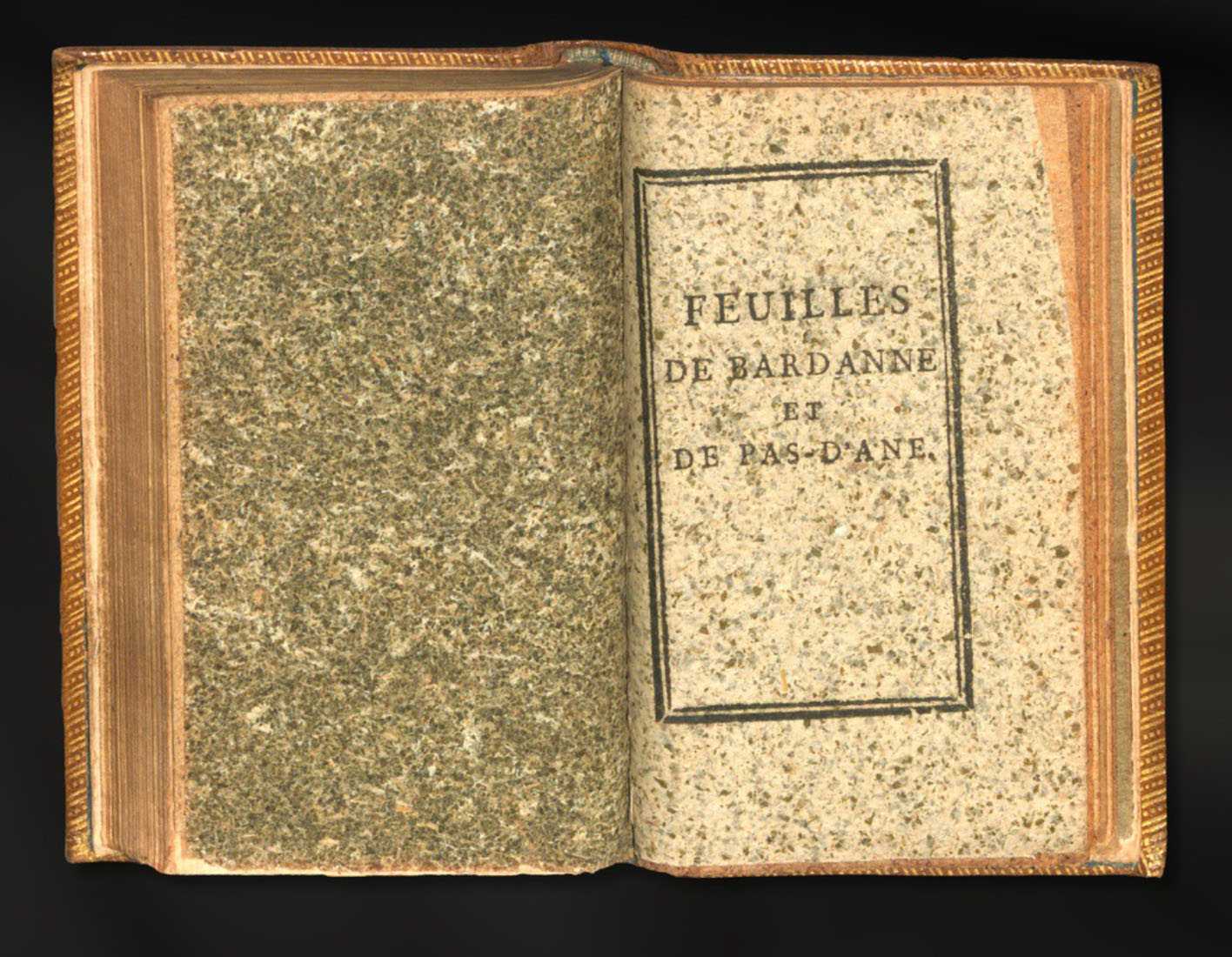
The History of The Veronica Rudge Green Prize in Urban Design
The History of The Veronica Rudge Green Prize in Urban Design

The Veronica Rudge Green Prize in Urban Design is awarded biennially to recognize exemplary urban design projects. Projects must be more than one building or an open space built anywhere in the world within the last ten years that makes a positive contribution to the public realm of a city and improves the quality of urban life in that context. The project must also demonstrate a humane and worthwhile direction for the design of urban environments.
The Urban Design Case Study Archive is a project of Harvard University’s Graduate School of Design developed collaboratively between faculty, students, developers, and professional library staff. Specifically, it is an ongoing collaboration between the GSD’s Department of Urban Planning and Design and the Frances Loeb Library. This project received funding from the Veronica Rudge Green Prize for its development and was originally envisioned by professors Peter Rowe and Rahul Mehrotra.
As a collection of case studies, the archive aims to support the study of the human settlements in urban areas through rich descriptions of urban design projects and related interpretations, drawings, and images. It makes use of excellent tools for the sophisticated search and visualization needed to support its scholarly research and pedagogical aims.
At present, each of some 40 case studies includes digital photographs of the site context, the projects themselves, and other graphic representation such as site plans, sections, and elevations, as well as texts, commentary, articles, analyses, bibliographies, people involved and interviews to facilitate and encourage discoverability and a flexible navigation within and across case studies depending on research interests. Discoverability is further articulated via three different search possibilities that include the name of the specific project, the project’s location (geography), and project type.
The project launched in 2023 with 19 urban design projects that were awarded the Veronica Rudge Green Prize in Urban Design and will continue to grow in demand to cover urban design and other settlement projects of excellence across the globe.
We thank the funders, faculty, staff, students, and the developers Performant Solutions, LLC for bringing this project to fruition.
MODELS THEMSELVES
MODELS THEMSELVES
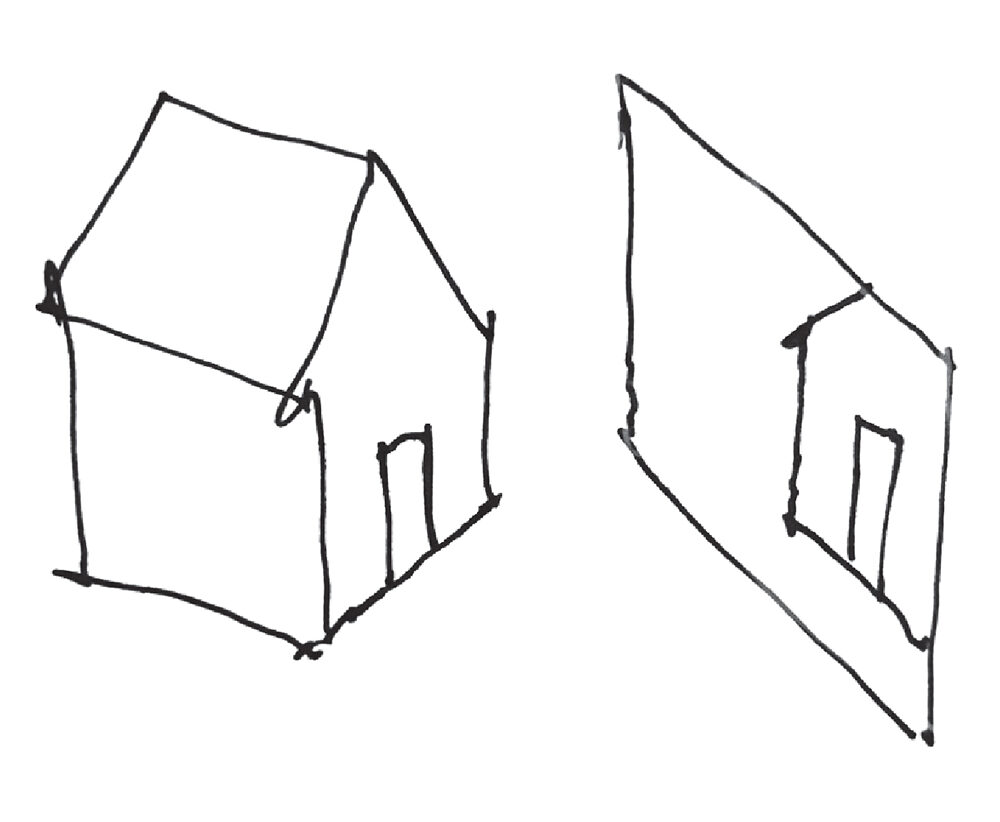
This exhibition presents a rare, concentrated view of Jon Lott’s architectural practice through the lens of selected physical models. Lott’s practice spans experimental houses, cultural institutions, and public interventions—each exploring the provisional, the adaptive, and what he terms a reflexive formalism. Models Themselves assembles physical models from across this body of work, including projects featured in his forthcoming Park Books publication, Proximities, such as the Brugge Diptych, Haffenden House, Stump House, and Couple-Lean-Tos.
Presented as the models themselves, each is a scalar rehearsal for what might be. Each reveals proximities between architecture’s parts—wall for a wall, roof for a roof—operating somewhere between representation and description. The exhibition affirms the GSD’s commitment to architecture as a speculative discipline, shaped equally by its built manifestations and the iterative tools that bring them into being.
Jon Lott, Associate Professor of Architecture at the GSD and founding principal of Para Project.
Para Project Team
Jon Lott
Emma Sheffer (MArch ’27)
Nancy Lu (MArch ’27)
Kei Takanami (MArch I ‘25)
SYNTHIA
SYNTHIA

Project Synthia, by the Responsive Environments and Artifacts Lab (REAL) at Harvard, is a case study in emergent design methodology—an approach that treats collaboration as a dynamic system, where outcomes are not imposed but negotiated. Here, design is framed as an act of assembly, shaped by a multiplicity of voices rather than a singular vision. This exhibition reflects an evolving synthesis, mediated by the tensions and harmonies of interdisciplinary thought.
Synthia emerges from the intersections of geology, futures study, cognitive science, physics, art, design, architecture, history – each discipline contributing fragments to a larger, unresolved puzzle. The exhibition draws inspiration from radical experiments in design methodology, from Bruno Munari’s Da cosa nasce cosa (from one thing comes another) to the interdisciplinary ethos of Gyorgy Kepes, Chicago’s New Bauhaus, and MIT’s Center for Advanced Visual Studies (CAVS). Like these predecessors, it challenges the notion of authorship and control, embracing uncertainty as a generative force.
At its core, Project Synthia is a meditation on assembly—of ideas, artifacts, and histories. It traverses time and discipline, collapsing distinctions between past and future, human and machine, simulation and materiality. It is both an excavation and an invention, a recognition of the mess we have made, and a proposition for how we might make sense of it.
REAL Lab
Allen Sayegh
Isa He
Kevin Tang
Ben Kazer
Gustavo Borges
Eric Rannestad
Contributors
Joelle M. Abi-Rached
Melissa Franklin
Youtian Duan
Amelia Gan
Sean Nakamura-Dolan
Melanie Louterbach
Cynthia Deng
Elif Erez
Justin Booz
Gem Barton
Jacob Walker
Brooke Chornyak
Samuel Adrian Massey
Marieke Van Damme, History Cambridge
Air as Matter:
Atmospheric Encounters
Air as Matter:
Atmospheric Encounters
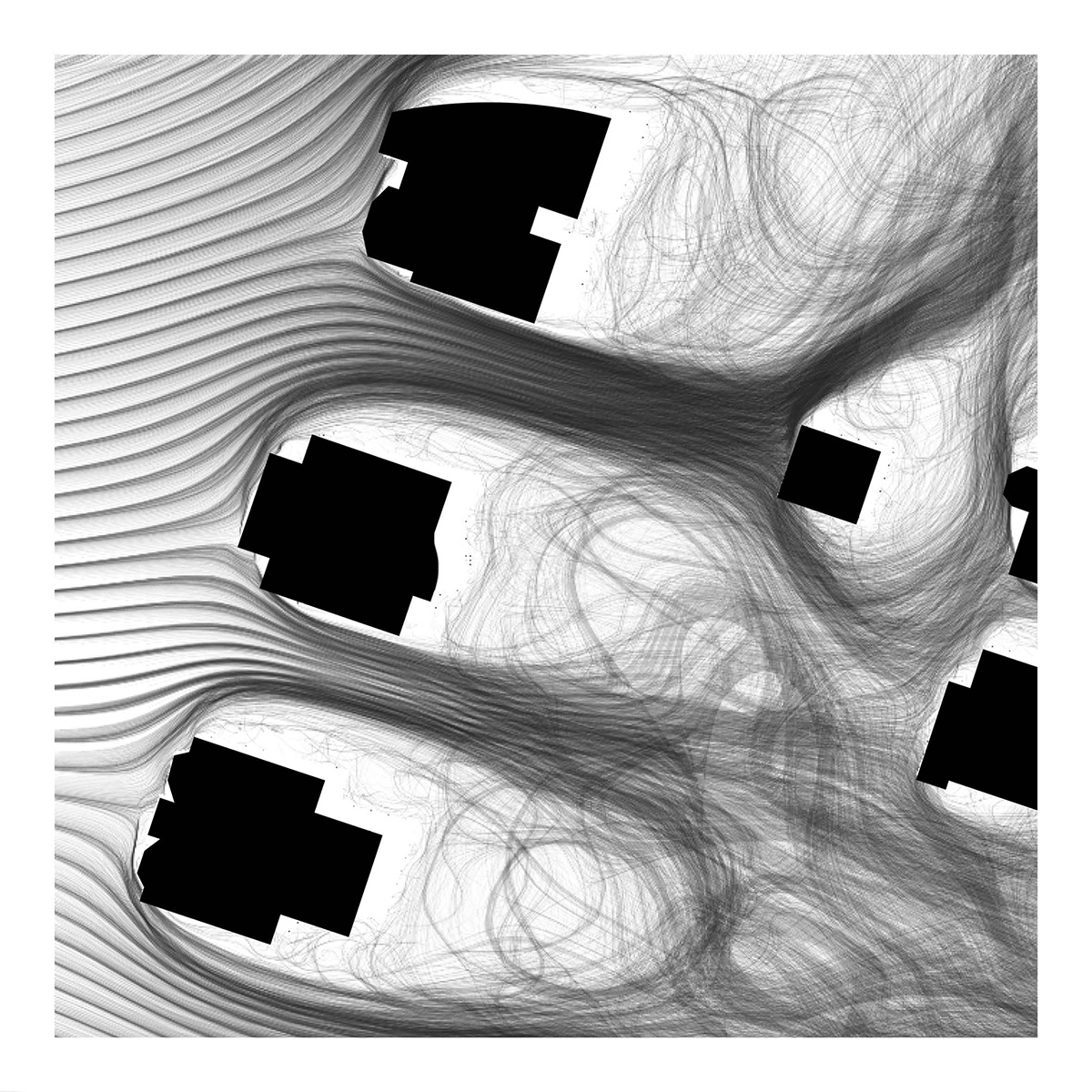
Air is the invisible and indivisible planetary matter that constitutes all life. It is an agent of entanglement and interconnection, operating as a network of enveloped material processes that hold the world together while remaining seemingly indifferent to human endeavors. The air continuously signals and re-frames the world in which we live, acting simultaneously to indicate future potentials and describe symptoms of the past. As the most prominent material we encounter every moment of every day, its commonality and invisible nature belies its fundamental role in supporting all life around the globe. Consequently, and quite remarkably, it is most often the recipient of undue indifference. The attitude of disregard is compounded by its behavior as a complex system that displays contradictory interactions of dependency and competition between its constituent elements and its environment, in which the outcomes of its actions are received as inputs for further animation. Nonlinear tendencies characterized by spontaneous order, emergence, and a capacity to adapt augment the capacity for air to resist conventional forms of measure and evade typical cultural codes of definition.
Digital Air claims air as matter by re-conceptualizing it as a material that is both corporeal and technological. In resisting conventional forms of definition and representation, air as matter invites the potential of emergence and production to augment our static realities. This material dialectic changes how we perceive and understand the scope of landscape architecture and how we might compose the architecture of our cities and landscapes in which air is identified as a principal agent for design.
Craig Douglas
Assistant Professor
Department of Landscape Architecture
How Did the Hills Become Floating?
How Did the Hills Become Floating?
Jungyoon’s research on the lost nature in densely developed cities began during the pandemic early in 2020. Confined to her basement near Cambridge, she used Google Earth to virtually travel to her hometown, Gangnam, in Seoul, Korea. As a child growing up there, she witnessed chronic urban flooding and, at the same time, the replacement of rice fields with high-rises. Many years later, and after becoming a landscape architect, her Google Earth explorations led to researching Seoul Korea and what emerged was a considerable disjuncture between the past and the present, further exacerbated by a seemingly disinterested public with respect to the problems we are experiencing today, the problem of how much nature has been lost and rendered invisible.
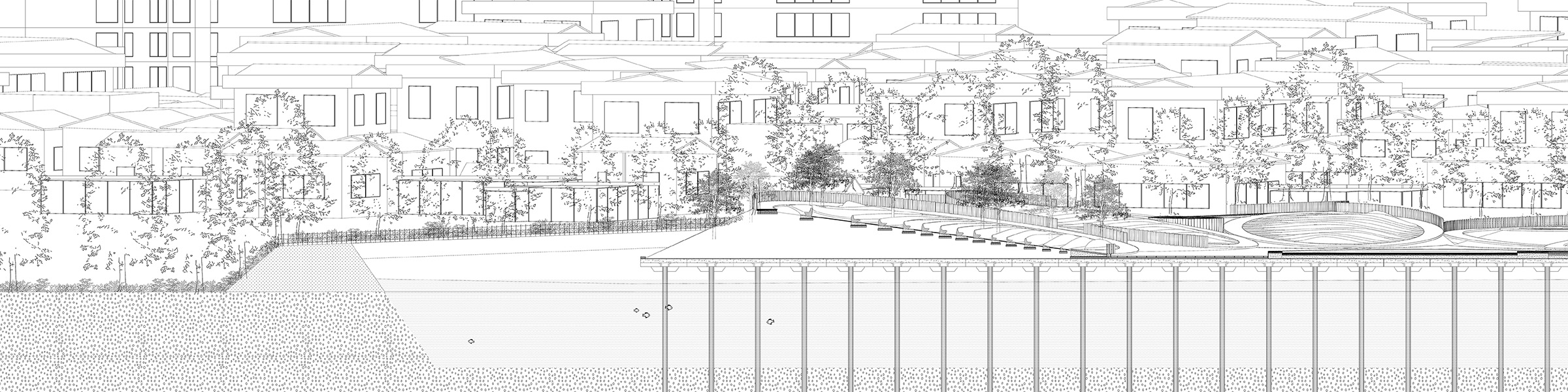
The outcome of this research project, showcased here in this exhibition for the first time is ‘The Lost Nature Maps’, which includes Seoul Korea amongst several other global cities. These maps became the foundation of her seminar courses, “Lost and Alternative Nature: Vertical Mapping of Urban Subterrain for Climate Change Mitigation” during Fall 2022 and Fall 2023. Jungyoon used these maps with her students as a set of resources to identify the critical points of a city that converge on specific sites, thus warranting the vertical exploration of a comprehensive sectional drawing. This method of looking deeply in the ground extends to the pedagogy of her series of options studios entitled “Below, Above, and Beyond”, featured here in two recent Studio Reports publications.
Working through sections, from the beginning to the end of a design process, has been a part of Jungyoon’s design approach and that of her firm PARKKIM. By using the section, the landscape architect establishes a way to relate themselves to a site, from geological history to the current atmospheric conditions. The ongoing Suseongmot Lake Floating Stage, to be completed in 2026, ‘Floating Hills,’ is an example with which PARKKIM’s multi-scalar, multi-dimensional, collaborative and timeful way of design can be explained. By unfolding the complicated layers of the stage’s design process, i.e., ‘how did the hills become floating?’ Jungyoon’s intertwined practice, research, and teaching can be explored in a more holistic way.
Credits:
Jungyoon Kim
Assistant Professor in Practice of Landscape Architecture
Founding Principal, PARKKIM
Research Assistants for Lost Nature Maps: Kari Roynesdal, MLA/ MUP ’21, Michael Cafiero MLA ’20, Eunsoo Choi MLA ’22, Isaiah Krieger MLA ’22
Exhibition Preparation: Jung Min Yoo MArch ’25, Esther Kim MLA/ MArch ’25, Minh Nguyen MDes ’24
Featured Student Projects: Nana Komoriya, MArch ’24, Mike Lidwin, MUP ’23, Lara Trimarco Prebble, MLA ’23, Jeb Polstein, MLA/ MUP ’23
Towards a Newer Brutalism:
Solar Pavilions, Appliance Houses, and other Topologies of Contemporary Life
Towards a Newer Brutalism:
Solar Pavilions, Appliance Houses, and other Topologies of Contemporary Life
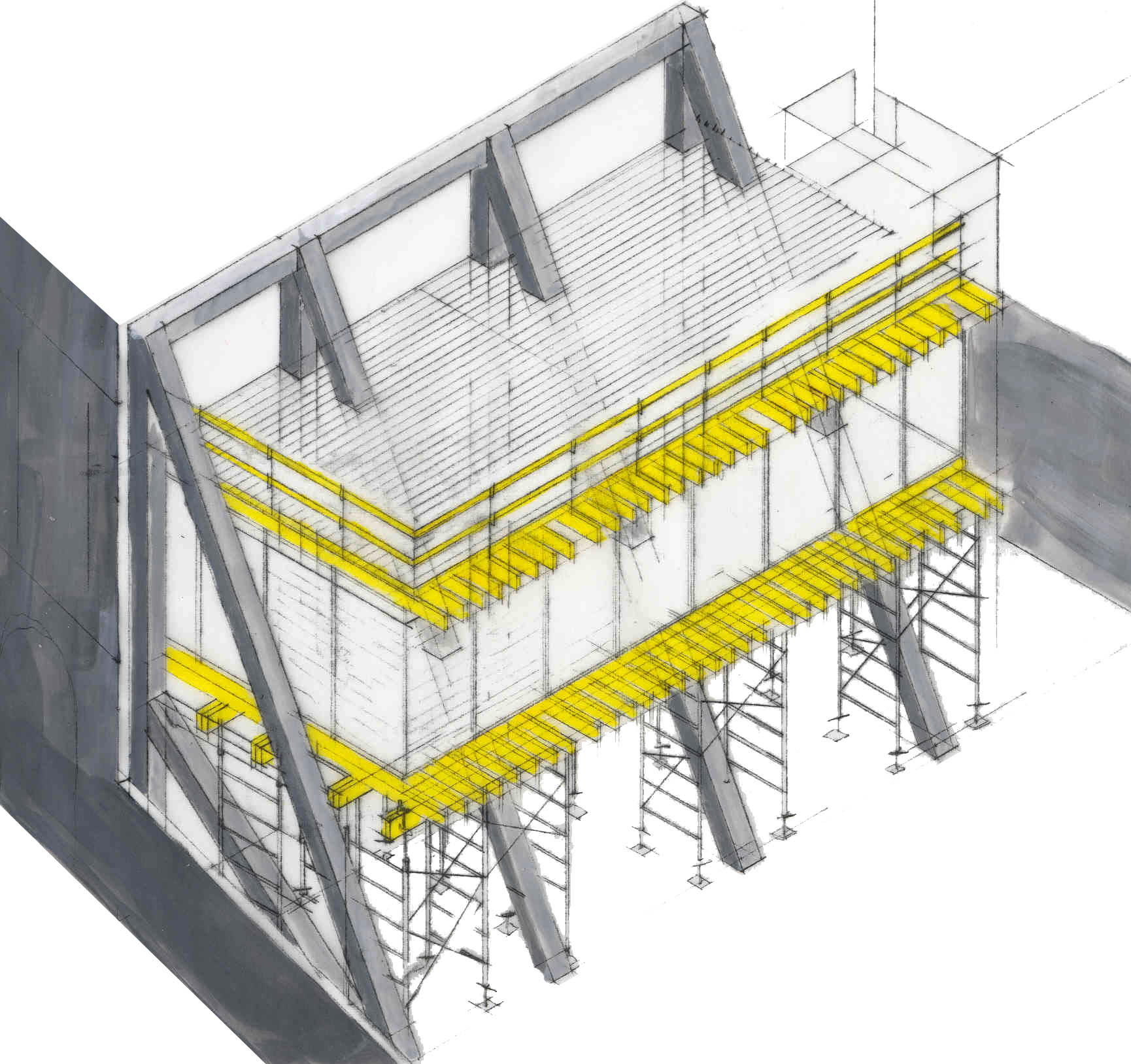
In the early 1950s, British architects Alison and Peter Smithson announced their arrival with a call for a “new brutalism”—a polemic sketched out over several years through texts and building projects. Describing new brutalism as an ethic, not a style, the Smithsons aimed to meet the changing needs and desires of postwar society through an architecture that directly expressed the material conditions of its time. Their friend and critic Reyner Banham defined a new brutalist building by its “1. Memorability as an image; 2. clear exhibition of structure; 3. valuation of materials for their inherent qualities ‘as found,’” and argued for “the threat and the promise” of such “bloody-minded” work within an increasingly staid culture of postwar modern architecture. In contrast to the style that came to be known as brutalism, the new brutalism anticipated diverse and fertile trajectories: playful, ironic, and critical uses of found objects and materials in the manner of Dada, Pop and art brut; both high-tech and crude explorations of the limits of functional, technological and/or ecological determination and expression; close attention to ordinary and economical forms of construction and use.
Today, the imperatives of the new brutalism almost perfectly articulate a latent theory of contemporary architecture that connects a number of practices. This exhibition appropriates the new brutalism as a “found” theory of the present, exploring its relevance as a design methodology rooted in material economy, spatial flexibility, structural expression, and disregard for prevailing aesthetic conventions. What do the ethics of these working methods offer architects at a time of acute social and environmental crises? How do such ethics relate to the stylistic affectations of an image-saturated architectural culture?
Organized in an associative manner that recalls the curatorial and graphic experimentation of the Smithsons’ 1953 exhibition Parallel of Life and Art (in collaboration with artists Nigel Henderson and Eduardo Paolozzi) and their “Dubrovnik Scroll” (presented as a gift to the members of Team X at the final CIAM conference in 1956), this exhibition puts early projects and texts from the Alison and Peter Smithson Archive in dialogue with a selection of paradigmatic contemporary building projects produced since 1988, suggesting a parallel history to the preoccupations and pedagogies of the American academy that can be traced back through MoMA’s Deconstructivist Architecture exhibition of the same year, or even to the rupture of the modernist project c. 1968. Through this visual and textual conversation, it aims to reveal a set of principles and possibilities that are animating the work of a new generation of students and faculty at the GSD and beyond.
All work by Alison and Peter Smithson, Reyner Banham, and their critics is drawn from The
Alison and Peter Smithson Archive, held in the Special Collections of the Frances Loeb Library at the Harvard Graduate School of Design.
Additional contributions to the exhibition have been made by:
Iñaki Ábalos & Juan Herreros (courtesy the Canadian Centre for Architecture)
Mark Anderson & Andrew Zago
Shigeru Ban
b+
Lionel Devlieger / Rotor
Jan de Vylder & Inge Vinck
Ensamble Studio
Andrés Jaque / Office for Political Innovation
Jones, Partners: Architecture
Lacaton & Vassal
Mark Linder
Office for Metropolitan Architecture
The Oasis Loop: Vernacular Agricultural Landscapes in Arid Conditions
The Oasis Loop: Vernacular Agricultural Landscapes in Arid Conditions
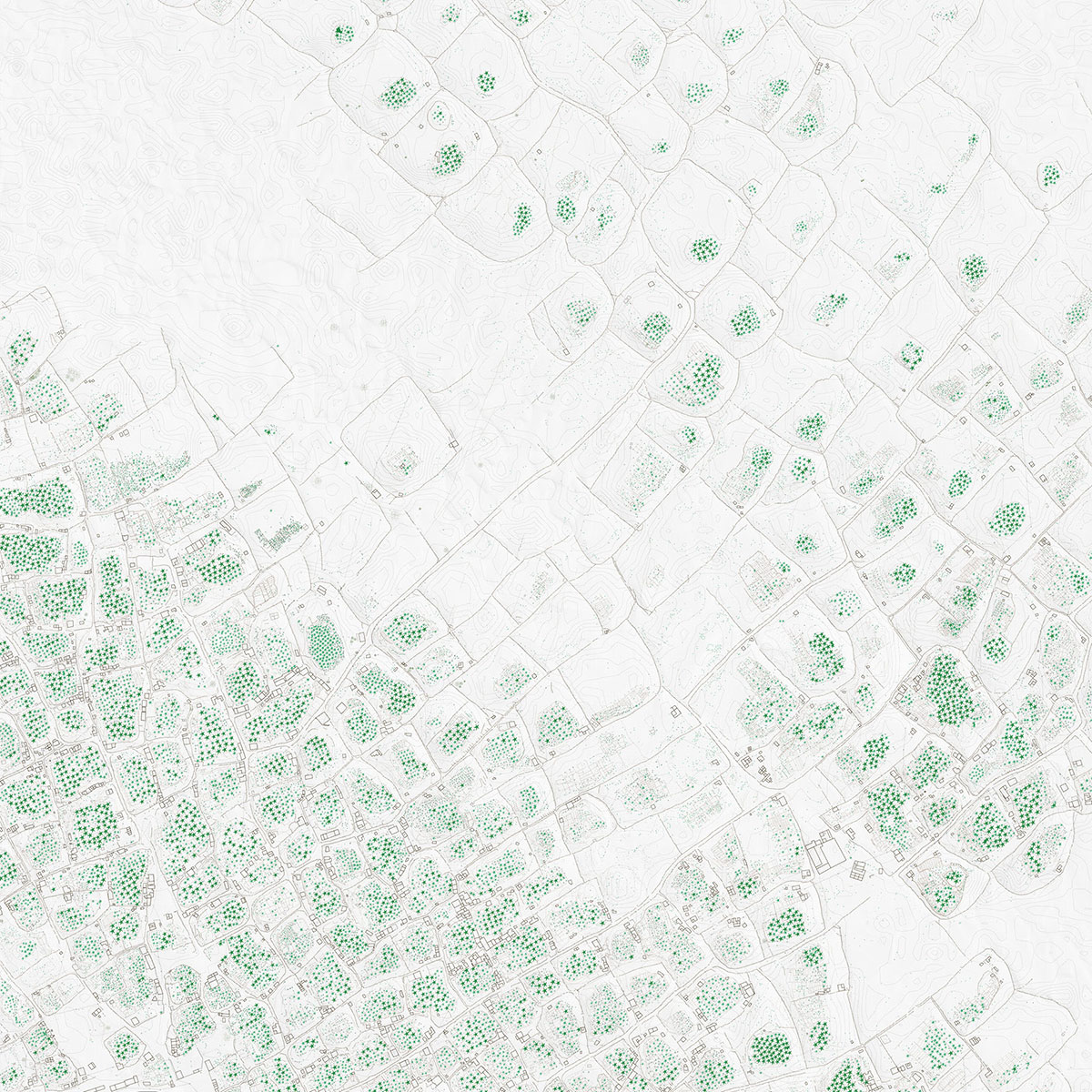
5 SPECIES-TOWNS: Agricultural Modernization, Collective Memory, and Deep Structure
5 SPECIES-TOWNS: Agricultural Modernization, Collective Memory, and Deep Structure
Planning @ 100
Planning @ 100
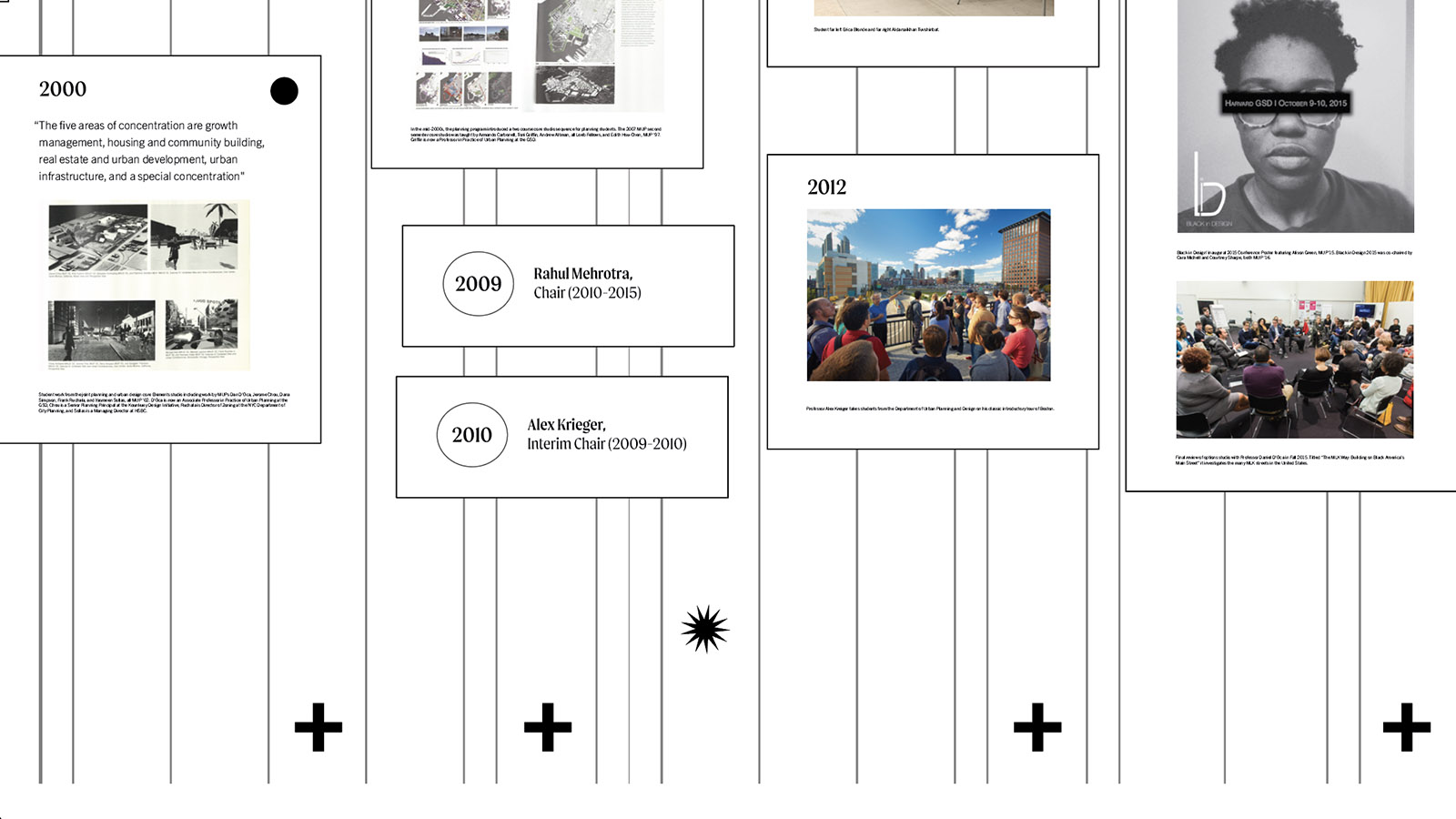
Curators Sophie Weston Chien (MLA I AP/MUP ‘24) Ann Forsyth Rebecca McDonald-Balfour (MLA II/MUP ‘24) Naomi Andrea Robalino (MUP ‘23) With thanks to Amna Pervaiz (MUP ‘23)
The Book in the Age of …
The Book in the Age of …