New Synagogue Addition Designed by Preston Scott Cohen Draws National Attention
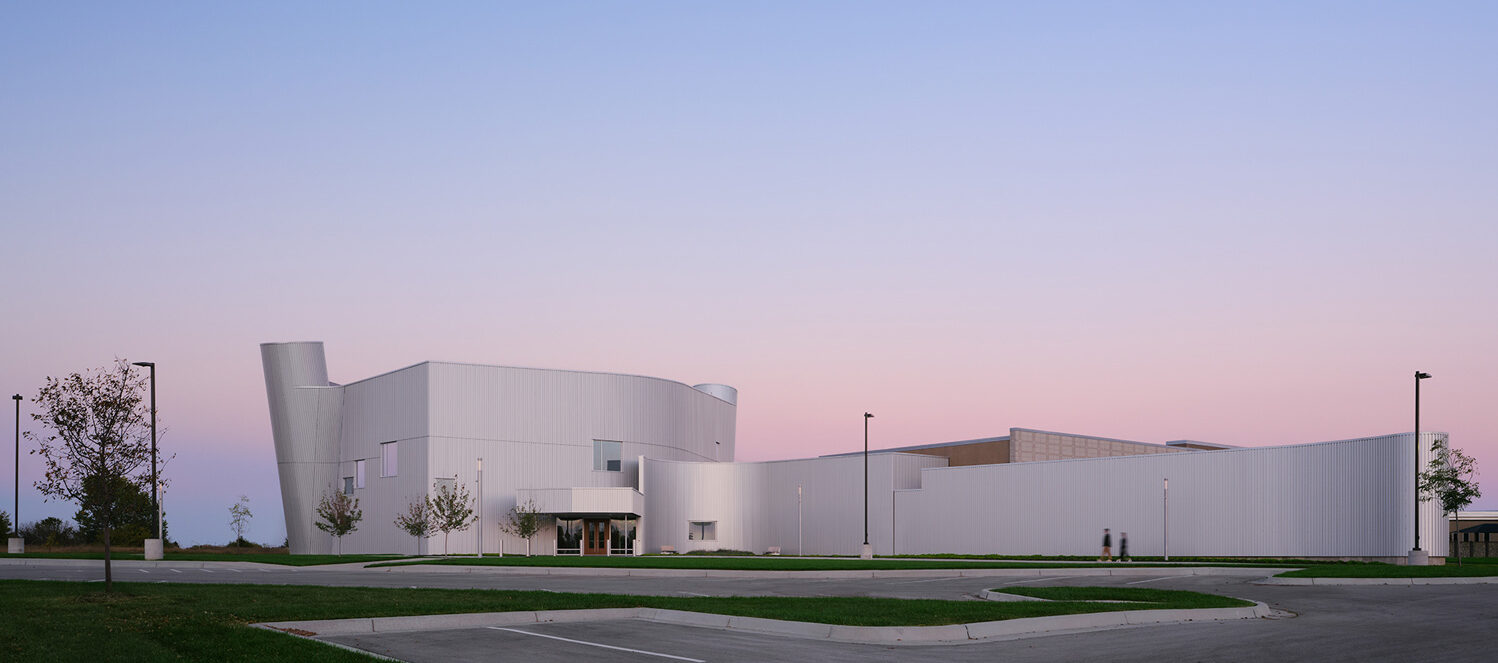
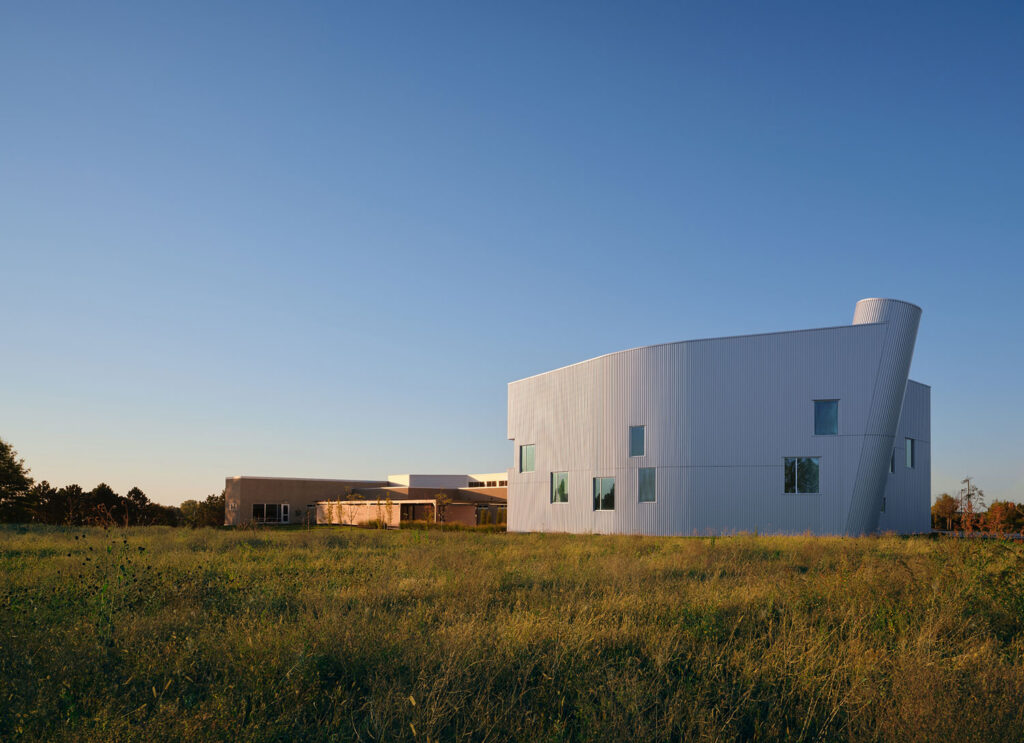
Congregation Beth Shalom Synagogue, designed by Preston Scott Cohen (MArch ’85), Gerald M. McCue Professor in Architecture at the Harvard University Graduate School of Design, and Carl D’Apolito-Dworkin (MArch ’12), design critic in architecture—both Principal Partners of Preston Scott Cohen, Inc.—in collaboration with BNIM as Architect of Record, was featured in the December 2025 issue of Architectural Record. Completed in fall 2024, the new synagogue has drawn national attention for its translation of a rigorous architectural idea into a highly functional and welcoming sacred space. The project is attached to a multiuse building in Overland Park, Kansas, where, for nearly twenty years, a multipurpose room had served as a temporary sanctuary for the congregation.
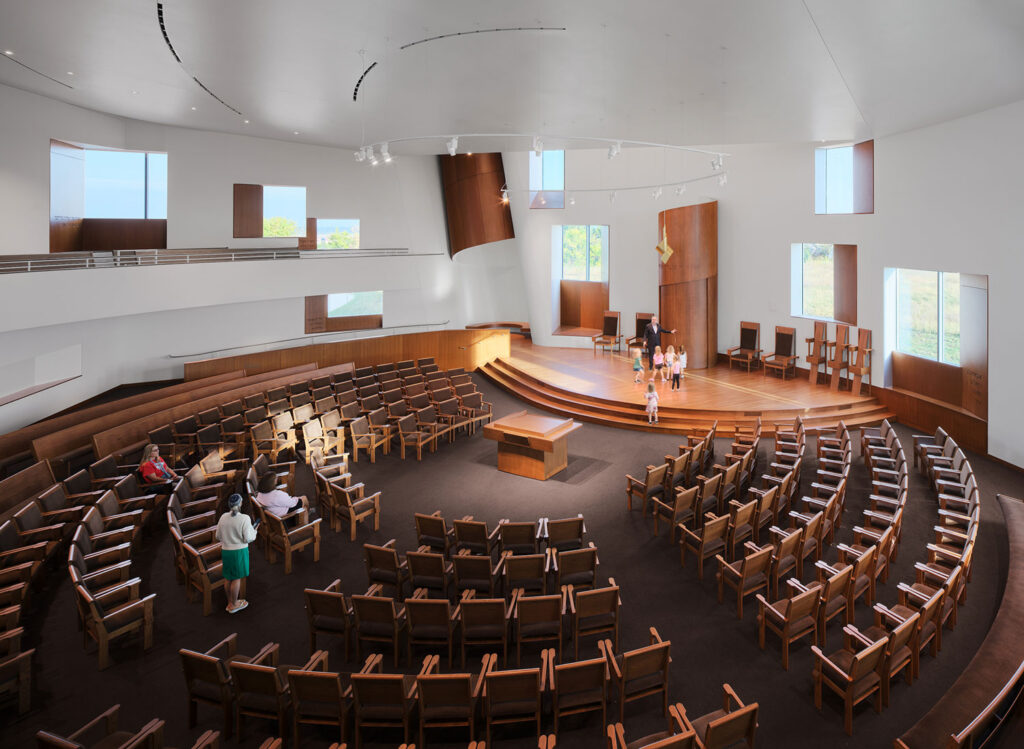
The project addresses a familiar challenge: how to create a sanctuary that feels intimate for weekly Shabbat services yet can expand for the High Holy Days without resorting either to a generic “one big room” or to a sanctuary/social hall divided by a movable partition. Instead, the oval-shaped sanctuary expands concentrically—from movable seating to surrounding pews, an additional ring of chairs, and a balcony that both cantilevers into the sanctuary and extends beyond it over the lobby—accommodating configurations that range from small gatherings to large congregational events.
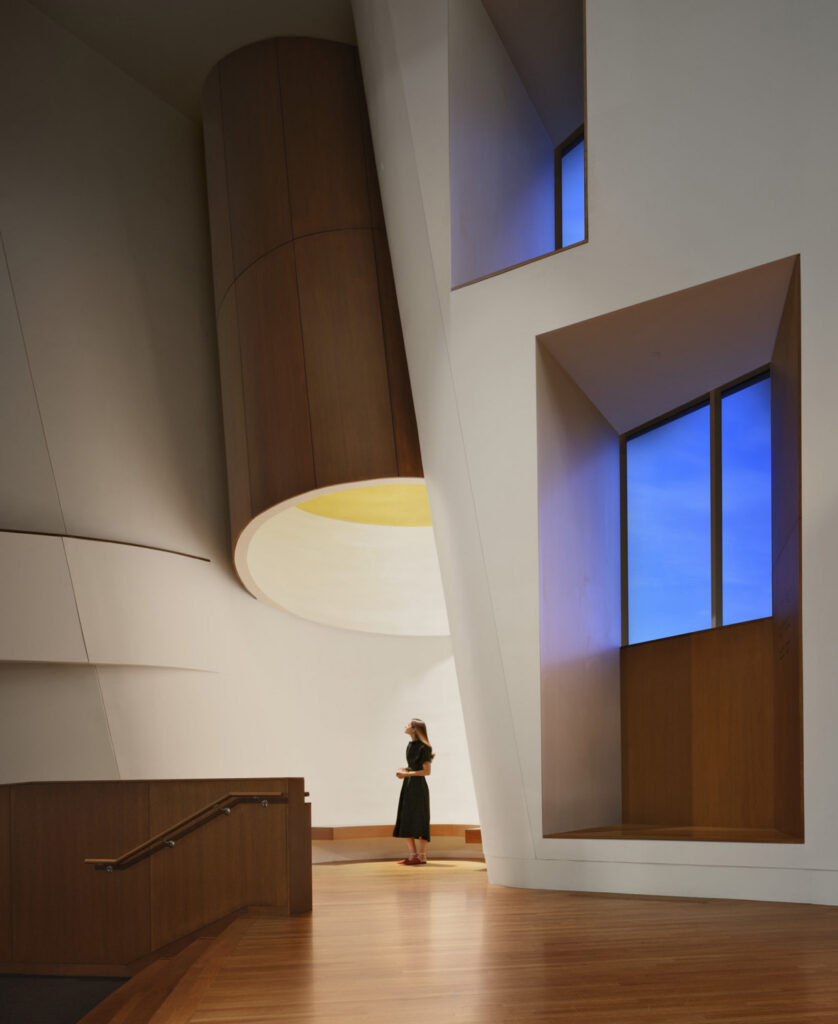
The building’s form is conceived as an interpretation of reading the Torah, with tilting and layered surfaces that evoke the act of unrolling a scroll. The corrugated metal exterior, along with the wood-clad ark (which houses the Torah), side chapel, and balcony stair, reinforces the idea of a “scroll within a scroll.” Sited on a knoll, the synagogue is first perceived from a distance. The driveway loops past the education wing and culminates in a cul-de-sac, reinforcing the sense that the sanctuary is experienced in the round. This configuration both secures the building and creates a drop-off area with accessible parking close to the lobby, better serving elderly and disabled congregants.
In profiling the project, Architectural Record highlights the building as a notable milestone within Cohen’s portfolio and a significant contribution to contemporary religious architecture.