Chris Reed’s Design for Historic Dallas Sites Recognized by Time Magazine
Time‘s “A Portrait of America in 25 Buildings and Monuments” includes a design for Dealey Plaza and Martyr’s Park by Reed’s STOSS Landscape Urbanism.
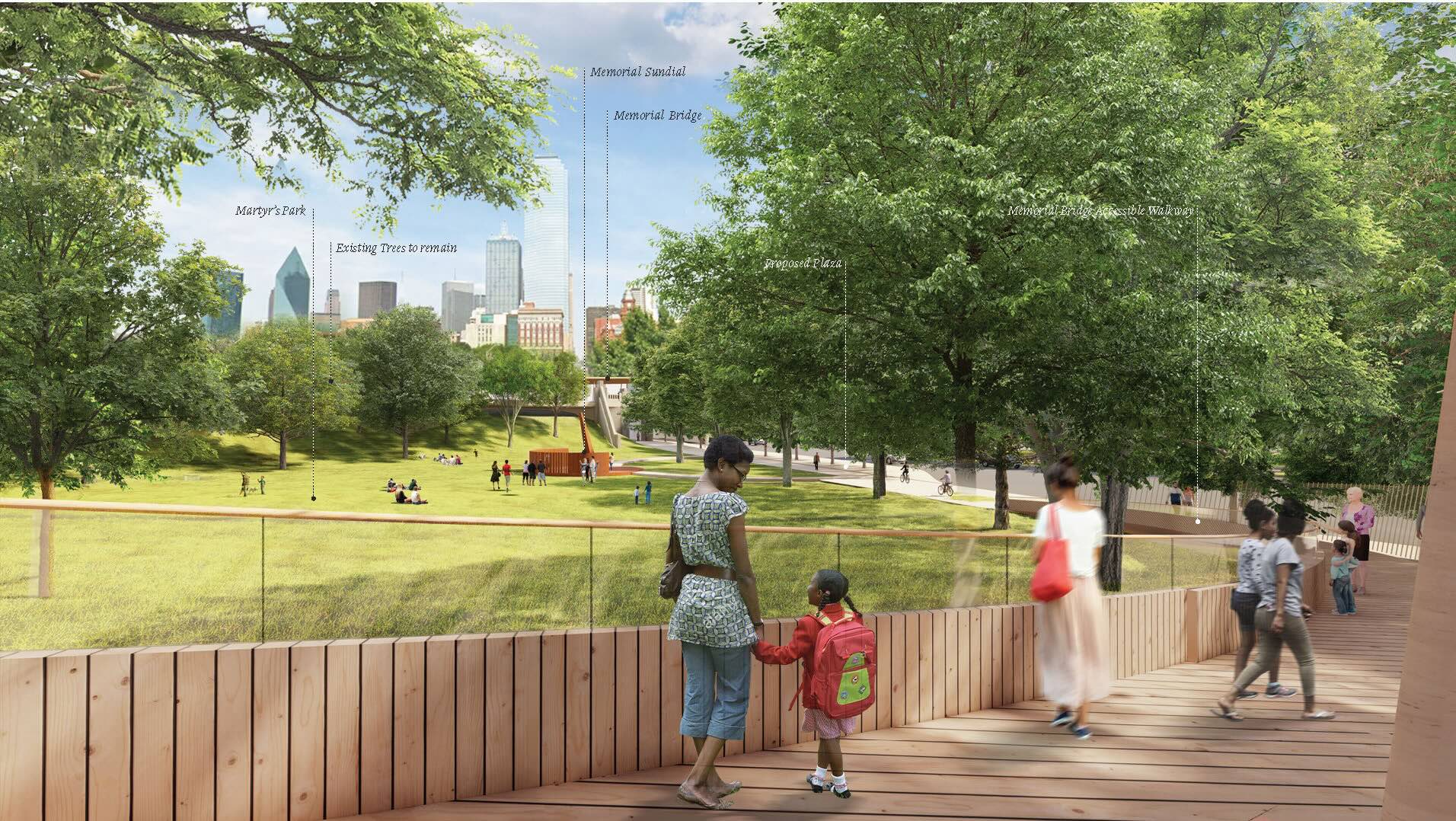
In celebration of the nation’s semiquincentennial, Time highlighted a project proposal for the redesign of two historic sites in Dallas led by STOSS Landscape Urbanism, whose founding director, Chris Reed, is professor in practice of landscape architecture at the Harvard Graduate School of Design (GSD). The firm collaborated on the design with MPdL, founded by Monica Ponce de Léon (MAUD ’91). The proposed redesign of Dealey Plaza and Martyr’s Park is featured in “A Portrait of America in 25 Buildings and Monuments” alongside major icons like the the Lincoln Memorial, ambitious technological marvels like the International Space Station, and everyday urban experiences such as the prosaic bike lane.
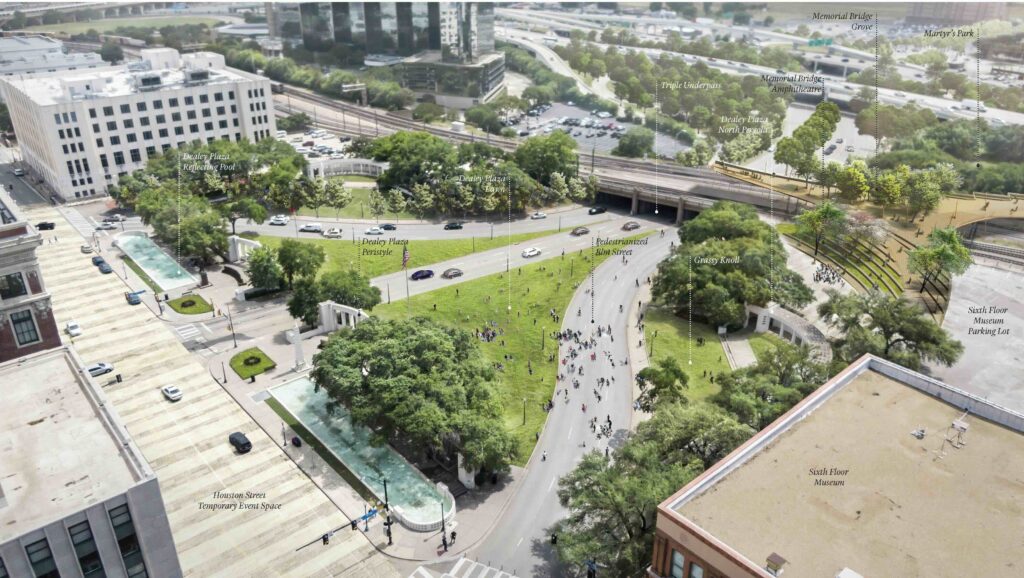
By connecting two historically significant areas in the city, the project in Dallas, which was commissioned by Pulitzer Prize–winning Dallas Morning News architecture critic Mark Lamster (LF ’17), “weaves a reconsideration of the site of the assassination of President John F. Kennedy with a reframing and enhancement of the proposed Martyr’s Park, site of the lynching of three innocent Black men.” In 1860, three enslaved men, Patrick Jennings, Samuel Smith, and Cato Miller, were lynched on the site named Martyr’s Park in their memory. In 1963, just over 100 years later, at nearby Dealey Plaza, President John F. Kennedy was assassinated.
“The work embodies the idea of public space both as a forum for recognizing our multiple, deep, rich, and sometimes brutal histories,” says Reed, “and for reflecting on and debating these histories and values as citizens. The recognition points toward the simple but important notion that we might forego singular, monumental gestures in favor of multi-layered projects of landscape and urban fabric that engage people to educate, to confront the realities of our past and present, and to chart new futures forward—a space for living histories.”
MPdL founder Monica Ponce de Léon selected the project for Time and described the vision for a re-imagined downtown Dallas area. She explains that uniting the plaza and park in a cohesive design allows visitors to more holistically experience the spaces, and, she notes, “At a time in history in which so many communities are divided, the project reflects America’s hope for a united future.”