Harvard GSD Team Advances to Build Phase of National Housing Innovation Challenge
A team of Master in Real Estate students will develop its proposal into a full-scale housing prototype through a national competition focused on reducing housing costs.

A team of students from the Harvard Graduate School of Design’s Master in Real Estate (MRE) program has been selected as one of 10 teams advancing to the build phase of the inaugural Housing Innovation Challenge, a national design-build competition focused on developing and testing solutions to reduce housing costs.
The Harvard GSD team, One Block Away, brings together MRE students whose backgrounds span architecture, development, finance, and real estate. Team members include Justin Joel Tan (MRE ’26), Marko Velazquez (MRE ’26), Noah Garcia (MRE ’26), Tejas S (MRE ’26), and Pranav Subramanian (MRE ’27). Their multidisciplinary expertise enables the team to approach housing affordability from multiple perspectives, reflecting the challenge’s emphasis on integrating design, development, and construction. The team is advised by Tim Love, assistant director of the Master in Real Estate program, lecturer, and senior fellow in real estate and urban planning.
Unlike many student design competitions, the Housing Innovation Challenge requires teams to move beyond design proposals and engage directly with development and construction. By advancing to the build phase, selected teams work alongside homebuilders, manufacturers, and industry partners to bring their ideas to life.
The resulting homes will be evaluated, publicly exhibited, and ultimately occupied by local families, giving students a rare opportunity to see their ideas tested under real-world conditions. Construction will take place over the next year in Charlotte, North Carolina, culminating in a public exhibition in October 2027.
“More so than many student competitions, the Housing Innovation Challenge is grounded in the realities of housing development because the projects are actually going to be built,” said Tan. “The City of Charlotte, development partners, contractors, and other stakeholders are involved at every stage, and residents will ultimately live in these homes. That direct connection to a community is what makes the challenge so exciting.”
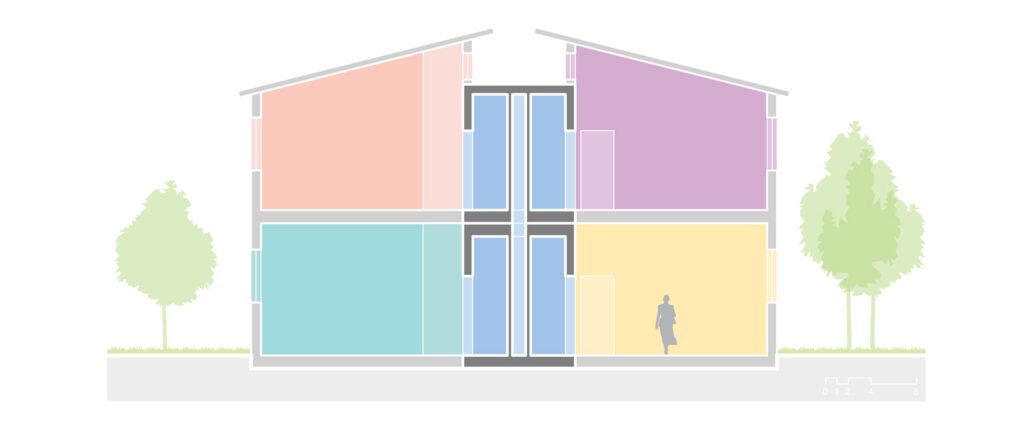
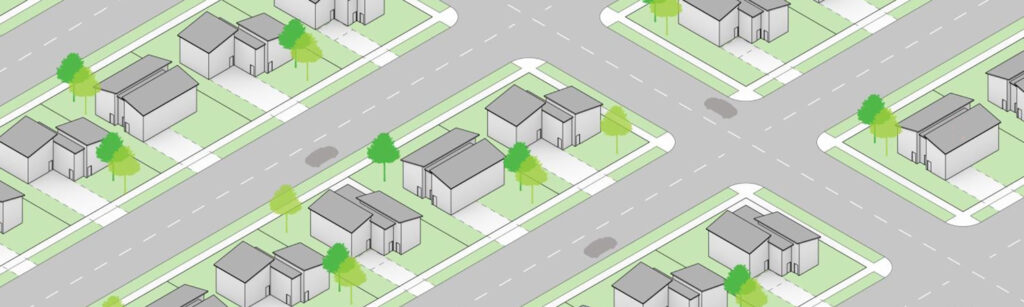
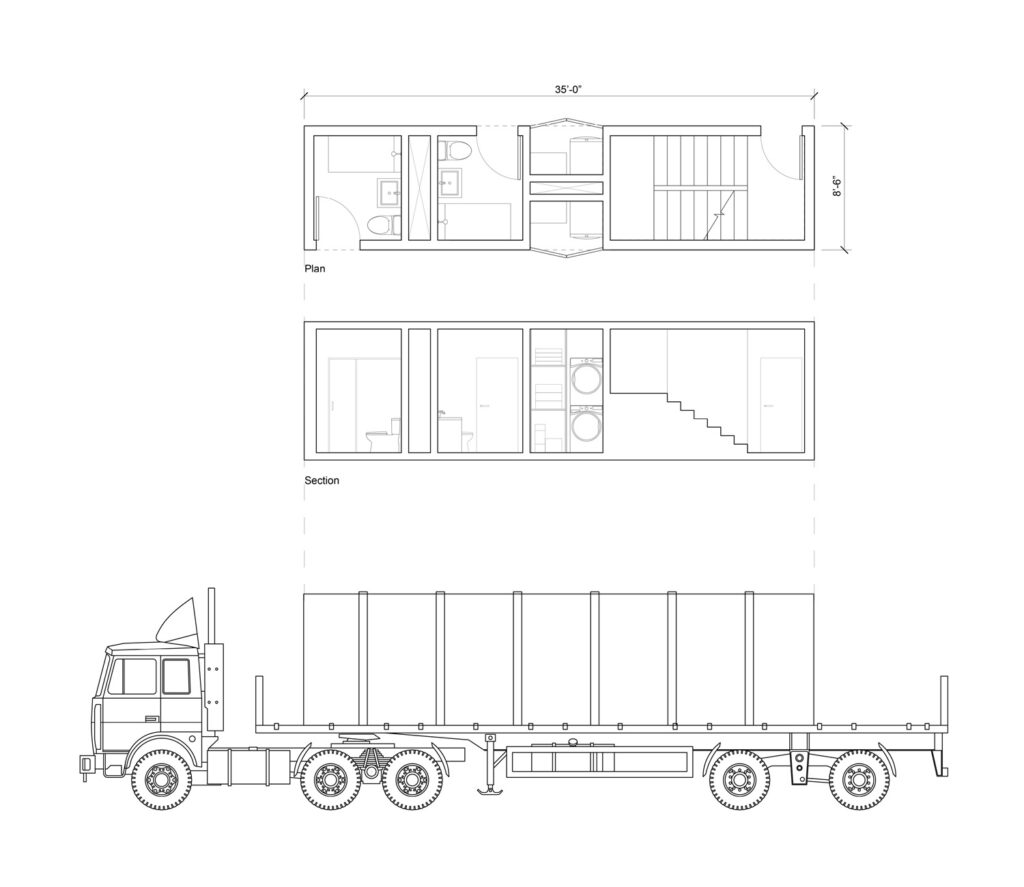
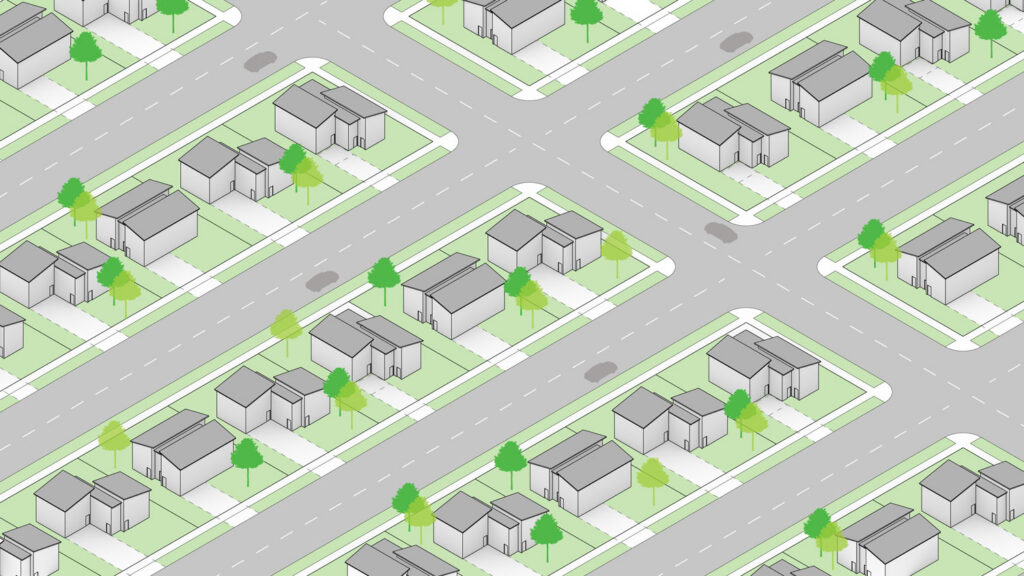
One Block Away’s proposal, “NeighborCore,” introduces a housing model designed to make homeownership more attainable through shared amenities, flexible living arrangements, and a hybrid building approach. At the center of each building is a prefabricated core containing the most complex systems, including bathrooms, laundry facilities, and stairwells. The surrounding living spaces are built on site, combining the efficiencies of prefabrication with the adaptability of conventional construction. The model offers an alternative to both single-family homes and conventional apartment buildings, supporting multigenerational households and greater density while remaining compatible with existing neighborhoods. In doing so, “NeighborCore” responds to growing affordability challenges and evolving housing needs across the United States.
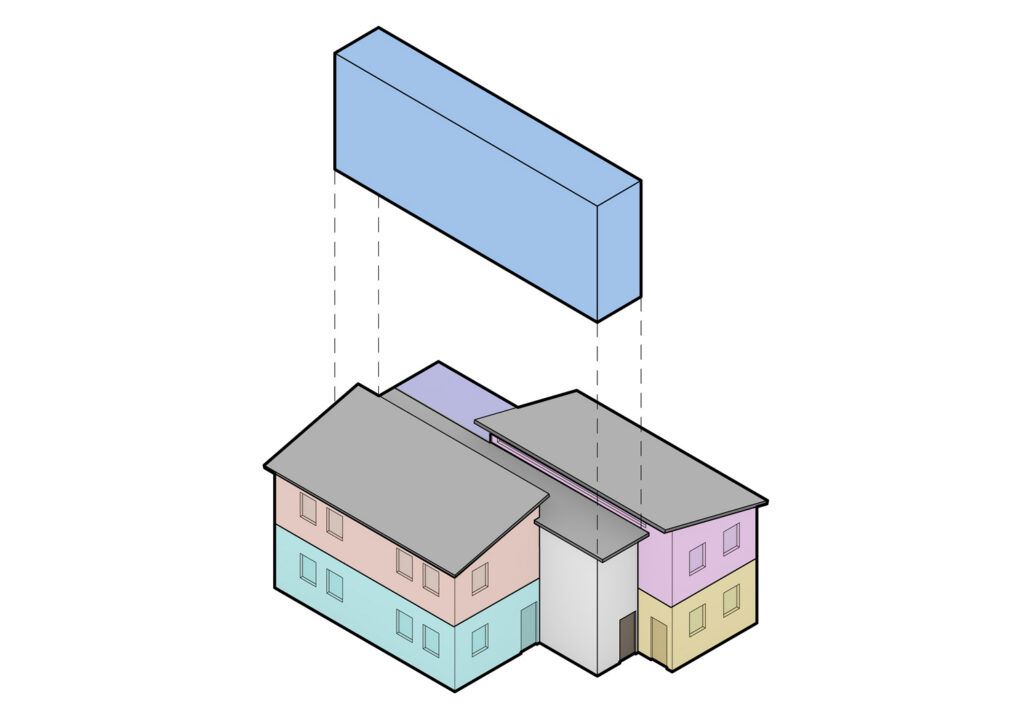
“A key advantage of the strategy is that it allows the design to respond to its surroundings,” said Tan. “Rather than creating a modular building that looks the same wherever it is placed, ‘NeighborCore’ separates the prefabricated core from the living spaces, allowing the architecture to take cues from the surrounding neighborhood. That approach delivers the practical benefits of prefabrication while creating housing that feels rooted in its local context.”
Love emphasized the proposal’s conceptual strategy. “In ‘NeighborCore,’ the most complex building systems are consolidated within a prefabricated core, while the surrounding living spaces are constructed on site,” he said. “By separating the most technically demanding elements from the rest of the building, the proposal reduces construction complexity while maintaining the flexibility needed to adapt to different sites and neighborhoods. There is a certain retroactive inevitability to its logic, and I think this conceptual clarity is what impressed the jury.”
Advancing to the build phase will require One Block Away to assemble the partnerships needed to bring the project to life. Working with builders, manufacturers, and local collaborators, the team will transform the proposal into a full-scale prototype. The process will test not only the team’s design and development expertise but also its ability to deliver an innovative housing concept under real-world conditions.
The Housing Innovation Challenge attracted 20 student-led teams from across the United States, which submitted 32 proposals aimed at reducing housing costs. Following review, 10 teams were selected to advance to the build phase, where their concepts will be developed into full-scale homes.
The Housing Innovation Challenge was established by three founding partners: the Housing Innovation Alliance, a housing industry collaboration platform; Home Technology Ventures, an organization that supports housing innovation; and Meritage Homes, a national homebuilder. Together, they created the competition to help move promising ideas from the classroom into the built environment. Through the challenge, students work alongside housing professionals to test new approaches under real-world development and construction constraints. The City of Charlotte, North Carolina, is serving as the inaugural host.
“NeighborCore” previously won the Construction & Design category at the 2025 Ivory Innovations Hack-A-House, a virtual competition that challenges students to develop innovative responses to America’s housing crisis.