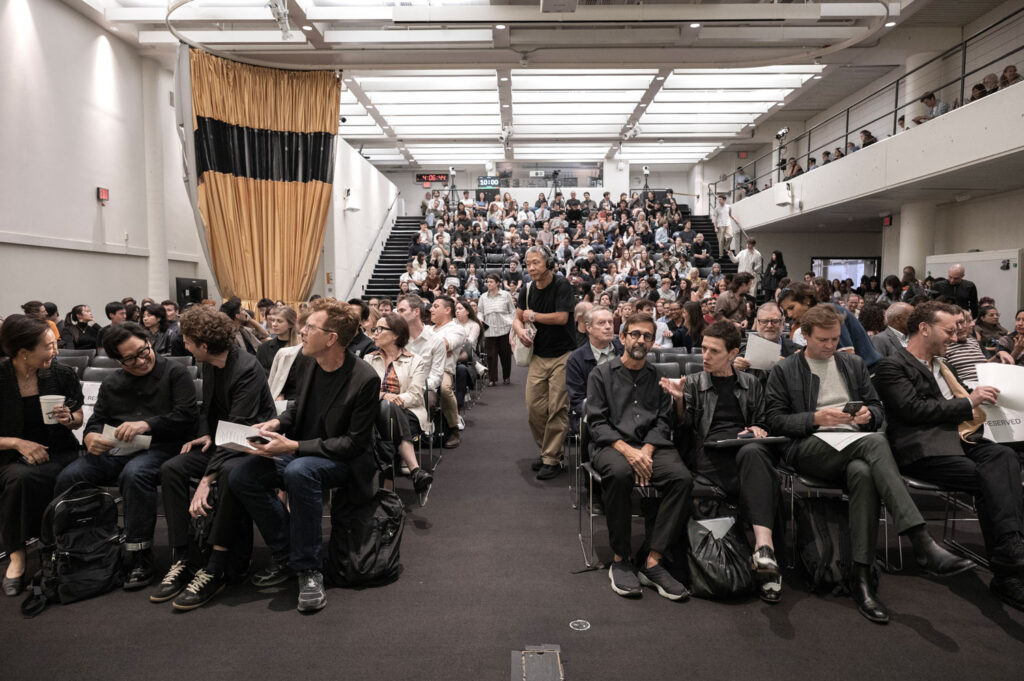
Welcoming the Harvard Graduate School of Design (GSD) community back for the start of the fall 2026 semester, Sarah M. Whiting, dean and Josep Lluís Sert Professor of Architecture, set the tone for a new academic year by reflecting on the careers of two women who she characterized as surprisingly relevant for an audience of aspiring designers: Dolly Parton and Gloria Steinem. Whiting spoke to a packed house of students, faculty, and staff who had gathered in Piper Auditorium for a marathon of short presentations about the semester’s advanced option studio courses, reviving a tradition that had paused for the pandemic. Whiting argued that the iconic country musician and the pathbreaking feminist writer, who both happened to pass away this past week, embodied an aspiration at the core of the GSD curriculum. Through their creative work and philanthropy, such as Parton’s campaigns to improve literacy, both sought to “design a better world.”
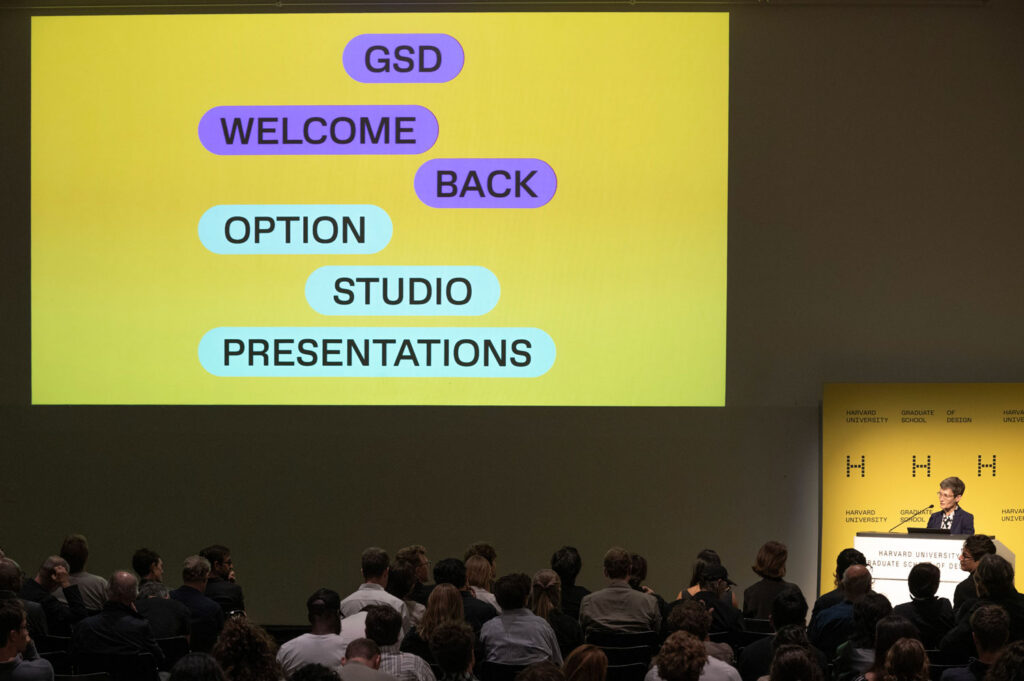
This expansive, optimistic view of what design can be—exceeding the boundaries of any one discipline—was evident throughout the evening’s presentations. In a rapid-fire series of talks, more than 20 faculty members introduced the semester’s option studios, courses in which GSD students focus on a complex, real-world problem for a semester. Studios this semester will travel to sites as different as Tokyo, Colorado’s Rocky Mountains, Ireland’s Atlantic coast, and the corporate parks of Brussels. They will focus on individual buildings, entire urban districts, or diffuse systems, like Boston’s energy grid. Yet despite these differences in scope, subject, and geography, the studios hold the common aspiration to understand design as a fundamental act, not just of shaping the built environment, but of advancing ideals in the world.
Homecomings
Dean Whiting emphasized the global purview of the GSD’s curriculum, a testament to the international makeup of the School community. While focused on contexts far from Cambridge, many studios represent homecomings for the faculty members leading them. Rome-based architects Maria Claudia Clemente and Francesco Isidori, Kenzo Tange Design Critics in Architecture, focus on the ancient heart of their city with “Re-Imagining the Roman Forum.” Students will propose a new structure within one of the most complex historical sites on the planet, described by Clemente as a “palimpsest” of eras, architectural styles, and contemporary uses.
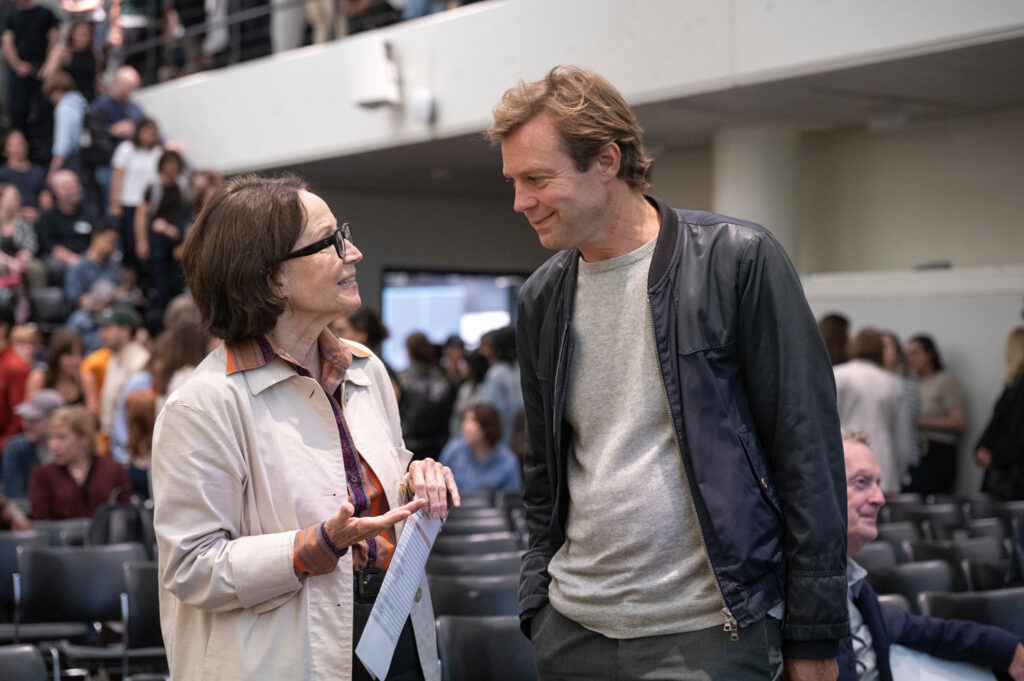
Anita Berrizbeitia, interim chair of the Department of
Landscape Architecture, and Bas Smets, professor in practice of landscape architecture, who is teaching “Biospheric Urbanism—Case Study 5: Brussels, Belgium.”Photo: Anita Kan.
Mariana Alegre Escorza, lecturer in urban planning and design, will challenge students to reimagine urban development in Lima, where she has worked extensively, founding and directing influential NGOs, including Lima Cómo Vamos. Her studio will study how the South American metropolis can remedy its pervasive “fast food” approach to urban design, which she playfully contrasted with the city’s sophisticated cuisine. Conducting the fifth edition of his studio “Biospheric Urbanism” in his hometown of Brussels, Bas Smets will explore urban landscape interventions to make the city habitable in increasingly extreme climate-warming scenarios. Drawing on his connections to municipal, regional, and federal government agencies, Smets expressed hope that student projects developed in the studio could spark real transformation in the city.
Adapting History
In many cases, these transformations involved creative reuse of existing structures. Contemporary approaches to adaptive reuse underlie a substantial number of studios, especially in the Department of Architecture. The future of modernist buildings—as “midcentury” now denotes 70- and 80-year-old structures—emerged as a particularly urgent question. Adrien Verschuere, John C. Portman Design Critic in Architecture and principal and founder of BAUKUNST, kicked off the evening by detailing “Corporate Afterlives: On Climatic Artefacts,” a studio focused on midcentury office tower in Brussels known as World Trade Center III. After close study of the glass-and-steel tower’s “anatomy” the studio will propose interventions aimed at “robustness,” a quality Verschuere defined not solely by energy efficiency, but, in the face of a rapidly changing climate, as “the capacity to absorb uncertainty.”
Applying a similar methodology to an iconic structure, Eric Höweler, professor of architecture, will explore the reuse of Eero Saarinen’s airport terminal in Athens, while Jason Frantzen and Christine Binswanger, both design critics in architecture and partners at Herzog & de Meuron, draw on their firm’s deep experience designing hospitals and other medical facilities in Europe to propose adaptive reuse strategies for the Massachusetts Eye and Ear Tower at Massachusetts General Brigham Hospital in Boston.
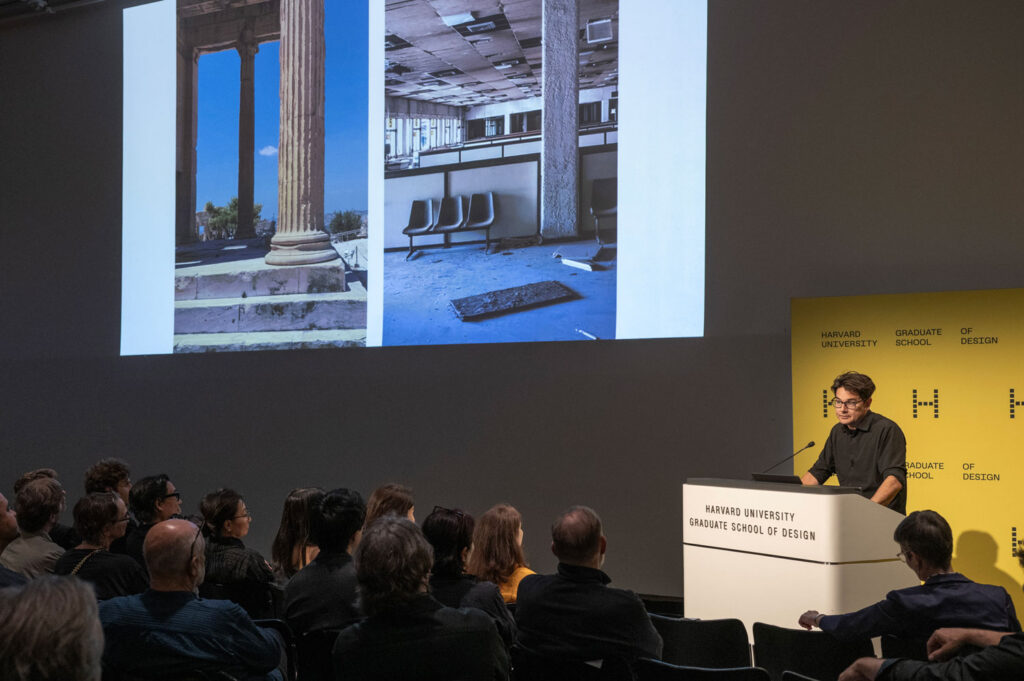
Eric Höweler, professor of architecture, introduces “Afterlives: Transforming Saarinen’s Ellinikon Terminal, Museum of Design Athens.” Photo: Anita Kan.
The need to find new uses for existing structures also expanded to the scale of the city. A studio led by Kevin Hirth, design critic in architecture, takes on Denver’s infamous Colfax Avenue, dubbed by Playboy the “longest, wickedest street in America.” A drive down Colfax’s 26 miles is a journey through the city in all its contrasts: rich and poor, dense and sprawling, commercial and residential, urban and rural. By studying Colfax in sections and devising their own projects for its varied conditions, students will grapple with the Western metropolis in microcosm.
While many students this semester will envision ways to rehabilitate celebrated structures, as Whiting observed, a number of studios investigate the “underbelly of history,” where designers grapple with the physical traces of conflict and built forms that embody lingering tensions. Ignacio Bunster-Ossa’s studio focuses on the industrial heritage of McKeesport, Pennsylvania, just south of Pittsburgh, where once-thriving plants produced steel piping and workers fought for a decent living. After decades during which McKeesport suffered deindustrialization and population loss, Bunster-Ossa is challenging students to re-envision the Rust Belt town as “a must place to live, work, and play.” Struggles over historical water infrastructure underpin the research of Danielle Choi, associate professor of landscape architecture. At a moment when tensions are rising over rights to water in the Colorado River, Choi’s studio investigates the legacy of infrastructure including the Colorado–Big Thompson Project, a complex of reservoirs and tunnels that have fed Colorado’s growth. Such transformative, state-backed initiatives, Choi argued, are simultaneously entangled with the representation of a picturesque frontier wilderness in the state.
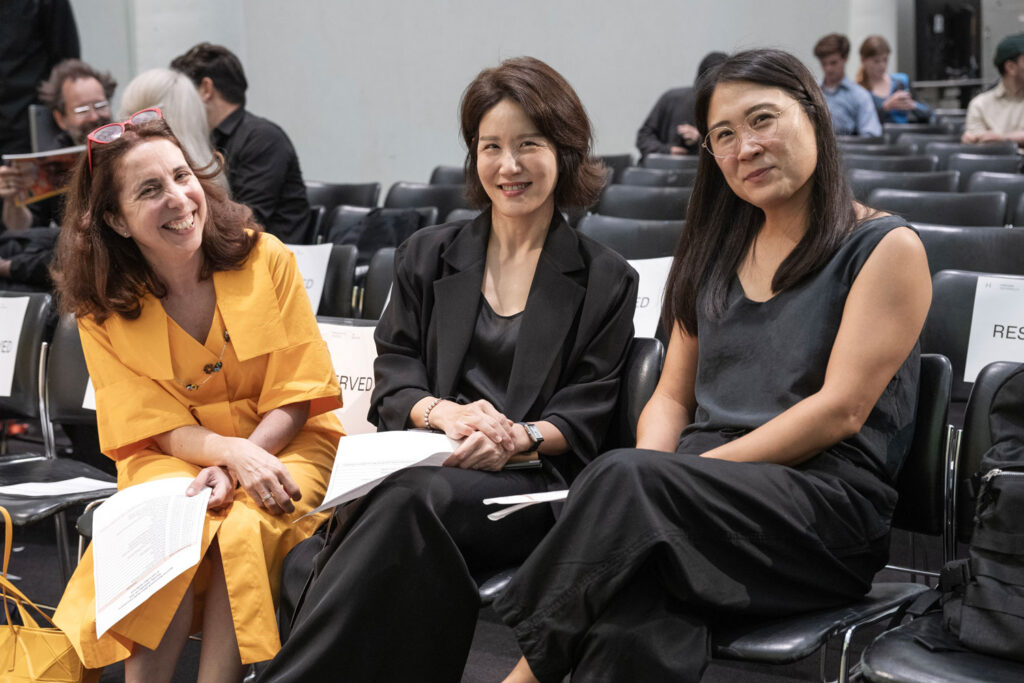
A trio of landscape architecture faculty members prepare to introduce their option studios (L to R): Lorena Bello Gómez, design critic in landscape architecture, “Aqua Incognita VI: Resilience under New Climate Regimes in Valencia, Spain”; Jungyoon Kim, associate professor in practice of landscape architecture, “Regenerative Adaptation: Harnessing Abundance in the Hydraulic Landscape of Kurobe”; and Danielle Choi, associate professor of landscape architecture, “Diversions: Minor Public Works of the Continental Divide.” Photo: Anita Kan.
The Machine in the Garden
The evening’s presentations suggested complex relationships between design and the natural world. Lyndon Neri, Kenzo Tange Design Critic in Architecture and co-founder of Neri&Hu, drew upon the philosophical and aesthetic traditions of Burke, Ruskin, and Thoreau to examine how the notion of the sublime can inform the design of a new cultural facility at Mount Tremper in New York’s Catskills Mountains—an area that has long served as a muse for artists and thinkers. “Wind and Water: Infrastructures for the Wild Atlantic Way,” taught by Roison Heneghan, Shih-Fu Peng, and Hanif Kara, will examine sustainable development on the rugged west coast of Ireland, where the enormous potential for wind energy generation sits in a delicate balance with existing tourist and cultural sites.
The natural world was also figured as a potential threat to inherited city plans and infrastructure, especially in a year of El Niño weather patterns. Lorena Bello Gómez, design critic in landscape architecture, will return to Valencia, Spain, to study landscape interventions that can mitigate the effects of increasingly extreme fluctuations in water levels—a project undertaken in solidarity with those affected by catastrophic floods in 2024. Climatic conditions also inform GSD research in subtle ways. Johanna Hurme and Sasa Radulovic, design critics in architecture and principals of the Winnipeg-based firm 5468796, will lead students to Helsinki to study housing adapted to the Scandinavian climate. Bringing these lessons back to the Boston area, their study will focus on housing typologies with a focus on “negative space,” the ways “courtyards, mews, yards, passages, and shared outdoor domains constitute an essential form of social and environmental infrastructure.”
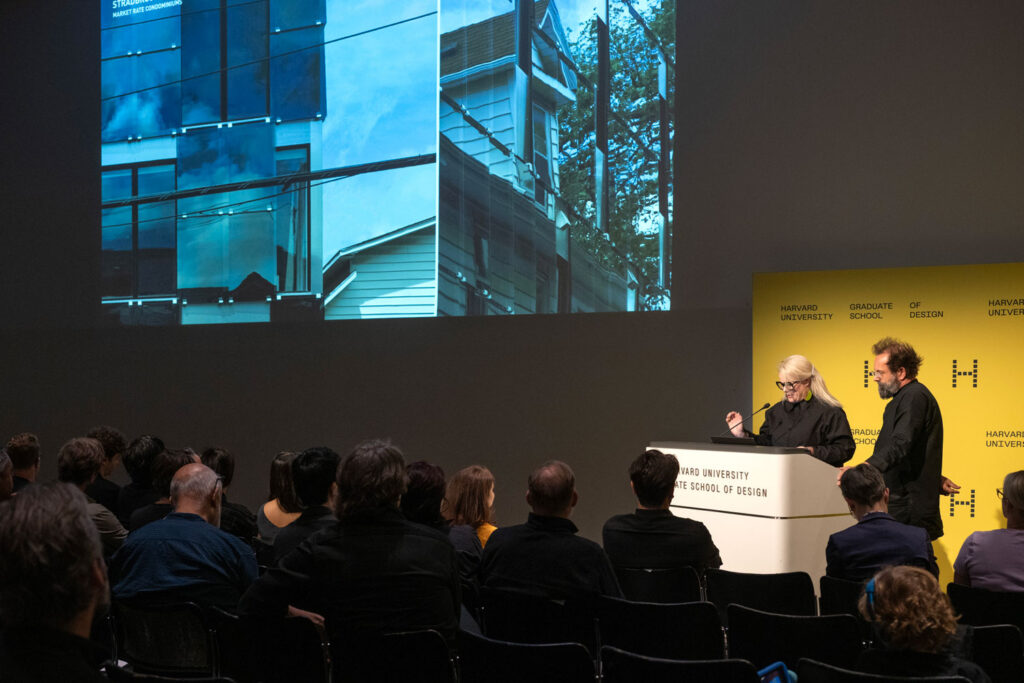
“Shared City: Subverting Positive / Negative Space.” Photo: Anita Kan.
Speculative Realism
The work that GSD students produce in option studios is speculative and experimental even as it develops from real scenarios. Yet the ideas that emerge in GSD courses can and do inform the development of future projects and urban policies. Working closely with policymakers, nonprofit organizations, and other stakeholders on the ground, Alex Yuen, lecturer in urban design, will lead “City in a City: Designing LA’s Second Renaissance.” Focused on the metropolis’s downtown core, the studio will generate projects that could have a critical impact as the city prepares for the 2028 Olympics. Similarly, Elizabeth Christoforetti, associate professor in practice of architecture, will research the dynamic relationships between buildings and urban master planning for a new district in Tokyo that is currently set for redevelopment.
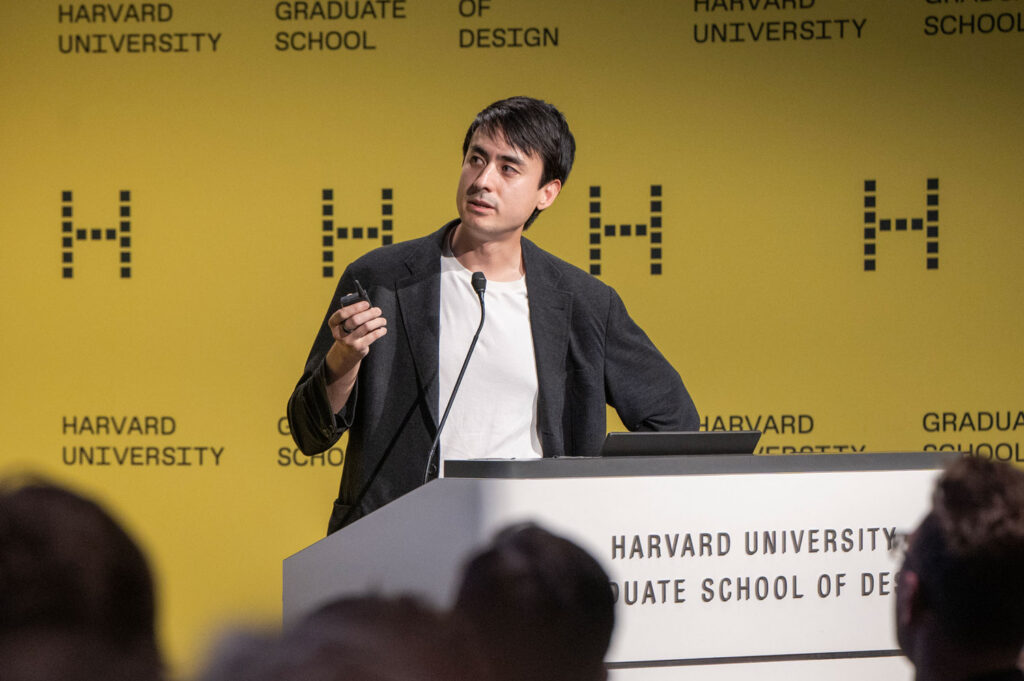
Alex Yuen, lecturer in urban design, introduces “City in a City: Designing Downtown LA’s Second Renaissance.” Photo: Anita Kan.
The practical effects of studios hardly preclude speculative propositions, visionary approaches to design, and even mystical thinking. In “Architecture Before Form,” Juan Sala and Douglas Harsevoort, design critics in architecture, focus on Las Pozas in Xilitla, Mexico—a “surrealist garden” of fantastic cast-concrete floral forms devised in the 1960s by Edward James. Delving deeply into surrealist aesthetics and local perspectives on the natural world, the studio aims to create both the architecture and museological system for displaying the wooden forms used to cast the garden’s botanical sculptures. The deep history of masonry, which gave rise to secret societies and esoteric methods for transmitting knowledge, is at the core of “Architecture of Defense,” a studio about stone in architecture led by Sotirios Kotoulas, design critic in architecture. In addition to visiting several New England quarries, students will understand the fundamental role of stone in defensive structures and sacred architecture.
The optimism expressed throughout the evening reflected both the excitement of a new semester and the deeply held belief among the School community that design can contribute to a better world. Yet Dean Whiting also stressed the “long durée” of design, pointing to the studies this semester that extend past research, including longstanding work in the Kurobe region of Japan led by Jungyoon Kim, associate professor in practice of landscape architecture. Design takes time, and real change does not happen in a single semester. Yet the evening of glimpses into longstanding research suggests a complex body of knowledge building piece by piece, across disciplines and areas of practice. And in that corpus, certainly Parton and Steinem have places of honor.