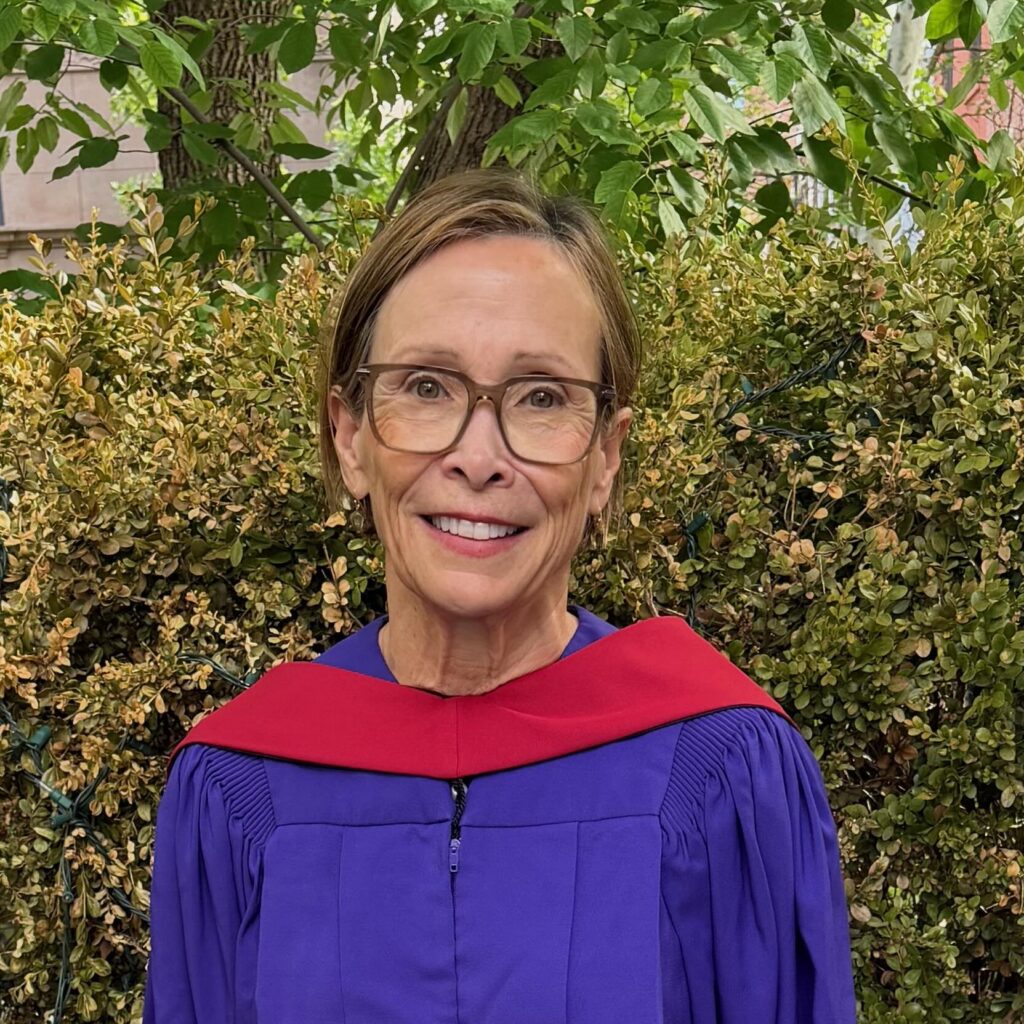
At the end of a year-long fellowship in Cambridge, England, Katherine Dillon (MAUD ’86) found herself at a crossroads. She had studied architecture as an undergraduate at Cornell before earning her degree at the Harvard Graduate School of Design (GSD). Fascinated by technological innovations in design, she realized she didn’t want to pursue a typical architecture career and was instead drawn to other fields. Cash-strapped and unsure of her next move, she typed up a letter to Jules Barnathan, president of engineering at ABC Television, and sent it off via airmail. He replied and offered to meet if she ever found herself in New York. Dillon scraped together the fare for a plane ticket, showed up at his door, and was hired on the spot. That kind of tenacity has driven Dillon’s career as a media designer and storyteller who has stayed at the cusp of each new technological shift, from the internet to podcasting.
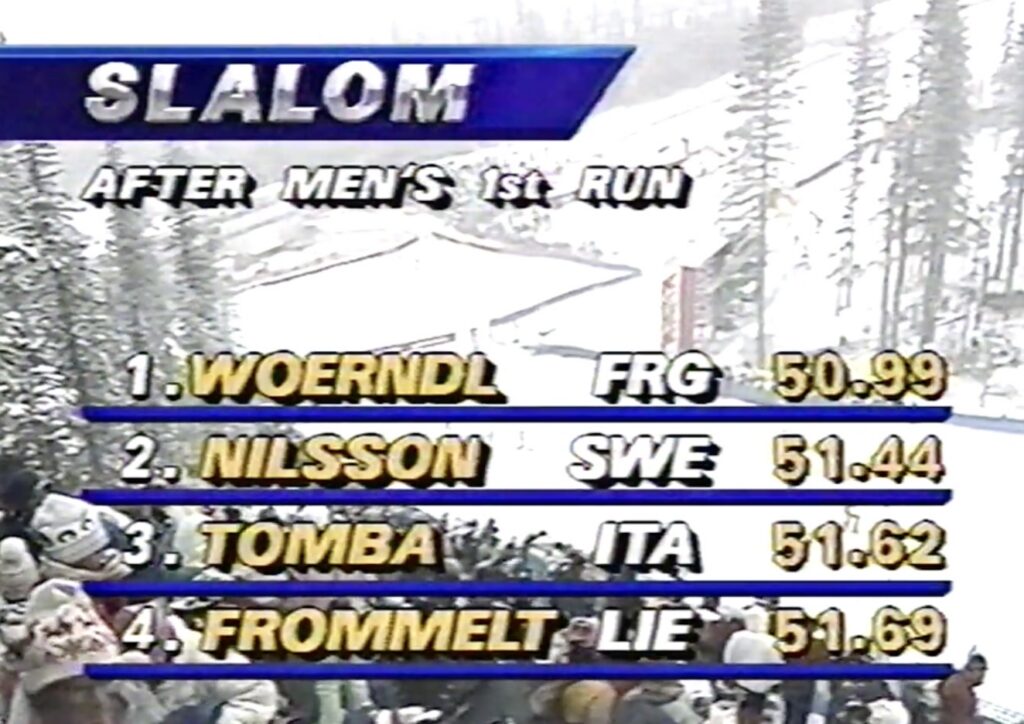
In an earlier era of media, with only three television networks and a few events each year in which they could differentiate themselves, covering the Olympics was an opportunity to stand out. ABC had just won the broadcast rights to the 1988 Winter Olympics in Calgary, so in that first role, Dillon was sent to Canada, where she found herself facing computer technology she wasn’t allowed to touch as a manager, due to union rules.
“I had been in the world of architecture and academia and barely knew what a labor union was,” she explains. “That was a very stressful situation.”
She adapted quickly to the industry and began innovating on broadcast graphics—for example, reframing how scores are shown on-screen and designing graphics that signify the heart of a story.
“I was not a television person,” she says, “but that ultimately served me well, because I wasn’t influenced by all the traditional models for communicating information.”
She and her team won an Emmy for their work at the Olympics, and she went on to run broadcast graphics at ABC for seven more years. She had joined the company at a pivotal moment, when the networks were transitioning from designing by hand with paper and cardboard to working entirely on computers. Her design training and facility with new media gave her an advantage. With a team of 110 artists, she supported all the daily shows, from Good Morning America at the start of the day to Nightline at the end, with animation, typography, branding—graphic design, she says, “in the broadest sense of the word.” Anything that wasn’t video, she and her team handled.
As the internet emerged, she became interested in what it would mean for media companies and moved into the department at ABC focused on the pivot to digital content. CNN had launched 24-hour cable news programming in 1980, with many other networks following suit in subsequent years, and in August 1995, the early days of the internet, CNN announced their creation of a 24-hour news website. Dillon, who was working on early web programming, convinced ABC executives that they should develop a 24-hour online news site. The network announced that plan in October 1997, basing on the prototype Dillon built using HyperCard, Apple’s Macintosh program for multimedia design. “It’s such early, dated technology,” she notes, laughing at how rudimentary HyperCard looks today. Nevertheless, it was effective; leadership took notice, and Dillon was named general manager of ABCNews.com, setting the creative and editorial direction and hiring the team that created the website and its programs.
Within a couple of years, Disney had bought ABC, and Dillon decided it was time to co-found her own company, Dillon Thompson, adopting early the remote online working model that so many people follow today. Dillon, based in New York, worked with her co-founder, who lived in Seattle, to design and build websites for people and companies that needed online branding. The work helped her realize that clients did not understand the importance of fundamental design concepts and visual language. With future professionals in technical and new media work in mind, she designed the course she had always wished she had been able to take: Visual Communication, which marries technical skill-building with developing a visual language, and defining one’s own sensibilities. She began teaching the course at NYU’s Tisch School of the Arts, where, today, she is an associate arts professor.
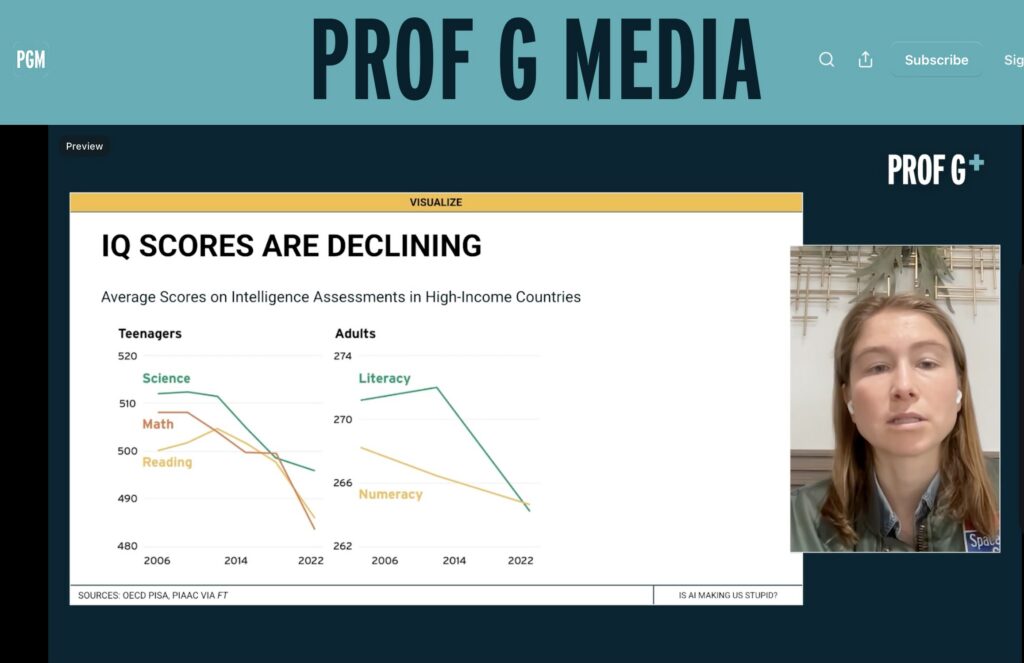
Alongside her teaching, she began collaborating with Scott Galloway on his company L2, where she served as chief creative officer. Dillon helped brands better understand their online and social media performance and develop more effective marketing strategies. She and her team aggregated data from major companies like Estée Laude to track their online engagement, and developed a system by which companies could compare their performance metrics with one another. She used the skills she had honed years earlier at ABC to visualize the data, revealing the patterns and stories it told. L2 quickly grew to 140 employees. She and Galloway sold the company in 2017 but continued their collaboration. The viral success of their four-minute weekly video show, Winners and Losers, in which the pair focused on best practices in the digital world, Galloway founded Prof G Media, where Dillon is executive producer. The company has 23 employees and produces 15 podcasts a week.
Dillon’s trajectory as a TV and podcast executive producer might seem like a tangent from her start in architecture and urban design at the GSD, but in retrospect, she was ahead of her time, following the curriculum and career path that MDes students might pursue today. She won a second Emmy for her art direction on PrimeTime Live, and three Webby Awards for her online and podcasting work.
“When I reflect on my career,” she says, “the thread that runs through it all is being on the leading edge of opportunities in storytelling, whether that was at ABC News in broadcast graphics, or information design, or using tools to tell interesting data stories—and now, podcasting and video.”
With more than 400,000 subscribers to the podcasts she produces at Prof G, all of them grounded in data, she maintains her focus on well-designed storytelling in the fast-paced world of media production. She is a believer in the efficiency that technology now offers now, with a small staff needed to film a show rather than the dozens who once crowded TV sets. But in podcasting she still applies the principles she learned at her first job: “You have three seconds of people’s attention on a screen. How do you communicate the essence of the story in that time? I love that pace.”