Each January brings a new slate of J-Term offerings: non-graded workshops taught by Harvard Graduate School of Design (GSD) students, staff, and faculty that explore experimental topics in a low-stakes, often playful environment. This year, J-Term featured more than 30 courses spanning material and spatial explorations, socialization, and self-care. Among them, a subset reflected the growing presence of—and interest in—artificial intelligence (AI) in design. Two such courses explored how AI can expand design thinking and practice.
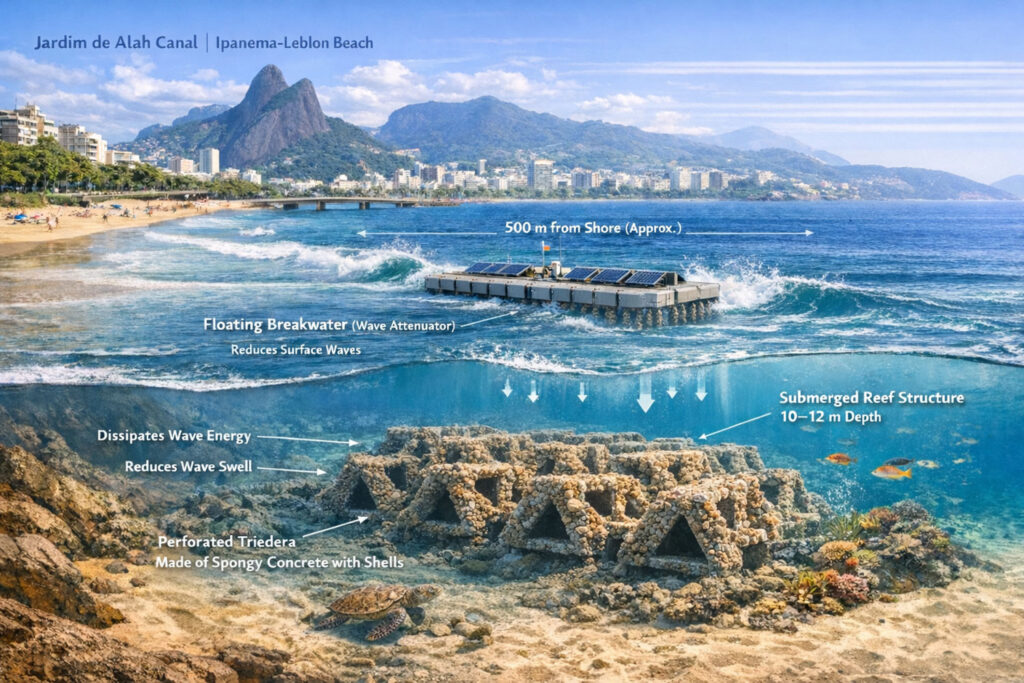
Taken together, they suggest a shift in design pedagogy: AI is not simply a tool for accelerating outputs, but a medium that reorients how designers generate, test, and communicate ideas.
AI Design for Ocean Solutions
Designers have always worked through proxies: a building in plan, a city in miniature, a climate reduced to arrows and gradients. Generative AI belongs to this lineage—a new studio instrument that is, at once, tracing paper, reference library, and sketching partner. Used strategically, AI can help generate and iterate ideas quickly, refining them into novel interventions.
This premise anchored “AI Design for Ocean Solutions,” a course hosted by the metaLAB at Harvard and the GSD, which framed the technology’s value as a muse rather than a tool for efficiency. Led by metaLAB director of Art & Education Sarah Newman; scientist, entrepreneur, and metaLAB affiliate Heather Newman; metaLAB researcher Sebastian Rodriguez; and GSD lecturer and senior metaLAB associate Eric Rodenbeck, the course positioned generative AI as a creative method transferable across disciplines. It drew on the metaLAB’s AI Pedagogy Project, described by founder and project lead Sarah Newman as “an initiative to explore what AI means for teaching and to provide faculty with practical, conceptual, and ethical resources.”
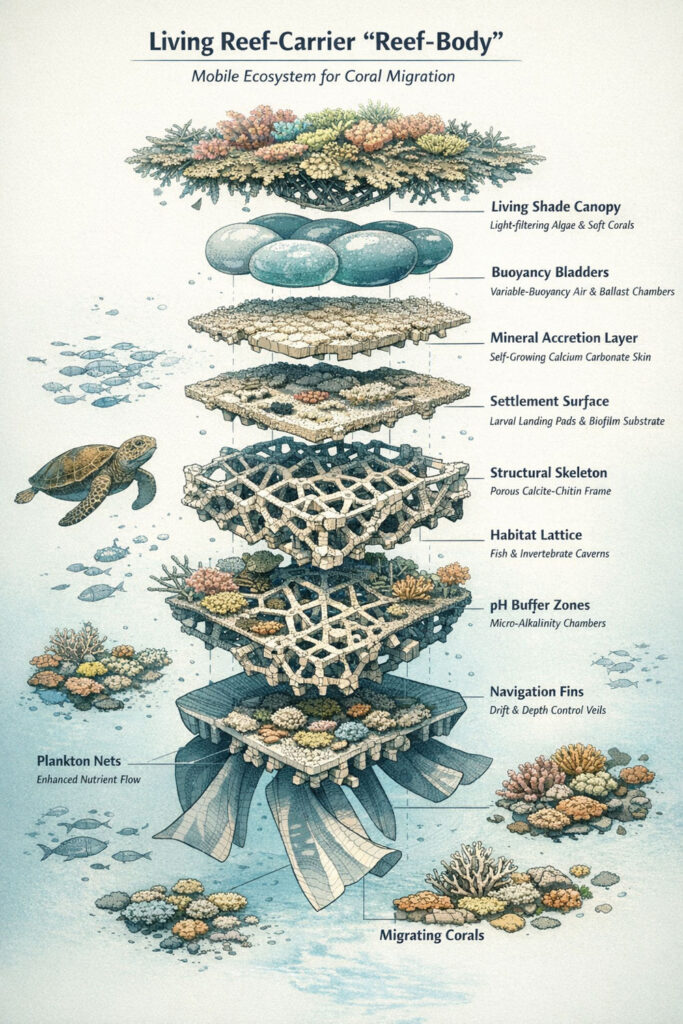
Staged over four afternoons, the studio required no prior experience in AI or marine science. Lectures—on AI’s basics, risks, and environmental impacts; oceanic challenges; and chance as a creative catalyst—alternated with design exercises using large language models (LLMs) such as ChatGPT, Claude, and Sora. Students developed proposals addressing issues including sea level rise and biodiversity loss.
LLMs operate through pattern recognition and prediction, generating likely continuations of a prompt. These outputs are not definitive answers but probabilistic suggestions—productive precisely because of their imprecision. Such slippages can prompt unexpected ideas: a mobile reef that relocates to avoid warming waters, or an automated flotation device that skims harmful algae. The course presented a practice that is both tool-literate and critically engaged, treating AI as a design medium rather than a productivity shortcut.
Vibe Coding & Experimental Cartography
Haozhuo Yang (MAUD ’25) led a J-Term course on experimental cartography, approaching AI less as a speculative partner than as a practical interface—one that lowers technical barriers and reframes how designers work with data. The course focused on vibe coding to develop maps in ArcGIS, a platform for creating data-driven maps. While AI-generated imagery has drawn widespread attention, Yang notes that its computational applications—particularly in spatial analysis—remain underexplored.
Defined by Andrej Karpathy as the iterative practice of instructing AI in everyday language, vibe coding allows designers to bypass technical hurdles in GIS. As Yang puts it, “AI can unlock significant potential from the designer’s perspective,” enabling more efficient production of maps that express both data and intent.
“When I want a prototype or need to understand a client’s spatial problem,” Yang says of his work with his startup TangiblEmpact, “vibe coding can help me rapidly synthesize knowledge and produce solutions within a coding environment.”
Designed for students with varying levels of experience, the course introduced geoprocessing operations in ArcGIS Notebook, the creation of reusable Script Tools, and the development of expressive cartographies of Manhattan. These exercises allowed students to apply their skills while developing their own visual and analytical approaches. Yang has also produced an open-source handbook for designers interested in using vibe coding within GIS.
While at the GSD, Yang co-founded Harvard GSD Urban AI (HUAI) with Han Na Kim (MArch ’25) and Tony Juncheng Yang (DDes ’25). Last month HUAI held its 2026 conference “Multi-Scalar Urban Intelligence: Towards an Adaptive Future,” featured leading interdisciplinary thinkers including Harvard GSD faculty Antoine Picon, G. Ware Travelstead Professor of the History of Architecture and Technology; and Elizabeth Bowie Christoforetti, assistant professor in practice of architecture.
Together, these courses point to an emerging pedagogical shift at the GSD: AI is not a discrete topic but an embedded design medium—one that expands how designers think, work, and engage with complexity.