Infrastructure in a Time of Flux: Methods, Conditions, and Situations Symposium
LIVESTREAM INFO
| A live stream for this event will be available on this page at the scheduled start time. Closed captioning is available by clicking the “CC” icon at the bottom of the player window. |
About This Event
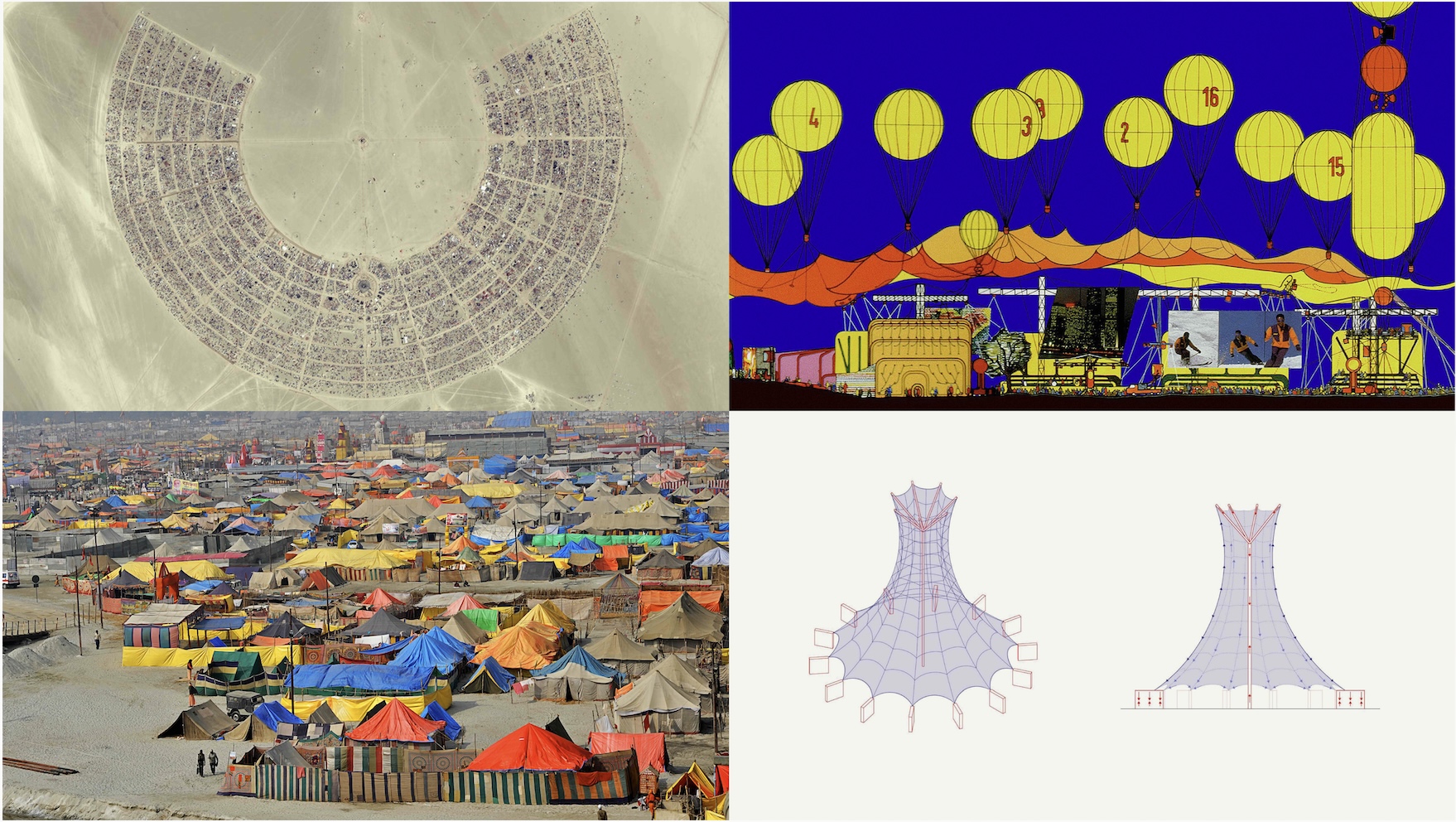
Infrastructure in a Time of Flux: Methods, Conditions, and Situations, an exhibition curated by Rahul Mehrotra and Dan Borelli, examines how architecture, engineering, urban design, and planning respond to a world increasingly defined by environmental disruption, political instability, technological transformation, migration, and rapidly changing patterns of habitation.
Schedule & Speakers
Alessandro Petti is an architect, artist, researcher, and educator. Together with Sandi Hilal, he co-directs DAAR, a practice working across architecture, art, pedagogy, and research. Their work addresses and intervenes in the political and spatial conditions of exile, displacement, decolonization, and difficult heritage, including the afterlives of colonial-fascist architecture. Through projects and research, they have developed concepts and practices including Permanent Temporariness, Refugee Heritage, Campus in Camps, and Decolonizing Architecture. Petti is Professor of Architecture and Social Justice at the Royal Institute of Art in Stockholm. His work has been presented internationally while remaining grounded in long-term collective practices in Palestine and beyond.
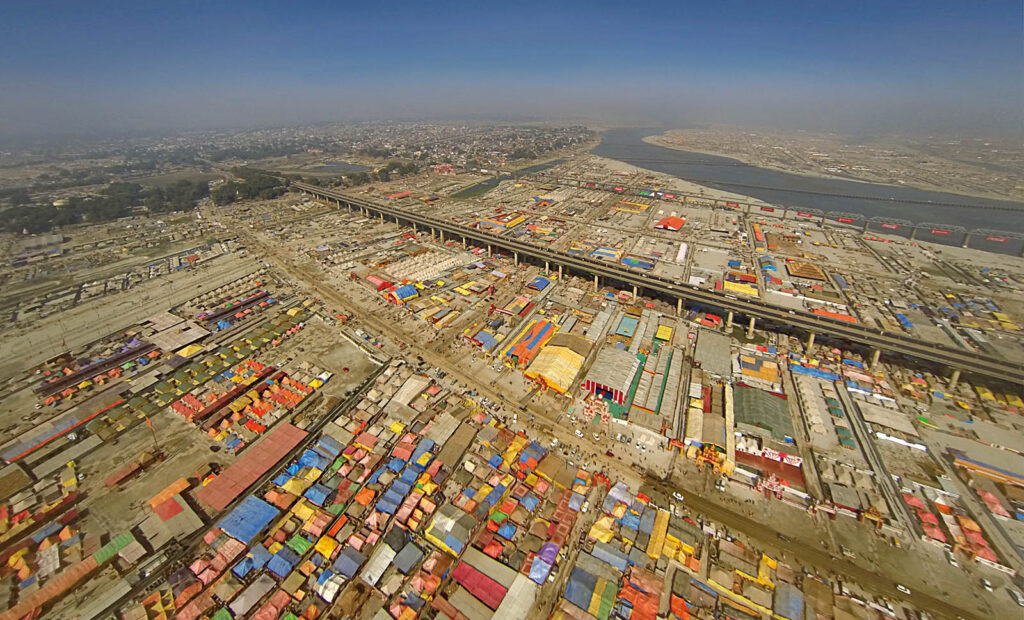
Religious pilgrimages create temporary sacred cities. Drawing work by several schools at Harvard, this interdisciplinary conversation reflects on the Kumbh Mela, one of the largest gatherings in the world, and the roads, tents, sanitation systems, ceremonial routes, and public services that support it. This panel is organized by the Lakshmi Mittal and Family South Asia Institute at Harvard University.
SPEAKERS
• Rahul Mehrotra, John T. Dunlop Professor in Housing and Urbanization at the Harvard Graduate School of Design
• Tarun Khanna, Jorge Paulo Lemann Professor at Harvard Business School and Director of the Lakshmi Mittal and Family South Asia Institute at Harvard University
• Satchit Balsari, Associate Professor of Emergency Medicine at Harvard Medical School and of Global Health and Population at the Harvard T. H. Chan School of Public Health
• John Macomber, Senior Lecturer of Business Administration at Harvard Business School
• Namita Dharia, Associate Professor of Political Economy at the Rhode Island School of Design
• Diana Eck, Professor Emerita of Comparative Religion and Indian Studies at Harvard University
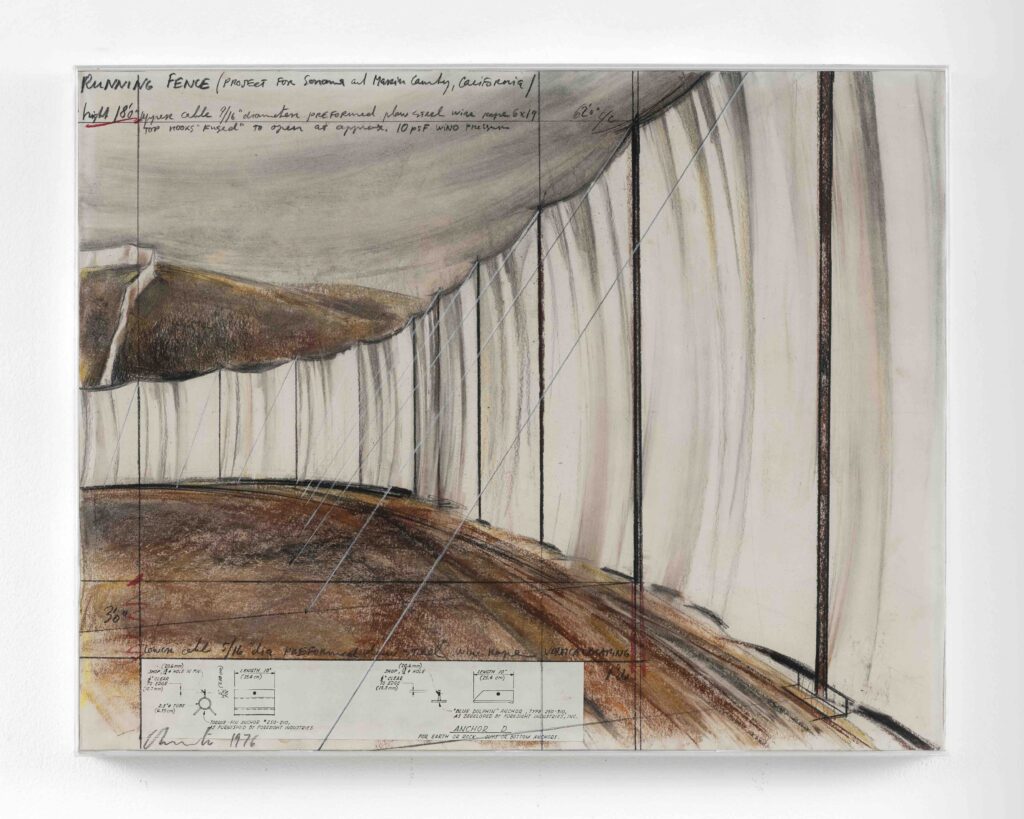
This panel explores historic and contemporary approaches to lightweight construction: suspended, pneumatic, tensile, tensegrity, deployable, gridshell, folded, scaffolding, and spaceframe systems. Developed across different periods and disciplines, these methods use tension, air pressure, geometry, movement, modularity, and coordinated assemblies to create expansive spaces with relatively little material.
SPEAKERS
• Chip Lord, Artist; Founding member, Ant Farm
• Isabella Inti, Founder, Temporiuso.net; Co-Director, M-US-T (Master in Temporary Uses), Politecnico di Milano
• Kelsey Nocket, Loeb Fellow 2027; Former USAID Bureau of Humanitarian Assistance
MODERATOR
Dan Borelli, Director of Exhibitions, Harvard GSD
This panel brings together urbanists, economists, and political scientists to discuss the forces that continually reshape human settlements. These forces operate beyond the scale of individual buildings, transforming landscapes, redistributing resources, influencing migration, and determining where and how communities can live.
SPEAKERS
• Luis Felipe Vera Benitez, Chief of Operations, Inter-American Development Bank
• Satchit Balsari, Associate Professor of Emergency Medicine at Harvard Medical School and of Global Health and Population at the Harvard T. H. Chan School of Public Health
• Amy Whitesides, Assistant Professor of Landscape Architecture, Harvard GSD
MODERATOR
Kelsey Nocket, Loeb Fellow 2027; Former USAID Bureau of Humanitarian Assistance
This panel features designers and researchers presenting contemporary examples and speculative proposals for structures that meet immediate human needs. These situations emerge through necessity, ritual, labor, exchange, displacement, conflict, celebration, and collective action.
SPEAKERS
• Malkit Shoshan, Interim MDes Domain Head: Publics; Founding Director, FAST (Foundation for Achieving Seamless Territory)
• Mojtaba Nabavi, Designer, Safdie Architects
• José Mayoral, Founding Partner, PRÁCTICA
• Jeannette Sordi, Visiting Associate Professor, New York Institute of Technology
MODERATOR
• Luis Felipe Vera Benitez, Chief of Operations, Inter-American Development Bank
This symposium is supported by the Koji Yanai Innovative Infrastructure Initiative Fund, a partnership with the Lakshmi Mittal and Family South Asia Institute, and contributions by the Loeb Fellowship at the Harvard Graduate School of Design.
Harvard University welcomes individuals with disabilities to participate in its programs and activities. If you would like to request accommodations or have questions about the physical access provided, please contact the Public Programs Office at (617) 496-2414 or [email protected] in advance of your participation or visit. Requests for American Sign Language interpreters and/or CART providers should be made at least two weeks in advance. Please note that the University will make every effort to secure services, but that services are subject to availability.
#GSDEVENTS