In 2013, the Sun, the Moon, and Jupiter entered an alignment that occurs once every 12 years. According to the Hindu astrological calendar, the event signaled the start of a Maha Kumbh Mela, the largest religious gathering in the world. Over roughly two months, tens of millions of pilgrims—estimates range from 60 million to 100 million—converged on the confluence of the Ganges, the Yamuna, and the mythical Saraswati Rivers near Allahabad (now Prayagraj), India, for prayer, feasting, and ritual bathing.
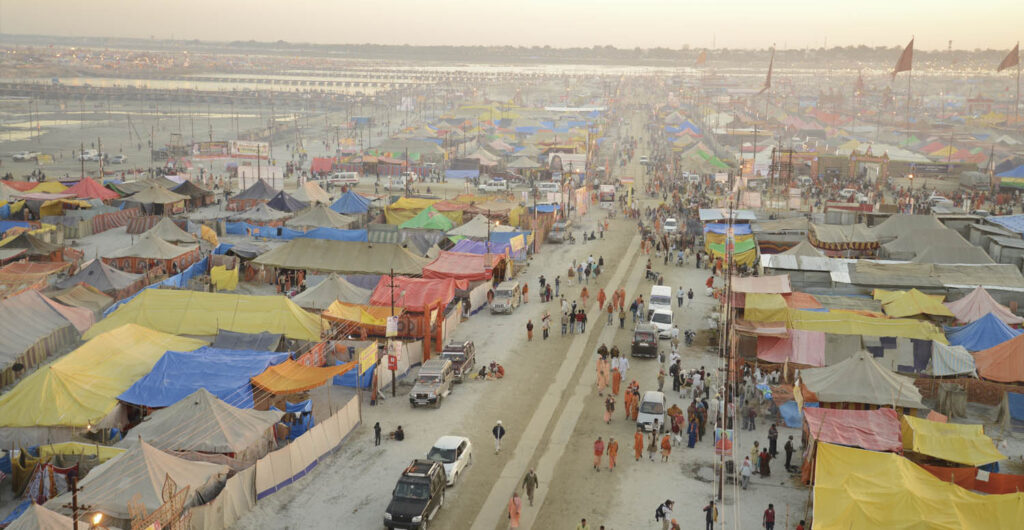
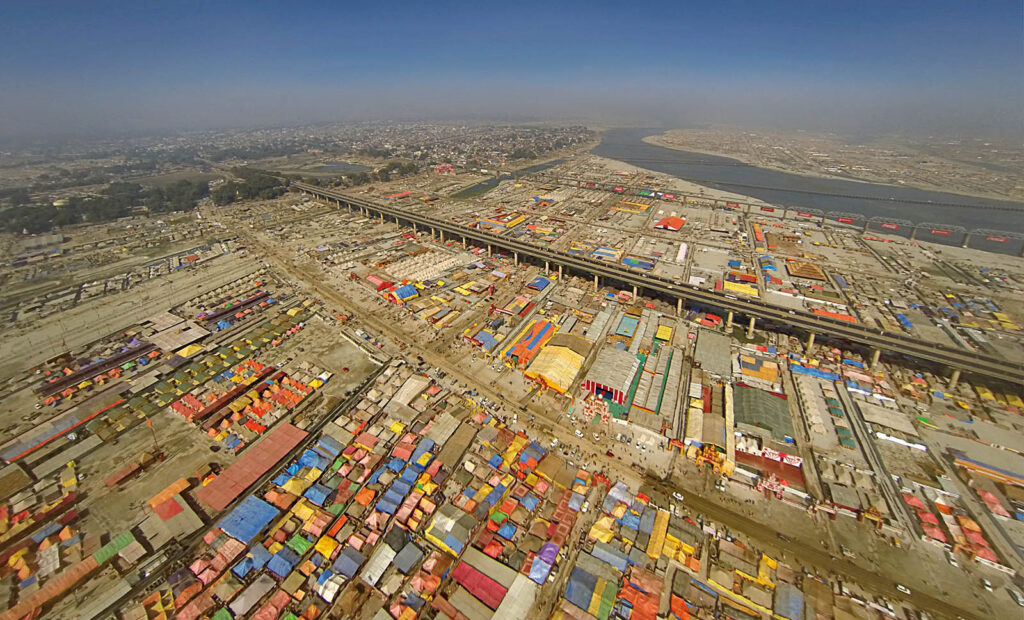
That year, the Lakshmi Mittal and Family South Asia Institute organized an interdisciplinary team of researchers from across Harvard University. They studied the Kumbh Mela as a religious and cultural event, an economic engine for the region, a public health challenge, and—for the first time—a case study in large-scale temporary urbanism. The infrastructure required to house, feed, and care for the pilgrims added up to a megacity built of bamboo poles, fasteners, and fabric. One of the largest urban centers on the planet rose on the rivers’ floodplain and vanished within weeks.
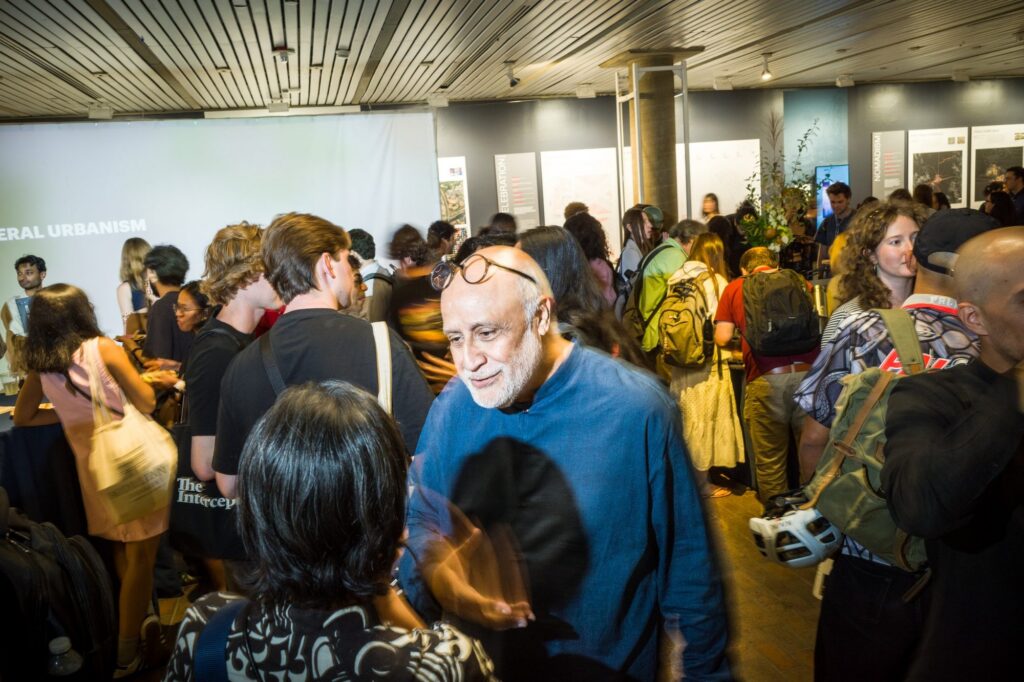
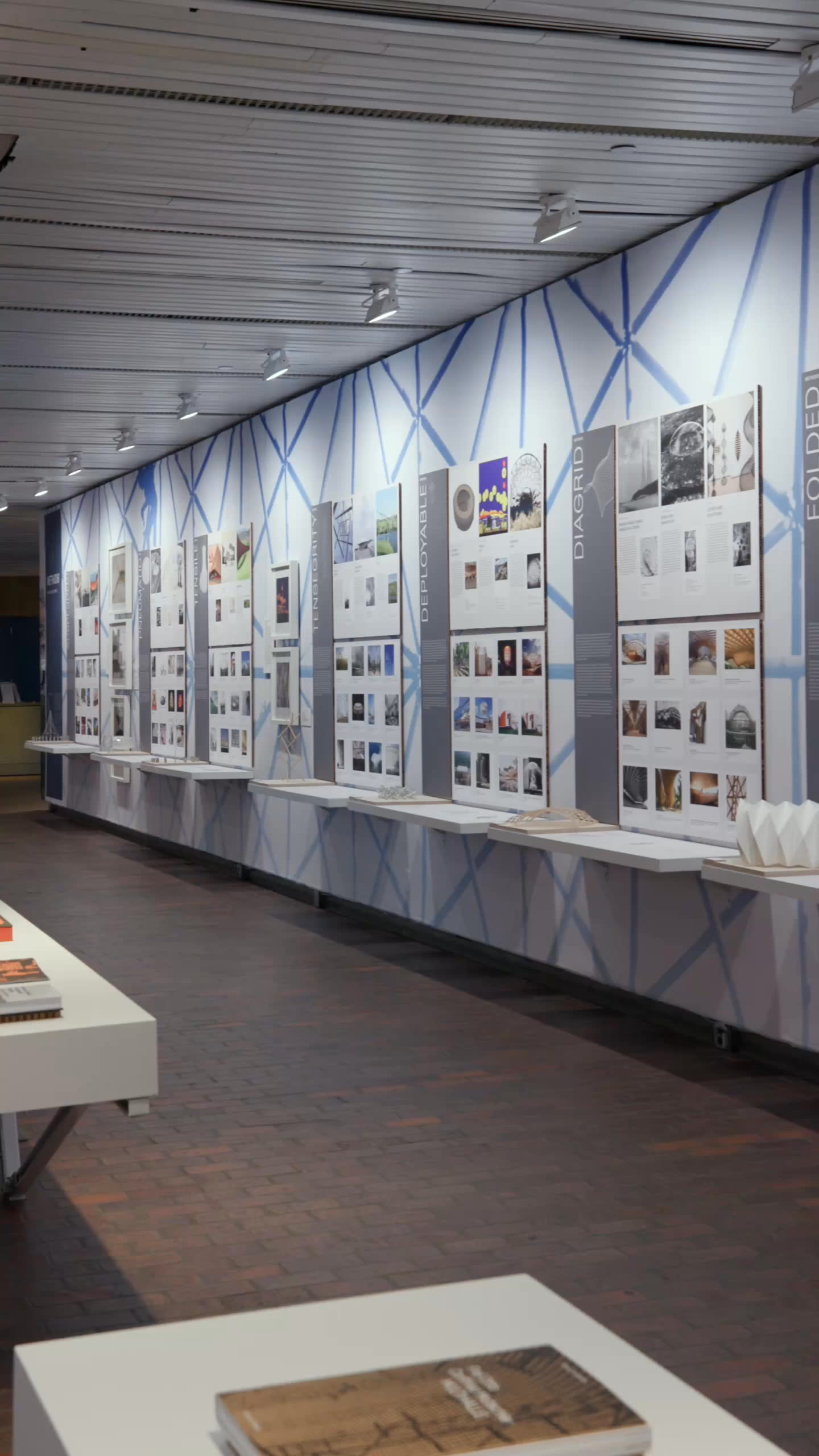
Members of that team reconvened at the Harvard Graduate School of Design (GSD) on November 12 and 13 for a symposium accompanying the exhibition Infrastructure in a Time of Flux: Methods, Conditions, and Situations, which includes studies of the festival. The exhibition was curated by Rahul Mehrotra, John T. Dunlop Professor in Housing and Urbanization at the GSD and a co-lead of the Kumbh Mela project, with Dan Borelli (MDes ’12), the GSD’s director of exhibitions. It is on view in the Druker Design Gallery through December 20.
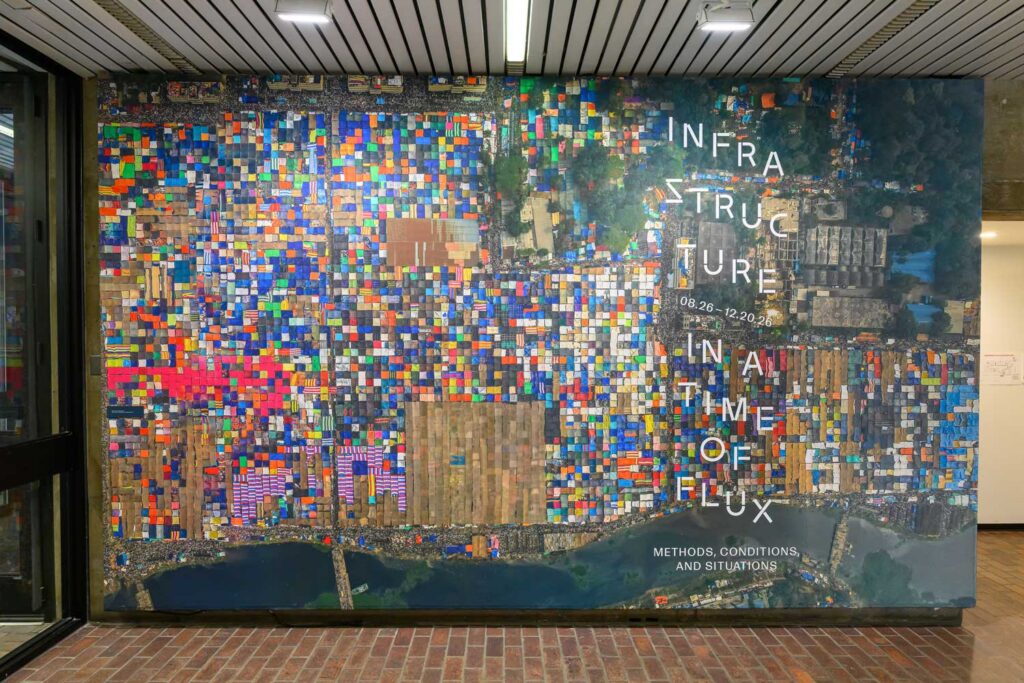
Introducing the symposium, Mehrotra described how the Kumbh Mela informed ongoing research at the GSD into lightweight, reversible structures and into temporary urbanism around the world. The work in the exhibition and the presentations at the symposium range from religious gatherings and mass festivals to refugee camps and military installations.
Temporary urban forms are usually treated as marginal to a presumably stable built environment. Mehrotra argued instead that they can be central to understanding contemporary cities at a moment when climate change and political instability are driving large-scale social change. “What if permanence were not always the default of urbanism?” he asked, making the case for “defining cities instead by what changes.”
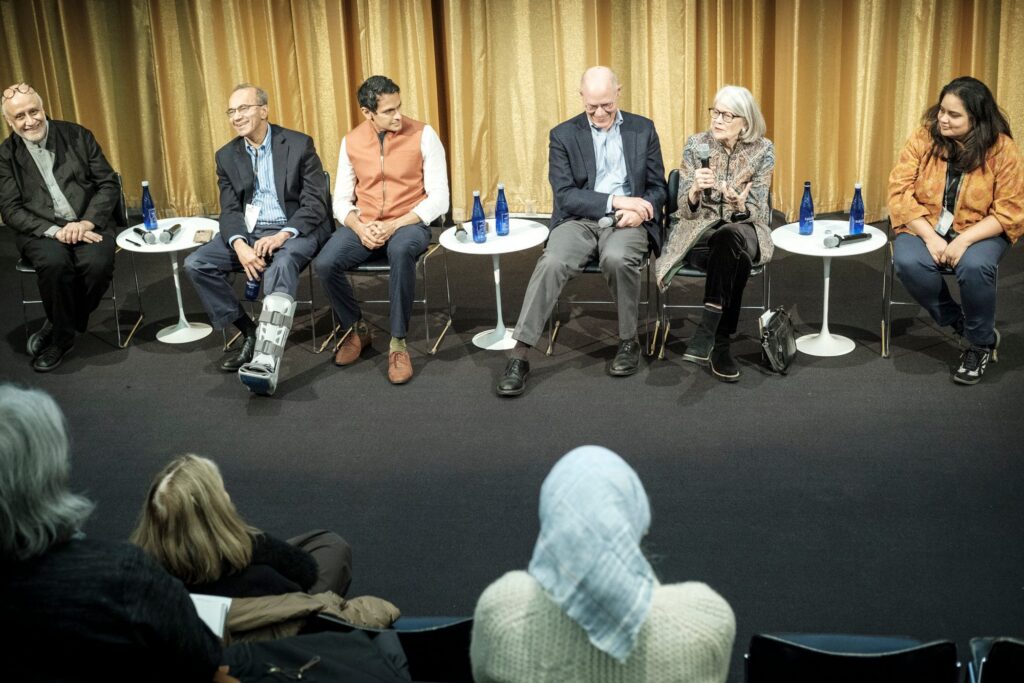
Alongside members of the original Kumbh Mela team, the symposium brought together scholars, designers, and artists whose projects range from cattle markets in Dhaka to seasonal resort towns on the Chilean coast to abandoned buildings in Milan repurposed as art spaces. Across two keynotes and four panels, shared themes emerged from diverse research methods and geographies.
The Politics of Permanent Temporariness
“Everything in a refugee camp is a political act—it is architecture in all its political dimensions,” said Alessandro Petti in the symposium’s opening keynote. Petti cofounded Decolonizing Architecture Art Research (DAAR) with Sandi Hilal, and much of his talk focused on their work in Dheisheh, a camp for Palestinian refugees in Bethlehem. Among DAAR’s long-term projects is a formal nomination to UNESCO proposing that the camp, together with the 44 villages from which its original inhabitants came, be recognized as a transboundary World Heritage Site.
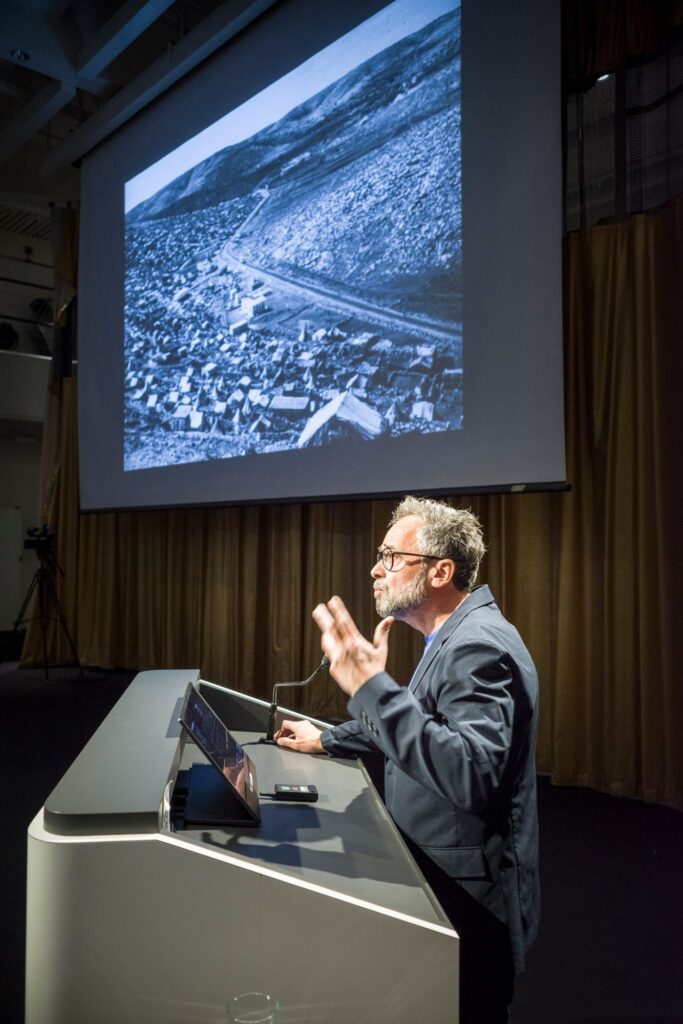
Dheisheh was established in 1949 as a tent camp for some 3,000 refugees. Over the decades the tents gave way to permanent buildings, and today the camp is home to nearly 19,000 refugees registered with the United Nations. Yet even as Dheisheh grew into a dense urban district, its residents continued to affirm its temporary status, holding on to the right to return to their villages, now within Israel. “Every improvement could undermine the right to return,” Petti said. Every investment in the built environment raises a fraught question: “How to improve your living conditions without normalizing your life.”
Petti calls this condition “permanent temporariness,” the title of his keynote, and as other speakers made clear, it is increasingly common. How do you design a temporary environment when the effects of an emergency can last for generations? Kelsey Nocket, a Loeb Fellow at the GSD and a former officer in USAID’s Bureau of Humanitarian Assistance, called this tension the “emergency paradox.” Relief structures such as UN-standard tents or flat-pack units like the IKEA Foundation–backed Better Shelter are designed for short-term use, she noted, but displacement routinely stretches across years or even generations.
Such imported housing solutions can do harm as well as good. A sudden influx of manufactured materials and construction methods can upend local economies of production and override local knowledge about housing and infrastructure suited to a particular culture and climate. Malkit Shoshan, interim MDes Domain Head: Publics at the GSD and founding director of the Foundation for Achieving Seamless Territory (FAST), focused on that knowledge in Mauritania’s Mbera camp, home to tens of thousands of refugees from Mali. Designers, she urged, should turn to “refined inherited knowledge,” including extant examples of low-density urbanism and adobe structures in the Sahel, not imposed solutions.
Namita Dharia (PhD ’15), associate professor of political economy at the Rhode Island School of Design and a member of the original Kumbh Mela team, made a related point about the festival’s labor system. As Mehrotra noted, the entire ephemeral city is assembled from a few essential units, including the eight-foot bamboo pole. For Dharia, the laborers who build it are “co-designers” who bring ancestral traditions to the construction of the ritual city. The temporary urbanism of the Kumbh Mela, in other words, is hardly improvised but rests on long-standing cultural knowledge about design, infrastructure, and governance. The question for humanitarian design is how such bodies of knowledge might be put to work in places living under permanent temporariness.
Art Asks the Question
Artists have long found ways to represent such intractable situations. DAAR’s gallery installations pair photographs of Dheisheh with images of the villages its residents left behind, a strategy that recalls Robert Smithson’s dialectic of site and nonsite, here turned toward a fulcrum of geopolitical tensions. As Borelli put it, paraphrasing the designer John Maeda, art asks the question, and design suggests answers. The exhibition places temporary structures within a long history of artistic experimentation: for example, visitors entering the show encounter Christo and Jeanne-Claude’s wrapping of the Pont-Neuf in Paris in 1985 as well as JR’s later intervention on the same bridge.
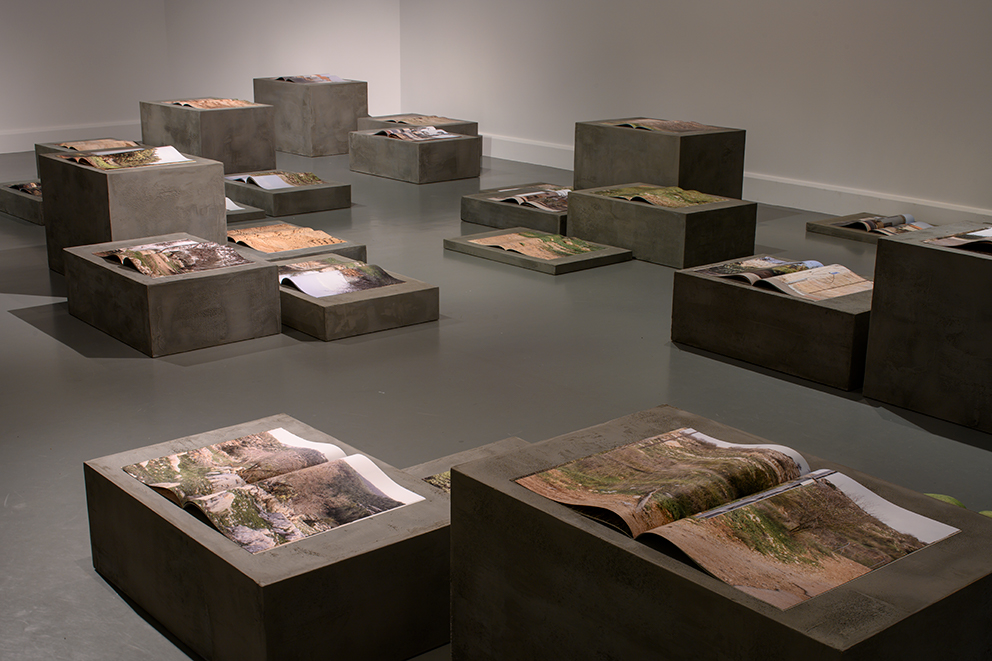
Photographic dossier by Luca Capuano
Book Design Rosanna Lama.
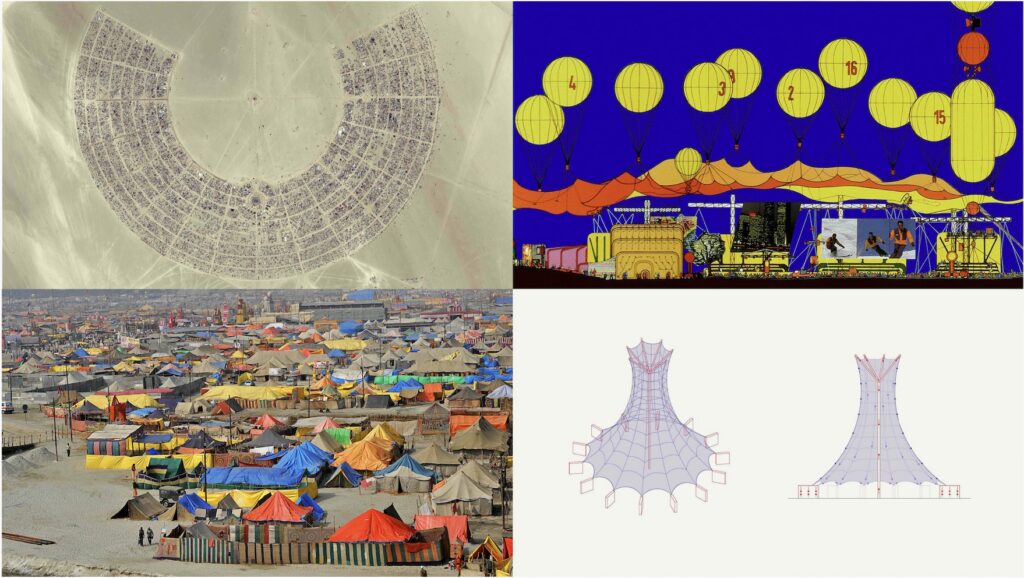
Chip Lord, a founding member of the radical architecture collective Ant Farm, gave the symposium’s second keynote, revisiting the late 1960s, when it seemed possible that experimental design could change the world. Ant Farm’s inflatable structures became icons of the era. An enlarged version of the group’s 50 x 50′ Pillow served as the medical tent—the “bad-trip pavilion,” in Lord’s phrase—at the Rolling Stones’ ill-fated 1969 free concert at Altamont, the event remembered for the disastrous decision to hire the Hells Angels as security. Playful as they were, Ant Farm’s installations were often driven by political engagement, particularly activism around air pollution. The collective’s Clean Air Pod (1970) imagined pneumatic structures as both retreats from and protests against the status quo.
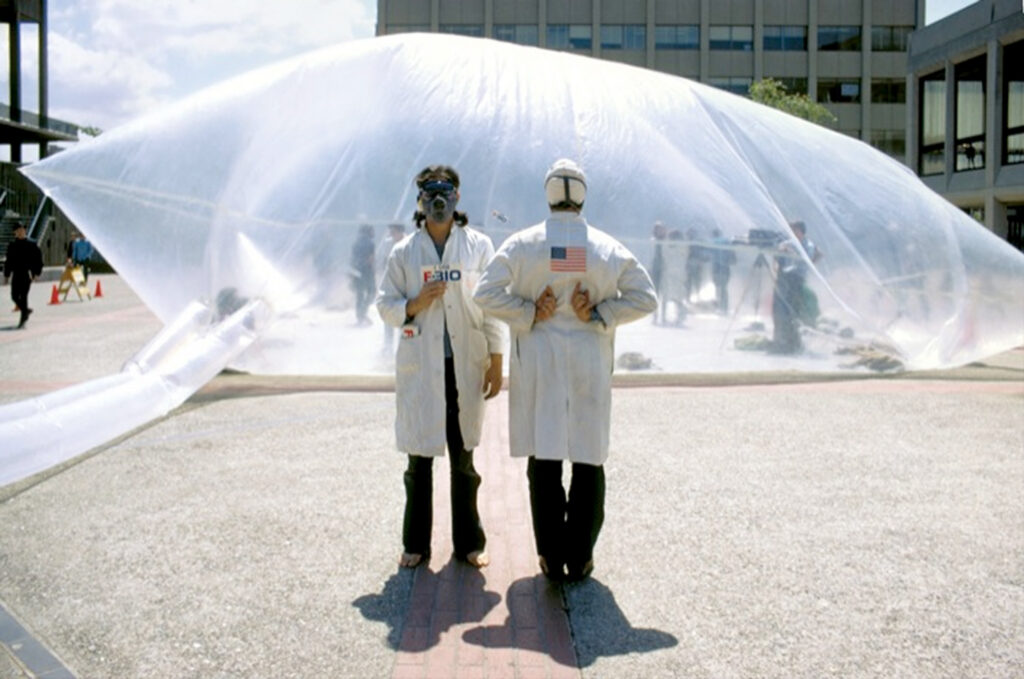
Pneumatic structures are now enjoying a revival, in some instances temporarily attached to permanent buildings. Isabella Sara Inti, founder of Temporiuso.org and codirector of the Master in Temporary Uses (M-US-T) at the Politecnico di Milano, offered a systematic framework for such rapidly deployable, lightweight interventions. Temporiuso has developed methods for repurposing underused and abandoned buildings in Italy, often for cultural uses, and Inti addressed the ethical dimensions of that work.
Nusrat Jahan Mim (DDes ’24), assistant professor at the University of Toronto’s John H. Daniels Faculty of Architecture, Landscape, and Design and Faculty of Information, gave a precise account of how such cultural activities operate on the scale of the city. During the Muslim festival of Eid al-Adha, which calls for the sacrifice of cattle and goats, parts of Dhaka are transformed into temporary livestock markets. Mim describes such transformations as “borrowing” from the city: occupying space and taking up resources that must be returned when the festival ends.
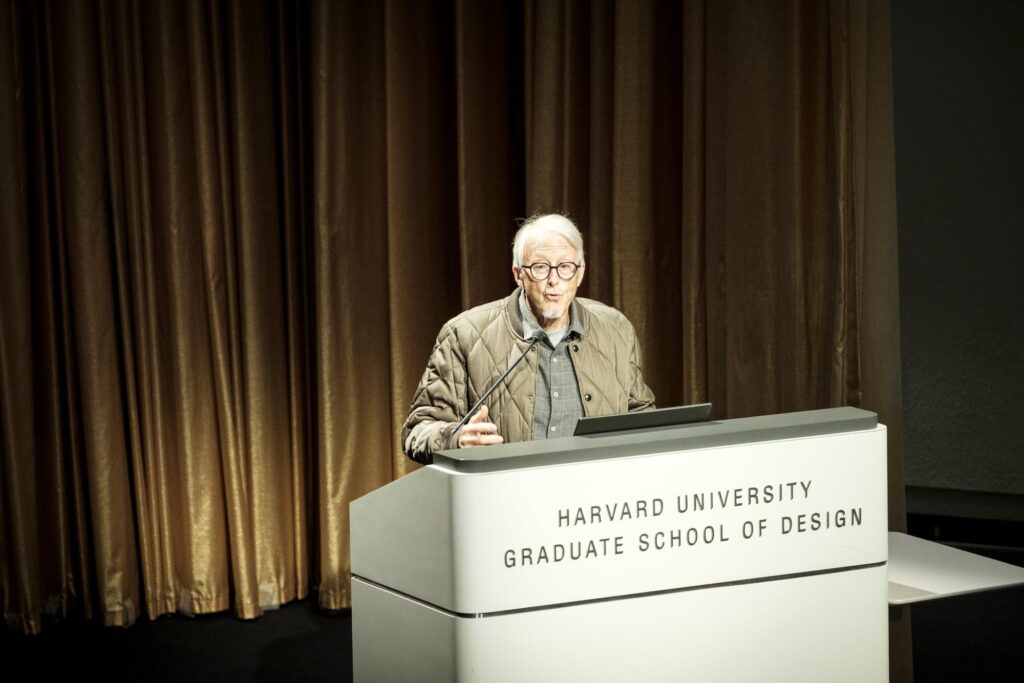
This collective logic of borrowing, which ultimately sustains an urban ecosystem through periods of change, was also evident in the account of festivals in Seville and Venice by José Mayoral (MArch ’14), a partner at PRÁCTICA. It also provides a contrast to the work of avant-garde practitioners like Ant Farm, who are motivated to critique and even break an ecologically destructive status quo rather than return to it.
Bringing It Home
Though the projects spanned the globe, several speakers turned to planning for contingency within the United States. Nockett asked whether refugee camps might offer a model for addressing the long-term crisis of homelessness in the US, noting that the expertise built up around housing aid in international development has rarely been applied to displacement at home.

Also on view in the exhibition is research by Mojtaba Nabavi (MAUD ’24), now a designer at Safdie Architects, on a new generation of American nomads, many of whom took to the road after economic crises. Nabvi’s project offers a taxonomy of mobile living, from “stealth docking” illegally in cities to “boondocking”—living, usually in RVs, on public land—in places such as Quartzsite, Arizona. Nabvi describes “transition as a condition” for these nomads, and his design intervention caters to maximum flexibility. The modular structures he envisions provide hybrid infrastructure, including restrooms, healthcare facilities, and community gathering places, for people primarily living in vehicles.
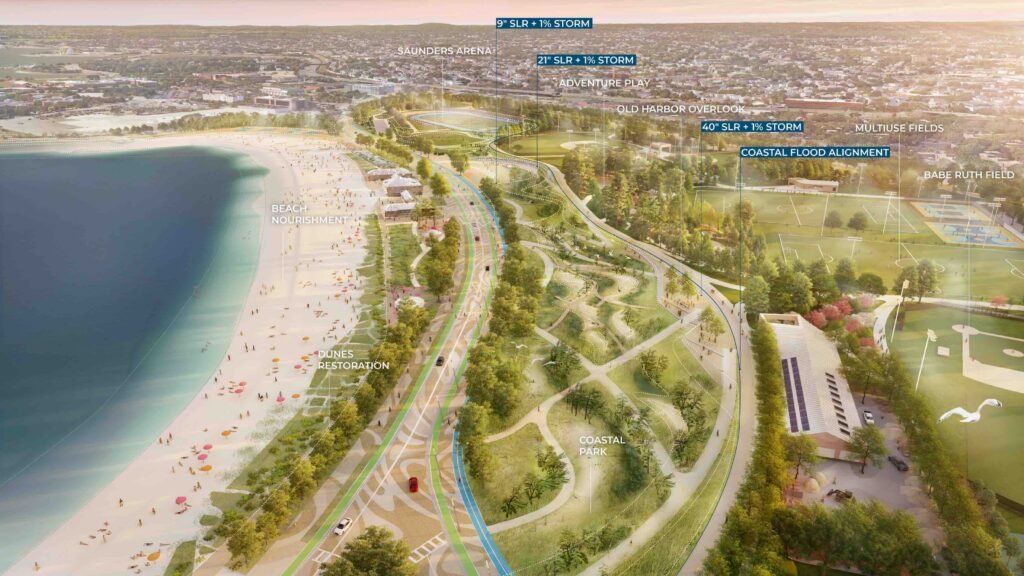
That condition, whether called temporary permanence or permanent transition, is increasingly common, and it will have to be built into permanent infrastructure as well. Amy Whitesides (MLA ’12), assistant professor of landscape architecture at the GSD and a longtime director at Stoss Landscape Urbanism, showed how in the plan for Moakley Park in South Boston, conceived as infrastructure that can change and evolve over time. Its amphitheater doubles as a stormwater catchment, and its landscape provides space for recreation while protecting neighborhoods from storm surge as sea levels rise.
Climate change formed a pointed backdrop to many of the presentations, including Satchit Balsari’s on extreme heat in Europe and Felipe Vera’s (MDes ’13) on migration in Latin America. The reality of a changing climate, forecast in overwhelming detail, poses a challenge for urban planners everywhere that Mehrotra spelled out in his conclusion to the symposium.
What happens when the future is more precisely documented than the past? With climate data forecasting conditions in increasing detail, Mehrotra argued, “planning is a rear-guard action, not avant-garde any longer.” The task he set forth is to take an anticipatory stance—to build change, adaptability, and even reversibility into the design process from the start.
This symposium was supported by a partnership with the Lakshmi Mittal and Family South Asia Institute at Harvard University. It was funded by the Koji Yanai Innovative Infrastructure Initiative Fund and the Loeb Fellowship at the GSD.