Savalee Tikle: Meet the Class of 2026

At the intersection of sustainable design strategies and data-driven community advocacy, Savalee Tikle is studying in the Department of Urban Planning and the GSD. An architect and urban research practitioner from Mumbai, she specializes in urban innovations and design paradigms, with experience at Perkins Eastman Architects DPC and SEArch Design Studio.
Her work is grounded in sustainable urbanism and shaped by fellowships such as YLAC, PUKAR, and LEAP Cities, alongside collaborations with NGOs and placemaking initiatives. She served as a Harvard Bloomberg Summer Fellow with the City Leadership Initiative in Indiana, where she created the city’s first GIS-based blight database and developed a replicable revitalization model reframing underutilized sites as opportunity zones for housing, public space, and economic growth.
Throughout her career, Savalee has led community-based research addressing grassroots issues, contributed to policy drafting, and conducted multi-sectoral studies on urban development, transportation, waste management, poverty, and gender dynamics. Through her cross-disciplinary and systemic approach, she weaves design, policy, and community insight into strategies that foster resilient, inclusive, and equitable urban futures, leaving an impact that resonates across geographies.
The Harvard Graduate School of Design Class of 2026 represents the range of departments and disciplines that shape the school’s distinctive approach to design education. In this series, students share perspectives on their work, research, and experiences, reflecting a commitment to advancing a more resilient, just, and beautiful world. Together, these videos offer a cross-section of the GSD’s intellectual and creative community.
Eric Rannestad: Meet the Class of 2026
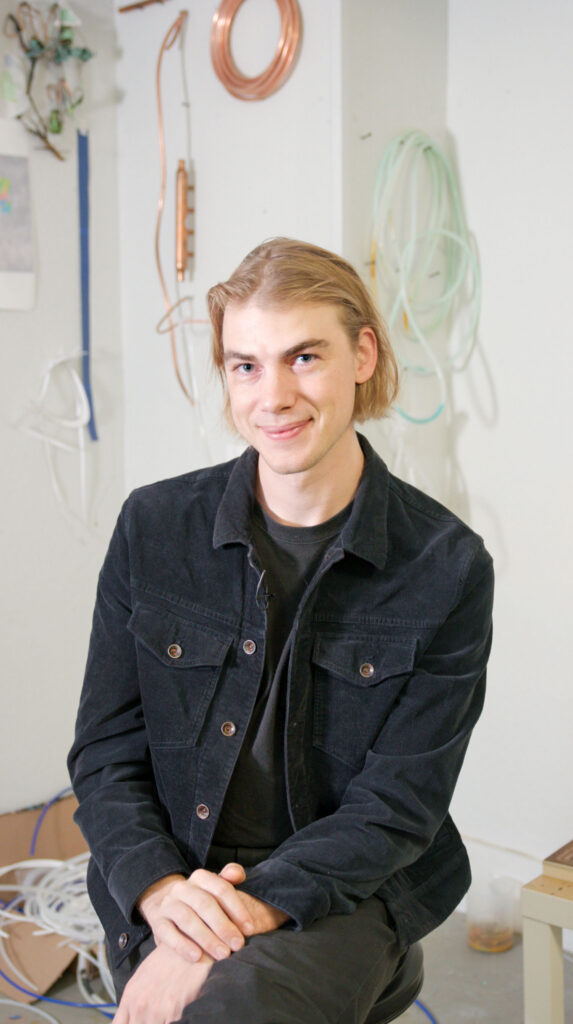
Eric Rannestad (MDes ’26) is an artist whose work explores the systems and technologies humans use to compartmentalize, measure, and model the world. Working across sculpture, painting, and digital media, he speculates on the infrastructure of the built environment through projects informed by economic, natural resource, and architectural models.
Eric’s practice draws on mapping technologies, commercial cartography, and environmental conservation work across the American West. During his time at the GSD, historical and archival research became another significant source of inspiration—one he describes as “deeply influential” and a practice he will continue. “It has changed the work in pretty profound ways,” he says.
The Harvard Graduate School of Design Class of 2026 represents the range of departments and disciplines that shape the school’s distinctive approach to design education. In this series, students share perspectives on their work, research, and experiences, reflecting a commitment to advancing a more resilient, just, and beautiful world. Together, these videos offer a cross-section of the GSD’s intellectual and creative community.
Valentine Geze: Meet the Class of 2026
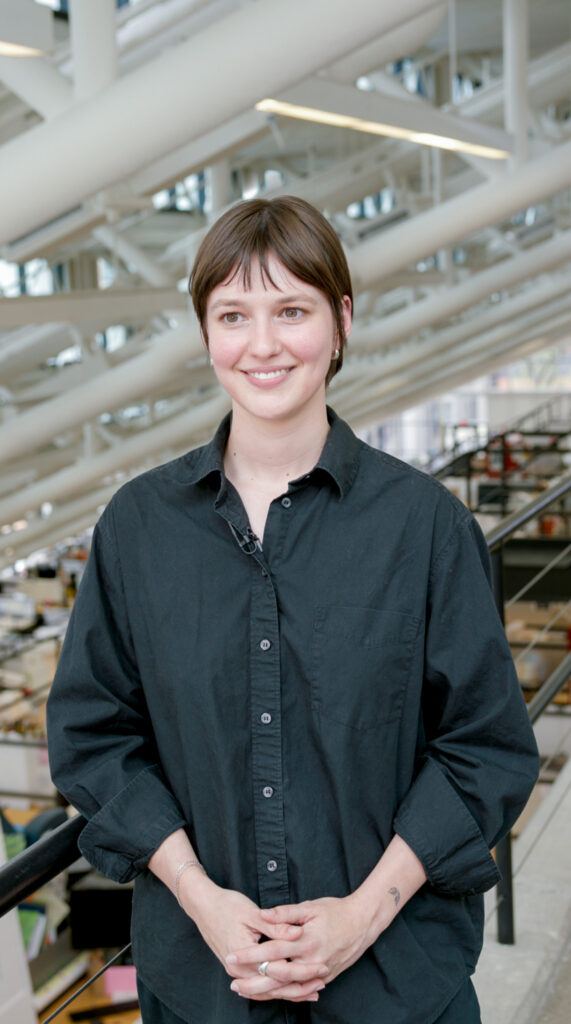
A Chicago native, Valentine Geze (MDE ’26) earned a bachelor’s degree in environmental engineering with a minor in studio art from Loyola University Chicago. Before arriving at the GSD, she worked as an environmental engineer at Partner Engineering & Science and later as an environmental, social, and governance consultant at Ernst & Young, experiences that sharpened her interest in how ecological systems, policy, and design intersect.
At Harvard, Valentine looked to further bridge science and art, intent on uniting “the technical rigor of an engineering degree with the creativity and human-centered focus of a design program. Her research has focused on the relationship between ecology, technology, and material systems, driven by a commitment to making climate futures both legible and actionable.
During her time in the MDE program, Valentine served as class representative, presented her research at the Circular Materials Conference in Copenhagen, and received the GSD-Courances Design Residency, where she studied sediment and hydrology in a traditional French garden. Her thesis, a project she plans to develop alongside future professional endeavors examines landscape-scale comparison in ecological restoration.
The Harvard Graduate School of Design Class of 2026 represents the range of departments and disciplines that shape the school’s distinctive approach to design education. In this series, students share perspectives on their work, research, and experiences, reflecting a commitment to advancing a more resilient, just, and beautiful world. Together, these videos offer a cross-section of the GSD’s intellectual and creative community.
Andrew Schwartz: Meet the Class of 2026
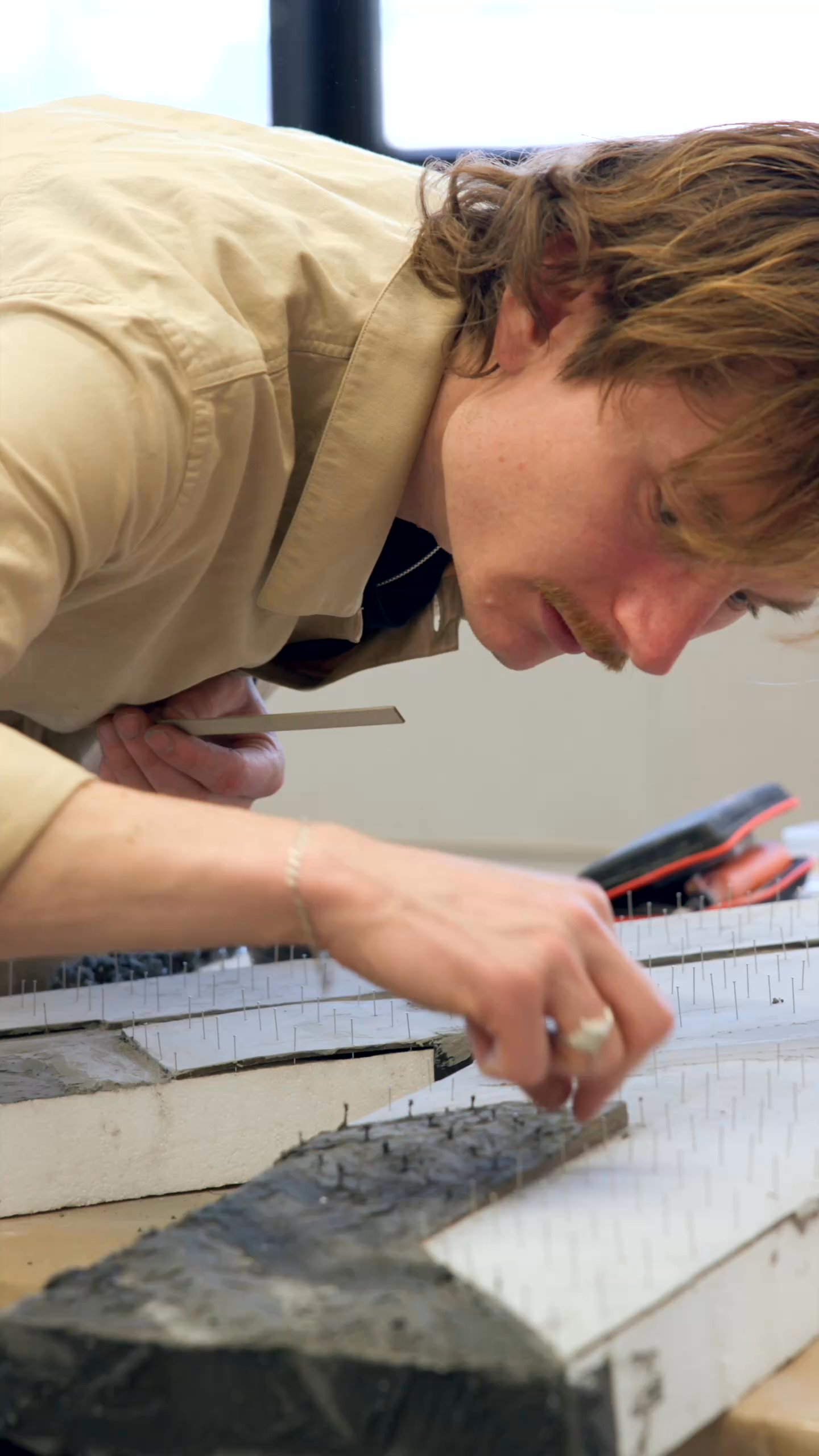
Andrew Schwartz (MLA ’26) is a multidisciplinary designer whose work investigates how landscape can shape—and be shaped by—built and post-industrial environments. “I’m interested in landscape architecture because it’s a young field still actively being defined,” he notes, “and has a lot of opportunity specifically within the post-industrial environment.”
Drawing closely on site history and materiality, Andrew approaches design as an iterative process grounded in observation, making, and experimentation. His practice moves fluidly across scales and mediums, integrating photography, graphic design systems, and landscape thinking into a deeply process-driven approach. Central to his work is model making, which he uses as both a design tool and a way of understanding spatial and material relationships.
The Harvard Graduate School of Design Class of 2026 represents the range of departments and disciplines that shape the school’s distinctive approach to design education. In this series, students share perspectives on their work, research, and experiences, reflecting a commitment to advancing a more resilient, just, and beautiful world. Together, these videos offer a cross-section of the GSD’s intellectual and creative community.
Ann Tanaka: Meet the Class of 2026
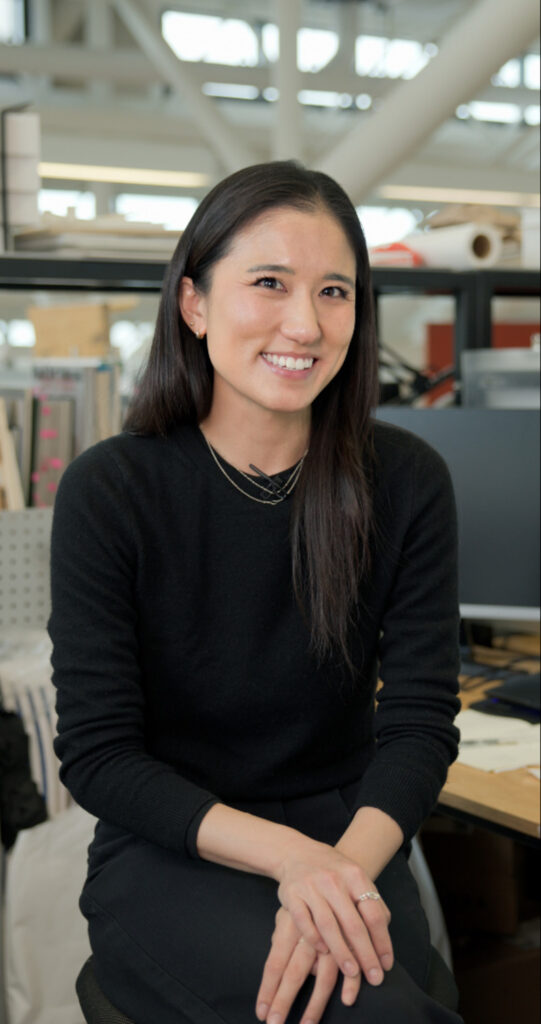
Ann Tanaka (MArch ’26) is a designer and researcher whose work explores climate adaptation and collective approaches to resilience at the wildland-urban interface. She has focused her thesis—“Bōsai Architecture for Fire-Prone Los Angeles”—on reframing wildfire resilience as a shared civic challenge, drawing inspiration from Japanese models of disaster preparedness. Building on research she began at the School, Ann is currently applying these ideas to a project in her hometown of Los Angeles.
Before coming to Harvard, Ann earned a BS in architectural design from Stanford University, with minors in art history and East Asian studies, and worked at design practices in New York, Los Angeles, San Francisco, and Tokyo. Her time at the GSD has spanned studios, structures courses, research, and teaching, including work connected to the “Japan Story” seminar. “I came into the GSD wanting to become a better designer,” she says. “I’m also leaving as a stronger researcher with the ability to connect design and research in my own work.”
The Harvard Graduate School of Design Class of 2026 represents the range of departments and disciplines that shape the school’s distinctive approach to design education. In this series, students share perspectives on their work, research, and experiences, reflecting a commitment to advancing a more resilient, just, and beautiful world. Together, these videos offer a cross-section of the GSD’s intellectual and creative community.