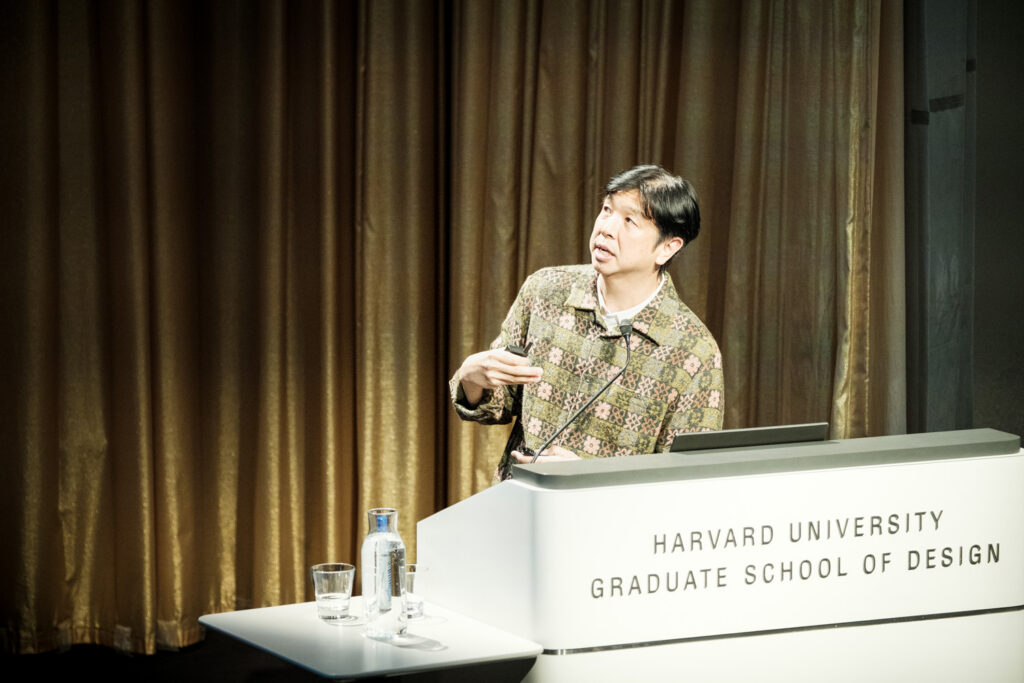
When architect Chatpong Chuenrudeemol spoke at the Harvard Graduate School of Design in spring 2026, he detailed his longstanding fascination with “Bangkok Bastards.” These improvised architectural forms, including improvised canal crossings made of long-tail boats to ad hoc structures of corrugated metal, define his home city’s urban landscape. Such “homegrown concoctions, created by everyday people to solve everyday problems in everyday life,” also inspire Chuenrudeemol’s practice.
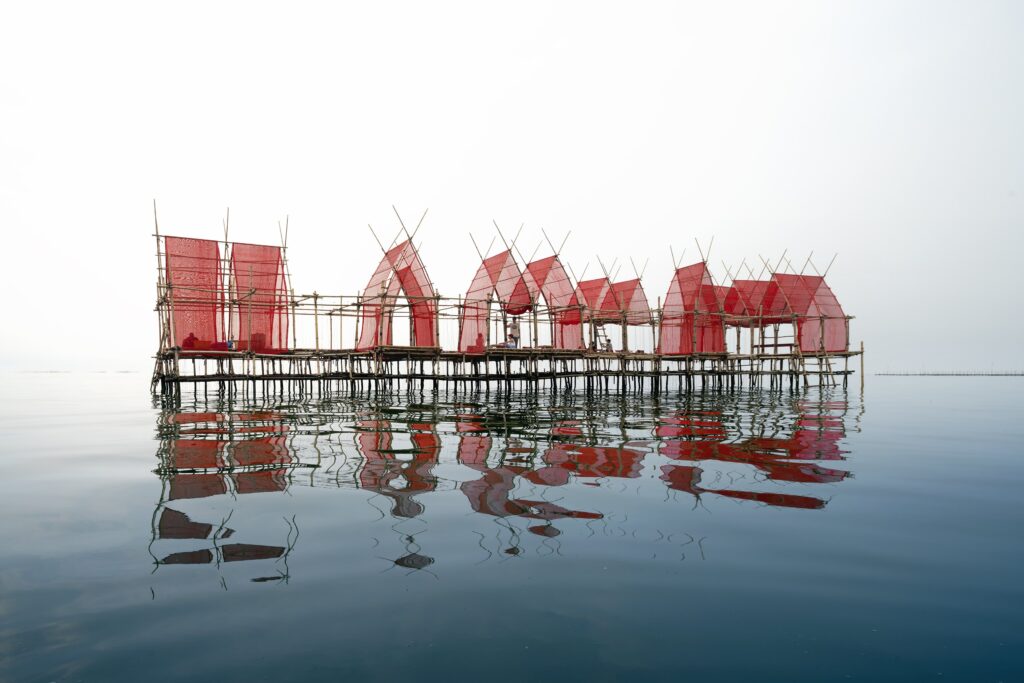
Chuenrudeemol discussed projects by his firm Chat Architects in Thailand including Angsila Oyster Pavilion, Na-Eh Bamboo Market for the Indigenous Karen Pwo Community, Indigo Loom House, and Samsen STREET Hotel.
Chuenrudeemol taught a spring 2026 option studio at the GSD, “Shophouse Metropolis,” focused on re-imagining one of the most ubiquitous building types in Bangkok. Introducing Chat’s lecture, Department of Architecture Chair Grace La noted his “ingenuity in creating a living tradition of bottom-up architecture, shaped by necessity and culture.” These overlooked conditions reveal an alternative architectural intelligence rooted in necessity and adaptation. What might it mean to see these informal practices as central to how cities are made? For Chuenrudeemol, “this beautiful underbelly of Bangkok and Thailand” offers a new way to think about—and design—our physical environment.