Designing Climate-Ready Cities Powered by Visionary Philanthropy
Cities are heating faster than the planet itself. They absorb more heat, suffer more frequent floods, and strain infrastructure designed for another era. Incremental fixes no longer suffice. The built environment must adapt quickly—and that demands research, experimentation, and innovation that is practice-ready. At the GSD, forward-looking donors empower faculty, fellows, and students to take on this challenge now.
The Experimental Fellowship Program: Sustainable Practice Meets Design Technology
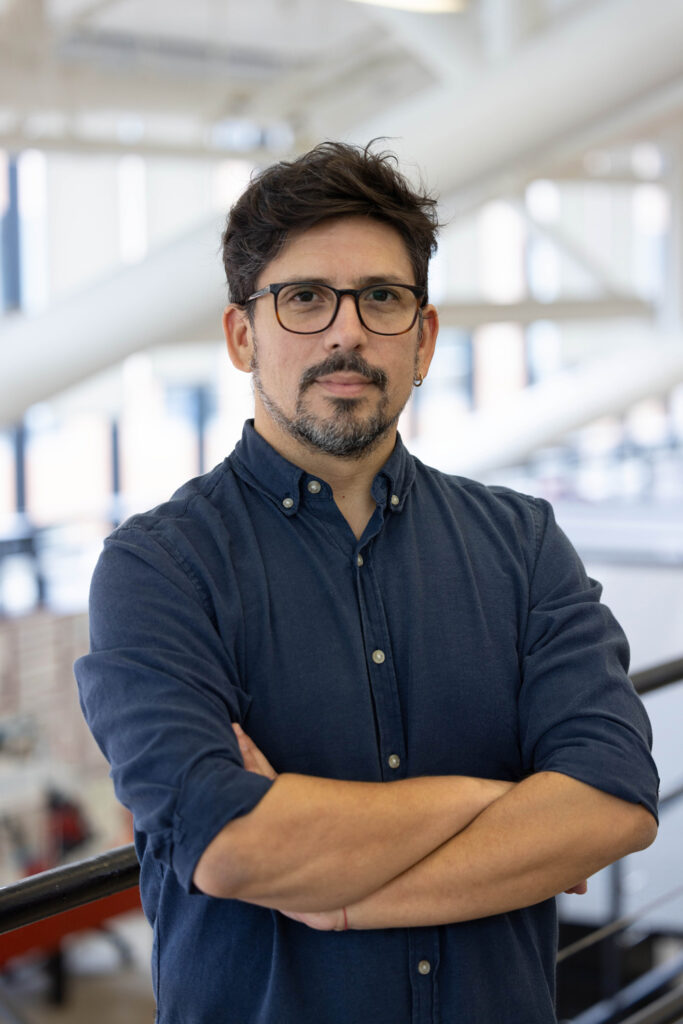
Launched in summer 2025, the Experimental Fellowship —Harvard GSD program demonstrates how philanthropy accelerates impact. Supported by the Experimental Foundation, a Berlin-based nonprofit organization founded in 2022 by architect Prof. Regine Leibinger (MArch ’91), the fellowship invites two postdoctoral scholars to the GSD for one year to conduct practice-oriented research on healthy, low-carbon material systems for buildings, landscapes, and cities.
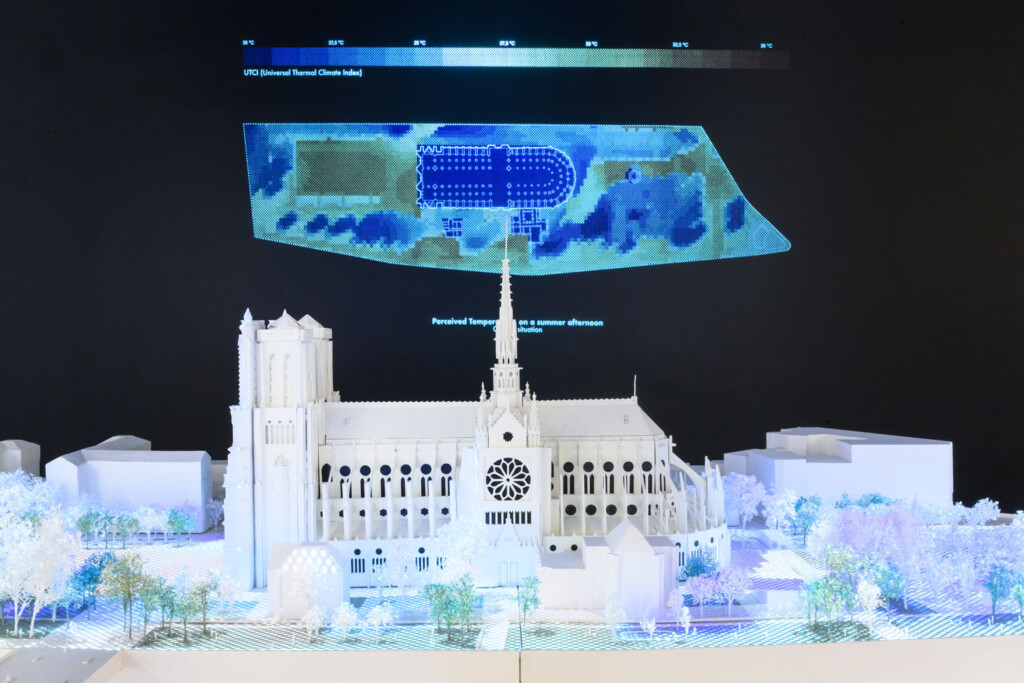
Each Experimental Fellow joins the Laboratory for Design Technologies (LDT), the School’s collaborative platform for exploring design’s frontiers at the intersection of technology and the built environment. Under the direction of Academic Dean and Kumagai Professor of Architectural Technology Martin Bechthold (DDes ’01), the fellows have access to advanced fabrication facilities, data-rich city models, and interdisciplinary mentorship across the GSD and Harvard.
What distinguishes this fellowship is its intent and time frame. Each project must yield tangible outcomes—physical prototypes, pilot applications, and publications or exhibitions—within a single year. This structure ensures that experimental ideas course through Gund Hall and rapidly evolve into tools and materials that can inform professional practice and policy alike.
“At the GSD, we are particularly interested in knowledge that is consequential for practice,” says Bechthold of the fellowship’s goal. “We acknowledge that faculty and students must engage in research, discourse, and learning that advance innovations on topics including, but not limited to, material solutions.”
Through initiatives like this, the Experimental Foundation fosters projects that aim to discover new territories in the field of architecture with the goal of changing how and with what we build. The program’s model of reciprocal collaboration links academia, philanthropy, and industry. Each fellowship culminates in a publicly shared body of research intended to advance low-carbon construction worldwide, thereby expanding the reach of sustainable design far beyond campus.
The Experimental Fellowship is really about bridging the gap between research, practice, and industry. It’s more important than ever to create space for experimentation. This fellowship collaboration with the Harvard GSD is deeply rooted in the shared recognition for fostering timely and meaningful intervention through education into building realities.
Regine Leibinger
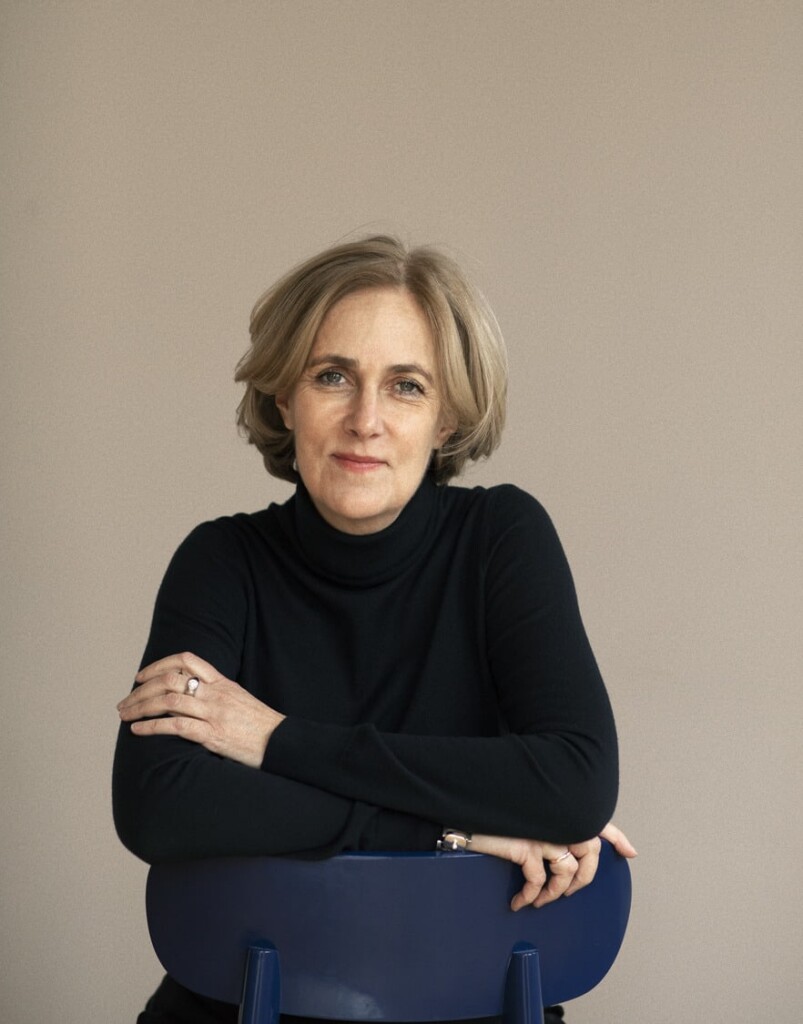
Through visionary support, the Experimental Fellowship—Harvard GSD positions the School as a testing ground for the next generation of climate-conscious design, transforming philanthropic investment into global change.
Colman Family Faculty Support Fund Fuels Faculty Excellence
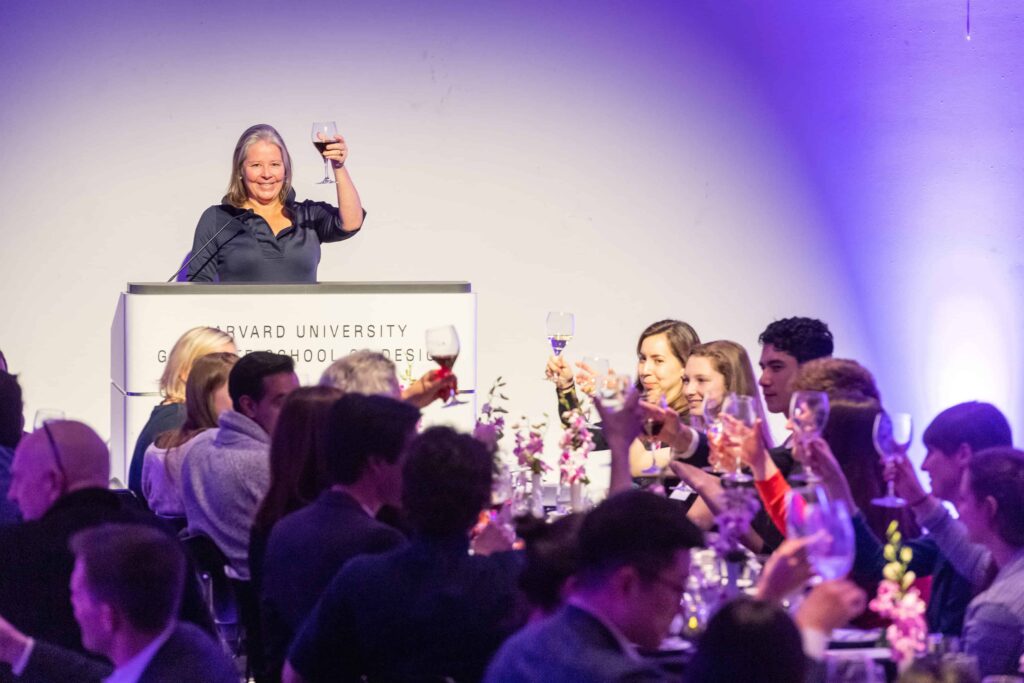
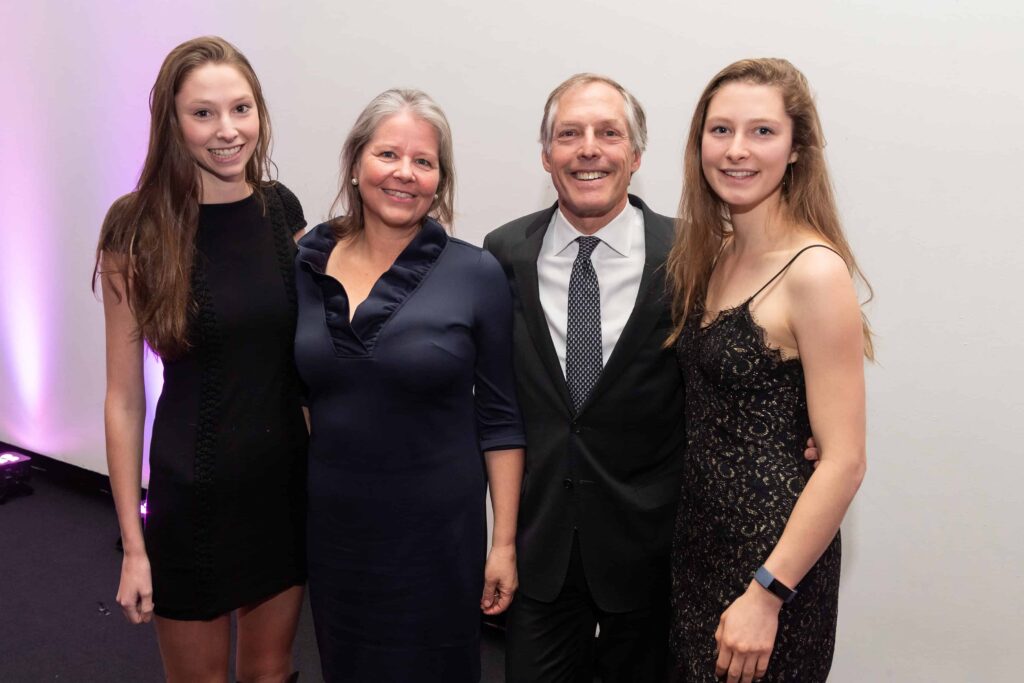
Thanks to the generosity of Bridget Colman, a dedicated Dean’s Council member, and Mark M. Colman (AB ’83, MBA ’87), the Colman Family Faculty Support Fund is providing flexible support to faculty. This funding is fueling innovation, fostering collaboration, and promoting professional growth across all disciplines. Through the generosity of the Colman family, faculty members are being equipped to pursue bold ideas and help shape the future of design education.
A Donor-Enabled Research Ecosystem
These two new funds are part of a larger ecosystem of donor-supported faculty research that positions the GSD as a hub for innovation. In 2024–2025, the following funds supported foward-focused initiatives:
- The Daniel L. Schodek Fund for Research in Design Technology powered the Urban Stack Lab, now relaunching as the Laboratory for Values in the Built Environment (ViBE Lab), where faculty explore methods and models that advance our understanding of the carbon consequences of design decision-making, from the architectural scale to the level of urban planning and transportation.
- The Joe Brown and Jacinta McCann Fund for Faculty Research enabled Assistant Professor of Landscape Architecture Craig Douglas to transform House Zero into a living instrument for studying urban air. The project culminated in the Frances Loeb Library exhibition Air as Matter: Atmospheric Encounters.
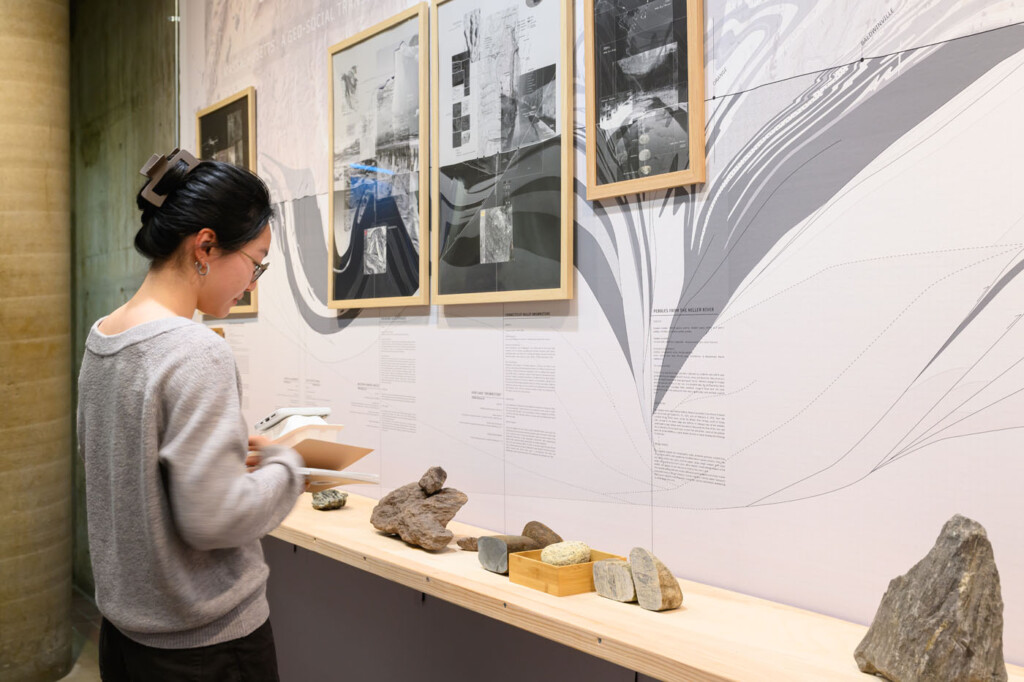
- The Jack E. Irving Dean’s Innovation Fund supported Becoming Geologic, a project by Mélanie Louterbach (MLA ’24), which invited architects, designers, and the public to develop a deeper sensitivity to geological materials—their formation, transformation, and future trajectories.
- The LUMA Landscape & Ecology Research Series Fund provided flexible grants to landscape architecture faculty, recently advancing Assistant Professor Kaja Tally-Schumacher’s work on resilience in Pompeii and the research by Karen Lee Bar-Sinai (LF ’13) into bio-based material practices.
Together, these projects reveal how donor support turns seemingly abstract urgent issues into tangible research outcomes: tools, installations, and insights that extend far beyond Gund Hall. At the GSD, philanthropy transforms curiosity into practical, world-changing knowledge.
Design Research
Studios as Climate Laboratories
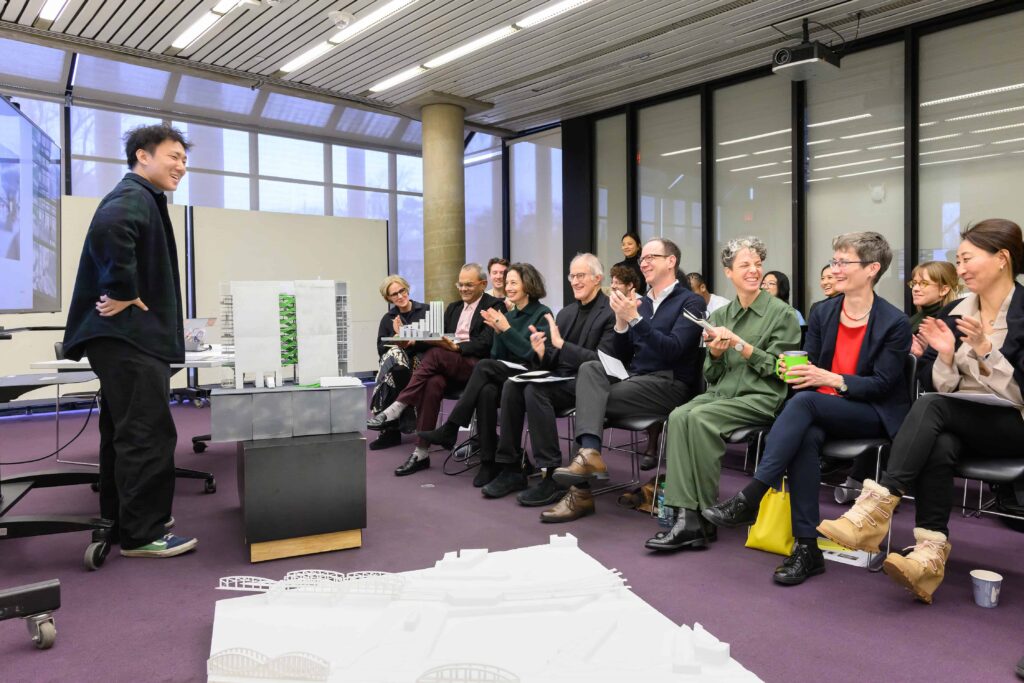
Philanthropy also fuels the School’s pedagogical core. Donor gifts for option studios enable students in urban design, landscape architecture, and architecture to test climate as the design brief itself.
- “Biospheric Urbanism—Changing Climates” (fall 2024), led by Professor in Practice of Landscape Architecture Bas Smets and supported by the LUMA Landscape and Ecology Research Series Fund, asked how design can reframe a city already grappling with extreme heat and drought. Students proposed biospheric strategies that position Athens as a living laboratory for climate resilience.
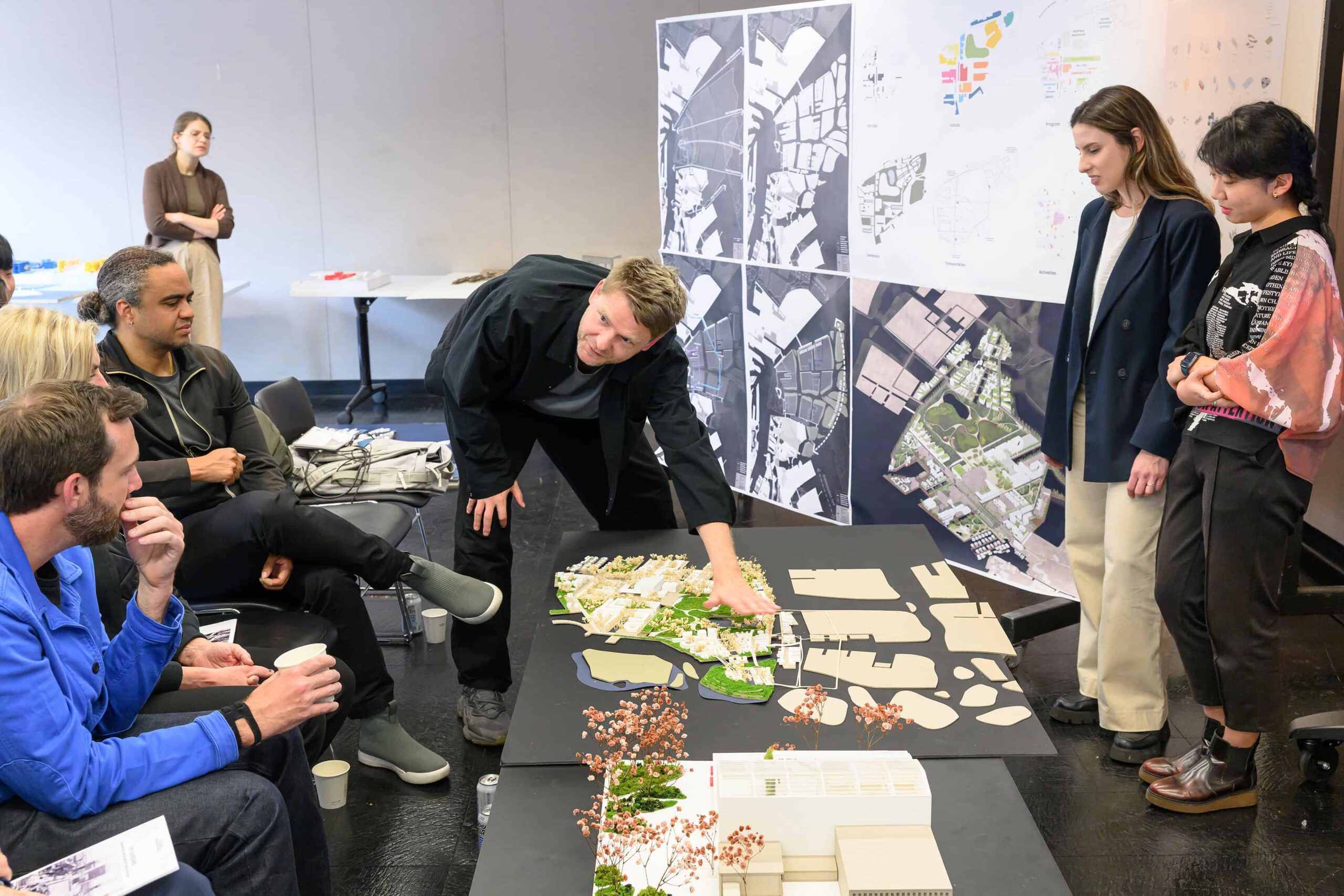
- “Conditions: Context and Climate” (spring 2025), led by visiting Kenzō Tange Design Critic Dorte Mandrup, challenged students to design net-zero interventions for Copenhagen’s postindustrial Refshaleøen, integrating adaptive reuse with coastal resilience.
- “City as Resource: Urban Repair Through Innovative Infrastructure” (spring 2025), led by Professor in Practice of Urban Design Dan Stubbergaard with support from the Koji Yanai Innovative Infrastructure Initiative Fund, explored the theme of urban repair in Copenhagen through the innovative use of existing infrastructure.
Each of these studios turned Gund Hall into a test bed, where real-time data, research, and industry critique informed design speculation—and where donors made it possible for students to wrestle with climate and urban crises in tangible, immediate ways.
Design Studios
Impact Beyond Gund Hall
Across the GSD’s design disciplines, from urban planning to landscape design and architecture, the GSD’s climate work is propelled by donors who believe the future can—and must—be designed differently. Their support affirms a core conviction of the GSD community: cities can thrive on a warming planet, and visionary philanthropy makes that future possible today.