Ana María León _POSITIONS XXIV
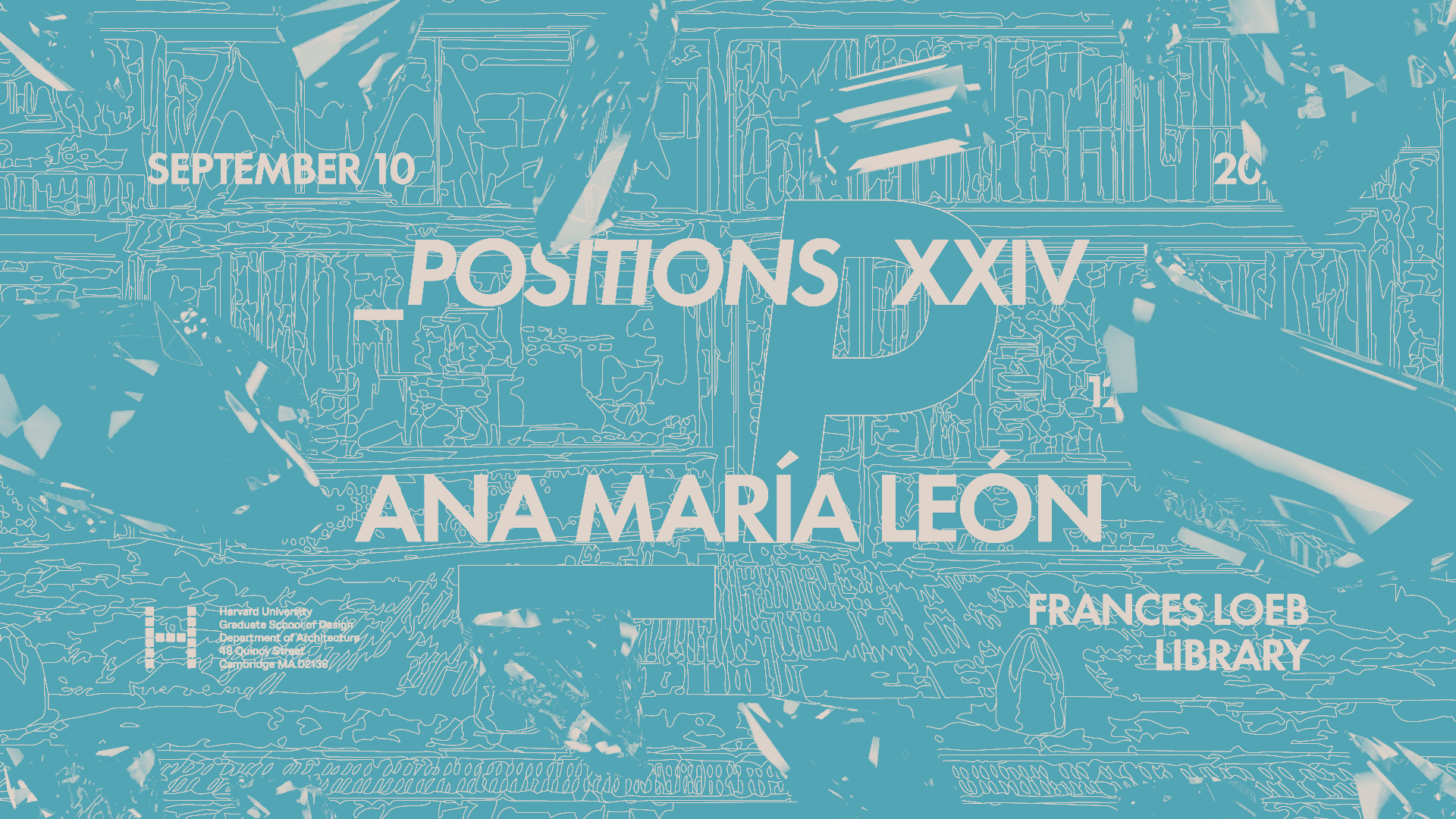
Featuring Ana María León.
Ana María León’s work traces how spatial practices and transnational networks of power and resistance shape the modernity and coloniality of the Americas. Her research and teaching foregrounds the agency of populations under struggle and the multiple forms of bias embedded in the built environment and its histories. León is invested in collaborative approaches to learning, teaching, and writing. Attention to multiple critical positions, particularly those of historically underrepresented groups, she argues, grounds our understanding of history in the politics of coliberation.
About _positions
Where do you stand in the field of architecture?
“_positions” is a series of conversations convened by the Department of Architecture at the Harvard University Graduate School of Design aimed at revealing the positions – temporary, relational, and self-conscious – taken by players on the field of contemporary architecture. Participating GSD faculty and invited guests are drawn from all facets of the discipline – architects, designers, historians, scholars, theorists, technologists, and those in other allied fields. The notion of relationality supersedes any fixed number of speakers. All speakers are asked to discharge the same task: share three projects that correspond to the development of your position over time.
Each speaker’s three projects are selected and regarded as answers to a series of guiding questions. First, what project by a mentor or teacher or school of thought informed the position you occupy today? (Where did your position come from and to whom or what do you owe your line of thinking?) Second, what project of your own was the first to indicate your position? (Where did your position begin and how did it define your stance in a particular spot?) Third, what project indicates where you stand now, and perhaps indicate how you will evolve? (How does the project align with your other work and/or seed future agenda?) The word “project” remains broadly construed, to encapsulate any kind of endeavor related to architecture. It may mean a building (built or unbuilt), a book, an essay, or another type of work that is significant to the author’s positioning.
The conceptual understructure of this series aims to differ from the crisp binaries in the language of a journal like OPPOSITIONS, and from the collage-like heterogeneity drawn from a journal like Assemblage. Instead, _positions reasserts an embodied, spatial sense of architecture’s field as a dynamic condition in which to situate ourselves. Projects today are nearer to or farther from each other, between or beside one another, qualified by shades of adjacency instead of by pure difference. Further, _positions uses these spatial modes of positioning to open up discursive vocabularies for describing relationships in the field without exclusively resorting to languages of dialectical, binary, or irreconcilable difference. While taking a position in (or on) a field has historically meant seeking maximum distinction, the most space, from one’s neighbors, we now can imagine it to mean otherwise, as in piling on, gathering around, or finding mutualisms across gaps. _positions deliberately leaves the prefix blank to encourage innovation in describing these relationships, expanding the framework of the architectural field to include im-position, re-position, ap-position, post-position, inter-position, ex-position, dis-position, com-position, juxta-position, contra-position…
Recent _Positions Events
View Calendar-
-
-
_positions
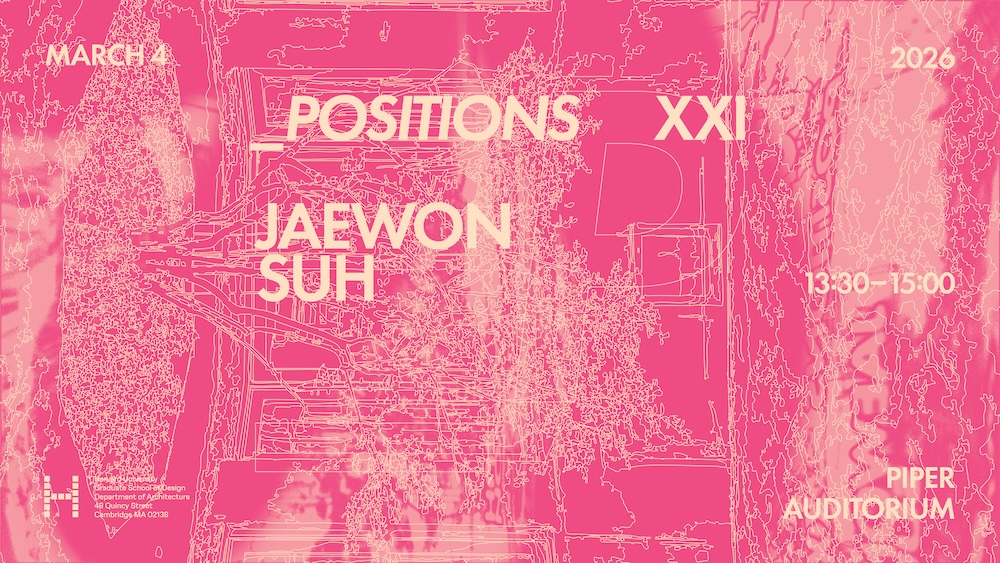
Jaewon Suh _POSITIONS XXI
-
-
-
-
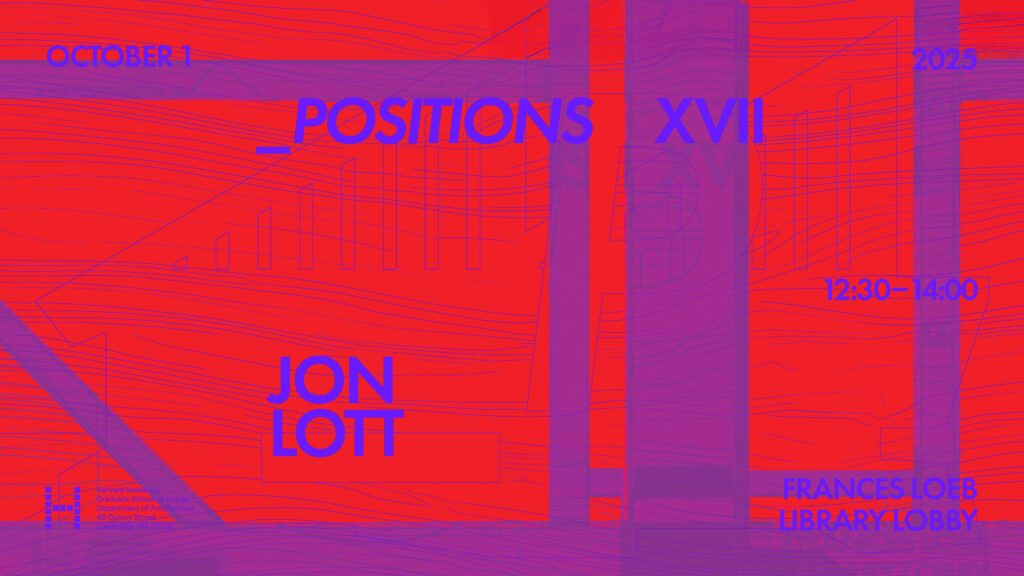
_positions
Jon Lott _POSITIONS XVII
-
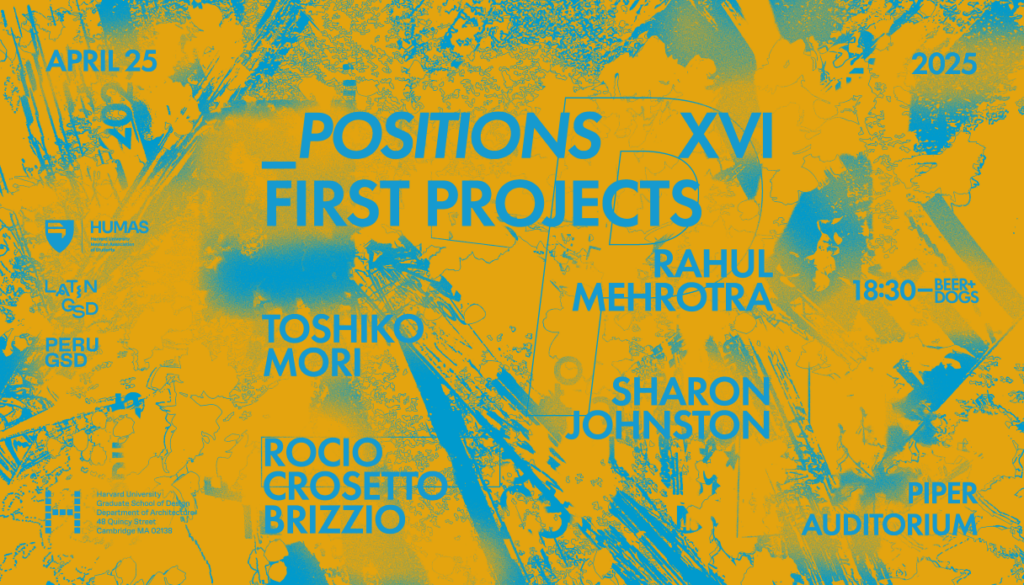
_positions
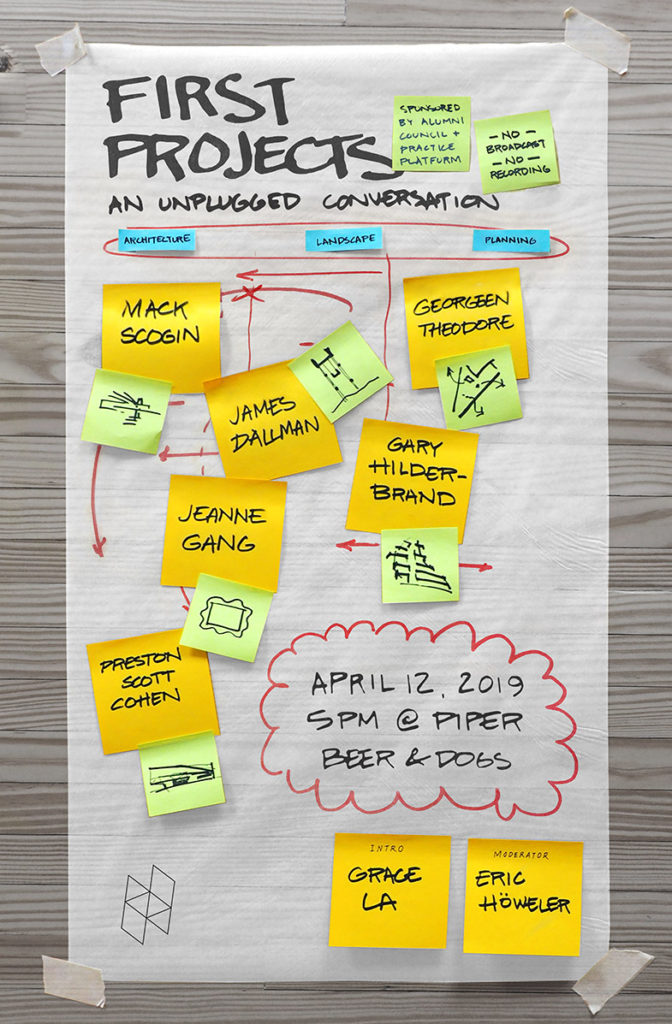
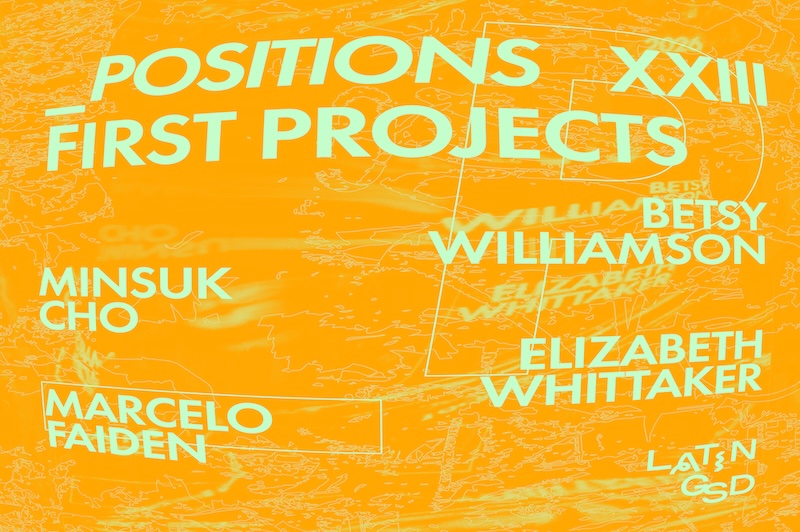
First Projects _POSITIONS XVI
-
-
-
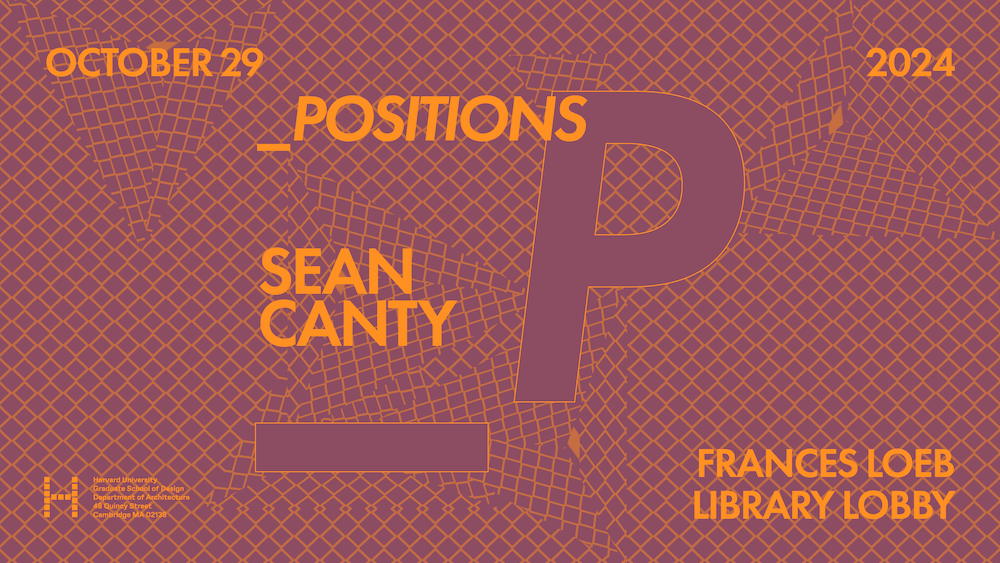
_positions
Sean Canty _POSITIONS XII
-
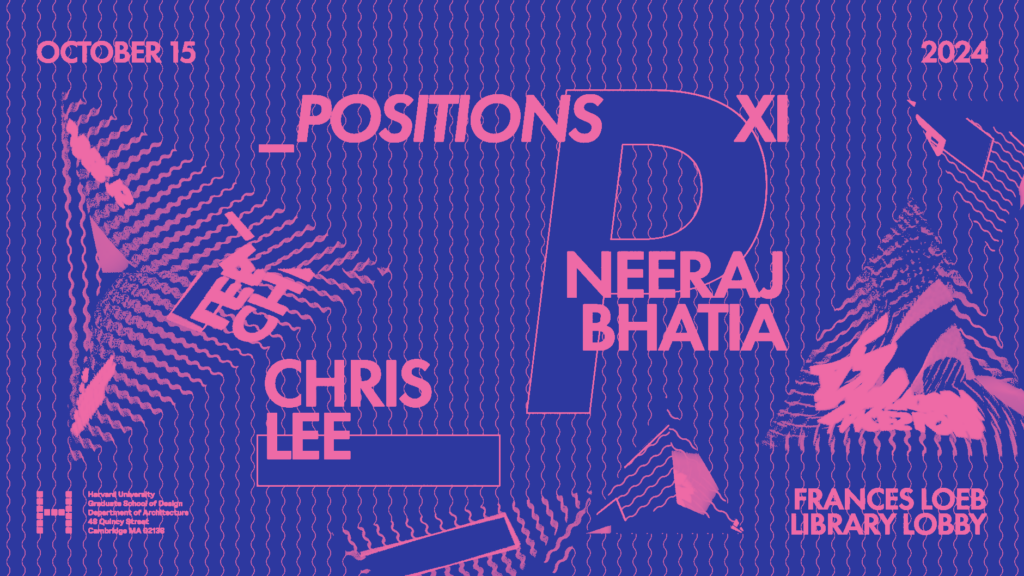
_positions
Neeraj Bhatia & Chris Lee _POSITIONS XI
Harvard University welcomes individuals with disabilities to participate in its programs and activities. If you would like to request accommodations or have questions about the physical access provided, please contact the Public Programs Office at (617) 496-2414 or [email protected] in advance of your participation or visit. Requests for American Sign Language interpreters and/or CART providers should be made at least two weeks in advance. Please note that the University will make every effort to secure services, but that services are subject to availability.
#GSDEVENTS