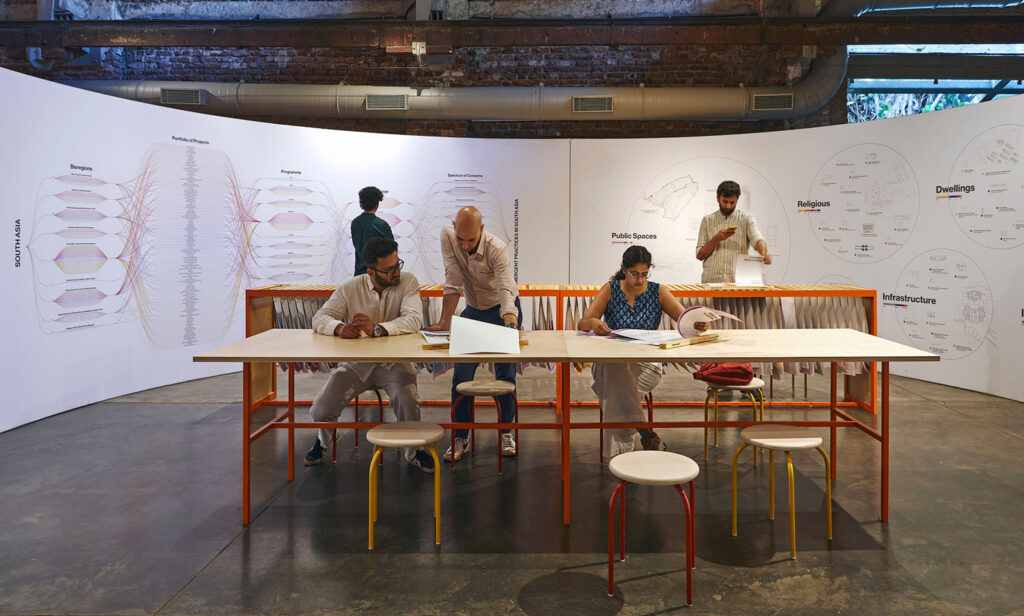
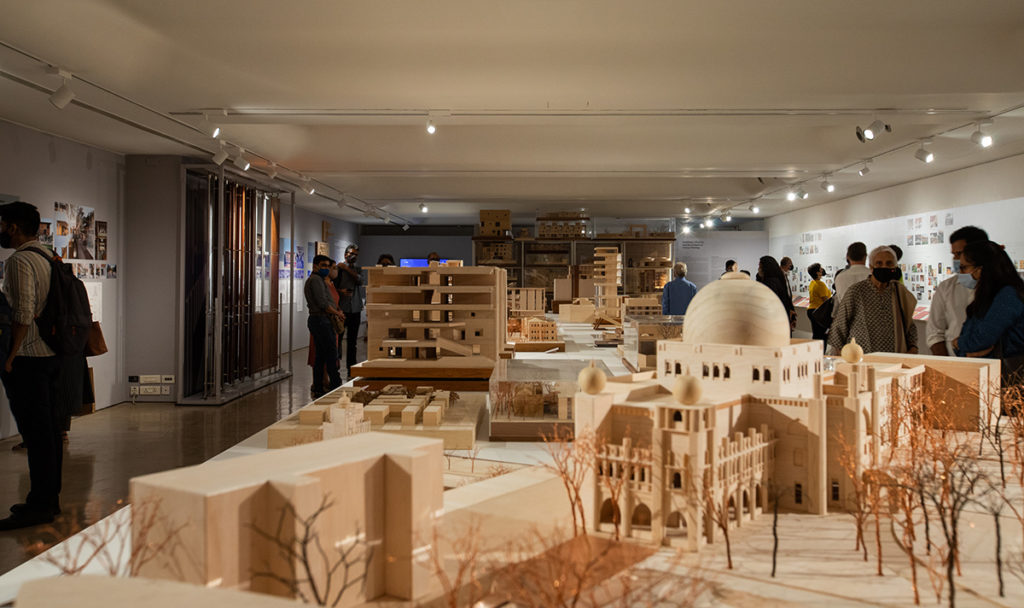
The exhibition Emergent Practices in South Asia, on view March 15 through 22, 2026, at the Institute for Building Environment (IFBE) in Mumbai, India, surveyed emerging architectural work across the region.
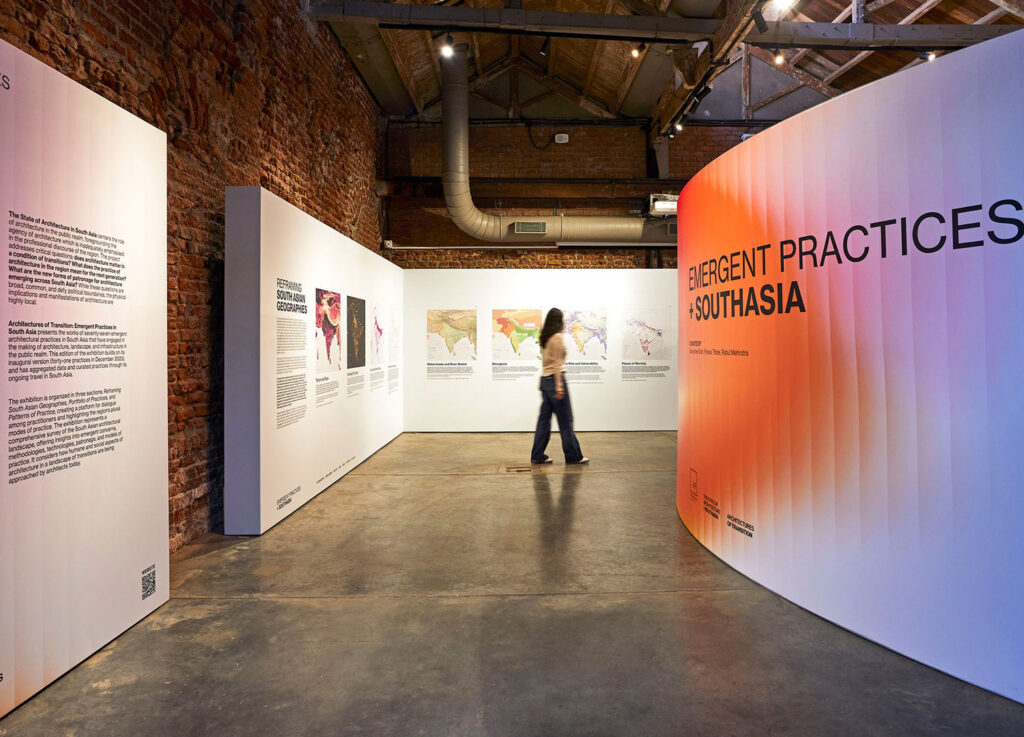
Curated by Devashree Shah (MArch ’23), Pranav Thole (MAUD ’23), and Rahul Mehrotra, John T. Dunlop Professor in Housing and Urbanization, the show formed part of the ongoing State of Architecture in South Asia research project initiated at the Harvard Graduate School of Design (GSD) in 2022, with support from the Lakshmi Mittal and Family South Asia Institute and Architecture Foundation India. The exhibition’s 2026 iteration built on its inaugural 2023 edition to explore architecture’s evolving role in the public realm.
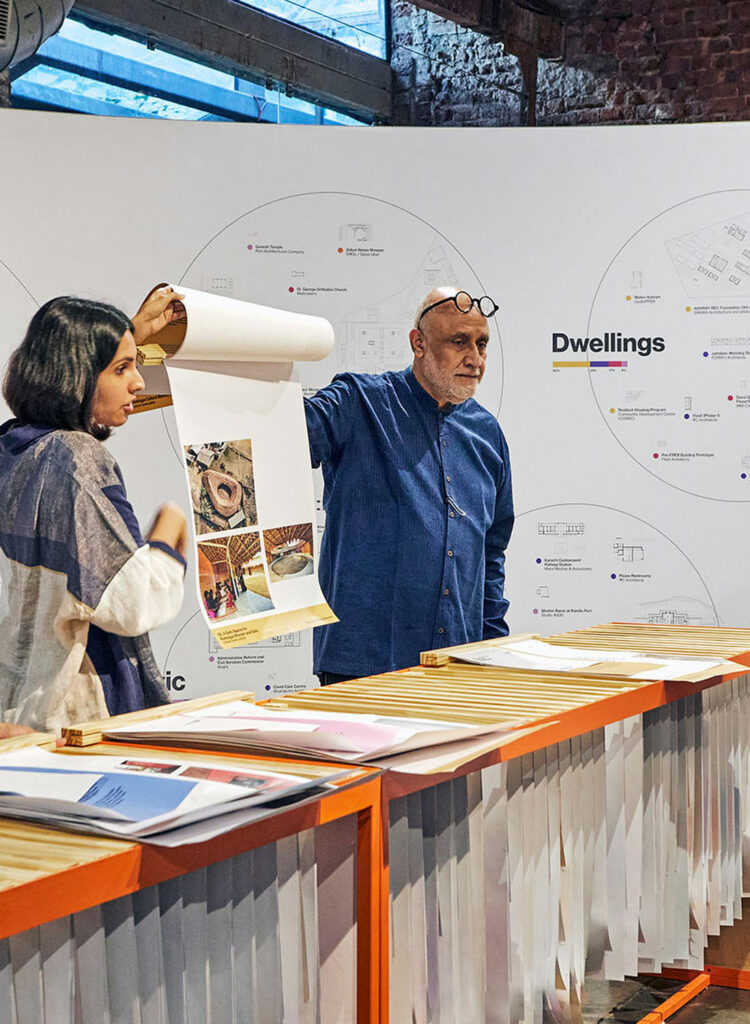
Featuring seventy-eight practices and 128 projects, Emergent Practices in South Asia examined how architectural work is being reshaped by rapid social, environmental, and economic change. Organized into three sections—”Reframing South Asian Geographies,” “Portfolio of Practices,” and “Patterns of Practice”—it situated projects within broader systems, from ecological networks that cross national boundaries to shifting relationships between patronage, collaboration, and practice.
Across the work on display, a clear shift emerged—from discrete, object-based commissions toward sustained public engagement. Educational projects formed the largest share, reflecting the scale of investment needed across the region’s dense, widely distributed settlements. With civil society and nonprofit actors playing a leading role—and the state present but not dominant—the exhibition highlighted how practices are building new forms of patronage while extending commitments over time. In this context, the value of architectural practice is increasingly measured by its capacity to sustain engagement and deliver long-term public benefit under conditions of constraint.