Leading Through Practice: Angela Ward Hyatt and Kevin Sullivan
Two Harvard GSD alumni lead practices whose work has helped shape Greater Boston’s civic, cultural, scientific, and educational institutions.

Two architecture firms, PAYETTE and Schwartz/Silver Architects, have helped shape the institutional architecture of 21st-century Boston. Together, their projects support many of the scientific, educational, cultural, and civic organizations that define the city.

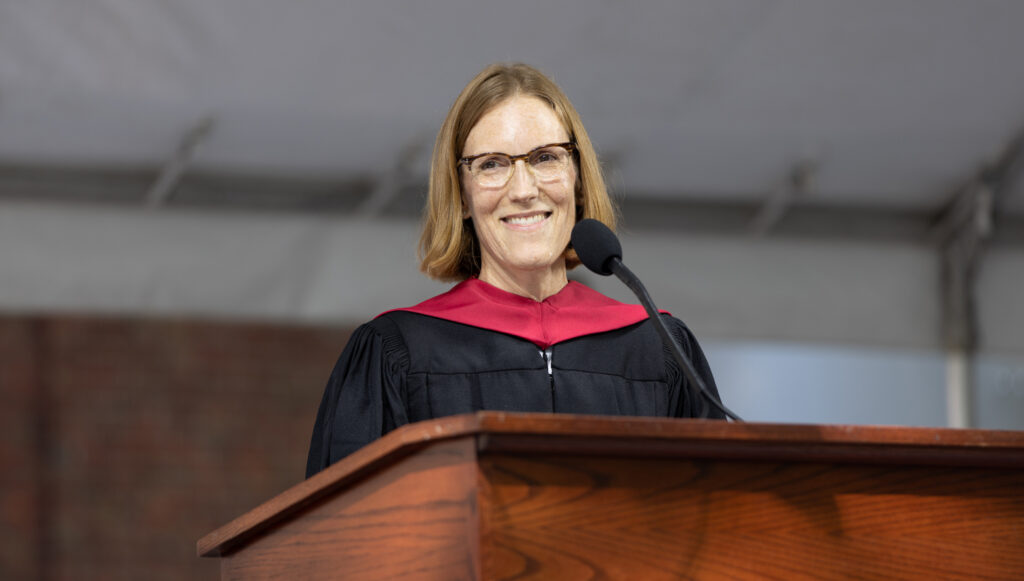
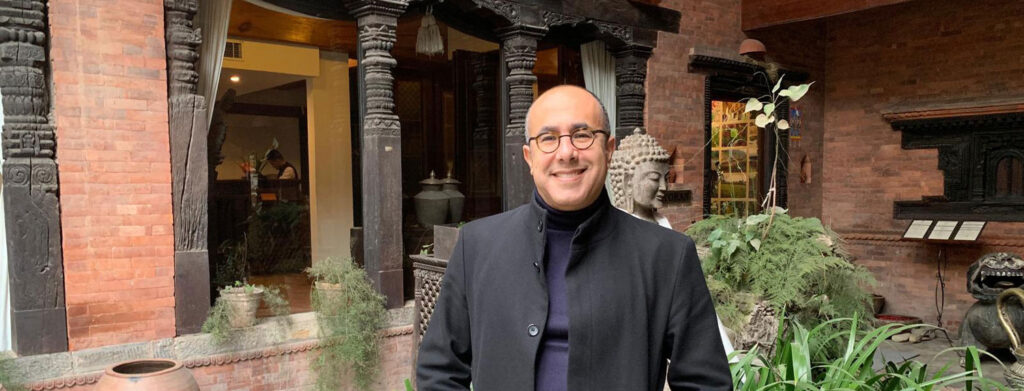
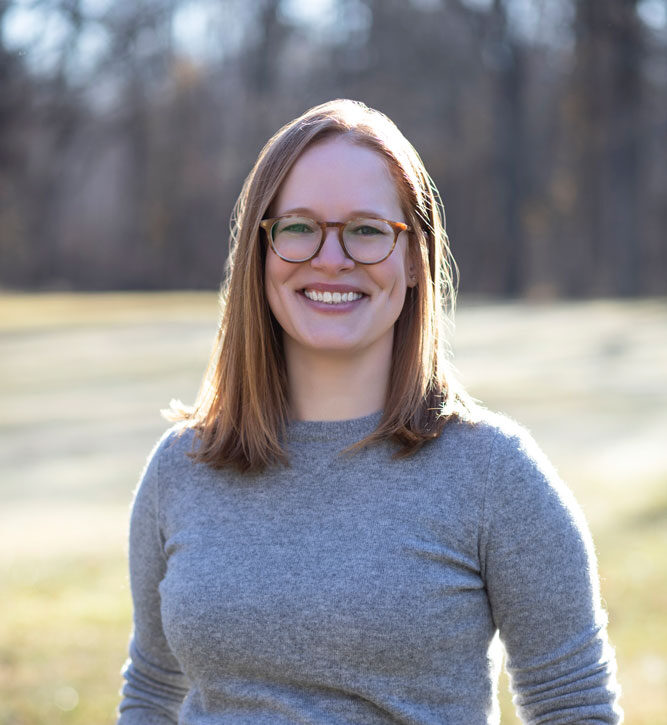
Today, both practices are under the leadership of members of the same Harvard Graduate School of Design (GSD) class. Kevin Sullivan and Angela Ward Hyatt, who earned their Master of Architecture II (MArch II) degrees in 1994, joined the respective firms after graduation and spent the next three decades advancing through their ranks. Sullivan is now president and partner of the 185-person PAYETTE, while Hyatt is president and co-owner of the 25-person Schwartz/Silver Architects.
Sullivan’s and Ward Hyatt’s careers followed remarkably similar trajectories, but they came to define leadership in different ways. Both credit the GSD with expanding how they think about architecture and giving them the confidence to forge their own paths. Those lessons would guide not only their own vocations but also the practices they would eventually steward.
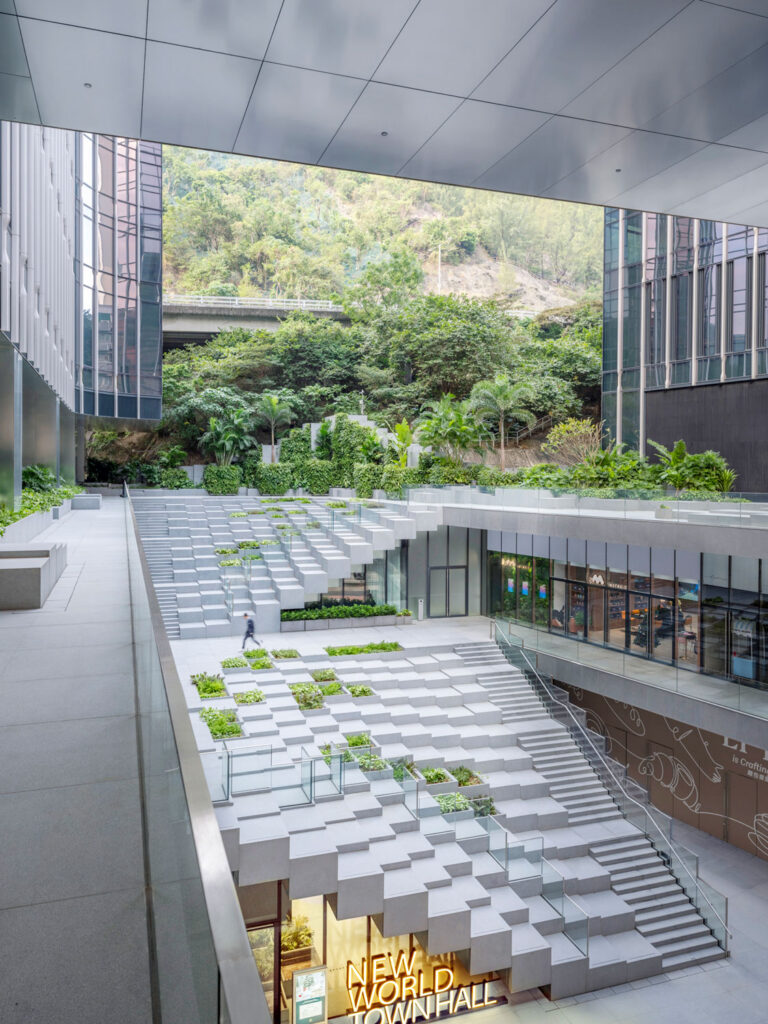
Although the firms differ in scale and specialization, they play complementary roles in strengthening the institutions that define Greater Boston. PAYETTE designs hospitals, laboratories, research facilities, and academic buildings that have helped transform the region’s scientific and medical districts; Schwartz/Silver designs libraries, museums, educational institutions, and civic buildings that advance learning, culture, and community life. Together, they demonstrate that a city’s identity is built not through individual landmarks but through sustained investment in its public institutions.
Learning to Lead
Both Ward Hyatt and Sullivan entered the GSD looking to broaden their thinking about architecture.
After earning a bachelor of architecture from Iowa State University and practicing briefly in Des Moines, at the GSD Ward Hyatt encountered a wide range of design approaches in studios led by Joan Busquets, Wilfried Wang, and Chris Risher. The most lasting lesson, however, came from beyond Gund Hall in a seminar on 17th-century Dutch painting, taught by Sir Simon Schama in Harvard’s Graduate School of Arts and Sciences (GSAS). Initially convinced that she was in over her head—students were accepted into the class by interview only—Ward Hyatt emerged from the experience with a new confidence. “This sharpened my ability to think critically beyond the world of architecture,” she reflects.
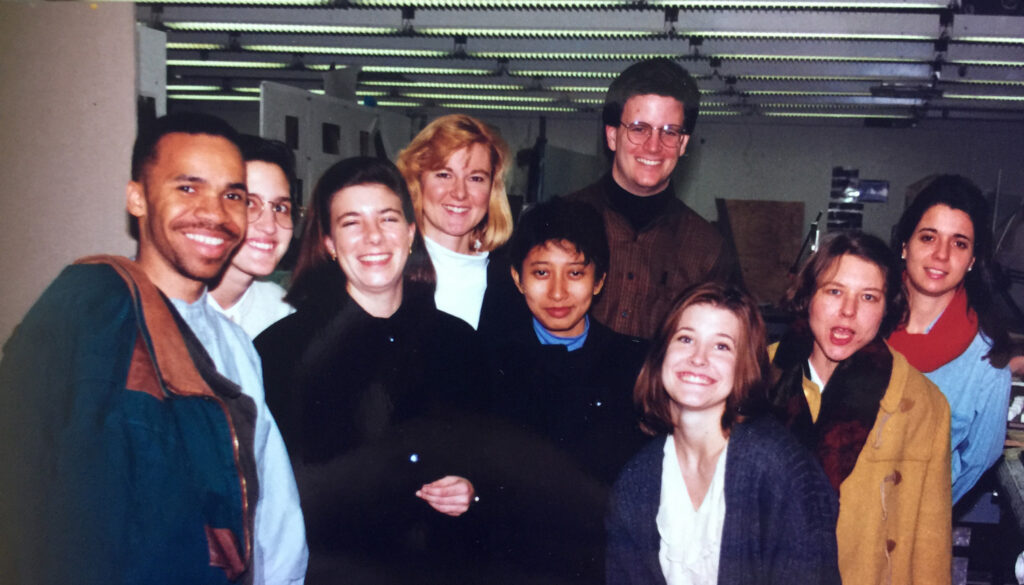
A graduate of Virginia Tech who had already spent four years at PAYETTE, Sullivan arrived at the GSD seeking an intellectual framework to guide his practice. A studio with Peter Eisenman and Preston Scott Cohen, a seminar with Mohsen Mostafavi, and a GSAS seminar with Yve-Alain Bois honed his understanding of formal rigor and architecture’s intellectual foundations. “The GSD helped me formulate a way of thinking that I could carry forward as an architect,” he asserts.
For both architects, the transition from the GSD to practice was immediate. Ward Hyatt joined Schwartz/Silver before graduating. Sullivan returned to PAYETTE where he found opportunities he would not have elsewhere. Each remained with the firm where they began, rising to leadership over the course of their careers.
Leading Through Practice
At Schwartz/Silver, Ward Hyatt found the freedom to build a career around civic architecture in a firm that, for over nearly five decades, has helped shape the public realm across Greater Boston through libraries, museums, colleges, and cultural institutions. The New England Aquarium West Wing, the renovation of the Boston Athenaeum, and the Massachusetts Institute of Technology (MIT) Roach Library reflect a practice that resists a single formula. “We’ve tried to continuously innovate along the way,” Ward Hyatt says, “which creates a freshness and surprise in our work.”
For Ward Hyatt, that commitment to originality began with the Hyde Park Branch Library, the first project she saw from conception through completion. She worked on everything from the architecture to the interiors, giving her an opportunity to contribute to the building at every scale. The project remains deeply meaningful to her—“The Hyde Park Library was my first baby,” she says. It also marked the beginning of a career devoted to library design.
From Boston neighborhood branches to Connecticut College’s Shain Library and the River Center Branch Library in Baton Rouge, Louisiana, Ward Hyatt’s projects demonstrate how thoughtful civic architecture can strengthen communities while responding to the character of each place. “You’re building something that’s part of a community legacy,” she states, “something that can be part of people’s memory of place and culture.”
Ward Hyatt’s civic engagement extends beyond architectural practice. After nearly two decades of public service in Brookline, Massachusetts, she now serves on the Boston Landmarks Commission, helping steward the city’s architectural heritage. The experience has amplified her understanding of architecture’s public role beyond the boundaries of individual projects. “It’s important to step back,” she says, “and see the broader impact we can make within a community.”
At PAYETTE, Sullivan has spent three decades designing buildings for academic science, medicine, and research while helping guide the firm’s evolution. That transformation was recognized with the American Institute of Architects’ (AIA) Architecture Firm Award in 2019. “We’ve grown from being recognized primarily as a leader in science and healthcare into an architecture and design research practice,” he notes, “where design inquiry, environmental performance, technical innovation, and education are integral to our culture.”
For Sullivan, that evolution is inseparable from his own work. “One of the central themes of my career has been designing not only buildings,” he says, “but also a model of practice.” This idea comes into focus in the Ragon Institute. Created for a collaboration among Massachusetts General Hospital, MIT, and Harvard University, the building organizes laboratories, shared spaces, and circulation to encourage interdisciplinary research, turning architecture into an instrument of scientific exchange.
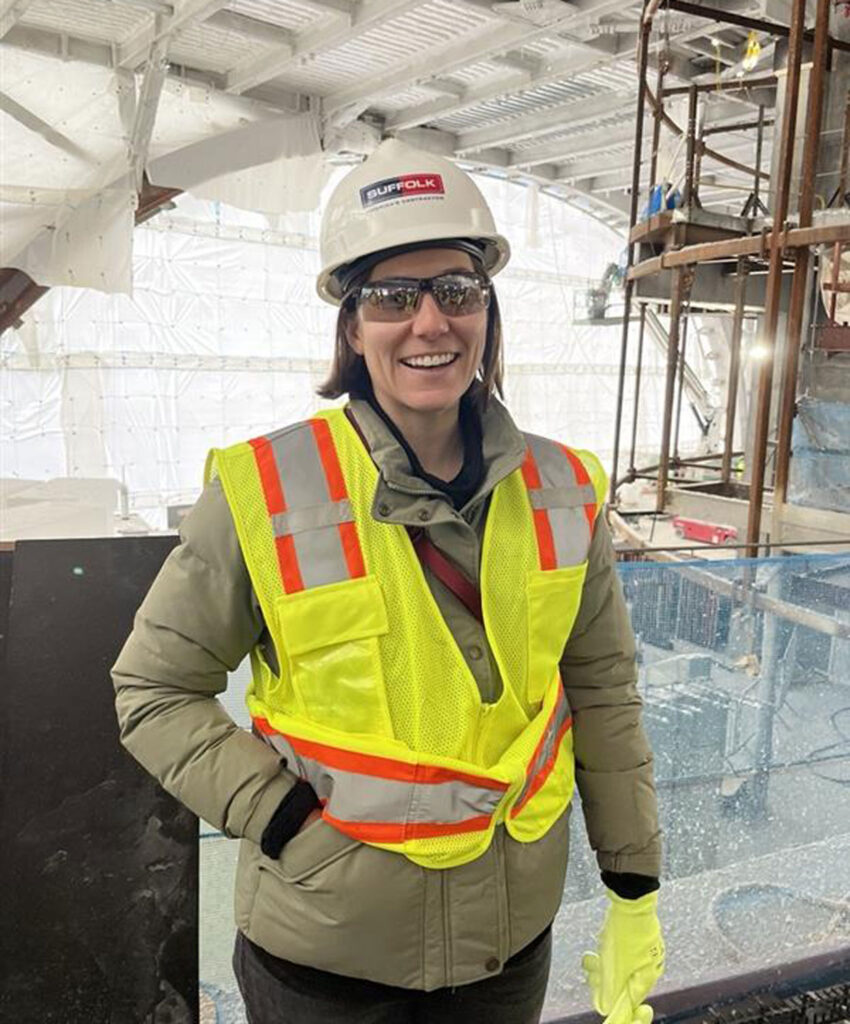
Across projects, Sullivan has explored how architecture can shape the work it supports. The Ragon Institute demonstrates how design can promote collaboration across institutions, while Northeastern University’s Interdisciplinary Science and Engineering Complex makes research and teaching more visible within the life of an urban campus. At the Lavine Bekenstein Cancer Hospital at the Dana-Farber Cancer Institute, currently under construction, Sullivan and his colleagues have focused on another question: how architecture can support healing by pairing technical sophistication with warmth, comfort, and human connection. Together, they illustrate a view of architecture as an active participant in research, teaching, and healing. At the much smaller scale of Land’s Sake Farm in Weston, Sullivan’s pro bono work reflects the same conviction, using architecture to support education, community, and stewardship through a modest civic building.
That commitment to architecture as a vehicle for inquiry and public engagement extends beyond individual projects to the culture of PAYETTE itself. Six years ago, Sullivan established OpenLAB Boston, a semester-long academic program embedded within PAYETTE that invites architecture students to pursue independent design investigations alongside practicing architects, engineers, and fabrication specialists. Developed in partnership with Virginia Tech, OpenLAB is led by Sullivan and other Payette architects, including several GSD alumni. The program also regularly brings current and former GSD faculty and critics—including Jenny French (MArch ’11), Tim Love (MArch ’89), and Megan Panzano (MArch ’10), James Dallman (MArch ’92), and Mark Lee (MArch ’95)—in for reviews, lectures, and discussions, reinforcing the reciprocal relationship between education and practice. What began as a teaching initiative has ultimately reshaped PAYETTE itself, evolving into an internal curriculum and fostering what Sullivan describes as “an academic mindset” throughout the office.

Leadership as Stewardship
Despite their different practices, Sullivan and Hyatt—who have both been elevated to the AIA College of Fellows—share a common understanding of leadership. They see it less as directing the work of others than as creating the conditions in which people and institutions can flourish.
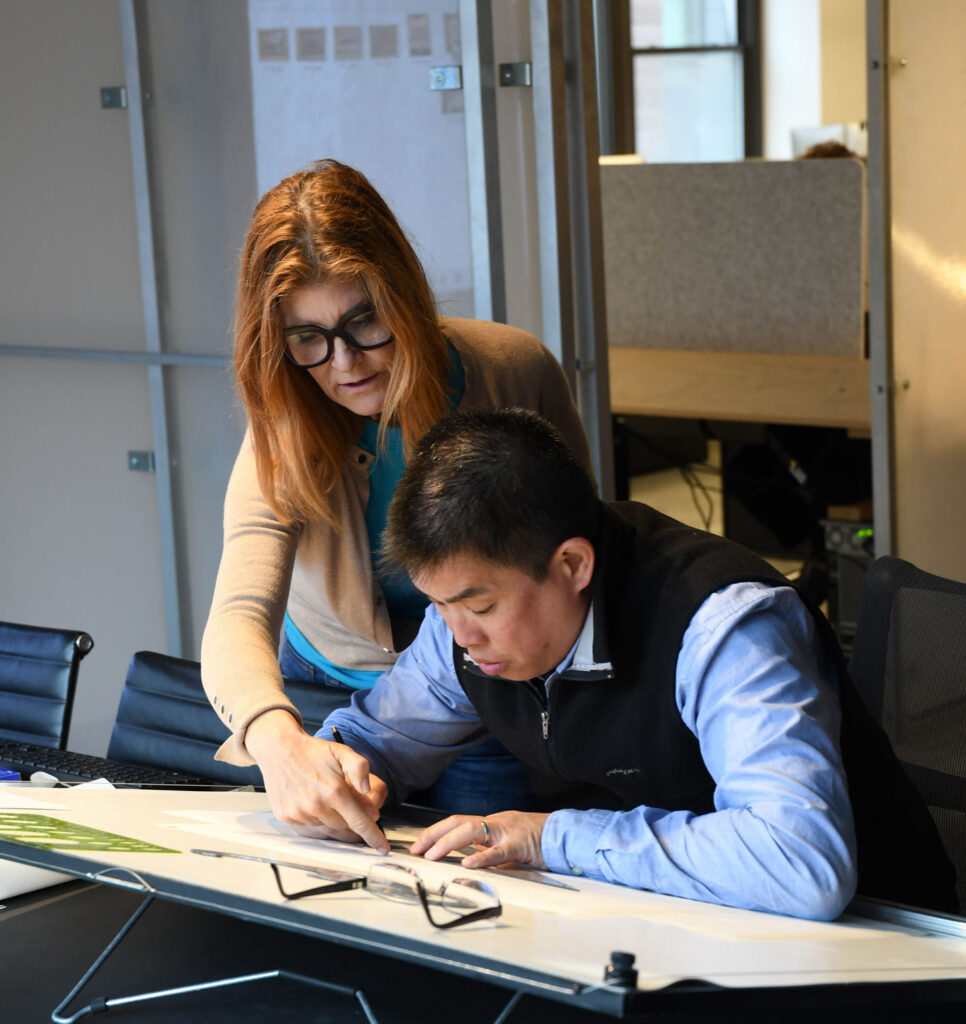
For Sullivan, the GSD fundamentally changed the standards he set for himself as an architect. “It gave me a confidence I didn’t have before,” he declares. “You leave with higher expectations for yourself. You hold yourself accountable to do more once you’ve been in that environment.”
Ward Hyatt describes the experience differently. The intensity of the MArch II program, she says, left her believing that “if I could do that, I could do anything. I was pushed outside my comfort zone but realized that I thrive in that environment.”
Together, their careers suggest that leadership in architecture is a form of stewardship. Through practices that have helped shape Boston’s civic, cultural, scientific, and educational life, Sullivan and Hyatt demonstrate that an architect’s lasting influence extends beyond individual buildings to the institutions, professions, and communities they help strengthen and evolve.