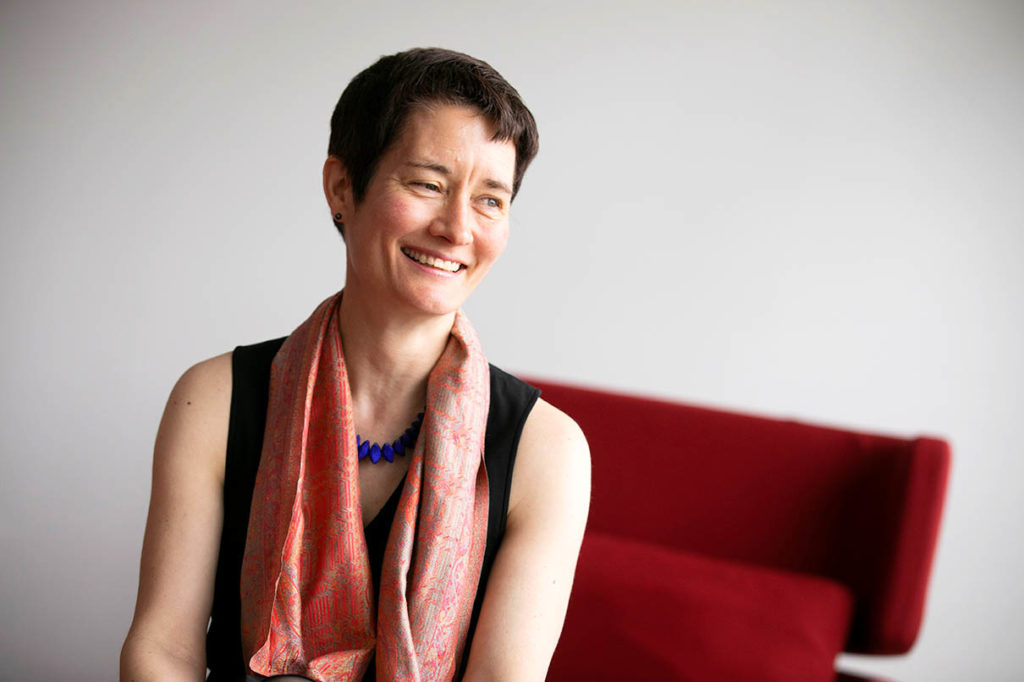
Steven Koller

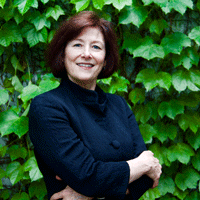
Kristen Hunter

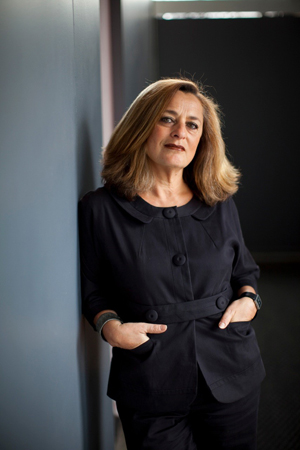
Kristen Hunter is a dedicated educator with two decades of experience in collegiate, graduate, and executive education. Since 2010, she has taught real estate finance and urban development at the Graduate School of Design. She has taught Public and Private Development with Professor Jerold S. Kayden. She also works with Professor Jerold S. Kayden, Founding Director of the Master in Real Estate Program, as Special Assistant to the Master in Real Estate Program. 

Kristen’s research has explored the efficacy of Massachusetts’ Community Preservation Act-funded subsidies in expanding affordable housing options in municipalities across the spectrum of fiscal and institutional capacities, socioeconomic profiles, land-use regulatory environments, and real estate market dynamics. Her research interests also encompass public­­­‑private partnerships, infrastructure finance, public finance, institutional and non-profit development, and socially responsible investment.

Her work has been featured in The Cheonggyecheon Restoration Project: A City and its Stream  and Methodological Notes on the Spatial Analysis of Urban Formation. She provided research support for Professional Real Estate Development: The ULI Guide to the Business, 3rd edition and The Evolution of Residential Land Use Regulation in Greater Boston case studies published by Harvard’s Joint Center for Housing Studies. She has authored a number of real estate finance teaching cases as well as a series of case studies on best practices in the delivery of federal construction projects for the U.S. General Services Administration Public Buildings Service, where she served as an instructor at the agency’s semi­­­‑annual academy.

An experienced development manager and LEED AP, Kristen has been a strategic consultant for complex urban development projects in domestic and overseas markets. She began her real estate career with a Boston-based boutique real estate development and construction firm, directing project acquisitions, regulatory affairs, construction management, and dispositions for infill residential and transit-oriented mixed-use developments. She is a licensed construction supervisor and real estate broker, and a founding member of the Harvard Alumni Real Estate Board.

Kristen received a Doctor of Design in Real Estate Finance and Urban Development along with a Master in Design Studies with distinction in Real Estate and Project Management from the Graduate School of Design, earning the Gerald M. McCue Medal for highest overall academic record and the Ferdinand Colloredo‑Mansfeld Prize for superior achievement in real estate studies. She was honored twice with the Graduate School of Design Alumni Council Unsung Hero Award and was elected Master in Design Studies class marshal. Kristen also holds an M.A. in Medieval Chinese History from Cornell University and an A.B. cum laude in East Asian Languages and Civilizations from Harvard University.

Eugenio Simonetti

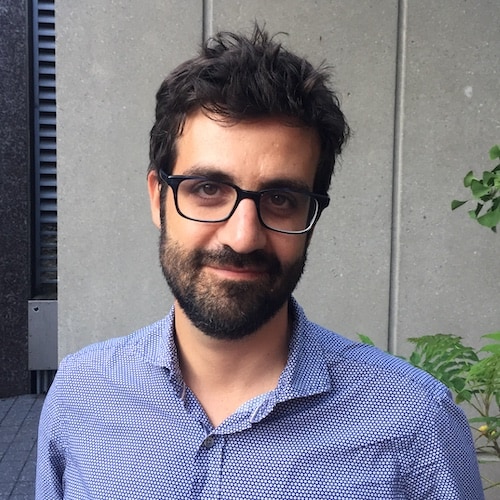
Eugenio Simonetti Toro is an Architect and Urban Designer living and working in Chile. Born in 1980 in Santiago de Chile, he holds a degree in Architecture at Universidad Finis Terrae (Summa cum laude 2004) after a year at the Scuola di Architettura Urbanistica in the Politecnico di Milano, Italy. In 2008, he received an MAUD degree from the Harvard Graduate School of Design.

Professor Simonetti has taught several studios and seminars related to architecture, urbanism and infrastructure at Universidad Finis Terrae, Universidad Andres Bello, and Universidad Mayor in Chile. In 2011, he was invited to teach at the Architectural Association Politic of Fabrication Laboratory and worked together with the School of Architecture of the University of Minnesota in 2013. While he was a student at Harvard he was an Urban Design Instructor at the 2007 Career Discovery Program.

Currently, he is a Professor at the Centro de Ecologia, Paisajismo y Urbanismo of Universidad Adolfo Ibañez in Chile. Some of his built work has been exhibited in the 14th Biennale di Architettura di Venezia in 2014, XVIII Chilean Bienal in 2012, XIX Chilean Bienal in 2015 and the XVIII Bienal Panamericana de Arquitectura. In 2016, he was nominated for the Mies Crown Hall Americas Prize for Emerging Architecture at the Illinois Institute of Technology in Chicago for his office building Costanera Lyon 2.

After his MAUD at Harvard in 2008 he become one of the founders of Almahue S.A. Architecture and Real Estate Company in Chile where he works until today as Principal Architect and a Board Member of the Construction Company since 2018.

For the past few years he has been leading a social oriented research about urban operative infrastructure in the most segregated areas of Santiago de Chile currently supported by Aguas Andinas S.A. (The biggest drinking water Company in Chile) and the Inter-American Development Bank. Today, he is building a 50-acre Masterplan with a Preservation zone designed together with the connoted Chilean Landscape Architect Teresa Moller.

Since 2005 he is married to the award winner children’s books author and artist Maya Hanisch Cerda.

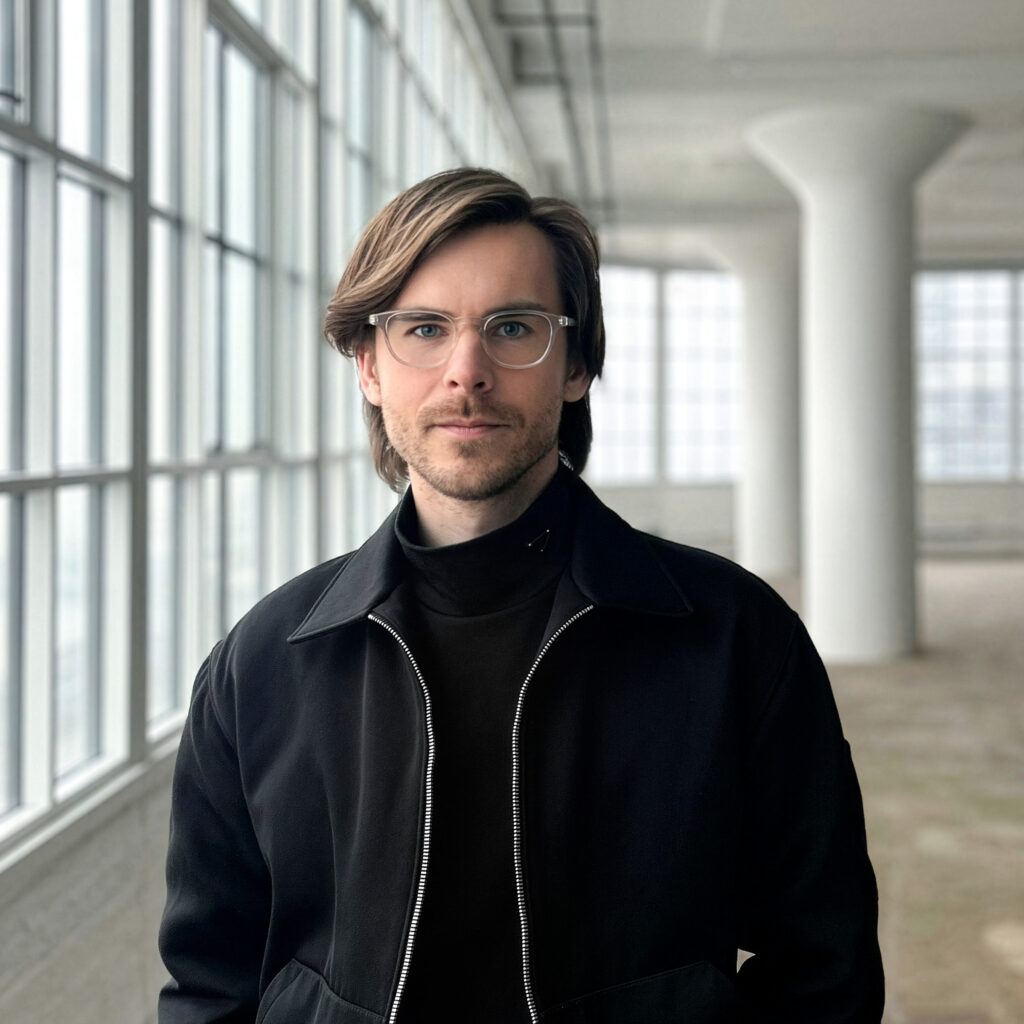
Elizabeth Bowie Christoforetti

Elizabeth’s teaching and research focus on emerging modes of design practice in the built environment. Her work at the GSD explores design methods, theories, and the technological building blocks that enable design practice to better confront the imperatives of our time, such as artificial intelligence and market-driven urbanism. The Laboratory for Values in the Built Environment (ViBE Lab ), her research group within the Laboratory for Design Technologies,  aims to uncover the potentials for scalable systems of design by daylighting, operating upon, and designing new socio-technical systems – design that is dependent upon a combination of social and technological processes, and collaboration between them.

Elizabeth directs Supernormal , a design studio based in Cambridge, MA. She founded Supernormal to create meaningful and practical change through the intersection of architecture, urbanism, technology, and contemporary culture. Elizabeth directs Supernormal as an engaged design practice that meets the world exactly as it is, and with a glass that is half full.

Her design practice, research, and teaching explore the cultural implications of large data sets, human-machine collaboration, and scalable systems of design. Elizabeth’s work joins a perspective of radical pragmatism with a deep value for the potential of design imagination.

David Adjaye

David Adjaye OBE is recognized as a leading architect of his generation. Adjaye was born in Tanzania to Ghanaian parents.  In 1994 he set up his first office, where his ingenious use of materials and his sculptural ability established him as an architect with an artist’s sensibility and vision.

In 2000, the newly formed Adjaye Associates immediately won several prestigious commissions including the Nobel Peace Centre (2005).  In the United States, Adjaye designed the new home for the Museum of Contemporary Art in Denver (2007), two public libraries in Washington DC (2012), and several innovative residential projects, including a social housing scheme in New York’s Sugar Hill (2014). In 2009 a team led by Adjaye was selected to design the new $360 million Smithsonian National Museum of African American History and Culture on the National Mall in Washington DC. Adjaye Associates’ largest completed project to date is the £160 million Moscow School of Management Skolkovo (2010).

Adjaye frequently collaborates with contemporary artists on art and installation projects including The Upper Room, with paintings by Chris Ofili (2002), which is now in the permanent collection of Tate Britain.

Adjaye has taught at the Royal College of Art, where he previously studied, and at the Architectural Association School in London, and has held distinguished professorships at the universities of Pennsylvania, Yale and Princeton. He is the John C. Portman Design Critic in Architecture at Harvard. He was awarded the OBE for services to architecture in 2007, received the Design Miami/Year of the Artist title in 2011 and the Wall Street Journal Innovator Award in 2013.

Material from Adjaye’s ten-year study of the capital cities of Africa was shown in an exhibition at the Design Museum, London (2010). He is now collaborating with Haus der Kunst in Munich and the Art Institute of Chicago on a comprehensive retrospective exhibition.

Image courtesy Ed Reeve

Jennifer Molinsky

Jennifer Molinsky is Director of the Housing an Aging Society Program at the Joint Center for Housing Studies and a Lecturer in Urban Planning and Design. As Director, Dr. Molinsky leads research exploring the housing challenges facing an aging population, including affordability, accessibility and safety in the home, community livability, and connections between housing, services, and health. She was lead author on the Center’s major reports on the challenges of housing an aging society, including Housing America’s Older Adults 2023Advancing Housing and Health Equity for Older Adults: Pandemic Innovations and Policy IdeasThe State of the Nation’s Housing for Older Adults 2018 and 2019Older Households 2015-2035: Projections and Implications for Housing a Growing Population (2016); and Housing America’s Older Adults: Meeting the Needs of an Aging Population (2014), and has also written about the role of housing in wellbeing in older age. Jennifer was also a co-editor of the 2018 book A Shared Future: Fostering Communities of Inclusion in an Era of Inequality and the 2014 book Homeownership Built to Last: Balancing Access, Affordability, and Risk After the Housing Crisis.

Jennifer is a member of the Advisory Board of the Milken Institute Center for the Future of Aging and the Board of Directors of both Hearth, Inc and 2Life Communities. She serves on the steering committee for The Chan School of Public Health Initiative on Health and Homelessness at Harvard and co-directs the Healthy Places Design Lab at the Graduate School of Design. Prior to joining the Center, she was Chief Planner for Long Range Planning in Newton, MA, and held positions with the Lincoln Institute of Land Policy, Municipal Art Society of New York, Abt Associates, and PricewaterhouseCoopers’ government housing finance practice.

Jennifer holds a PhD in Urban Planning from MIT, a Masters of Public Affairs-Urban and Regional Planning from the Woodrow Wilson School at Princeton, and a BA from Yale.

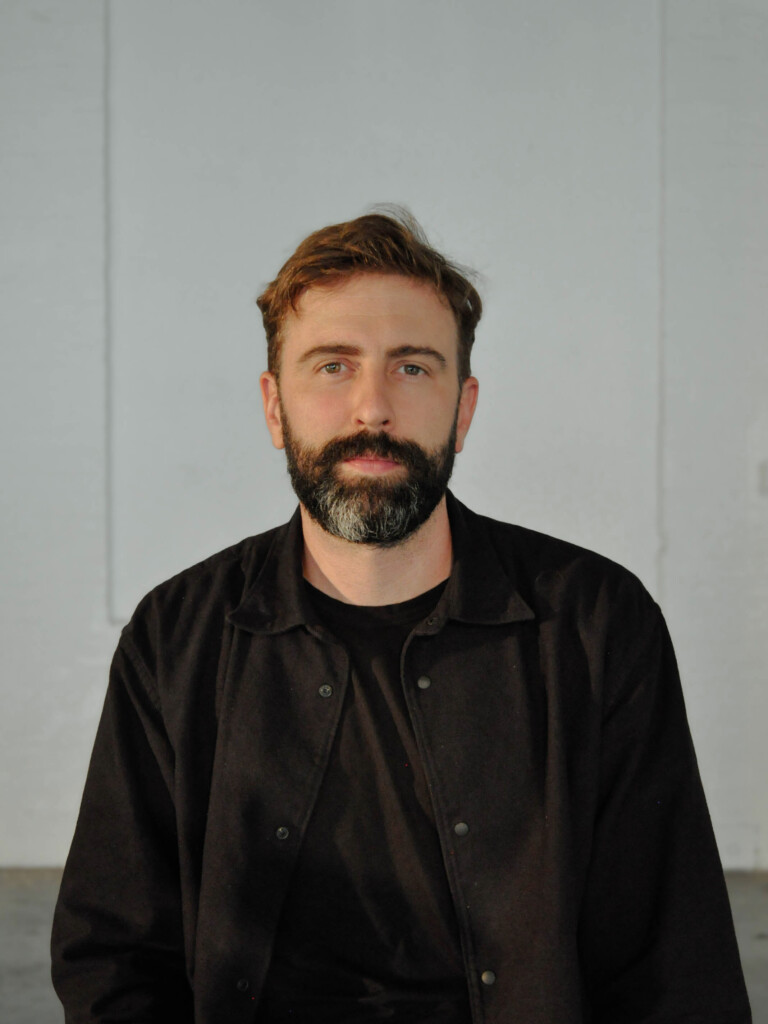
John May

On leave for Fall 2025

John May is founding partner, with Zeina Koreitem, of MILLIØNS , a Los Angeles-based design practice. Their recent work includes completed and ongoing projects in California, New York, Boston, Germany and Beirut. Recently selected as the winner of an international competition to reimagine the west wing of I.M. Pei’s Everson Musum, in Syracuse, NY, MILLIØNS’ experimental work has been featured in solo and group exhibitions at Friedman Benda Gallery, the Storefront for Art and Architecture, The Architecture + Design Museum of Los Angeles, and Jai & Jai Los Angeles, among others. Their essays have appeared in Harvard Design Magazine, e-fluxFlaunt magazine, I.D.a+t, and in a catalog of their work on experimental collective living, New Massings for New Masses: Collectivity After Orthography  (PDF) (MIT, 2015).

Situated at the intersection of philosophy, technology, and the politics of environmentalism, May’s writings aim at a continual articulation of the conditions surrounding the contemporary design fields. His most recent book, Signal. Image. Architecture  (Columbia, 2019) contemplates the psychosocial effects of transmissible electronic images, and their consequences for architecture and urbanism. Design Technics: Archaeologies of Architectural Practice  (Minnesota, 2019; co-edited with Zeynep Çelik Alexander) explores the philosophical, historical, and political dimensions of contemporary design technologies. May’s essays and interviews have appeared in Log, Perspecta, Praxis, MIT Thresholds, Project, Quaderns, New Geographies, and Actar’s Verb: Crisis, among many others.

May previously taught at MIT, UCLA, SCI-Arc, and the University of Toronto. In 2012 he was named National Endowment for the Humanities Visiting Professor in Architecture at Rice University. He holds a Bachelor of Arts in Philosophy and Visual Art from the College of William and Mary, a Master of Architecture (AP) with Distinction from Harvard GSD, and a doctorate in Geography and Environmental Studies from UCLA.

James Stockard

James Stockard, an expert in affordable housing and community development, retired in 2014 from the role of curator of the Loeb Fellowship, which he held for 17 years.  He continues to teach housing courses at the GSD. He also serves as an Academic Career Liaison for the Career Services Department, helping planning students think about their career paths and connecting them with potential employers. As a principal for over 25 years with the Cambridge-based consulting firm Stockard & Engler & Brigham, he worked with nonprofit groups and public agencies across the country on such issues as affordable housing development, property management, neighborhood revitalization, and local, state and national housing policy. Shortly before coming to the GSD, he served as the court-appointed Special Master for the Department of Public and Assisted Housing in Washington, DC. Mr. Stockard has taught courses on housing policy at MIT’s Department of Urban Studies and Planning, and Tufts University well as the GSD. He is the co-author of Managing Affordable Housing, and wrote the epilogue in New Directions in Urban Public Housing.

He was the principal investigator for the Public Housing Operating Cost Study commissioned by the US Congress. Stockard served as a commissioner of the Cambridge Housing Authority for 40 years (including 8 terms as chair) and is a founding trustee of the Cambridge Affordable Housing Trust Fund. He is a past president of the Citizens Housing and Planning Association, Massachusetts’ largest research and advocacy group for housing and community development issues. He has been a member of the Massachusetts Housing Appeals Committee, ruling on Chapter 40B cases, for the past 17 years. Stockard is an alumnus of the Loeb Fellowship Program and also earned a Master of City Planning degree from the GSD.

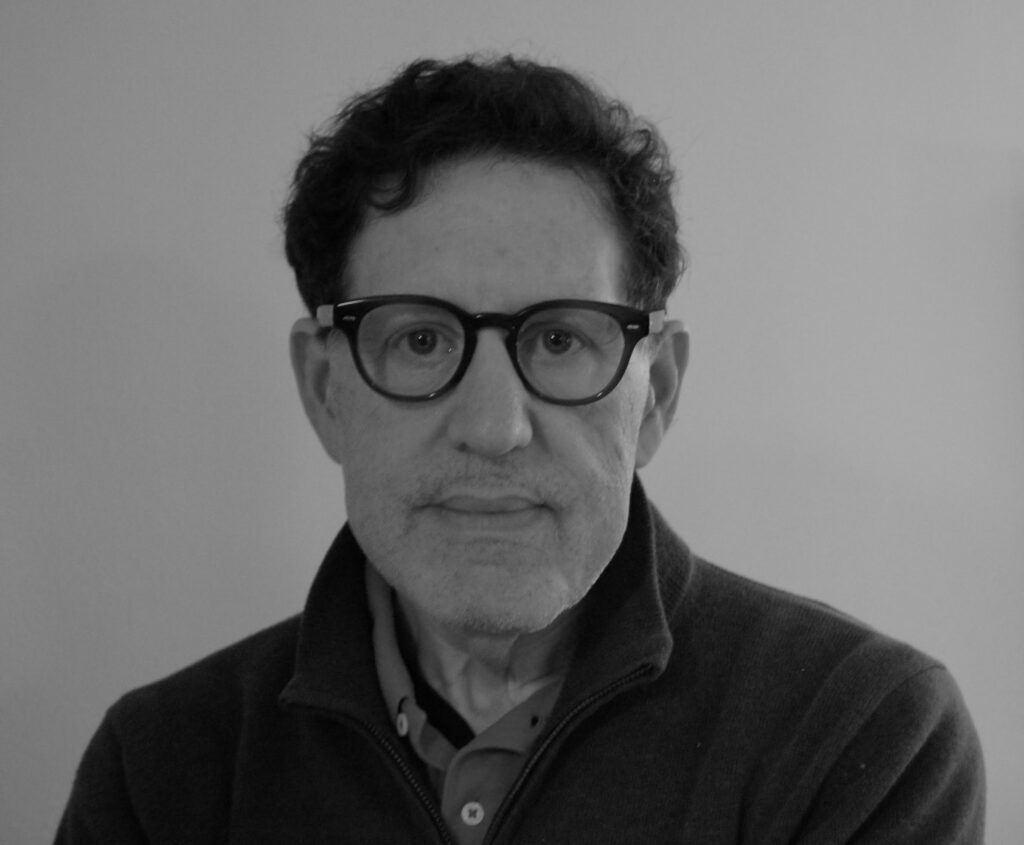
Alexander von Hoffman

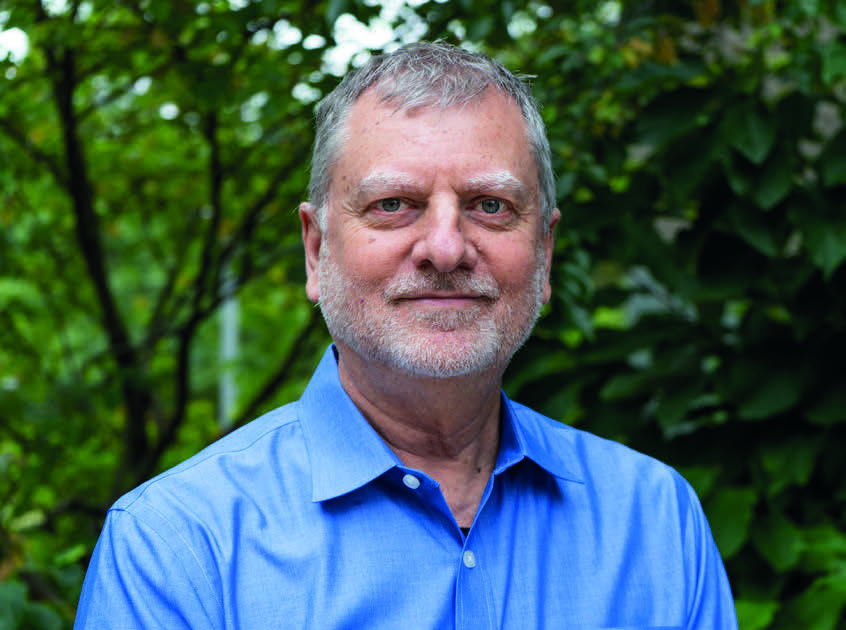
Alexander von Hoffman is a Senior Research Fellow at the Joint Center and Lecturer in Urban Planning and Design at the Harvard Graduate School of Design.   A historian by training, he is the author of House by House, Block by Block: The Rebirth of America’s Urban Neighborhoods (2003), which chronicled the rise of the community development movement in New York, Boston, Chicago, Atlanta, and Los Angeles; Fuel Lines for the Urban Revival Engine: Neighborhoods, Community Development Corporations, and Financial Intermediaries (Fannie Mae Foundation, 2001), which examined the relationship between funding organizations and community development corporations; and Local Attachments: The Making of an American Urban Neighborhood, 1850 to 1920 (1994), which traced the physical (including real estate and park development), social, economic, and political history of the Boston neighborhood of Jamaica Plain.  He is currently working on a book on the history of low-income housing in the United States.

Von Hoffman has published many scholarly articles on urban history and social policy, including most recently “Calling Upon the Genius of Private Enterprise: The Housing and Urban Development Act of 1968 and the Liberal Turn to Public-Private Partnerships” in Studies in American Political Development 27 (October 2013) and “The Past, Present, and Future of Community Development in the United States” in Nancy O. Andrews and David J. Erickson, eds., Investing in What Works for America’s Communities (Federal Reserve Bank of San Francisco, 2012).  He has also written essays on housing and urban development for general-interest periodicals, including the Atlantic Monthly, New York Times, Chicago Tribune, and Boston Globe.

While at the Joint Center, von Hoffman has written numerous working papers and case studies on housing policy and practice.  He is currently conducting a major research project, supported by the MacArthur Foundation, on the issue of preservation of affordable housing in the United States, which includes a monograph history of the issue and five case studies of preservation of affordable housing projects in different regions and types of locales.  He recently completed three histories of the evolution of land use regulations affecting residential development in three Boston metropolitan area towns, Arlington, Acton, and Weston.  Prior to that, he directed a three-year project in collaboration with the U. S. Geological Survey entitled “Patterns and Process of Sprawl,” which explored metropolitan development between 1970 and 2000.

Prior to coming to the Joint Center, Dr. von Hoffman was an Associate Professor of Urban Planning and Design at the Harvard Graduate School of Design and a Fellow at the Taubman Center for State and Local Government of the Harvard Kennedy School. He received a BA in English and an MA in History from the University of Massachusetts Boston, an MA in History from Harvard University, and a Ph. D. from the Department of History at Harvard.

Elizabeth Whittaker

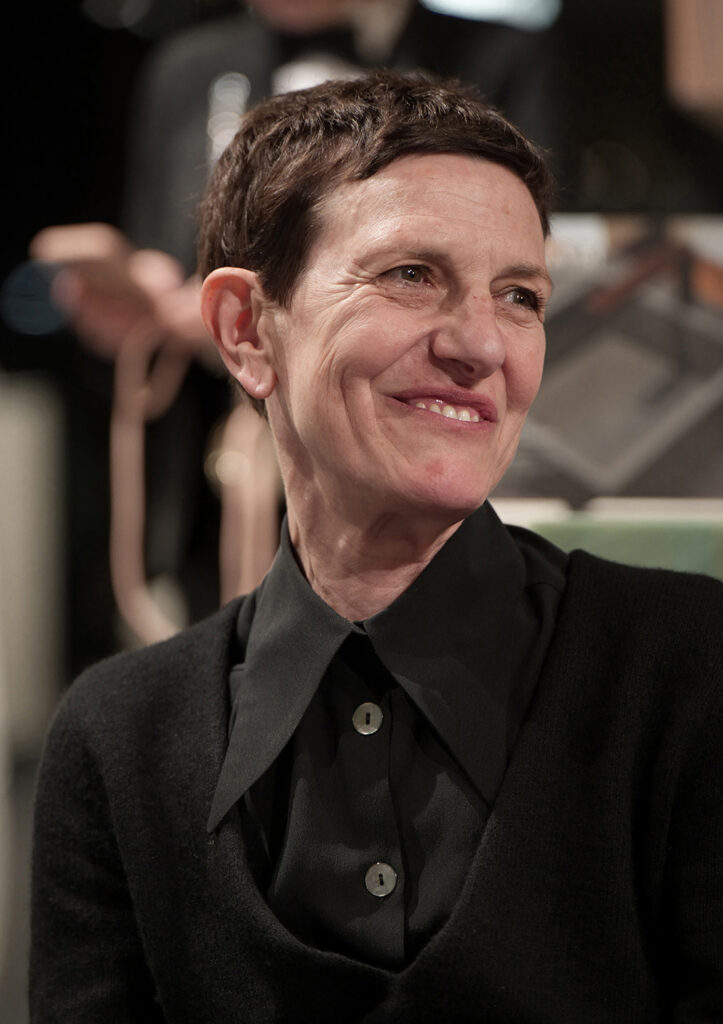
Elizabeth Whittaker is an Associate Professor in Practice of Architecture at the Harvard Graduate School of Design, where she has been teaching Core Architecture Studios since 2009, and was the Lead Faculty in Architecture in the Design Discovery Summer Program from 2011-2015.

Elizabeth is also founder and principal of MERGE architects, based in Boston since 2003. Her work at MERGE aims at developing contemporary craft, transforming typologies, and addressing social ecologies throughout the US. Her practice operates at multiple scales through commercial, institutional, retail, private residential, multi-family housing, graphic and furniture design. The office works side-by-side with teams of fabricators, artists, craftsmen and engineers to produce an architecture that embraces the art of making within a larger agenda: to re-define the urban and social boundaries in and around the city. The work combines both digital fabrication and the hand made by working through a cross-disciplinary as well a cross-production process.

The work of MERGE has been widely published both nationally and internationally and has received multiple awards including twenty-eight AIA/BSA awards. Elizabeth is the recipient of the AIA Young Architects Award, Architectural Record’s Design Vanguard, the Architectural League of New York ‘Emerging Voices’ Award, and the recipient of Architectural Record’s 2017 Women in Architecture ‘Next Generation Leader’ Award – an honor bestowed upon one female architect in the U.S. each year. She is currently serving as an Industry Advisory Group (IAG) member for the U.S. Department of State’s Bureau of Overseas Building Operations (OBO), advising on U.S. architectural projects throughout the world. Elizabeth was recently nominated for election to the AIA College of Fellows, the American Institute of Architects’ highest honor for contributions to the profession.

Elizabeth graduated from Harvard University’s Graduate School of Design with Distinction where she received numerous awards during her graduate studies including the Araldo A. Cossutta Prize/Core Studio Prize, the Faculty Design Award, and the John E. Thayer Award for overall academic achievement. Elizabeth approaches architecture as a discipline embedded in both practice and academia. She has taught design studios in several Architecture programs including Massachusetts Institute of Technology (MIT), Northeastern University, and the Boston Architectural College. She is also a regular guest critic at several institutions including Columbia University, Yale University, MIT, University of Michigan, Rhode Island School of Design, and Georgia Tech’s College of Architecture.