MRE Application Requirements
Eligibility
Applicants must possess a bachelor’s degree. Two or more years of professional experience in real estate or related fields (urban planning, urban design, architecture, landscape architecture, etc.) is preferred.

Transcripts from Prior Institutions
Transcripts are required from all colleges and universities from which you have earned credit or have received a degree and should include your name, the school name, degree, major, degree date if awarded, and a semester-by-semester course breakdown with corresponding grades. Transcripts not in English must be accompanied by a certified English translation. All transcripts must be uploaded directly into the application.
Letters of Recommendation
Applicants are required to obtain three letters of recommendation, ideally at least two from college or university instructors. If you have been out of school for several years, you may request letters from employers or other persons in a position to evaluate your professional abilities and academic potential.


Essays
Applicants must submit responses to both the general GSD community essay and any required program-specific essays. Essays prompts vary by program and are only available in the graduate application.
Portfolio
Portfolios are not an application component for the MRE and should not be submitted into the application.


Resume
Upload a resume or CV that includes full and part-time employment, education, fellowships, extra-curricular university activities, community service, honors, awards, professional registration and societies, publications, avocations, hobbies, and travel. If you served in the military, indicate rank on entry and rank on separation. Please provide a complete employment and educational history, including information about any gaps. While brevity is valued, please do not feel limited to one page.
GRE
GRE scores are not required or accepted for the MRE program. If submitted, GRE scores will not be considered when applications are reviewed. Applicants applying to another GSD program that requires the GRE must submit GRE scores for that program.

TOEFL
International applicants must take the TOEFL test and submit official scores to the GSD by the application deadline with the following exception. Applicants who hold or are in the process of completing a bachelor’s degree that includes a minimum of three years of in-person, full-time study where English is the sole medium of instruction in the following countries are exempt from the TOEFL requirement: Antigua and Barbuda, Australia, the Bahamas, Canada, Ghana, Ireland, Jamaica, New Zealand, Nigeria, Singapore, South Africa, Trinidad and Tobago, United Kingdom, and the United States. An official transcript for the relevant bachelor’s degree, showing three full-time years in residence, must be uploaded into the appropriate section of application.
Official TOEFL scores are due by the application deadline. Appropriate English proficiency is incredibly important for success at the GSD, and so we encourage applicants to diligently prepare for the TOEFL to achieve your highest possible score.
Preferred Score
104 overall with a 26 in each section
Minimum Score
92 overall with a 23 in each section
Student ProjectS
-
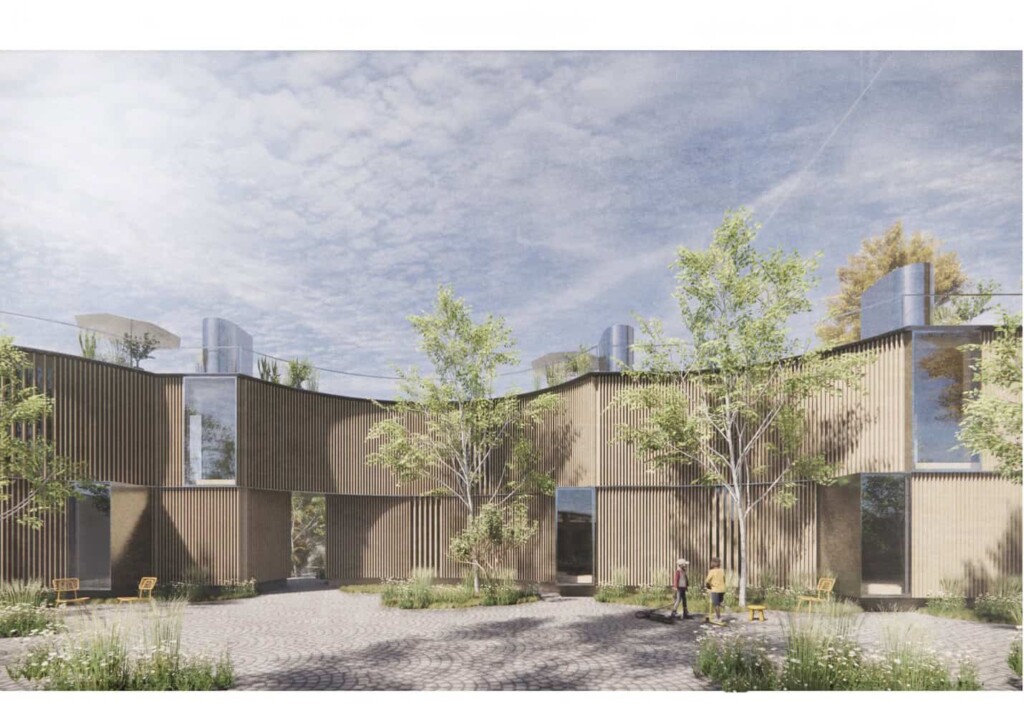
ARCA
Andres Lira Vigneaux (MArch II '25), Brittany Arceneaux (MRE '26), Noemi Iten (MDes '25), Dennis Sola (MArch II '25) -
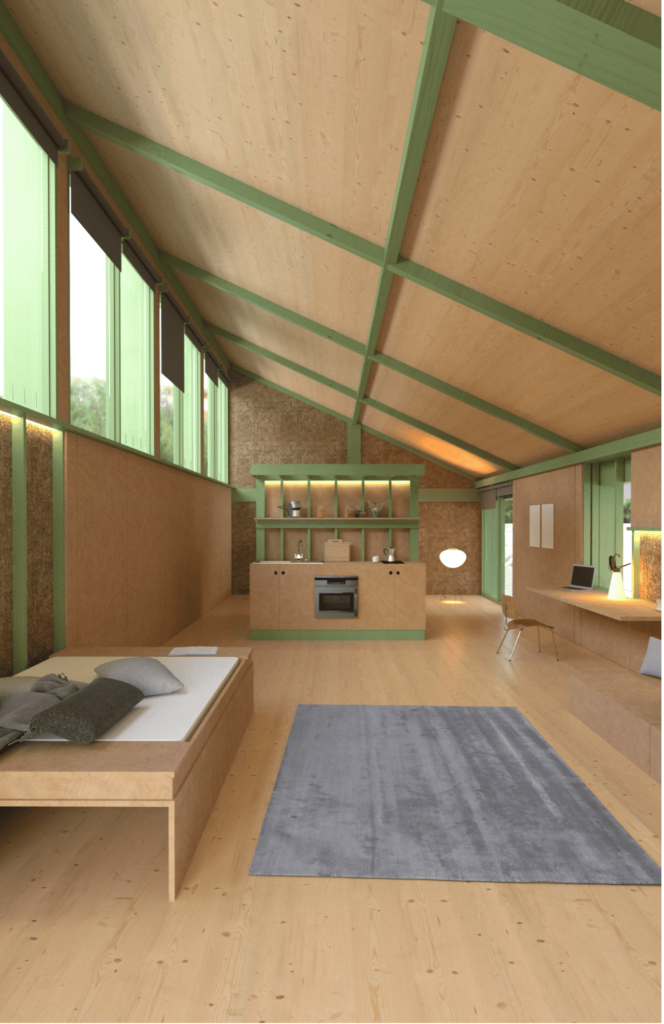
Infilling with Outbuildings
Nicky Rhodes (MArch I '26), Ian Erickson (MArch I '25), Nathan Lowrey (MRE '26), Vincent Jackow (MArch/MIT) -
![Monterrey’s Urban [River] Forest: Improving Microclimatic Conditions through Public-Private Partnership Vertical Development](https://www.gsd.harvard.edu/wp-content/uploads/2024/07/Monterrey-Urban-River-Forest_PlimptonPoorvuPrize2024_Submission-1_Page_01_2-1024x663.jpg)
Monterrey’s Urban [River] Forest: Improving Microclimatic Conditions through Public-Private Partnership Vertical Development
Miguel Lantigua Inoa (MArch II/MLA AP ’24), Jaime Espinoza (MRE ’25), Chris James (MRE ’25) -

SILVERLINE: A New Model for Data Centers in the Age of AI: Verticalities at the Edge of the Cloud
Ben Parker, Christopher Oh, Ziyang Dong, Jasmine Ibrahim, Thomas Oslund, Catherine Murray -
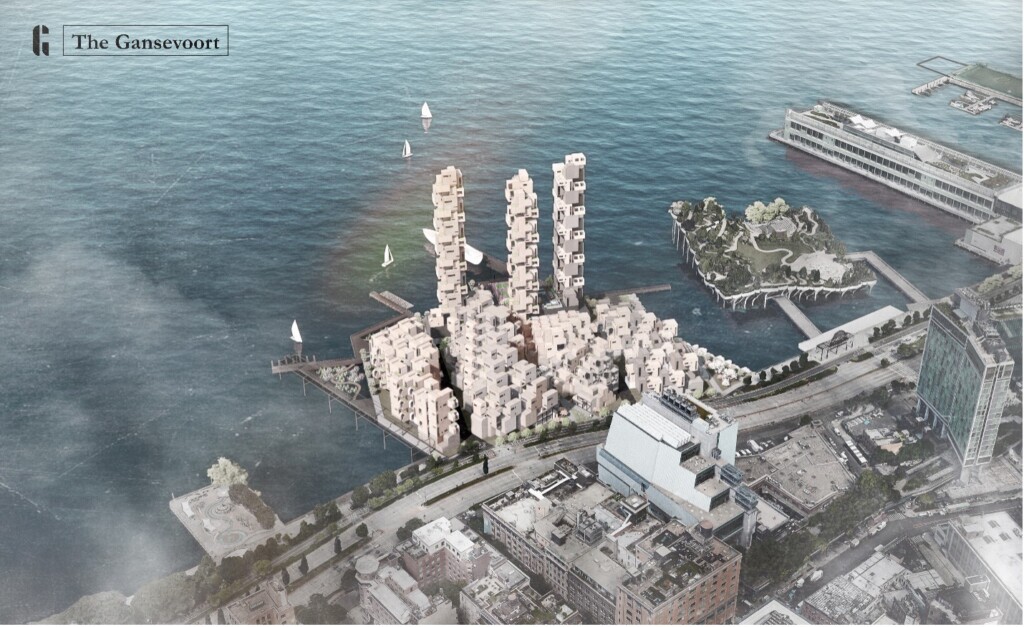
The Gansevoort: Design for Longevity
Xinxin Cheryl Lin (MArch II ’24), Vivian Cheng (MAUD ’23), Pinyang Paul Chen (MRE ’24/MLAUD ’23), Ben van Berkel, Dana Behrman
Master of Architecture II Application Requirements
Eligibility
Applicants to the MArch II program must have completed or be in the process of completing a professional 5-year architecture degree such as a Bachelor of Architecture of its equivalent, demonstrating high achievement in design. Applicants who hold a pre-professional architecture degree such as a 4-year Bachelor of Arts or Bachelor of Science with a major in architecture are not eligible for the MArch II program and should apply to the MArch I.
Transcripts from Prior Institutions
Transcripts are required from all colleges and universities from which you have earned credit or have received a degree and should include your name, the school name, degree, major, degree date if awarded, and a semester-by-semester course breakdown with corresponding grades. Transcripts not in English must be accompanied by a certified English translation. All transcripts must be uploaded directly into the application.
Letters of Recommendation
Applicants are required to obtain three letters of recommendation, ideally at least two from college or university instructors. If you have been out of school for several years, you may request letters from employers or other persons in a position to evaluate your professional abilities and academic potential.
MArch II applicants should solicit at least two recommendations from individuals involved in the supervision of at least one project in the applicant’s portfolio. For example, an applicant who includes their thesis in their portfolio might ask their thesis adviser for a recommendation and ask the adviser to write about the thesis. The same would hold true for an office mentor or supervisor.

Essays
Applicants must submit responses to both the general GSD community essay and any required program-specific essays. Essay prompts vary by program and are only available in the graduate application.
Portfolio
MArch II applicants are expected to submit examples of work demonstrating their ability to pursue study at an advanced level.
Portfolios should include as many individually authored projects as possible. Group projects and projects completed in professional offices should be clearly identified as such.


Resume
Upload a resume or CV that includes full and part-time employment, education, fellowships, extra-curricular university activities, community service, honors, awards, professional registration and societies, publications, avocations, hobbies, and travel. If you served in the military, indicate rank on entry and rank on separation. Please provide a complete employment and educational history, including information about any gaps. While brevity is valued, please do not feel limited to one page.
GRE
Official GRE scores are required to be sent directly from ETS to the GSD by the application deadline. The GSD does not have a minimum GRE score.
TOEFL
International applicants must take the TOEFL test and submit official scores to the GSD by the application deadline with the following exception. Applicants who hold or are in the process of completing a bachelor’s degree that includes a minimum of three years of in-person, full-time study where English is the sole medium of instruction in the following countries are exempt from the TOEFL requirement: Antigua and Barbuda, Australia, the Bahamas, Canada, Ghana, Ireland, Jamaica, New Zealand, Nigeria, Singapore, South Africa, Trinidad and Tobago, United Kingdom, and the United States. An official transcript for the relevant bachelor’s degree, showing three full-time years in residence, must be uploaded into the appropriate section of application.
Appropriate English proficiency is incredibly important for success at the GSD, and so we encourage applicants to diligently prepare for the TOEFL to achieve your highest possible score.
Preferred Score
104 overall with a 26 in each section
Minimum Score
92 overall with a 23 in each section
Student Projects
-
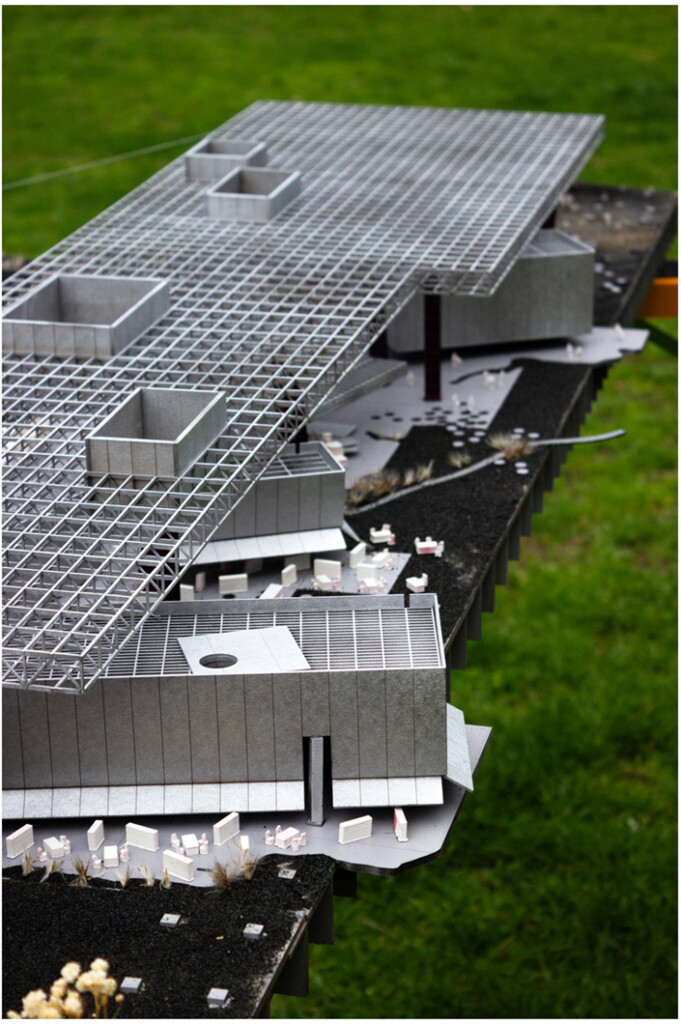
The Only Way Out is Through: Architecture, Building and Our Entangled Present in Gary, Indiana
Connor Daniel Gravelle (MArch II ’25), Eric Höweler -
ARCA
Andres Lira Vigneaux (MArch II '25), Brittany Arceneaux (MRE '26), Noemi Iten (MDes '25), Dennis Sola (MArch II '25) -
Monterrey’s Urban [River] Forest: Improving Microclimatic Conditions through Public-Private Partnership Vertical Development
Miguel Lantigua Inoa (MArch II/MLA AP ’24), Jaime Espinoza (MRE ’25), Chris James (MRE ’25) -
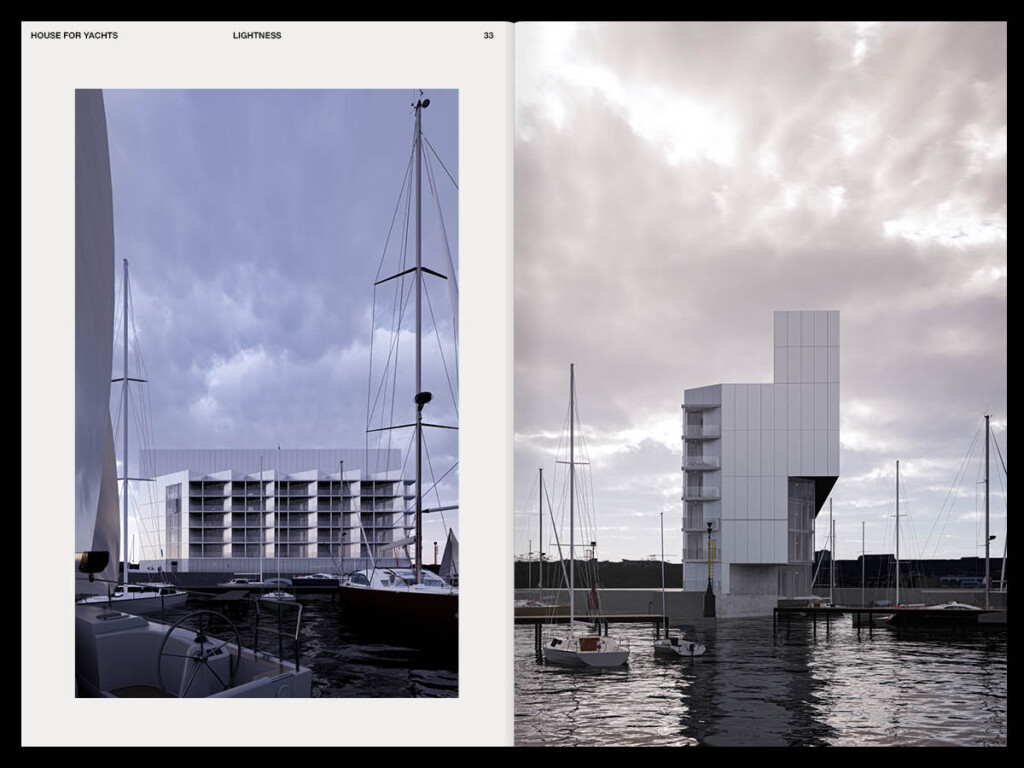
Bådehus
Yeonho Lee (MArch II ’24), Grace La, James Dallman -

KEUR FÀTTALIKU — The House of Recollection
Mariama Muhammadou Modou Kah (MArch II ’24), Mohsen Mostafavi, Rahul Mehrotra -
The Gansevoort: Design for Longevity
Xinxin Cheryl Lin (MArch II ’24), Vivian Cheng (MAUD ’23), Pinyang Paul Chen (MRE ’24/MLAUD ’23), Ben van Berkel, Dana Behrman -
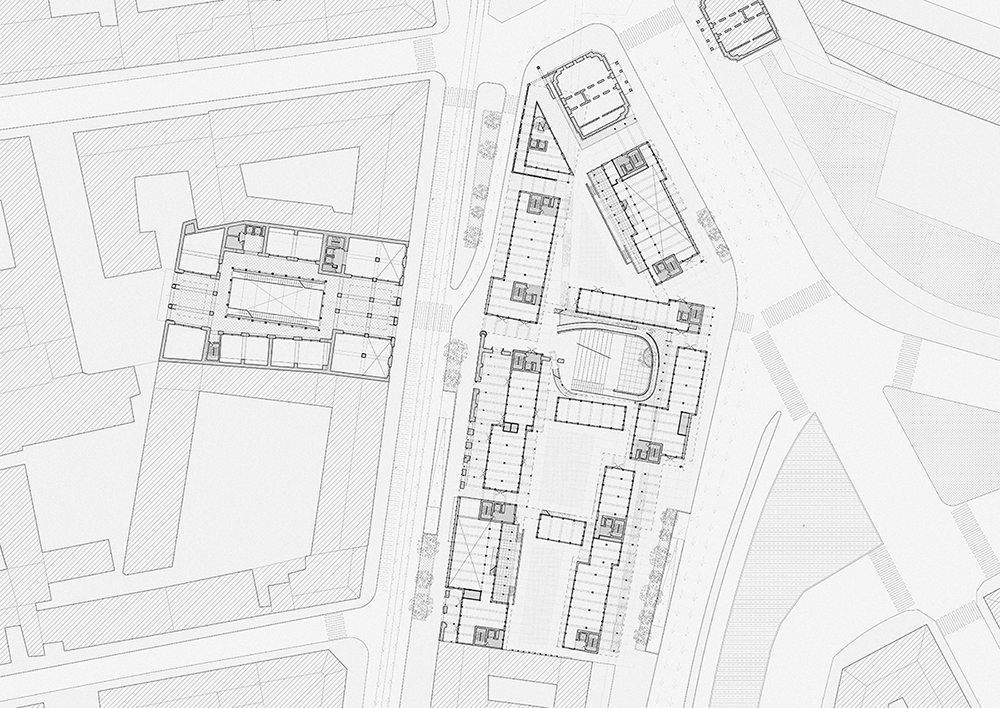
Boundaries of Everyday: walls to voids, voids to solids, solids to walls
Deok Kyu Chung (MArch II ’23), Lyndon Neri, Rossana Hu -
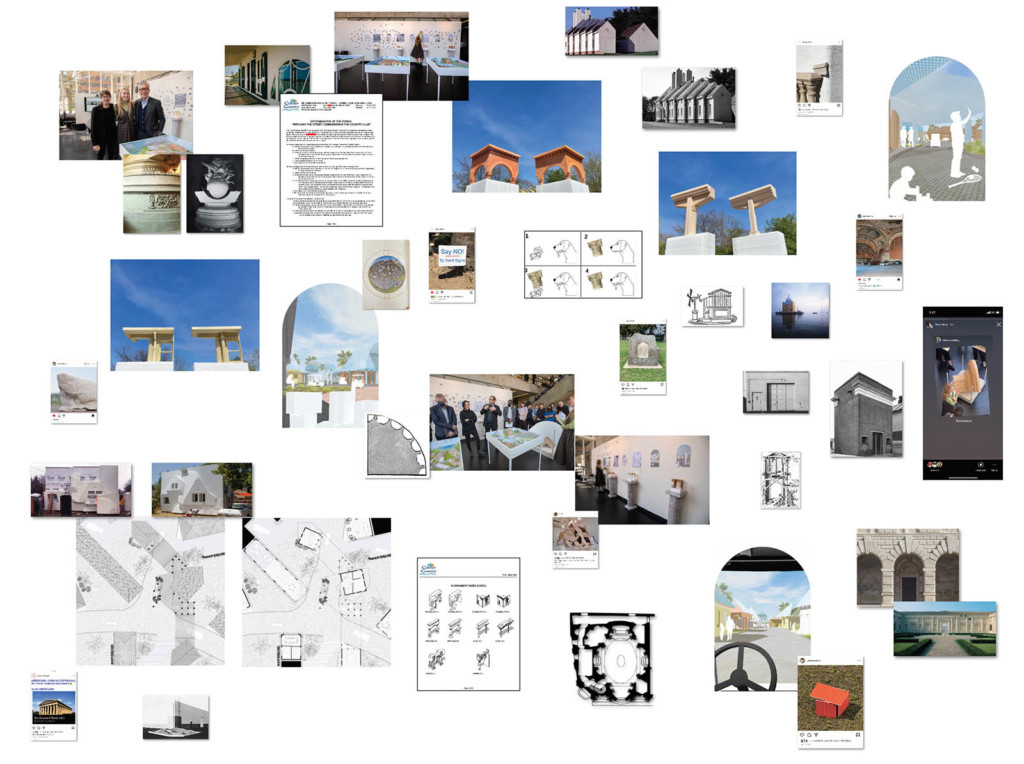
There Goes the Neighborhood
Remi McClain (MArch II ’22), Erika Naginski -

Multimodal Architecture: Applications of Language in a Machine Learning Aided Design Process
George Guida (MArch II '22), Andrew Witt, Jose Luis Garcia del Castillo Lopez -
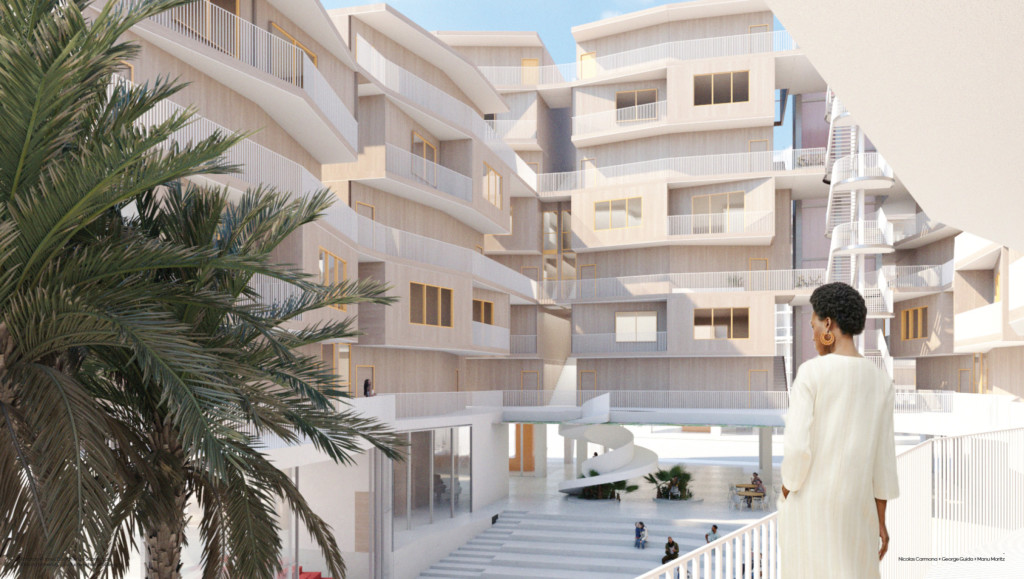
Miami Gateway
Nicolas Carmona (MArch II '22), George Guida (MArch II '22), Manu Moritz (MDes '22), Elizabeth Whittaker, Corey Zehngebot
MAster of Architecture I Application Requirements
MAster of Architecture I Application Requirements

Eligibility
MArch I applicants must hold or be in the process of completing a four-year Bachelor’s degree (BA or BS) in any field (architecture or other). Additionally, MArch I applicants should consider the following eligibility criteria while preparing an application:
- A total of four required college-level, semester-long prerequisite courses in calculus, algebra-based physics (mechanics & thermodynamics), and the history of architecture (two semesters; Renaissance through Modern periods for at least one of the courses). A minimum grade of B- must be achieved in each.
- Visual arts preparation (drawing, sculpture, graphics) is desirable but not required.
- Additional coursework in humanities, philosophy, literature, or economics is recommended but not required.
Transcripts from Prior Institutions
Transcripts are required from all colleges and universities from which you have earned credit or have received a degree and should include your name, the school name, degree, major, degree date if awarded, and a semester-by-semester course breakdown with corresponding grades. Transcripts not in English must be accompanied by a certified English translation. All transcripts must be uploaded directly into the application.
Letters of Recommendation
Applicants are required to obtain three letters of recommendation, ideally at least two from college or university instructors. If you have been out of school for several years, you may request letters from employers or other persons in a position to evaluate your professional abilities and academic potential.
Essays
Applicants must submit responses to both the general GSD community essay and any required program-specific essays. Essay prompts vary by program and are only available in the graduate application.
Portfolio
The purpose of the portfolio is to demonstrate creativity, aptitude for design, and a capacity to think and design in three dimensions. MArch I portfolios should show an applicant’s recent creative work in the visual arts or design executed by the applicant. Candidates without previous training in architecture, landscape architecture, or related fields may demonstrate design aptitude by submitting examples of freehand drawing, painting, sculpture, photography, graphic design, furniture, product design, etc. Those who have participated in Career Discovery/Design Discovery/Design Discovery Virtual (or similar programs at other schools) are encouraged to include this work in their portfolios.
The admissions committee strongly prefers to see a majority of individual projects rather than collaborative work and if possible, not more than one group project and not more than one office project. Should such group work be presented (either academic collaborations or from a professional office), candidates should clearly identify their role in the project.
Resume
Upload a resume or CV that includes full and part-time employment, education, fellowships, extra-curricular university activities, community service, honors, awards, professional registration and societies, publications, avocations, hobbies, and travel. If you served in the military, indicate rank on entry and rank on separation. Please provide a complete employment and educational history, including information about any gaps. While brevity is valued, please do not feel limited to one page.
GRE
Official GRE scores are required to be sent directly from ETS to the GSD by the application deadline. The GSD does not have a minimum GRE score.

Prerequisite Courses
MArch I applicants are required to complete several prerequisite courses at the college level, for credit, and must earn a minimum grade of a B-.
Required courses include:
- One semester of calculus typically satisfied by a college level calculus course.
- One semester of physics typically satisfied by introductory algebra-based or calculus-based physics courses for science majors that covers basic mechanics topics, including linear, circular, and projectile motion, vectors, forces, inertia, torque, energy, impulse, and momentum, waves and thermodynamics.
- Two semesters of the history of architecture, together covering Renaissance through Modern Periods at minimum. This requirement can be satisfied by two survey courses covering Ancient-to-Renaissance and Renaissance-to-Modern, or one survey course that covers the Renaissance to Modern periods and another course that focuses on a particular time period or topic in the history of architecture.
Applicants are not required to complete all prerequisites at the time of application, but it can strengthen an application to have completed or be in the process of completing as many prerequisite courses as possible.
TOEFL
International applicants must take the TOEFL test and submit official scores to the GSD by the application deadline with the following exception. Applicants who hold or are in the process of completing a bachelor’s degree that includes a minimum of three years of in-person, full-time study where English is the sole medium of instruction in the following countries are exempt from the TOEFL requirement: Antigua and Barbuda, Australia, the Bahamas, Canada, Ghana, Ireland, Jamaica, New Zealand, Nigeria, Singapore, South Africa, Trinidad and Tobago, United Kingdom, and the United States. An official transcript for the relevant bachelor’s degree, showing three full-time years in residence, must be uploaded into the appropriate section of application.
Appropriate English proficiency is incredibly important for success at the GSD, and so we encourage applicants to diligently prepare for the TOEFL to achieve your highest possible score.
Preferred Score
104 overall with a 26 in each section
Minimum Score
92 overall with a 23 in each section

Advanced Placement
In a very small number of cases, MArch I applicants who have completed a pre-professional four-year Bachelor of Arts or Bachelor of Science degree with a major in architecture or its equivalent may be eligible for admission with advanced placement subject to the review of the admissions committee. Applicants admitted with advanced placement normally begin study in the third term of the program, reducing the program length to 2.5 years. Although MArch I applicants must meet criteria below in order to be considered, doing so does not guarantee admission or advanced placement.
Applicants interested in being considered for advanced placement will apply to the MArch I program and indicate interest through a checkbox on the program selection page.
Requirements for Consideration for Advanced Placement
Student Projects
-
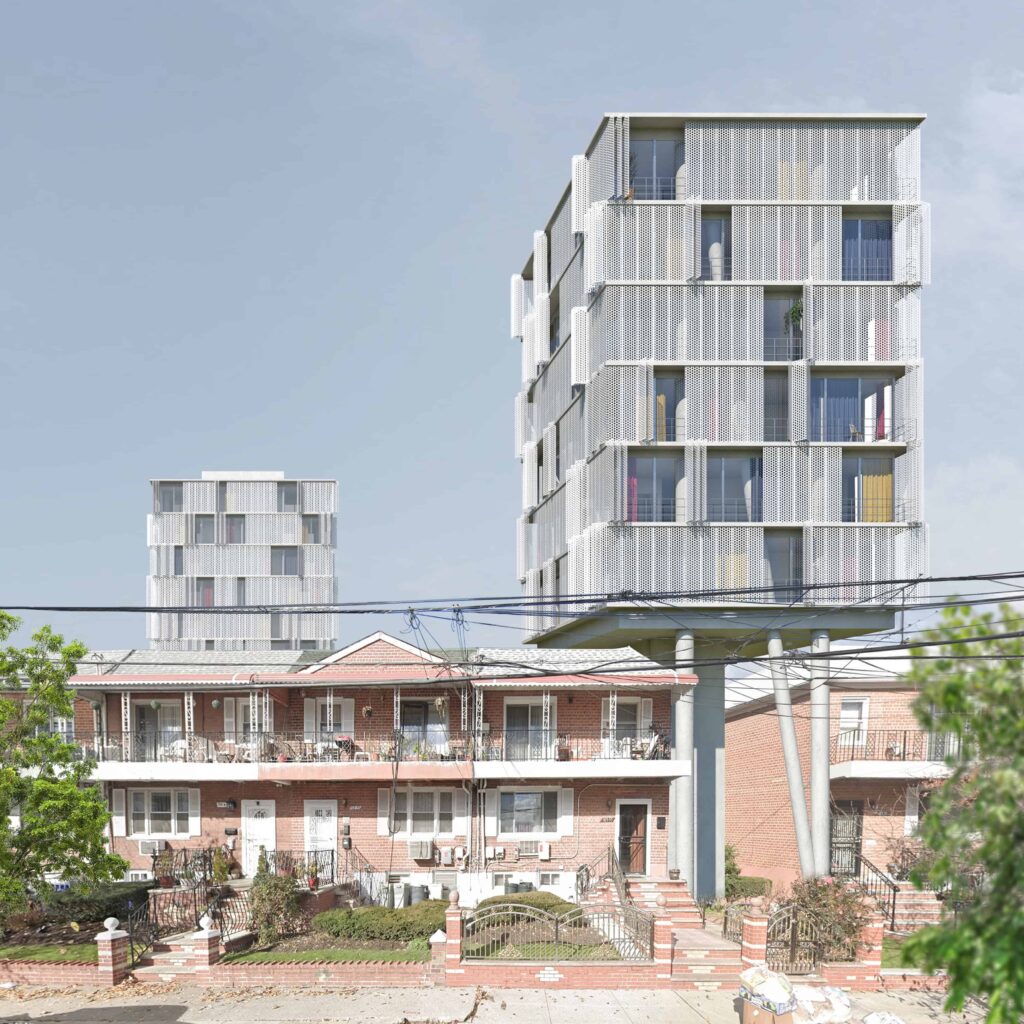
Block Edit
Chandler Caserta (MArch I ’25), Elizabeth Bowie Christoforetti -
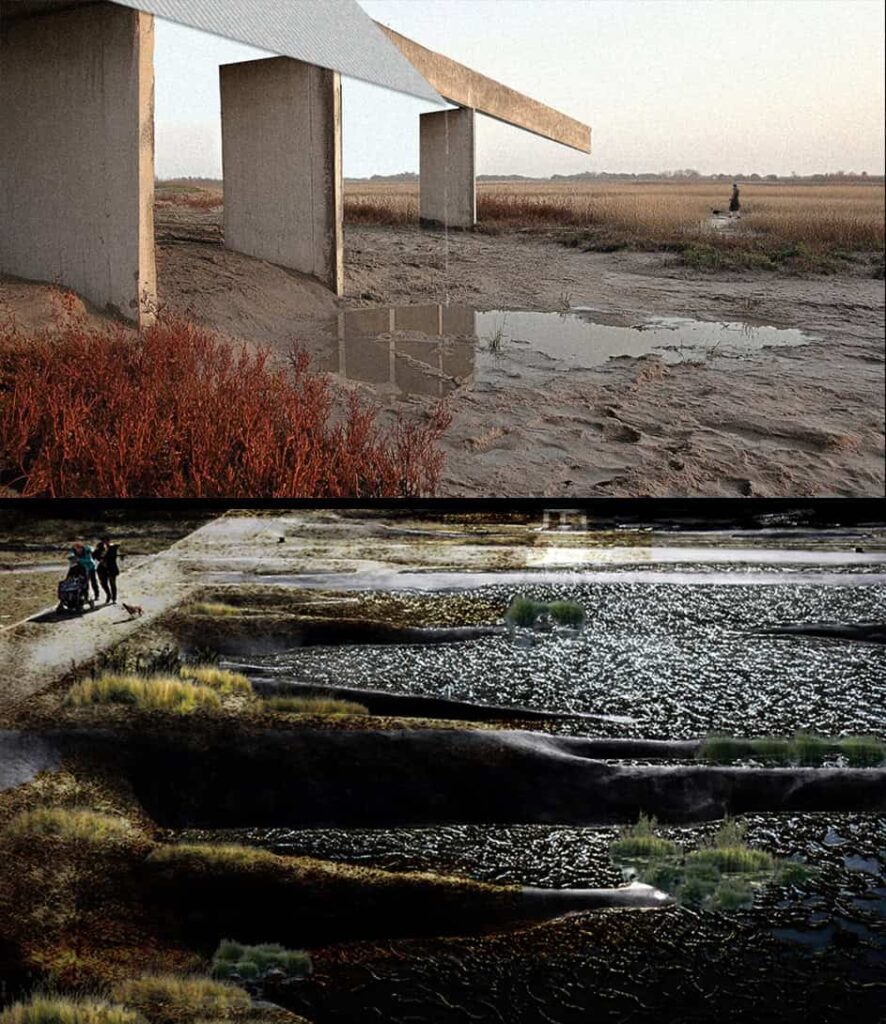
Resolution Grounds: Designing with the Fragmented Survey
Paris Bezanis (MArch I ’25) -
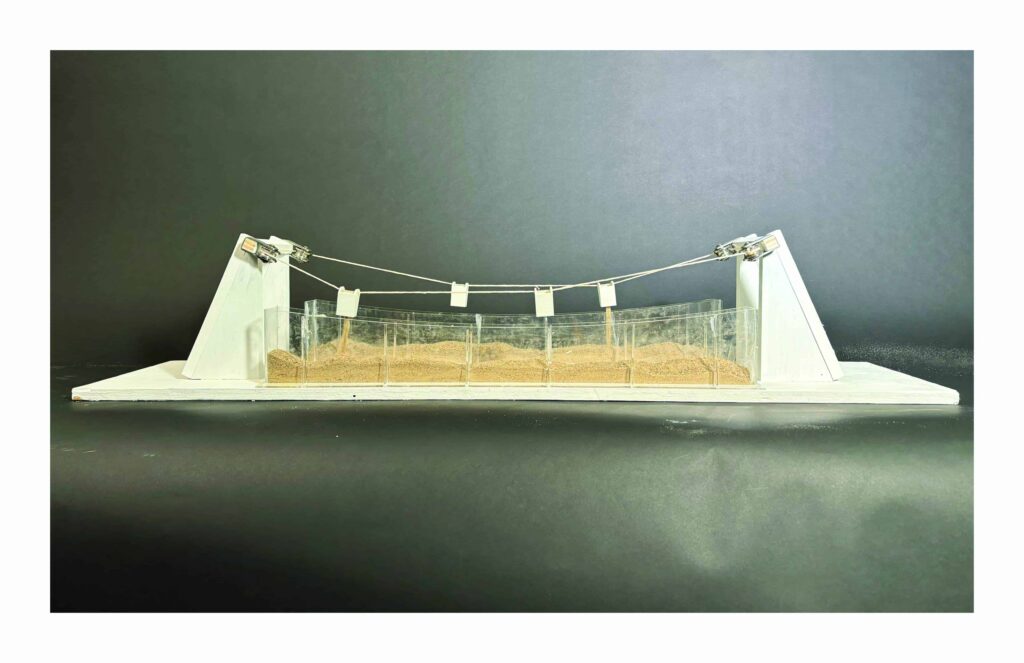
The Weight of Rubble
Juan Fernández González (MArch I ’25), Andrew Witt -
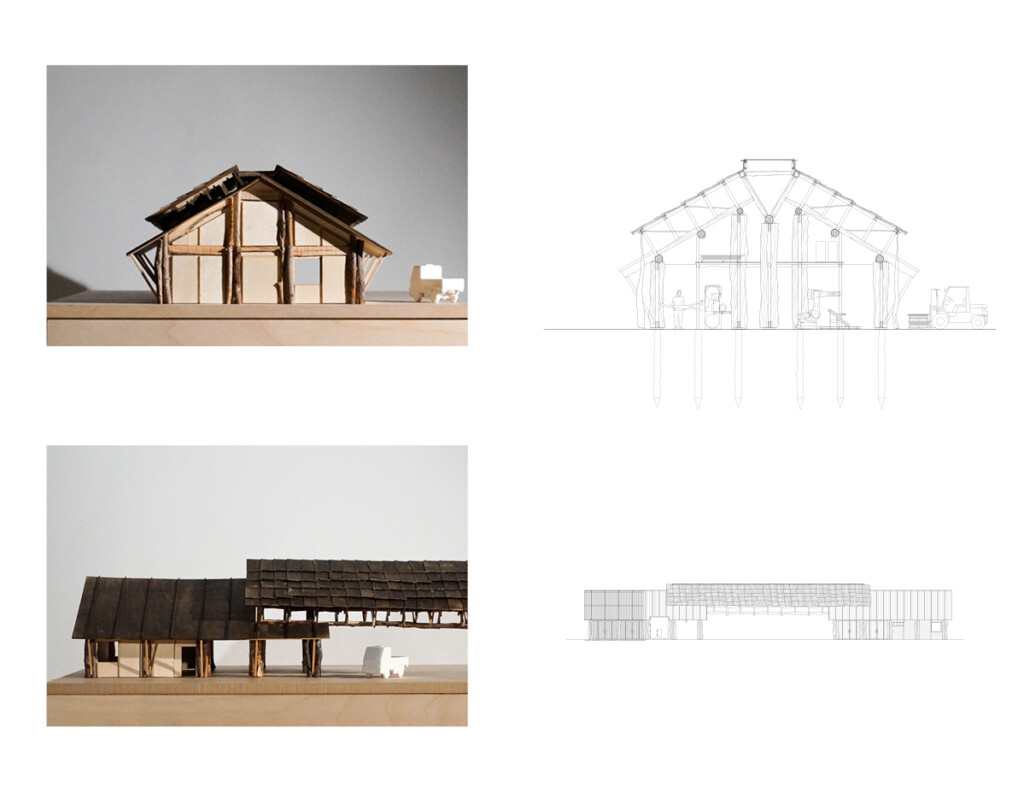
Form Follows Forest
Kei Takanami (MArch I ’25), Martin Bechthold, Jon Lott -
Infilling with Outbuildings
Nicky Rhodes (MArch I '26), Ian Erickson (MArch I '25), Nathan Lowrey (MRE '26), Vincent Jackow (MArch/MIT) -

Tectonics of Tenure: Public Infrastructure for Collective Housing
Maggie Musante, Susanne Schindler -
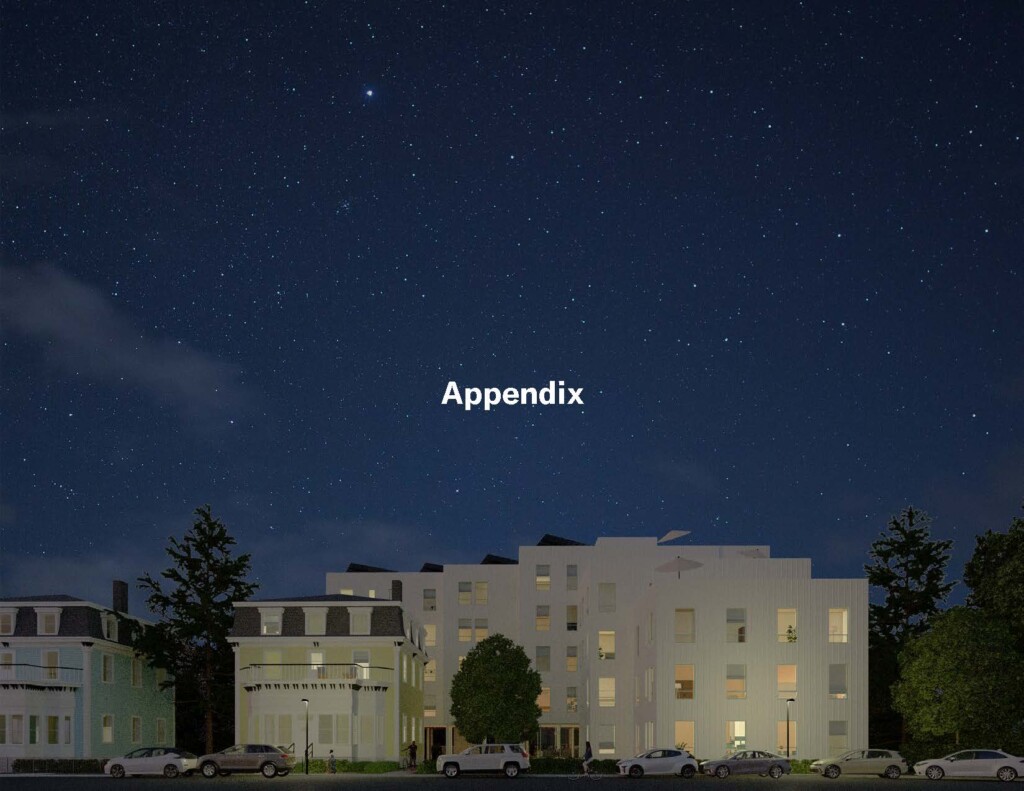
Walnut Park Place: Affordable Ownership Opportunities for the Egleston Square Community
Aaron Smithson (MArch/MUP '25), Cat Chen (MArch '25), Maggie Weese (MUP/MPH '24) -

Connecting Gilman Square: A New Housing and Green Space Development
Chandler Caserta (MArch I ’25), Austin Sun (MLA/MArch I ’24), Kei Takanami (MArch I ’25), Amber Zeng (MArch I ’25), Weijia Song -
SILVERLINE: A New Model for Data Centers in the Age of AI: Verticalities at the Edge of the Cloud
Ben Parker, Christopher Oh, Ziyang Dong, Jasmine Ibrahim, Thomas Oslund, Catherine Murray -
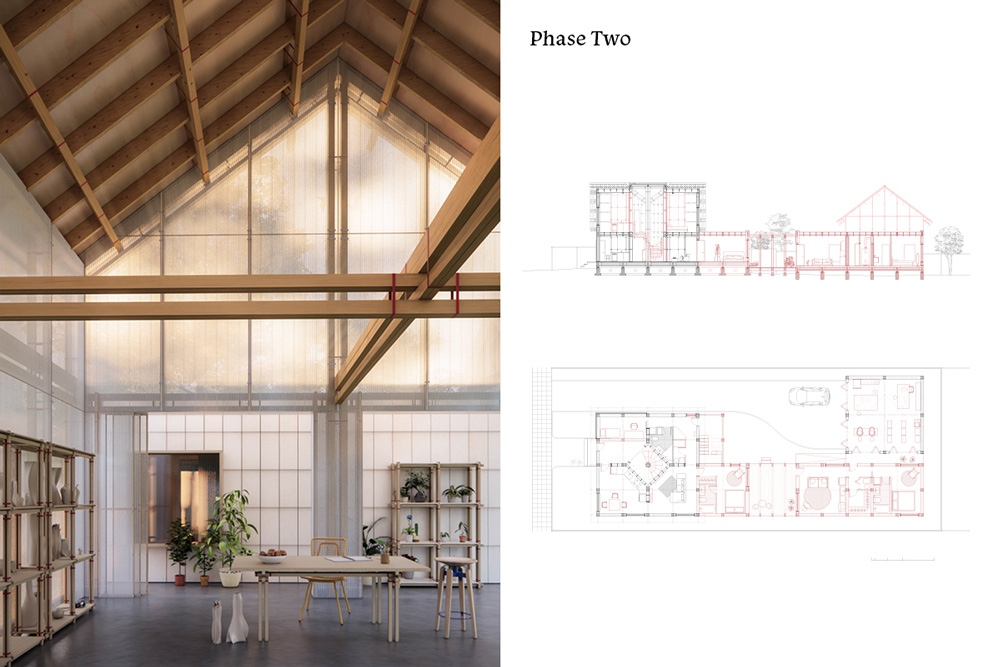
How to (Un)build a House? A Reinvention of Wood Framing
Clara Mu He (MArch I ’24), Toshiko Mori
Admissions Resources
In this folder:
AdmissionsResources
Admissions, Help Desk, Information Technologies
Financial Aid
Britt Axelson
Navigating the Application (FAQ)
Navigating the Application (FAQ)

General Application
That depends on which program you are interested in! We receive many successful applications to our professional degree programs from undergraduates who will graduate in the spring. Be sure to read the departmental pages for each program to learn about eligibility. Some programs require or prefer professional experience, and some programs require previous professional degrees. All of our programs require an undergraduate degree.
Yes! Our professional degrees (MArch I, MLA I, MUP) do not require a previous design background, although a four-year Bachelor of Arts or Bachelor of Science degree or equivalent is required to apply. Each year we also welcome students from other related disciplines to our Real Estate, Design Engineering, and Design Studies degree programs.
You are welcome to apply to the GSD if you are currently enrolled in a graduate program at another school, but the GSD does not accept transfer credit from other institutions. You will need to apply during our regular application process. If admitted, it may be possible to waive a required course if you have completed the equivalent course at another institution. This would not shorten the length of your program, but it may allow you to take an elective instead of the required course.
If you are currently enrolled in a graduate program you don’t intend to complete if admitted to the GSD, please include a brief memo describing your intentions in the Education tab of the application to better help the committee understand your academic interests.
You may apply a maximum of three times to the same GSD degree program. If you are denied admission for the third time, further applications to the same program will not be considered.
Yes, you can apply to a maximum of three programs during one application cycle. We strongly encourage you to think carefully about your interests prior to applying to more than two programs.
Applicants applying to more than one program must submit a separate application and supporting materials for each program. A separate application fee is also required for each application.
Applicants applying to more than one program who are interested in pursuing a concurrent degree at the GSD will go through the same process, submitting separate applications for each program, and should indicate within the application their interest in a concurrent degree. Each application is reviewed separately by the respective departmental committees.
Master in Urban Planning (MUP) students are eligible to pursue joint degrees with Harvard Law School and the Harvard Kennedy School. You must apply separately to both schools in which you are interested.
Transcripts
Official copies of transcripts for all schools from which you have received credit should be uploaded in the Education tab of the application. Screenshots or downloads from course websites or student self-service sites are not acceptable.
Transcripts must be in English or accompanied by a certified English translation and should include the following datapoints:
- Applicant name
- School name
- Degree title
- Major
- Degree date (if awarded)
- Semester-by-semester course breakdown with grades
- GPA (if applicable)
Applicants should enter the GPA exactly as it appears on their transcript. If your school does not issue a GPA, you should leave this field blank.
Applicants should enter their GPA exactly as it appears on their transcript. International GPAs should not be converted to the American GPA scale. You will be asked to provide the scale that your school uses.
Yes, you should upload transcripts for certificate or non-degree programs into the Education tab and enter the level of study as non-degree.
Some official digital transcripts are encrypted for security purposes, meaning that you may not be able to upload them directly to the application. To bypass the encryption, open the document in Adobe or any PDF reader. Then select the “print to PDF” or “Microsoft print to PDF” option to save a new copy. Then upload this new copy into the application. Usually, decrypted digital transcripts will reveal a water-mark that says “unofficial” or “copy.” This is not an issue for the purposes of the application.
If you are currently enrolled in school and are hoping to include your fall grades in your application, we recommend contacting your registrar’s office to see if those grades will be added to your transcript before the application deadline. If your fall grades won’t be included before the application deadline, you should request the most updated version and upload those into the application. We have many successful applicants each year who are not able to submit fall semester grades at the time of application. It is not possible to update your transcripts to include fall semester grades after you submit your application.
Transcripts not in English will need to be translated by an official translation service. We do not recommend a specific translation company. Both the original and translated versions should be uploaded into the application. Applicants who have completed or will complete a degree at an international school do not need to submit a WES evaluation at the time of application, though it will be required later if you are admitted.
A WES evaluation is not required when applying, though you are welcome to submit a WES evaluation if you have one available. If admitted, students who have attended schools outside the U.S. or Canada will be required to submit a course-by-course WES iCap evaluation at their expense.
As soon as possible! Transcripts must be uploaded into the application by the application deadline. Even if you are still in school, you should be thinking about your transcripts now. Schools receive a high volume of transcript requests in December due to application deadlines across the world. In addition, many colleges close for winter holidays, especially in the United States, so it is a good idea to reach out before then.
Letters of Recommendation
Impactful recommendation letters usually come from those familiar with you and your work who can speak to your academic potential at the GSD. As a first step, we recommend reaching out to prior college or university professors. It can be helpful to share a copy of your resume and personal statement with them, or even a prior project you worked on in their class to jog their memory. Consider scheduling a conversation to discuss the program(s) you are applying to, your motivations, and any specific aspects you would like them to address in their letter, such as a project in your portfolio or on other studio projects or coursework they are directly familiar with.
If you have been out of school for several years, you may request letters from employers or other persons in a position to evaluate your professional abilities and academic potential. It is important that professional letters address any transferrable skills that will help you succeed in a rigorous academic environment.
We still encourage you to reach out to past professors – you might be surprised that they remember you! In that case, it can be helpful to remind them who you are, when you took their classes, and to include some of your previous work in an email to jog their memory.
Yes, you should submit your application by the deadline even if we haven’t received all letters of recommendation. Recommendation letters can still be received after you submit. You can monitor the status of your letters through the Application Status Page. You can also send your recommenders reminders from this page.
All application materials, including recommendation letters, are due by the application deadline for your program. Letters received more than five days after the deadline may not be reviewed by the admissions committee. If you are submitting only three letters of recommendation and you cannot reach one of those recommenders, you may want to consider adding an additional recommender to your application as a backup. Please keep in mind that applicants can submit up to five letters of recommendation.
This depends! Recommendation letters can be shared across multiple applications, but it is important that you discuss this with your recommender ahead of time so that they can account for that when writing your letter.
To share recommendation letters across applications, go to the Recommendations tab in the application. You can import your letters from other applications by clicking “Add New” and then selecting the letter you would like to import. Note that your recommender must already have submitted their letter to at least one program for it to appear in the import list.
If you are concerned that your recommender may not submit their letter in time for you to import, we recommend entering their information separately into each application. They will then need to upload a letter for each application program.
In that case, the letter will need to be translated by an official and certified service. As the applicant, you can choose and pay for the translation service, but the recommender must send the letter to the translation service themselves and upload the original and translation from their email address so that you do not see the letter. There is a required questionnaire in English that they will be prompted to submit alongside their letter. They may need to seek assistance from a translator for this section as well.
Please have your recommender check their spam and junk folders. The email will be sent by [email protected]. It is also possible that there is a typo in the email address you entered in the application. If they still can’t find our message, please send us an email with the subject line “URGENT: Recommender Issue” that includes your application reference number and your recommender’s name. We will resend the link manually.
If you have not yet submitted the application, please “exclude” your recommender and re-add them with the updated contact information from the Recommendations tab in the application. Excluded recommendations will not be reviewed.
If you have already submitted your application, login to your application status page
. In the right-hand sidebar, you will find a link to “send a reminder” to your recommender. From this page, you will be able to exclude your recommender and re-add them to update their contact information.
The old upload link will expire and a new link will be sent to your recommender. Please be sure they are aware that they should use the newest version of the link. If your recommender already submitted their letter, they will need to resubmit their letter using the new link.
If your recommender is receiving an error message, please ask them to clear their cookies and cache, restart their browser, and try again. It may be necessary for them to restart their computer after clearing the cookies and cache. Trying a different browser should also resolve the issue.
Please have your recommender contact us at [email protected] with the word “URGENT” in the subject line.
Design Discovery evaluations should be uploaded in the designated section in the application. While committees very much like to see those evaluations, they do not count as one of your three recommendation letters. Applicants should have three recommendation letters in addition to their Design Discovery evaluation.
Letters submitted via personal email addresses may face additional scrutiny during review. We strongly prefer that you use your recommender’s current institutional email address as this helps us confirm the legitimacy of their letter. If that is not possible, a personal address can be used. We ask that all recommenders submit their letter on institutional letterhead, and this is even more important if your recommender is using an unofficial email address to upload their letter.
If your recommender’s organization restricts the receipt of emails from external sources, they likely need to add [email protected] to their safe senders list. If they aren’t sure how to do so, they should reach out to their local IT department.
Recommenders will receive instructions via email soon after you register their information in the application. Your recommenders must use the secure link to upload their letter. We do not accept letters over email or by mail.
If you applied within the last two years, you may import recommendations from a previously submitted graduate application to the GSD. For your application to be as strong as possible, we encourage you to seek updated letters if your previous letters were submitted more than two years ago.
Essays
Essay prompts and requirements are only available in the application itself and may vary significantly by program. Essay requirements are subject to revision on an annual basis so may be different each year.
While we understand submitting an essay that is only a few words over the maximum word count, you should aim to stay within the word limit requested for each specific prompt. Being able to articulate complex ideas within the set word limit is part of the evaluation process.
Some applicants do include pictures or other visual work in their essays to supplement the written text, but this is not required and should be done sparingly and only with proper citations.
You can think of the essays as your written, verbal introduction to the admissions committee. This is your opportunity to show the committee who you are and how you think about the discipline to which you are applying. It also serves as a writing sample.
There is no one right way of writing your essay. It is important that you use your own voice. Make sure that you are shown through the essay, not who you think the committee wants to see.
We recommend that you go through a series of drafts, edit and revise, and ask others for feedback. You can ask your mentor, a colleague, a friend, or a family member for advice on the essay.
For programs that ask for a personal statement, don’t just repeat what’s on your resume— try to add additional dimension and context to your experiences. Think of it as an opportunity for you to share the significance of your accomplishments and how those relate to your goals for the program, which cannot be demonstrated through the summarized data points in other areas of your application like your resume.
Portfolio
Each program has unique criteria for the portfolio. Please be sure to review the application requirements page for your program for specific information about the expectations for your application program.
Portfolios are required for all degree programs except the Master in Urban Planning (optional portfolio) and Master in Real Estate (portfolio not required or accepted).
Portfolios must be uploaded as a single PDF and include your most important and representative visual arts, design, research, and/or professional work. Projects should include a description as well as any supporting documentation. All work must indicate the date of the project and whether the project was academic, office-related, or personal. In the case of collaborative work, the contribution by the applicant must be described precisely. If any part of an image or process is not your own work, the source must be cited. Embedded links are deactivated when you upload your portfolio, so we do not recommend including them as there is no guarantee they will be reviewed.
- File type: upload a single, combined PDF into the portfolio section of the application.
- Max file size: 40 MB
- Max page limit: 30 single PDF pages, excluding the cover page and table of contents.
- Max resolution: 150dpi for all images or entire PDF. RGB is the recommended format for color management on computer monitors. When importing line drawings into PDF format, please check that line weights are properly reproduced or adjusted.
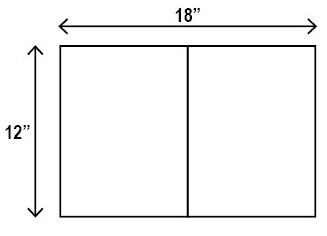
- Recommended page size: 12″ x 18″ (A3). We recommend converting spreads into single pages because it is unlikely that the committee will view the portfolio as spreads. If you wish certain pieces of content to be viewed at the same time, we suggest putting that content on the same page, which would count as one page.
We do not have any sample portfolios; a wide variety of design work and portfolio styles are submitted, and there is not one type of correct or successful portfolio.
No. We do not accept website portfolios.
Portfolios should be no more than 30 PDF pages. The 30-page limit refers to individual pages in your PDF file. Title and cover pages do not count towards the limit. Note that 30 pages is a maximum and not a minimum. It is fine if your portfolio is fewer than 30 pages.
The faculty will be reviewing portfolios on their laptop screens and are unlikely to review portfolios in spreads as the finer details may be more difficult to review or even illegible. If you wish to present content side-by-side, we suggest putting that content on the same 12×18 page, which would count as one page.
See below for an example of a potential page layout, noting that portfolio layouts may differ across applications.
The GSD does not offer portfolio reviews to applicants. We encourage applicants to seek feedback from mentors, colleagues, or your undergraduate career services office.
First, check the file type to make sure it is a PDF. Then, try uploading it to the Portfolio (video) tab of the application instead of the Portfolio (pdf) tab. Portfolios that exceed 32mb must be uploaded into the Portfolio (video) section of the application.
It is ultimately your decision to include additional group projects if you think that they will best demonstrate your abilities and potential. The admissions committee strongly prefers to see a majority of individual projects rather than collaborative work, and if possible, not more than one group project and not more than one office project. Should such group work be presented (either academic or professional collaborations), candidates should clearly identify their roles in the project.
The GSD welcomes applications to our professional programs from those without a traditional design background. Through your portfolio, it is important that you demonstrate your creative aptitude for design and the ability to think in two and three dimensions. Many non-background applicants include fine arts or other creative visual work in their portfolio, such as sketches, ceramics, painting, photography, graphic design, etc.
MDes applicants come from a variety of backgrounds and show a spectrum of work in their portfolios. Successful applicants have included relevant design work, academic research projects, data analysis, and other professional and academic projects.
MDes portfolios should specifically reference methods, media, and models (physical and intellectual, digital and analog, historic and contemporary, built and proposed) that demonstrate spatial fluency and intellectual depth in contemporary research questions and critical areas of inquiry.
Our advice is that if you have a portfolio, include it in your application. If you don’t, there is no need to create one. We admit many students to the MUP program each year who do not include a portfolio in their application.
Applicants have the option of submitting one video as a supplement to the PDF portfolio. Videos should be in MOV or WMV format and no more than 60 seconds in length. Videos should be sized for 640x480px. Note that videos may serve as a supplement to the PDF portfolio but cannot replace it.
Resume & Work Experience
While brevity is valued, please do not feel limited to one page.
Resumes should be uploaded as a PDF into the application and should include: full and part-time employment, education, fellowships, extra-curricular activities, community service, honors, awards, professional registrations and societies, publications, hobbies, and travel. If you served in the military, indicate rank on entry and rank on separation. You should include a complete employment and educational history, including information on any gaps.
Several of our programs require or prefer professional experience. Please see our Program Comparison Tool to compare eligibility and professional experience requirements.
Some programs, such as the MAUD, MLAUD, MRE, and MDE will ask for detailed information about your previous professional experience in the application.
GRE
The following programs require applicants to send verified, valid GRE scores to the GSD by the application deadline:
- MArch I
- MArch II
- MUP
- DDes
Applicants may choose to submit optional GRE scores for the following programs:
- MLA I
- MLA I AP
- MLA II
- MAUD
- MLAUD
- MDE
- MDes
GRE scores are not reviewed for the MRE program even if submitted.
Your application will not be disadvantaged if you choose not to submit GRE scores to a GRE optional program. If you have taken the GRE and would like to submit scores in support of your application, you are welcome to do so. If you have not taken the GRE or submitted scores, the weight of your other application materials will be considered during the review process. We recommend considering how and where GRE scores may be of benefit to your application. For example, they can be used to balance a lower than average GPA or to demonstrate competency in a particular area such as mathematics.
GRE scores must be sent to the GSD directly from ETS using institutional code 3455.
Verified GRE scores sent directly from ETS are due by the application deadline for your program.
First, please check to make sure you sent your scores to the correct institutional code for the GSD (3455). It is a common mistake to send them to Harvard College. We are not able to retrieve scores from the College.
If you’ve confirmed that you’ve sent your score to the GSD, we have likely received your score or will receive it shortly. If the information you used when registering for the GRE differs from what you’ve entered into the application (such as your email address, phone number, or name), your scores may not appear in your application record automatically upon receipt. We match these scores manually to ensure they are included in your application.
If you have submitted GRE scores at some point, you will likely see your score in the application proof and in your application checklist after submitting. Even so, the admissions committee will not be able to see your GRE during review for programs where the GRE is not accepted.
We are not able to delete GRE scores from your record. Any valid scores submitted for a GRE optional or required program will be included in review.
More information about an applicant can be valuable, and GRE scores provide an additional, useful data point for assessing applications. Test scores are just one data point among the many that are considered by committees. Careful and thorough review is given to all application materials, giving applicants multiple opportunities to demonstrate your experiences, skills, and accomplishments.
Current GSD students applying to another program at the GSD are required to submit official GRE scores if the GRE is an application requirement for the program to which they are applying. There are no exceptions to this policy.
Graduates of the GSD who have decided to apply for another degree program must follow all application requirements, including submitting GRE scores if required by your application program.
TOEFL
Applicants who hold or are in the process of completing a bachelor’s degree that includes a minimum of three years of in-person, full-time study where English is the sole medium of instruction in the following countries are exempt from the TOEFL requirement: Antigua and Barbuda, Australia, the Bahamas, Canada, Ghana, Ireland, Jamaica, New Zealand, Nigeria, Singapore, South Africa, Trinidad and Tobago, United Kingdom, and the United States. International applicants who have studied or lived in English speaking countries are NOT exempt from the TOEFL requirement outside of this specific policy.
International students must submit TOEFL iBT scores, except those who have completed at least three years of full-time, in-person undergraduate study with English as the sole language of instruction in one of the following countries: Antigua and Barbuda, Australia, the Bahamas, Canada, Ghana, Ireland, Jamaica, New Zealand, Nigeria, Singapore, South Africa, Trinidad and Tobago, the United Kingdom, or the United States.
No – you must have studied at least three years in full-time residence during your undergraduate degree at an institution in one of those countries.
If a TOEFL score is not submitted, and an applicant’s educational background does not meet this requirement, the application will be considered incomplete.
We do not accept IELTS scores. We are only able to accept the TOEFL as a test of English language proficiency. It is not possible to substitute other tests.
We do not accept TOEFL MyBest Scores. However, applicants are welcome to submit multiple sets of test scores for consideration.
TOEFL scores must be sent to the GSD directly from ETS using institutional code 3455.
Yes. Our minimum TOEFL score is a 92 with a 23 in each section (speaking, listening, writing, reading). Our preferred TOEFL score is a 104 with a 26 in each section.
If you are admitted and your scores fall below our preferred score, you will be required to take the summer English for Design course before enrolling at the GSD. Tuition for the English for Design course is separate from GSD tuition, and students who are required to enroll in the program are responsible for covering the cost.
You can still submit your application even if a section falls slightly below our minimum, though it will make your application less competitive. We encourage you to work towards achieving, at the least, our minimum required scores. Your goal should be to reach our preferred scores.
First, please check to make sure you sent your scores to the correct institutional code for the GSD (3455). It is a common mistake to send them to Harvard College. We are not able to retrieve scores from the College.
If you’ve confirmed that you’ve sent your score to the GSD, we have likely received your score or will receive it shortly. If the information you used when registering for the TOEFL differs from what you’ve entered into the application (such as your email address, phone number, or name), your scores may not appear in your application record automatically upon receipt. We match these scores manually to ensure they are included in your application.
We are not able to delete TOEFL scores from your record. Any valid scores receieved will be reviewed by the committee, including your most recent scores.
Verified TOEFL scores are due by the application deadline for your program. We recommend taking the TOEFL no later than December 20th to allow plenty of time for scores to arrive at the GSD and to be added to your application.
TOEFL scores are due by the application deadline for your program. We do not grant extensions for late TOEFL scores. Scores received within a short period of time after the deadline will be added to your application, but we cannot guarantee they will be seen by the admissions committee since review starts promptly after the deadline. If you have unofficial scores, enter those into the application as a placeholder while we await your official scores. You should also include your scheduled test date.
Current GSD students applying to a second program do not typically need to submit updated TOEFL scores.
Prerequisite Courses (MArch I, MArch I AP, MLA I, MLA I AP)
Applicants to the MArch I and MLA I and AP programs will be asked to provide transcripts, course descriptions, and syllabi in the application for each prerequisite course. Prerequisites are reviewed during the admissions review process. Admitted students will be notified of the approval status of each prerequisite course at the time of admission.
Prerequisite courses must be taken at the college level, for credit, and be completed with a grade of B- or above.
Although we provide examples of pre-approved courses below, we accept a wide range of courses, including courses taken at your undergraduate institution, online at an accredited institution, and at community colleges.
MArch I Prerequisite Courses
| Required Course | Pre-Approved Option |
|---|---|
| One semester of calculus – typically satisfied by a college level calculus course. | Straighterline General Calculus I |
| One semester of physics – typically satisfied by introductory algebra-based or calculus-based physics courses for science majors that covers basic mechanics topics, including linear, circular, and projectile motion, vectors, forces, inertia, torque, energy, impulse, and momentum, waves and thermodynamics. | Straighterline General Physics I |
| Two semesters of the history of architecture, together covering Renaissance through Modern Periods at minimum. This requirement can be satisfied by two survey courses covering Ancient-to-Renaissance and Renaissance-to-Modern, or one survey course that covers the Renaissance to Modern periods and another course that focuses on a particular time period or topic in the history of architecture. | Admitted students who have not fulfilled one or both semesters of architectural history will be invited to join an admitted student section of the HarvardX course, “The Architectural Imagination.” Note that this course only counts towards the prerequisite requirement if you are enrolled in the special admitted student section and fulfill the additional requirements of that section. |
Although we provide examples of pre-approved courses below, we accept a wide range of courses, including courses taken at your undergraduate institution, online at an accredited institution, and at community colleges.
MLA I and AP Prerequisite Courses
| Required Course | Pre-Approved Option |
|---|---|
| One semester of environmental science – typically satisfied by a college-level course in environmental science, ecology, geology, and/or botany. | Straighterline Introduction to Environmental Science |
| One semester of history of the built environment – typically satisfied by a college-level course in the history of architecture (preferred), the history of gardens and designed landscapes, environmental history, or urban history. | Admitted students who have not fulfilled history of the built environment requirement will be invited to join an admitted student section of the HarvardX course, “The Architectural Imagination.” Note that this course only counts towards the prerequisite requirement if you are enrolled in the special admitted student section and fulfill the additional requirements of that section. |
| One semester of visual arts – typically satisfied by a college-level course in drawing (preferred), painting, sculpture, or graphics. | It can be challenging to find a for-credit virtual option for a visual studies course. If you have not taken a visual arts course, we typically recommend enrolling in a Drawing 101 class for credit at your local community college. Note that all courses are subject to approval if admitted. |
While you are welcome to contact us at [email protected] for general advice about prerequisites during the application process, we cannot make a final determination or guarantee that a specific class will satisfy a requirement outside of the standard review process.
Even if you aren’t sure whether a course will satisfy a prerequisite, you should include it in your application. If admitted, you will be notified on the status of the courses you submitted for review. Admitted students will have the opportunity to submit additional courses for review or to enroll in a pre-approved course to satisfy the prerequisite before enrolling.
Applicants are not required to complete all prerequisite courses at the time of application. However, it is within your best interest to complete most of the prerequisites before you apply as this will strengthen your application. Admitted students are required to complete all outstanding prerequisites in the summer before enrolling. Depending on how many prerequisites you are missing, you may need to dedicate a substantial portion of your summer to completing prerequisite coursework if admitted.
MArch I applicants interested in being considered for MArch I Advanced Placement must demonstrate completion or be in the process of completing all prerequisite courses at the time of application.
Yes! Classes taken at a community college or other accredited institution may be used to full prerequisite requirements.
If your institution follows a quarter system, one term of the prerequisite course is generally considered sufficient to meet the requirement, granted that the course content aligns with our requirements and is considered the equivalent to a semester-long course. We recommend reviewing the specific course details to compare with the GSD’s criteria. If you aren’t certain, you are welcome to include the course in your application for consideration.
Syllabi provide important information to the faculty who determine whether a particular course will satisfy a prerequisite. If possible, we recommend trying to locate the syllabus. You might be able to find a copy by contacting the school’s Registrar or library, an old classmate, or the professor of the course. If this isn’t possible, please include your transcript and an official course description with any other documentation you have that demonstrates the content of the course.
Yes. You will need to have the syllabus translated by an official and certified translation service of your choosing. The original documents and the certified translation should be uploaded into a combined PDF.
Prerequisite courses do not expire even if you took the course several years ago. In some cases, it may be beneficial for you to refresh yourself on certain topics if admitted.
Coursera or other non-credit courses cannot satisfy a prerequisite course.
Upon review, scores of 4 or 5 on AP exams will fulfill prerequisites only if your undergraduate school has awarded credit for the relevant courses and the credits appear on your transcript. For physics, AP Physics 1 or C, or IB Higher Level Physics courses may satisfy the requirement if the course is recognized by the students’ undergraduate institution and in accordance with the
institutions’ requirements. Test scores from AP Physics 2, the IB Standard Level Physics, and the gaokao university entrance exam do not fulfill the prerequisite.
Academic Experience
Academic Experience

Our Courses
Core Studio

The studio method is central to design education at the GSD. Students enrolled in studio-based programs take one studio course each semester, meeting 2-3 times a week. For those who don’t come from a design background, studio is probably unlike any other class they’ve ever taken. A studio is composed of a dozen or so students under one critic’s tutelage. Student desks are organized by studio and are located in Gund above the lobby on the five terraced levels known as “the trays.” They are home-base for desk crits. Throughout the semester students will share their work and get feedback during pinups, midterm reviews, and final reviews.
Option Studio
After professional degree students complete the core studio sequence, students begin to take option studios. There are about 40 offered each year; one is offered abroad. Students indicate their preferences in a lottery system after option studio presentations. Visiting critics and site visits are highlights of the semester.
Courses
While studio courses are a large component of many of the GSD’s degree programs, nonstudio coursework constitutes the academic backbone of the school and the basis for research-based programs. Professional degree candidates also take required and elective nonstudio courses. Formats include lectures, seminars, and workshops and cover an extraordinary range of research concerns and methodologies. Some operate on an ordinary liberal arts model (assigned readings, lectures, class discussions, student presentations, term papers, etc.), while others include field trips, semester-long projects, and final reviews. Students also are able to cross-register and take courses outside of the GSD.
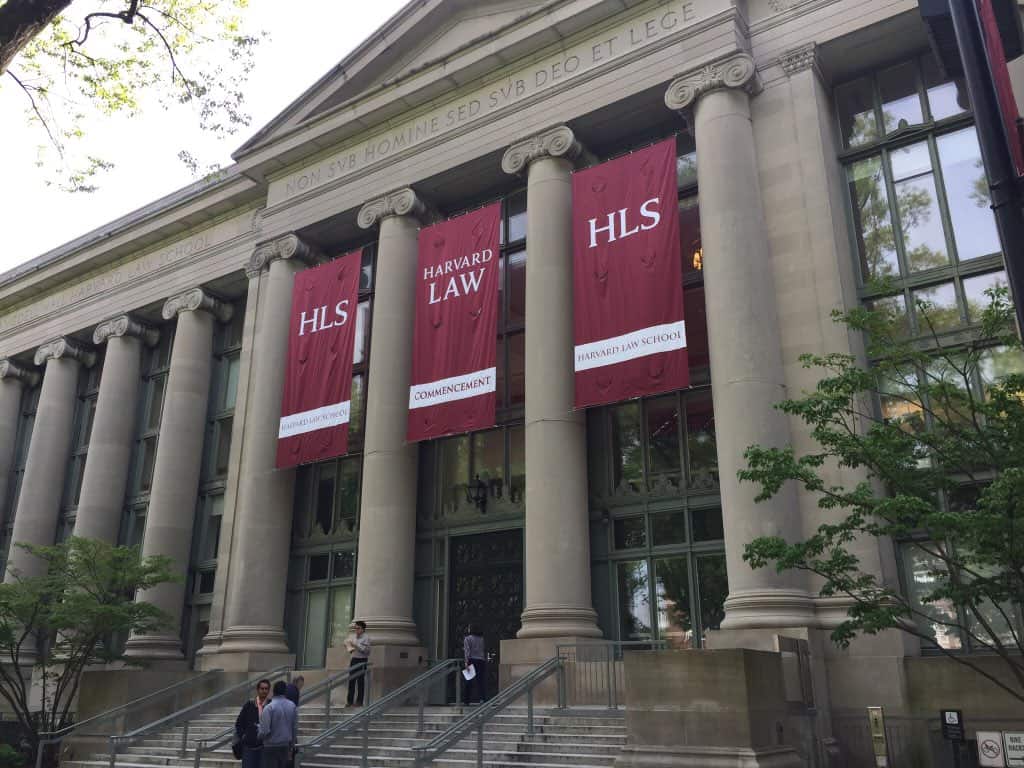
Thesis and Research
The thesis is an opportunity for students to pursue a project that is researched and developed independently. The completion of a thesis is required of all MArch I and MArch I AP students and is optional for all other studio-based programs. Students of any degree program may also pursue a nonthesis, faculty-advised independent research project.
Support Services
Digital Media Workshops
This series of workshops is for developing skills and techniques for the studio environment. The modeling software programs that are mostly used in studios are taught, including Rhino, 3ds Max, Grasshopper, Houdini, Blender, and Digital Project. More specialized applications are also taught in the context of seminars or lectures.
English for Design
This summer course is offered, in collaboration with Boston University, to entering first-year students wanting to improve their comfort with the English language, with an emphasis on design discourse at the GSD.
Research/Writing Support
Whether you are still improving your English or a native speaker, everyone can use extra help in the area of research, writing, and even mapping. Frances Loeb Library offers research consultations, one-on-one writings sessions, mapping and GIS resources, and a range of workshops and events to support students.
J-Term
During the first two weeks in January, a set of free workshops and non-credit courses are offered as an opportunity for students, staff, and faculty to hone skills, learn new ones, or just have fun. Courses are taught for the GSD community, by the GSD community.
Speakers & Workshops
The GSD sponsors a lively public lecture series that provides prominent designers, artists, and thinkers with an opportunity to present their work. The series of exhibitions and events transform the lobby, library, and many areas of the school into places to discover new knowledge and work.
Research Centers and Design Labs

With a tradition of groundbreaking innovations, research at the GSD forms interdisciplinary bridges to the university and beyond. Interests usually fit into three general areas of focus–technology; urbanism and landscape; and history, theory, and design–and take shape through a blend of sponsored research initiatives, design labs, affiliated centers and institutes at Harvard, and faculty-led projects. Thus, the wealth of opportunities to collaborate with both faculty and students is founded upon the integration of design education and research. These programs provide research positions for students.
At A Glance
Join the next generation of leaders advancing design’s global cause.
The Graduate School of Design educates leaders in design, research, and scholarship to make a resilient, just, and beautiful world.
Student Experience
Student Experience
Things To Do
Student Organizations
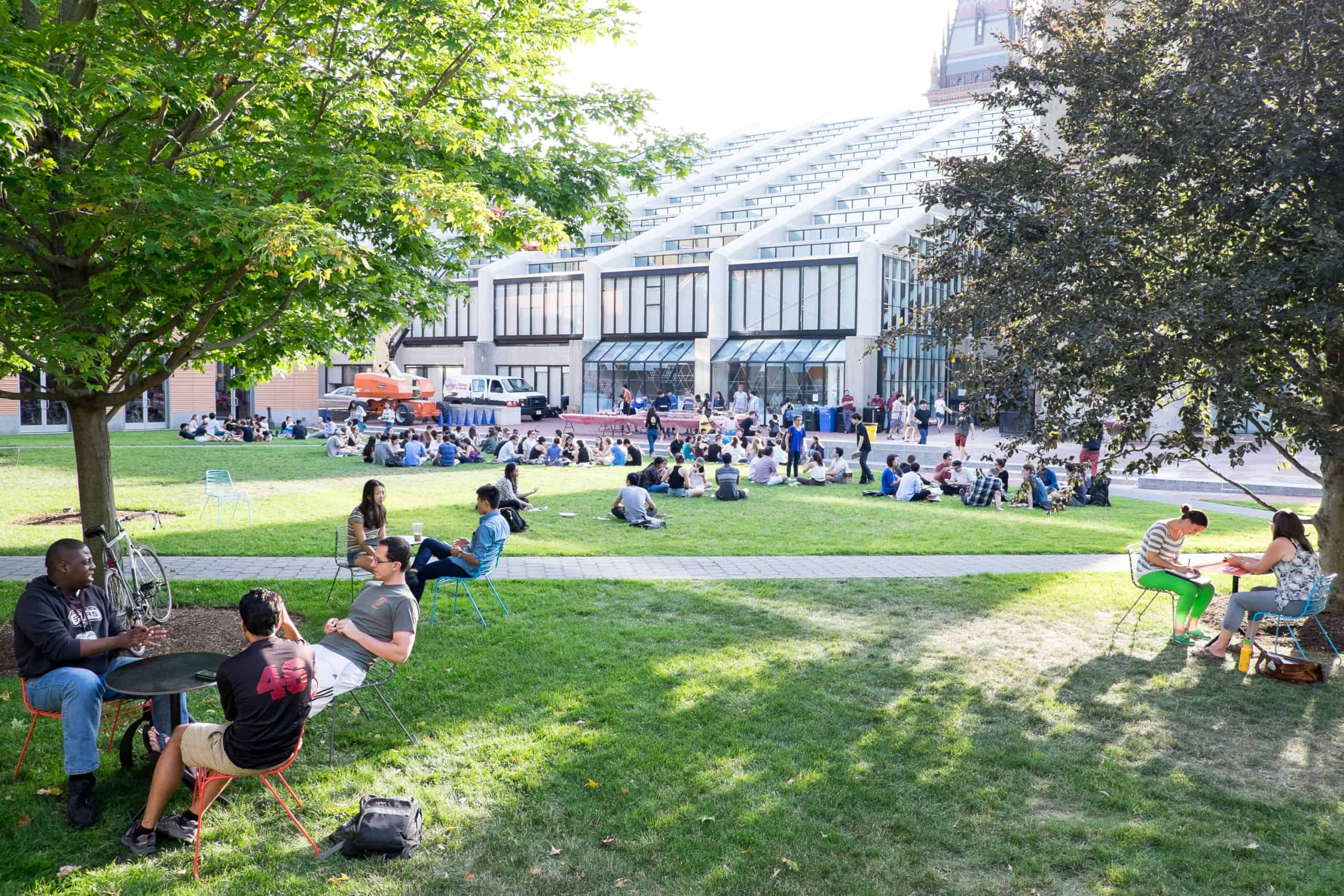
Student organizations are an essential part of life at the GSD. Each year, newly formed organizations join long-standing organizations in contributing to the academic and social discourse of the school. There are more than 60 student organizations at the GSD, and they’re not easily categorized. Cultural and social organizations spark rigorous academic discussions, advocacy and academic organizations know how to have fun, and a publication or exhibition can do both in an instant.

Publications
The GSD produces several publications on various themes, including Harvard Design Magazine, Incidents & A – Z; publications under the Harvard Design Press; and several student-produced publications, including New Geographies, Pairs, & Open Letters.
Events
Student organizations sponsor a variety of academic and social events throughout the year. Popular social gatherings include Beer n’ Dogs, the Halloween Party, and the GSD’s lively semi-formal dance, the Beaux Arts Ball.
Arts at Harvard

The Office for the Arts at Harvard offers several programs available to GSD students, like Learning from Performers, Arts First, and the Public Art Program. Other programs center around jazz, dance, and ceramics.
Museums
In addition to Museums around the city, Harvard’s museums include The Harvard Art Museums , Peabody Museum of Archaeology and Ethnology, Harvard Museum of Natural History, The Harvard Semitic Museum, The Collection of Historical Scientific Instruments, and the Harvard Film Archive .

HEAR FROM OUR STUDENTS

“Within MDE, I can bring in skills that are creative, critical, analytical, technical, and non-technical, and this gives me the freedom and flexibility to wear different hats and enter career paths as a designer who has the ability to understand problems and people.”
Nupur Gurjar (MDE '21)
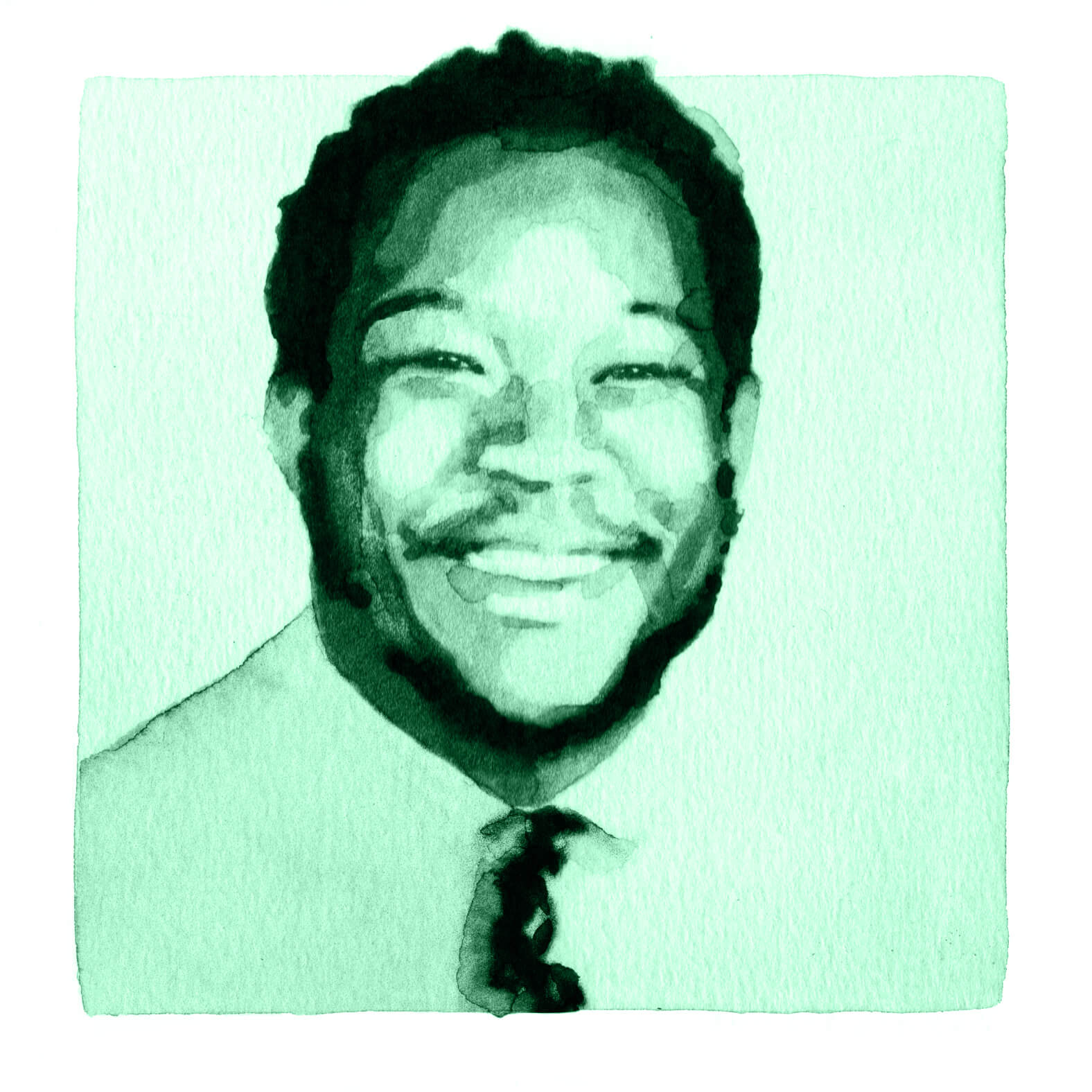
“Graduate studies have expanded my own conception of what architecture is, what architecture can be, and what architecture can do. And I think that that’s pretty powerful.”
Selwyn Bachus (MARch II '22)

“Everyone at the GSD is like a drop of water converging into Gund Hall, which is like an ocean generously absorbing provocative thoughts, debates, and even conflicts. I would like to be that drop of water pushing forward the waves of landscape architecture.”
Xinyi Chen (MLA II '21)
Making Harvard Your Home
International Student Life
The Harvard International Office can help decipher the complexities of immigration, working in the US, and adjusting to living as an international student. In addition to a two-part Virtual Group Orientation , the HIO offers an Advisor-on-Call each day to answer entry-level inquiries. Since 1962, a Host Program has provided an opportunity for connection and friendship between Harvard international graduate students who are new to the United States and residents who live in the Boston area.
Family Life
Through playgroups, outings, and potluck dinners, many families have found the Harvard Students Spouses and Partners Association (HSSPA) to be a resource for building a community. Visit the HSSPA website for more information.
Spiritual Life
The Harvard Chaplains are a professional community of more than forty chaplains, representing many of the world’s religious, spiritual, and ethical traditions, who share a collective commitment to serving the spiritual needs of the students, faculty, postdoctoral researchers, and staff of Harvard University. Morning prayers are held in the Appleton Chapel at Memorial Church. Harvard Divinity School, just a few minutes from the GSD, is a nonsectarian school of religious and theological studies. HDS organizes a variety of religious and spiritual activities for the Harvard community, including hosting speakers and services from various religious traditions, holding occasional retreats, and offering quiet spaces.
Wellness
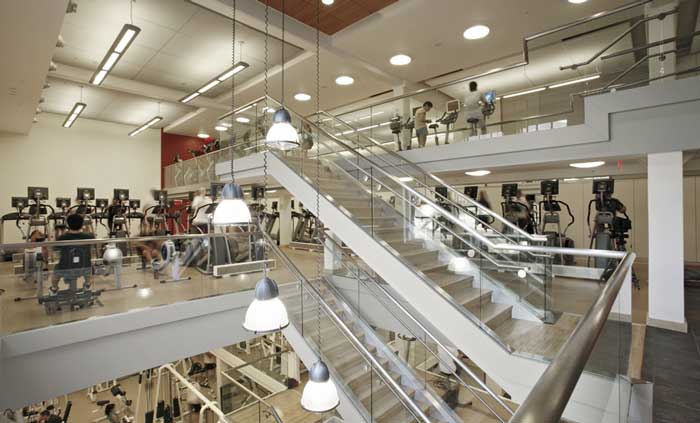
Graduate school is an intense and rigorous experience that can be stressful or overwhelming at times. The GSD strives to provide students with support and services conducive to a welcoming and accessible learning environment. OSA, the GSD’s Office of Student Affairs, provides students with support for a range of circumstances. University-wide resources also are available to students, including Counseling and Mental Health Services, Wellness and Health Promotion, and Harvard Recreation, where students can enroll in a Harvard gym membership or join a graduate club sports team. Yoga sessions are offered at the GSD as well as the ever-popular “de-stressing with dogs.”
Working as a Student
There are many ways to earn money as a student. From teaching and research roles, to other on-campus job opportunities, take some time to explore your options. The GSD Office of Career Services manages CREATE, the GSD job and internship database that is accessible to students.
Where to Live

GSD students tend to live as close to the GSD as possible. With late nights, early mornings, and winter weather, nearby apartments mean students can stop at home for a quick meal, shower, or nap. Finding a place within a 15-minute walk of Gund is best. A small number of Harvard dorm rooms are available to GSD students but renting provides the greatest variety of options in terms of location, price, roommates, and pets. Students search online or try to find a room from or with another GSD student. A “Harvard GSD Housing ” group on Facebook offers a place to post and search for housing.
Getting Around the City
The MBTA is Boston area’s public transportation system – the subway and bus are the easiest way to get around the city year-round. Biking is another great option, just be sure to gear up. While there are a number of advantages to owning a car, parking can be a challenge. Harvard Transportation is free to students, offering shuttle and van services throughout the Cambridge and Allston campuses. Otherwise, Uber, Lyft, Zipcar, and taxis are all widely available in the area.
Local Neighborhoods
Davis Square
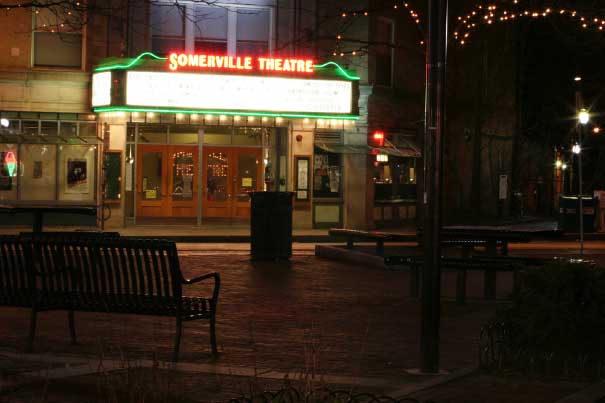
Equal parts Cambridge and Somerville, Davis Square is a bit far from Gund, but students living here make it work by cycling and taking the T. A mix of trendy new restaurants and working-class diners surround the historic Somerville Theatre.
Commute:
Walking: 35 min
Bike: 12 min
Train: 13 min
Photo Credit: “Somerville Theater ” by Steven Isaacson is licensed under CC BY-SA 2.0
Porter Square
Another great option for GSD students. It’s a five-to-ten-minute bike ride away or one T stop outbound from Harvard Square. What it lacks in charm, it makes up for in a convenient grocery store, hardware store, gyms, etc. — and the fantastic Japanese food at the Shops at Porter.
Commute:
Walking: 20 min
Bike: 7 min
Train: 10 min

Union Square
Just up from Kirkland/Washington Street. It’s not on the T, but buses and bicycles make the commute quite quick. It’s got a good selection of music venues, restaurants, and specialty grocery stores.
Commute:
Walking: 20 min
Bike: 8 min
Photo Credit: “Union Square Farmer’s Market ” by Todd Van Hoosear is licensed under CC BY-SA 2.0

Inman Square
Home to a number of bars and restaurants that are worth the short walk from Gund. Inman’s diverse resident population of locals, families, and students lends it a neighborhood feel.
Commute:
Walking: 15 min
Bike: 7 min
Photo Credit: “Cambridge – Inman Square ” by Niklas Tenhaef is licensed under CC BY-SA 2.0

Harvard Square
Very close to the GSD, but its proximity to campus also makes for a high cost of living. Restaurants, bars, chain stores, and local boutiques fill the square’s commercial spaces. Students make up the majority of the surrounding neighborhood’s inhabitants, while tourists usually populate the square itself.
Commute:
Walking: 5 min
Bike: 2 min
Train: 0 min

Central Square
Lies one T stop inbound from Harvard Square and anchors a cluster of live venues that host dance parties and rock shows, not to mention a plethora of bars, eateries, and clubs.
Commute:
Walking: 20 min
Bike: 8 min
Train: 10 min
Photo Credit: “Central Square from above ” by Eric Kilby is licensed under CC BY-SA 2.0

Kirkland Crossing
At the intersection of Kirkland/Washington Street and Beacon Street. It’s densely populated with GSD students due to its relative affordability and proximity to the GSD.
Commute:
Walking: 8 min
Bike: 3 min

Kendall Square
This is MIT turf, but a number of GSD students live around there, too. For the past decade, MIT and the City of Cambridge have invested heavily in making this area a destination.
Commute:
Walking: 35 min
Bike: 12 min
Train: 17 min