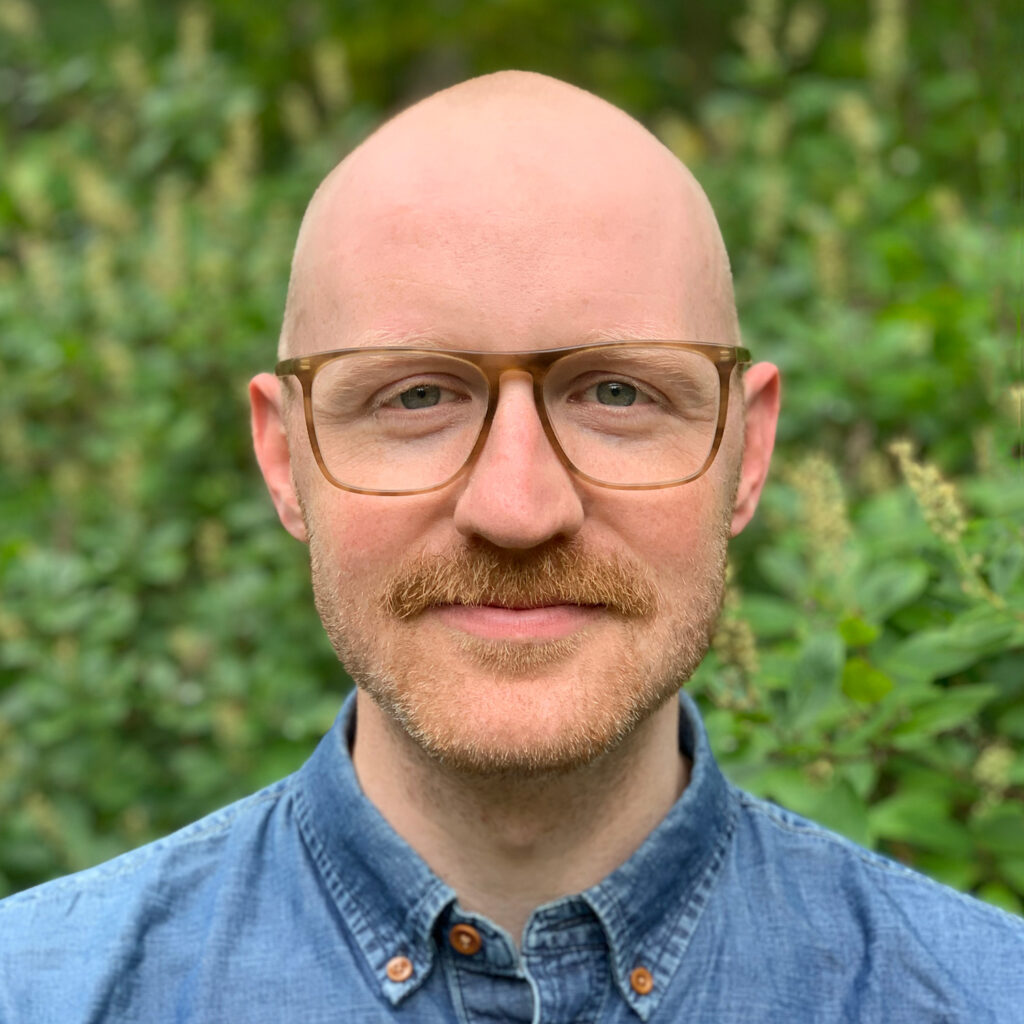
Kristen Hunter
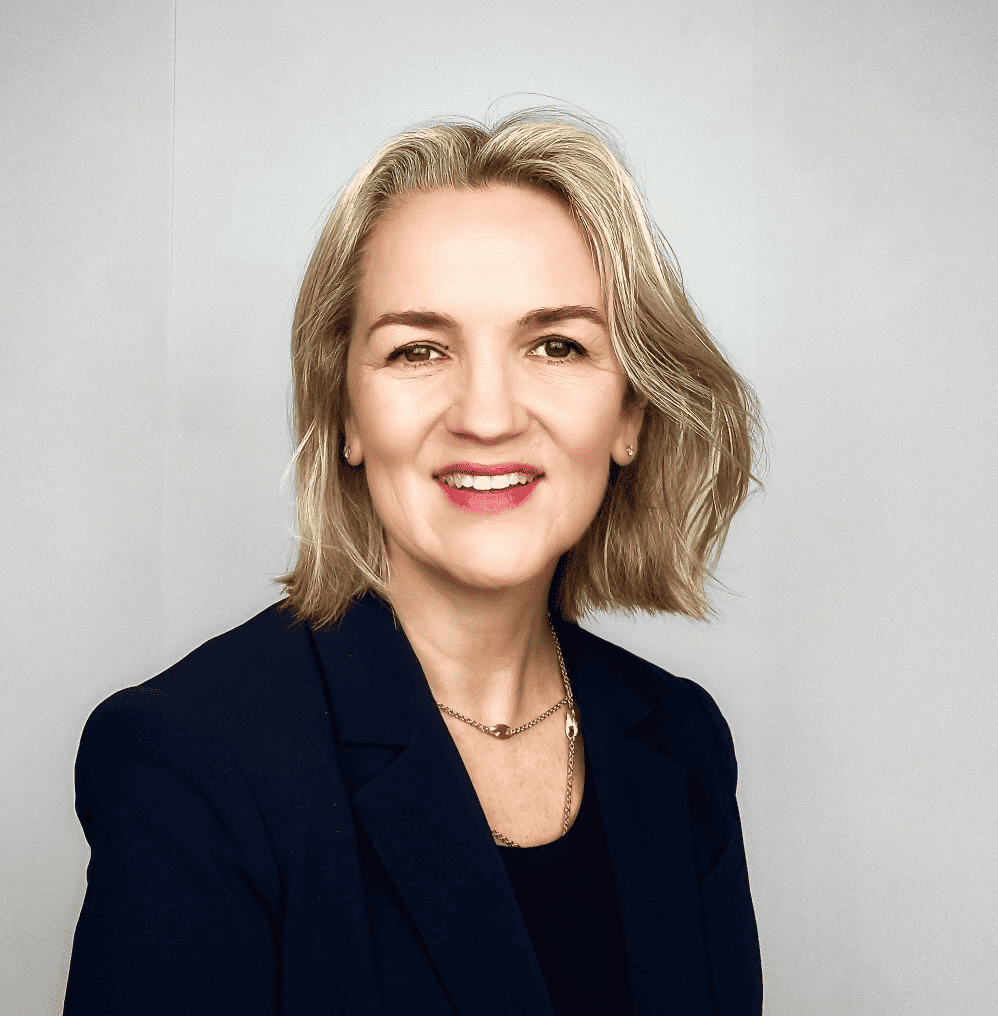
Kristen Hunter is a dedicated educator with two decades of experience in collegiate, graduate, and executive education. Since 2010, she has taught real estate finance and urban development at the Graduate School of Design. She has taught Public and Private Development with Professor Jerold S. Kayden. She also works with Professor Jerold S. Kayden, Founding Director of the Master in Real Estate Program, as Special Assistant to the Master in Real Estate Program.
Kristen’s research has explored the efficacy of Massachusetts’ Community Preservation Act-funded subsidies in expanding affordable housing options in municipalities across the spectrum of fiscal and institutional capacities, socioeconomic profiles, land-use regulatory environments, and real estate market dynamics. Her research interests also encompass public‑private partnerships, infrastructure finance, public finance, institutional and non-profit development, and socially responsible investment.
Her work has been featured in The Cheonggyecheon Restoration Project: A City and its Stream and Methodological Notes on the Spatial Analysis of Urban Formation. She provided research support for Professional Real Estate Development: The ULI Guide to the Business, 3rd edition and The Evolution of Residential Land Use Regulation in Greater Boston case studies published by Harvard’s Joint Center for Housing Studies. She has authored a number of real estate finance teaching cases as well as a series of case studies on best practices in the delivery of federal construction projects for the U.S. General Services Administration Public Buildings Service, where she served as an instructor at the agency’s semi‑annual academy.
An experienced development manager and LEED AP, Kristen has been a strategic consultant for complex urban development projects in domestic and overseas markets. She began her real estate career with a Boston-based boutique real estate development and construction firm, directing project acquisitions, regulatory affairs, construction management, and dispositions for infill residential and transit-oriented mixed-use developments. She is a licensed construction supervisor and real estate broker, and a founding member of the Harvard Alumni Real Estate Board.
Kristen received a Doctor of Design in Real Estate Finance and Urban Development along with a Master in Design Studies with distinction in Real Estate and Project Management from the Graduate School of Design, earning the Gerald M. McCue Medal for highest overall academic record and the Ferdinand Colloredo‑Mansfeld Prize for superior achievement in real estate studies. She was honored twice with the Graduate School of Design Alumni Council Unsung Hero Award and was elected Master in Design Studies class marshal. Kristen also holds an M.A. in Medieval Chinese History from Cornell University and an A.B. cum laude in East Asian Languages and Civilizations from Harvard University.
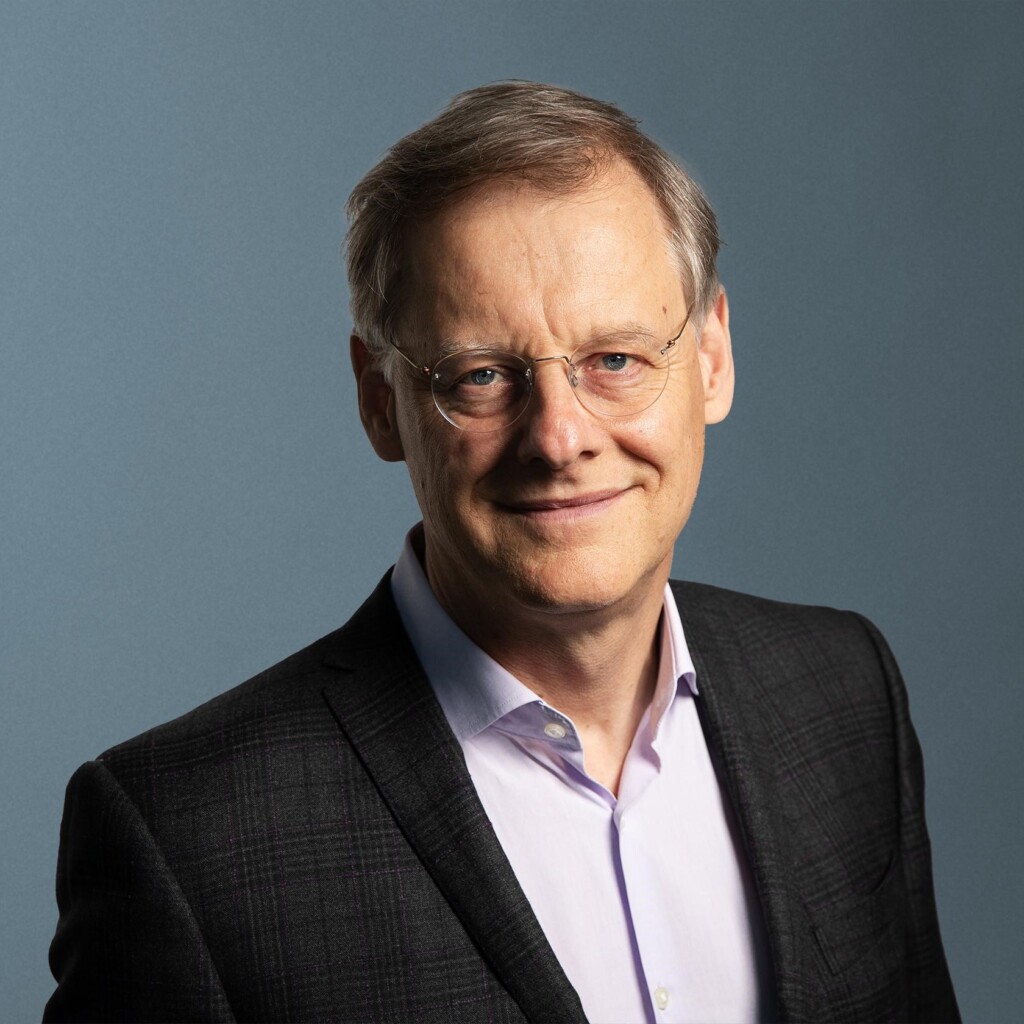
Eugenio Simonetti
Eugenio Simonetti Toro is an Architect and Urban Designer living and working in Chile. Born in 1980 in Santiago de Chile, he holds a degree in Architecture at Universidad Finis Terrae (Summa cum laude 2004) after a year at the Scuola di Architettura Urbanistica in the Politecnico di Milano, Italy. In 2008, he received an MAUD degree from the Harvard Graduate School of Design.
Professor Simonetti has taught several studios and seminars related to architecture, urbanism and infrastructure at Universidad Finis Terrae, Universidad Andres Bello, and Universidad Mayor in Chile. In 2011, he was invited to teach at the Architectural Association Politic of Fabrication Laboratory and worked together with the School of Architecture of the University of Minnesota in 2013. While he was a student at Harvard he was an Urban Design Instructor at the 2007 Career Discovery Program.
Currently, he is a Professor at the Centro de Ecologia, Paisajismo y Urbanismo of Universidad Adolfo Ibañez in Chile. Some of his built work has been exhibited in the 14th Biennale di Architettura di Venezia in 2014, XVIII Chilean Bienal in 2012, XIX Chilean Bienal in 2015 and the XVIII Bienal Panamericana de Arquitectura. In 2016, he was nominated for the Mies Crown Hall Americas Prize for Emerging Architecture at the Illinois Institute of Technology in Chicago for his office building Costanera Lyon 2.
After his MAUD at Harvard in 2008 he become one of the founders of Almahue S.A. Architecture and Real Estate Company in Chile where he works until today as Principal Architect and a Board Member of the Construction Company since 2018.
For the past few years he has been leading a social oriented research about urban operative infrastructure in the most segregated areas of Santiago de Chile currently supported by Aguas Andinas S.A. (The biggest drinking water Company in Chile) and the Inter-American Development Bank. Today, he is building a 50-acre Masterplan with a Preservation zone designed together with the connoted Chilean Landscape Architect Teresa Moller.
Since 2005 he is married to the award winner children’s books author and artist Maya Hanisch Cerda.
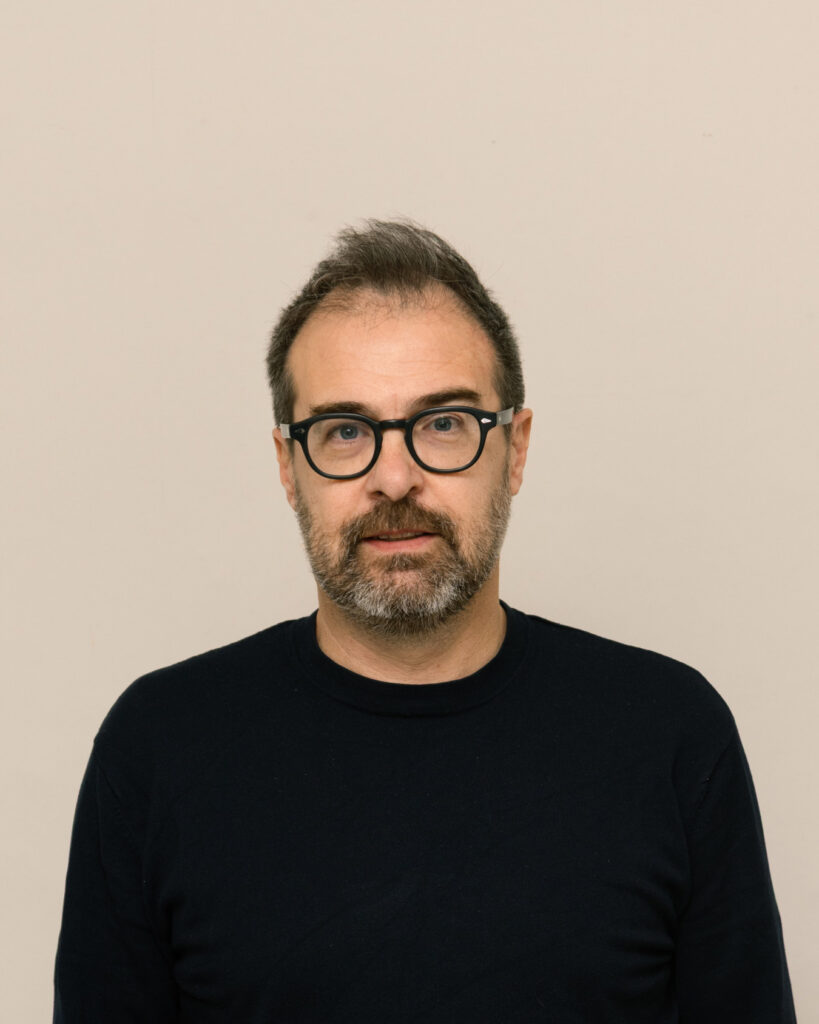
Paola Sturla
Paola Sturla is a lecturer in Landscape Architecture and the 2018/2019 Daniel Urban Kiley Fellow at the Harvard Graduate School of Design. She is a Ph.D. candidate in Urban Planning, Design, and Policy at Politecnico di Milano in the Department of Architecture and Urban Studies. Born and raised in Italy, Paola is a registered “architetto” and “paesaggista.” She is currently a full-time researcher working on the designer’s creative agency to address open-ended problems through the hermeneutic design process, and the potentials and limits of Artificial Intelligence-based tools in such a practice. Before entering academia, she had been practicing internationally in the architecture, engineering, and construction (AEC) industry in the framework of large scale infrastructure projects. Paola holds a bachelor’s degree in Architecture (Politecnico di Milano, 2004), a Master in Architecture (Politecnico di Milano, 2007), and a Master in Landscape Architecture (Harvard University Graduate School of Design, 2011).
Michael Manfredi
Michael A. Manfredi is the co-founder of WEISS/MANFREDI Architecture/Landscape/Urbanism, a multidisciplinary design practice based in New York City.
WEISS/MANFREDI is at the forefront of architectural design practices that are redefining the relationships between landscape, architecture, infrastructure, and art. Award-winning projects such as the Olympic Sculpture Park, Hunter’s Point South Waterfront Park, University of Pennsylvania’s Nanotechnology Center, Barnard College’s Diana Center, and the Brooklyn Botanic Garden Visitor Center construct reciprocal relationships between city and nature, architecture, and infrastructure. Recent projects include a master plan and mixed-use building for MIT’s Kendall Square, the Tsai Center at Yale University, the U.S. Embassy in New Delhi, India, and a reimagining of La Brea Tar Pits and Museum in Los Angeles. Most recently WEISS/MANFREDI was selected as design lead with Hood Design Studio to reimagine the West Side of Lincoln Center Campus in New York City.
Manfredi was born in Trieste, Italy and grew up in Rome. He received his Master of Architecture at Cornell University, where he studied with Colin Rowe. He is a founding member of the Van Alen Institute, a board member of the Storefront for Art and Architecture, and fellow of the Urban Design Forum.
Manfredi has taught at Cornell, Princeton, the University of Pennsylvania, and was the Eero Saarinen Visiting Professor at Yale University. He has been honored with the Cooper Hewitt National Design Award for Architecture, the Louis I. Kahn Award, the Academy Award for Architecture from the American Academy of Arts and Letters, the Architectural League’s Emerging Voices Award, Harvard’s International VR Green Urban Design Award, the New York AIA Gold Medal of Honor, the Thomas Jefferson Foundation Medal in Architecture, and has had exhibitions featured at the Museum of Modern Art, the Venice Biennale, the Louvre, and the Guggenheim Museum. He is a fellow of the American Institute of Architects and a National Academy inductee.
Princeton Architectural Press has published three monographs on his firm’s work entitled WEISS/MANFREDI: Surface/Subsurface, Site Specific: The Work of WEISS/MANFREDI Architects, and Public Natures: Evolutionary Infrastructures. A new book, Drifting Symmetries, will be published in early 2024.
Ben van Berkel
Ben van Berkel studied architecture at the Rietveld Academy in Amsterdam and at the Architectural Association in London, receiving the AA Diploma with Honours in 1987.
In 1988 he and Caroline Bos set up an architectural practice in Amsterdam, extending their theoretical and writing projects to the practice of architecture. The Van Berkel & Bos Architectuurbureau has realized, amongst others projects, the Karbouw office building, the Erasmus Bridge in Rotterdam, Museum Het Valkhof in Nijmegen, the Moebius House and the NMR facilities for the University of Utrecht.
In 1998 Ben van Berkel and Caroline Bos established a new firm: UNStudio (United Net). UNStudio presents itself as a network of specialists in architecture, urban development and infrastructure.
Current projects include the design for Doha’s Intregrated Metro network in Qatar, the Raffles City mixed-use development in Hangzhou and the Canaletto Tower in London.
With UNStudio he realized amongst others the Mercedes-Benz Museum in Stuttgart, Arnhem Central Station in the Netherlands, the façade and interior renovation for the Galleria Department store in Seoul, the Singapore University of Technology and Design and a private villa up-state New York.
Ben van Berkel has lectured and taught at many architectural schools around the world. Currently he holds the Kenzo Tange Visiting Professor’s Chair at Harvard University Graduate School of Design. Central to his teaching is the inclusive approach of architectural works integrating virtual and material organization and engineering constructions.
Matthew Urbanski
Urbanski teaches courses in plants in design and site ecology. Since 1989, he has worked at the New York office of Michael Van Valkenburgh Associates, where he is currently a Principal. As lead designer on many of the firm’s large public projects, Urbanski explores the ways in which urban public landscapes interact with other urban forces to enhance and expand the experience of city life.
His latest work involves large-scale urban landscapes, including Brooklyn Bridge Park and Hudson Park & Boulevard in New York City, and North Grant Park in Chicago. Completed projects include Union Square North, Segment 5 of Hudson River Park, and Teardrop Park in New York City, as well as Hoboken Pier C, Allegheny Riverfront Park, the Vera List Courtyard, the General Mills Corporate Headquarters Entry Landscape, and the Pucker Garden.
Andres Sevtsuk
Andres Sevtsuk is an Associate Professor of Urban Planning at the Harvard Graduate School of Design, with deep technical expertise in spatial analytics and urban technology. His research interests include urban design and spatial analysis, urban mobility, real estate economics, transit and pedestrian oriented development and spatial adaptability. Andres holds a PhD from the Department of Urban Studies and Planning at MIT, where he also worked with William J. Mitchell as a researcher in the Smart Cities group at the MIT Media Laboratory. He has collaborated with a number of city governments, international organizations, planning practices and developers on urban designs, plans and policies in both developed and rapidly developing urban environments, most recently including those in Indonesia and Singapore. He is the author of the Urban Network Analysis toolbox, which is used by researchers and practitioners around the world to study coordinated land use and transportation development along networks. He has led various international research projects; exhibited his research at TEDx, the World Cities Summit and the Venice Biennale; and received the President’s Design Award in Singapore, International Buckminster Fuller Prize and Ron Brown/Fulbright Fellowship. He was previously an Assistant Professor of Architecture and Planning at the Singapore University of technology and Design (SUTD), and a lecturer at MIT.
Chris Reed
Chris Reed is Professor in Practice of Landscape Architecture and Co-Director of the Master of Landscape Architecture in Urban Design Program at the Harvard University Graduate School of Design. He is also Founding Director of Stoss Landscape Urbanism . He is recognized internationally as a leading voice in the transformation of landscapes and cities, and he works alternately as a researcher, strategist, teacher, designer, and advisor. Reed is particularly interested in the relationships between landscape and ecology, infrastructure, social spaces, and cities. His work collectively includes urban revitalization initiatives, climate resilience and adaptation efforts, speculative propositions, adaptations of infrastructure and former industrial sites, dynamic and productive landscapes, vibrant public spaces that cultivate a diversity of social uses and cultural traditions, and numerous landscape installations. His work can be found in cities as diverse as Boston, Los Angeles, St. Louis, Dallas, Detroit, Galveston, Abu Dhabi, and Dongshan, China. His work through Stoss has been recognized with the Cooper-Hewitt National Design Award for Landscape Architecture; the Topos International Landscape Award; and various other practice- and project-based awards from Progressive Architecture, the American Society of Landscape Architects, Azure’s AZ Awards, World Landscape Architecture, the Architectural League of New York, the Waterfront Center, EDRA / Places, and the Boston Society of Architects.

Reed is the co-editor of Projective Ecologies with ecologist and planner Nina-Marie Lister, and co-author of the book Mise-en-Scène: The Lives and Afterlives of Urban Landscapes with photographer Mike Belleme. He is a recipient of the 2012 Cooper-Hewitt National Design Award in Landscape Architecture, a Fellow of the American Society of Landscape Architects, and the 2017 Mercedes T. Bass Landscape Architect in Residence at the American Academy in Rome. Reed received a Master in Landscape Architecture from the University of Pennsylvania and an AB in Urban Studies from Harvard College.
Spiro Pollalis
Professor Pollalis is Professor of Design Technology and Management, Emeritus at the Harvard Design School. Starting in 2008, he served as the Director of the Zofnass Program for the Sustainability of Infrastructure that led to the Envision Rating System. He is also the Principal Investigator of the project “Gulf Sustainable Urbanism” for 10 cities in the Arab Gulf. He has taught as a visiting professor at the ETH-Zurich, Switzerland; TU-Delft, Holland; Uni-Stuttgart, Germany; U-Patras, Greece; and has offered joint courses with the Harvard Business School on planning and development. He serves as the co-chair of the Advisory Committee on Future Cities for the Singapore-ETH Center.
Professor Pollalis is the chief planner for the new DHA City Karachi for 600,000 people, currently under construction, and the concept designer of the information infrastructure in the new administrative city in Korea. He served as the Chairman and CEO of the public company for the redevelopment of Hellinikon, the former Athens airport, and he developed the base master plan and business plan. He currently serves as a member of the Athens Planning Committee. He has designed two signature bridges: the Main Street Bridge in Columbus Ohio and the Kifisias pedestrian bridge in Athens, Greece, and played a central role in the iconic cable-stayed Zakim Bridge, the new symbol of Boston. Since 1999, Prof. Pollalis has been a contractor to the General Services Administration (GSA) for the “Learning from Our Legacy” program.
Professor Pollalis received his first degree from the University in Athens (EMP) and his Master’s and PhD from MIT. His MBA in high technology is from Northeastern University. He has an honorary Master’s degree in Architecture from Harvard.
Papers, Conference Lectures, Interviews
Farshid Moussavi
Farshid Moussavi is Professor in Practice in the Department of Architecture, Harvard University Graduate School of Design and principal of Farshid Moussavi Architecture (FMA). Moussavi’s approach is characterised by an openness to change and a commitment to the intellectual and cultural life of architecture. Alongside leading an award-winning architectural practice, she lectures regularly at arts institutions and schools of architecture worldwide and is a published author. Moussavi was appointed Officer of the Order of the British Empire (OBE) in the 2018 Queen’s Birthday Honours for services to architecture. She was elected a Royal Academician in 2015 and Professor of Architecture at the RA Schools in 2017.
Moussavi trained at Harvard GSD, the Bartlett School of Architecture University College London and Dundee University. Recognized as an outstanding and committed teacher, she has been a visiting professor at UCLA, Columbia, Princeton, and at several architecture schools in Europe; she was also the Kenzo Tange Visiting Design Critic at the GSD in Spring 2005. She taught for eight years at the Architectural Association in London and was the head of the Institute of Architecture at the Academy of Fine Arts in Vienna, where she taught from 2002 until 2005.
At FMA, Moussavi’s completed projects include the acclaimed Museum of Contemporary Art in Cleveland, USA; La Folie Divine, a residential complex in Montpellier; a multi-tenure residential complex in the La Défense district of Paris, flagship stores for Victoria Beckham in London and Hong Kong, and the Toys Department for Harrods in London. Her current projects include the Ismaili Center Houston and a primary school in Paris. Previously Moussavi was co-founder of the internationally renowned London-based Foreign Office Architects (FOA) where she co-authored many award-winning international projects including the Yokohama International Cruise Terminal and the Spanish Pavilion at the Aichi International Expo, London’s Ravensbourne College of Media and Communication and the Leicester John Lewis Department Store and Cineplex. Prior to setting up FOA, Moussavi worked with the Renzo Piano Building Workshop in Genoa and the Office for Metropolitan Architecture in Rotterdam.
A prolific writer and public speaker, Moussavi is a leading figure in contemporary architectural dialogue. Author of four books, her most recent Architecture and Micropolitics, Four Buildings 2011-2022, Farshid Moussavi Architecture (Park Books, 2022) sets out her vision for architecture as a form practice that is responsive rather than deterministic. Moussavi has pursued teaching in parallel to practice for more than 30 years, seeing it as the opportunity for developing new thinking on subjects including the design of social housing and approaches to adaptive reuse.
Moussavi has served on key design and architectural advisory panels and international design juries including for the British Council, the Mayor of London’s “Design for London” advisory group, the London Development Agency, the RIBA Gold and Presidential Medals and the Stirling Prize for Architecture.
Moussavi is deeply committed to art and culture. She has previously served as a trustee of the Whitechapel Gallery in London and the London Architecture Foundation, and a member of the Steering Committee of the Aga Khan Award for Architecture. Currently, she is a trustee of the Norman Foster Foundation London and New Architecture Writers (NAW) which focuses on black and minority ethnic emerging writers who are under-represented across design journalism and curation.
In Moussavi’s latest book, Architecture & Micropolitics , she seeks to dispel two widely held misconceptions: first, that architects are no longer central to the making of buildings and, second, that design is a linear process which begins with a fully formed architectural vision. Moussavi argues that the temporality of architecture provides day-to-day practice with the potential to generate change. She proposes that we abandon determinism and embrace chance events and the subjective factors that influence practice in order to ground buildings in the micropolitics of everyday life.