Paola Sturla

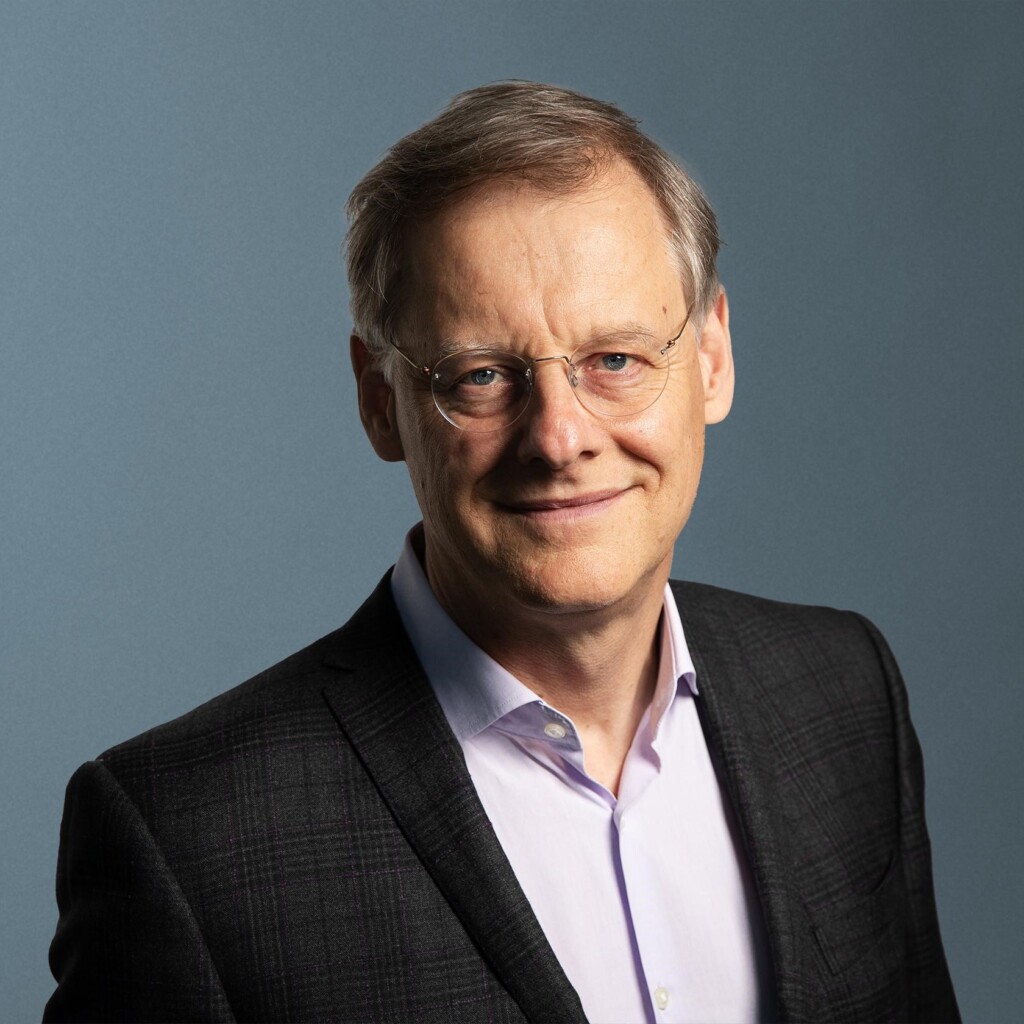
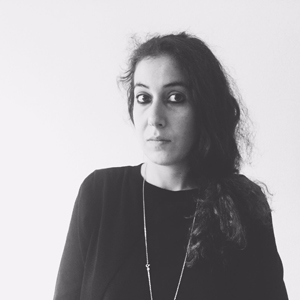
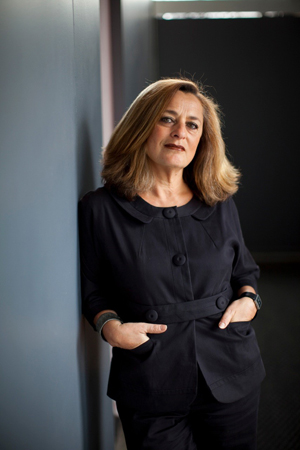
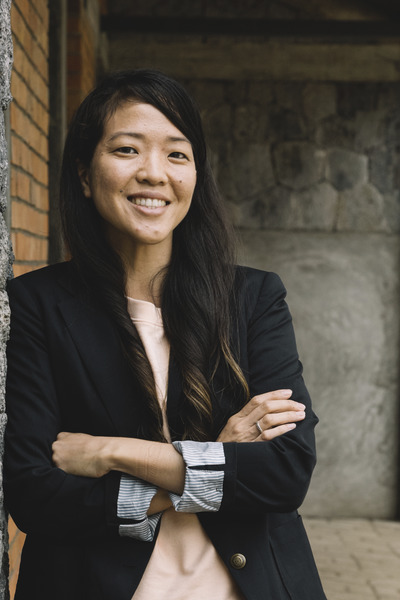
Paola Sturla is a lecturer in Landscape Architecture and the 2018/2019 Daniel Urban Kiley Fellow at the Harvard Graduate School of Design. She is a Ph.D. candidate in Urban Planning, Design, and Policy at Politecnico di Milano in the Department of Architecture and Urban Studies. Born and raised in Italy, Paola is a registered “architetto” and “paesaggista.” She is currently a full-time researcher working on the designer’s creative agency to address open-ended problems through the hermeneutic design process, and the potentials and limits of Artificial Intelligence-based tools in such a practice. Before entering academia, she had been practicing internationally in the architecture, engineering, and construction (AEC) industry in the framework of large scale infrastructure projects. Paola holds a bachelor’s degree in Architecture (Politecnico di Milano, 2004), a Master in Architecture (Politecnico di Milano, 2007), and a Master in Landscape Architecture (Harvard University Graduate School of Design, 2011).

Stefano Andreani

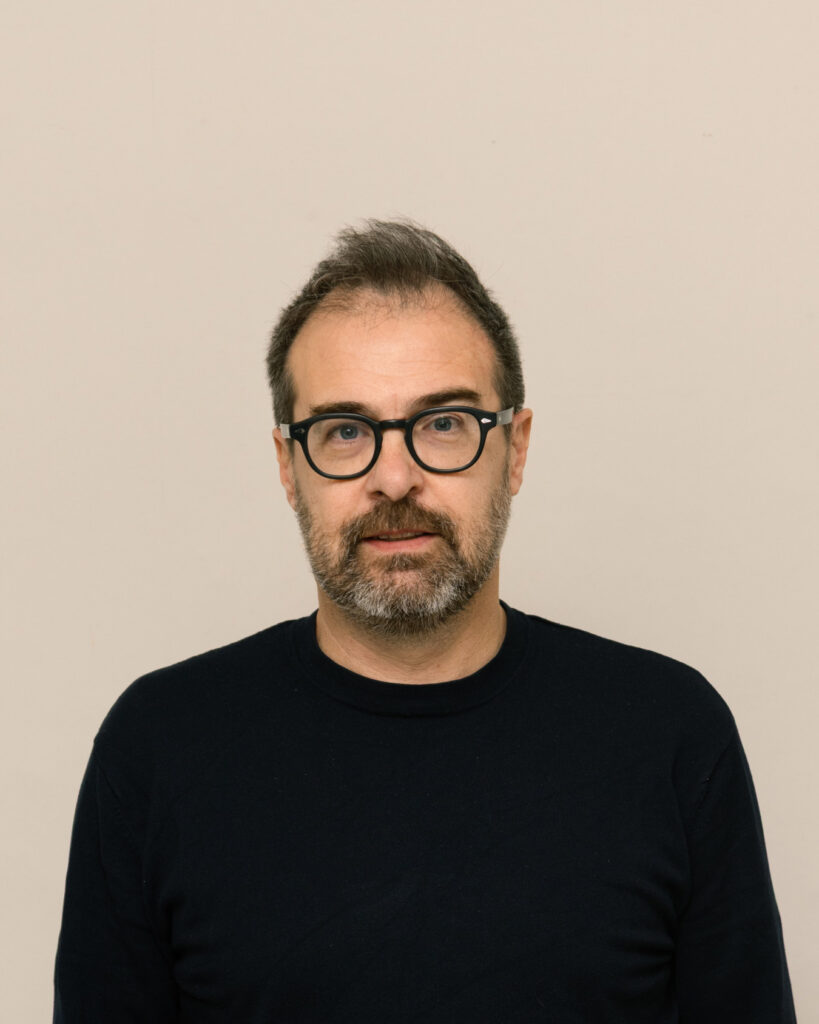
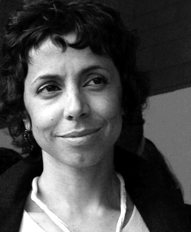
Stefano Andreani is a licensed architectural engineer and educator interested in innovative and transformative design research methods for the understanding and design of human-centered built environments. Andreani is a Research Associate and Lecturer in Architecture at the Graduate School of Design of Harvard University, co-teaching in courses on responsive environments, technological longevity, and quantitative urban experiences.

Pursuing his research at the intersection of innovation-driven architecture and digitally-informed urban design, Andreani is a Research Associate and Project Manager at the Responsive Environments and Artifacts Lab (REAL) at Harvard GSD where he develops alternative strategies for intelligent spaces, hybrid systems, and digital/physical artifacts towards a positive societal impact. Drawing on his research at Harvard, he also designs and consults at INVIVIA, a global architectural design, user experience and strategic research studio.

Andreani lectured, published, and exhibited internationally in numerous venues. He received a Master in Design Studies from Harvard GSD, focusing on computational design and robotic fabrication methods for novel building systems. He also received a Master in Architectural Engineering and a Bachelor in Civil Engineering from the University of Perugia, where he then served as a Lecturer in Architectural Technology.

Craig Douglas

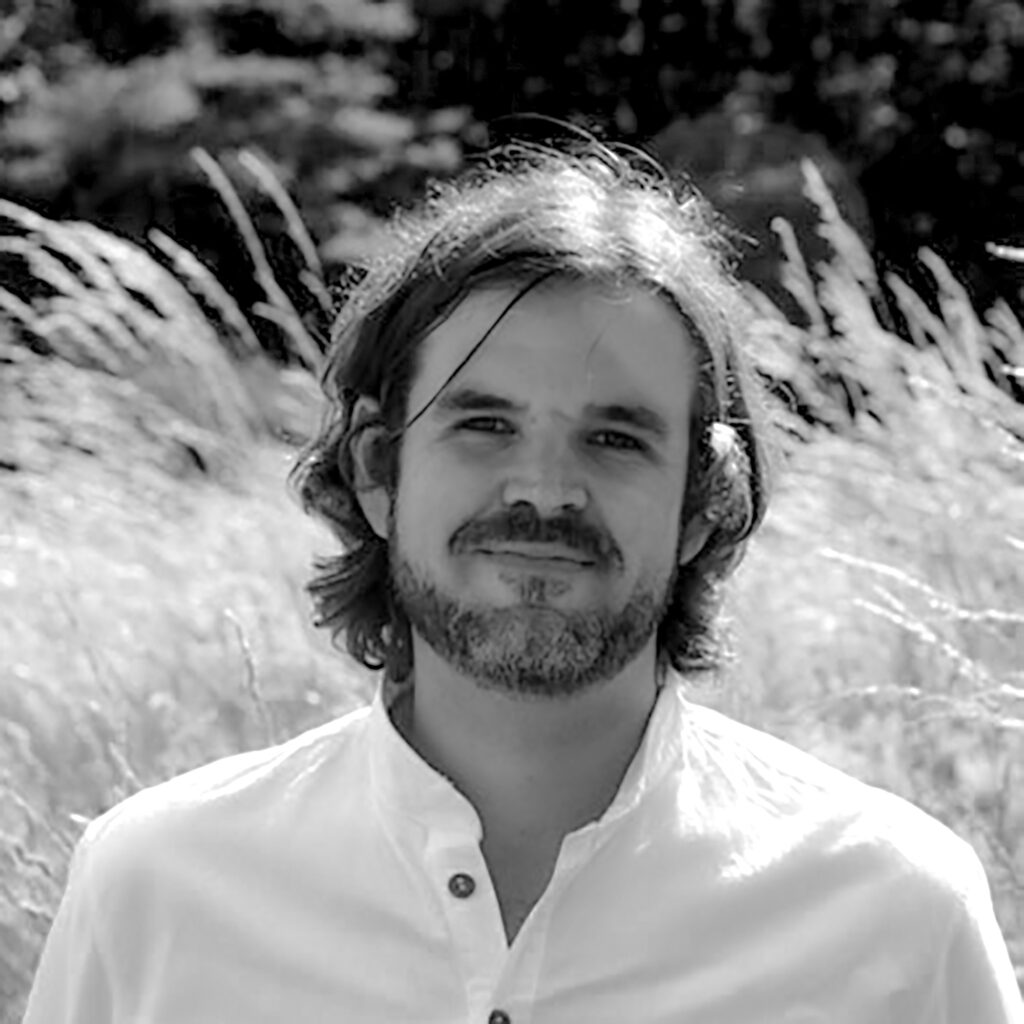
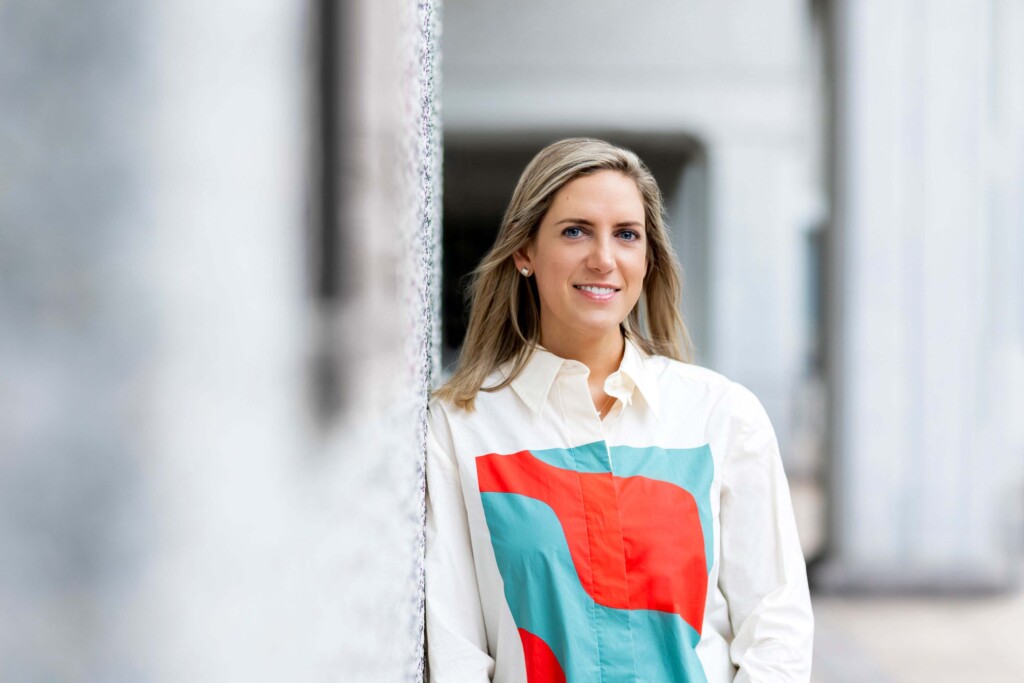
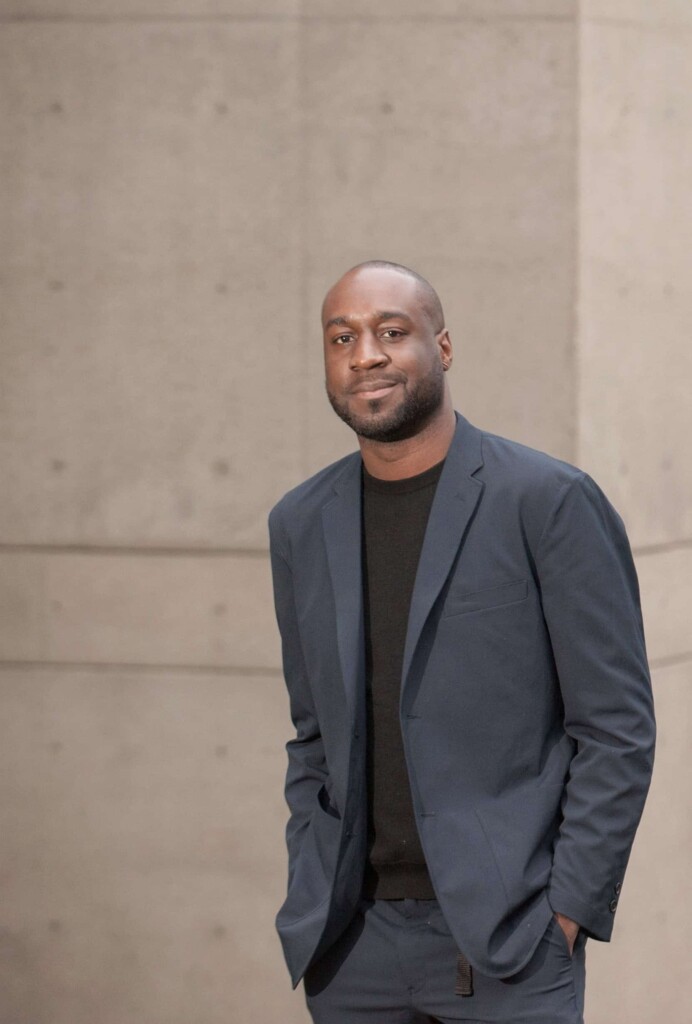
Craig Douglas is a Landscape Architect whose work focuses on innovative techniques and methodologies that explore the agency of representation in landscape architectural design. He is an Assistant Professor in the Landscape Architecture Department at the Graduate School of Design, Harvard University. His work explores the landscape as a dynamic material process in a constant state of flux through analytical and conceptual approaches integrating drawing, modelling, simulation, and sensing to make visible and reconstitute the landscape as a complex temporal and material manifold of differential space.

His work on ‘Digital Air’ claims air as matter by reconceptualising it as a material that is both corporeal and technological. In resisting conventional forms of definition and representation, air as matter invites the potential of emergence and production to augment our static realities. This material dialectic changes how we perceive and understand the scope of landscape architecture and how we might compose the architecture of our cities and landscapes in which air is identified as a principal agent for design.

The research explores the measuring and mapping of the air as matter oscillating between physical, corporeal, and cultural definitions by redefining it as a landscape of living and living space through atmospheric encounters. This is an investigation and reconceptualization of air as a dynamic, emergent process displaying flows, forces, and forms of change in a constant and unstable state of flux across a range of spatial scales, physical states, and temporal modes. Shifting the perception of air from an immaterial and wholly natural element to a material matter co-created by humans requalifies its significance, highlights the precarious relationship we have with it, and provides ways through which we might reconceptualise air and our relationship with it. ‘Digital Air’ considers the potential to inform new modes of understanding and practice that are relevant to the changes the climate crisis brings by making it possible to respond to projected states of being and to simultaneously consider how we might act through dynamic states of change.

His approach supports informed and innovative responses to the challenges found at the nexus of the social, ecological, and built environment that embrace the spatial, temporal, and material complexity of the landscape. It explores design as an activity of making and as an agent for understanding and responding to the challenges of urbanisation in a rapidly changing world that contributes to the complexity of the contemporary city in the age of climate crisis.

Douglas’ teaching includes the coordination of the Landscape Architecture Core II Design Studio and Representation II courses alongside Option Studios, Seminars, Independent Studies, Core III, and Thesis supervision. He has practised in offices in Australia, The Netherlands, and the United Kingdom on complex urban projects and continues to collaborate on projects with practices around the world.

Student Supervision Awards

Winner of the Thesis Prize in Landscape Architecture 2024: Seeding Grounds: Working Beyond Arcadia in The Pyrocene

Winner of the Thesis Prize in Landscape Architecture 2023: Kevin Robishaw’s Manatees and Margaritas: Toward a Strange New Paradise

Winner of the Thesis Prize in Landscape Architecture 2018: Seok Min Yeo’s Wild: Manhattanism Unhinged

Climate change, transportation, urbanism: 2019 ASLA Student Award winners tackle pressing landscape issues

Housing, politics, climate change, ecology: range of student projects honored with 2018 ASLA Awards

Mack Scogin

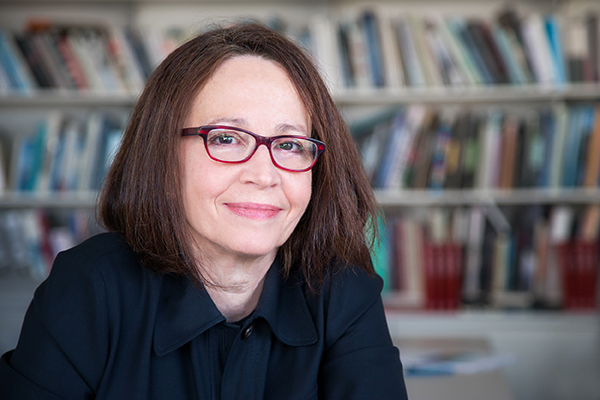
Mack Scogin, Kajima Professor in Practice of Architecture, Emeritus at the Harvard University Graduate School of Design, is a principal in the firm of Mack Scogin Merrill Elam Architects, in Atlanta, Georgia. At GSD, he was the chairman of the Department of Architecture from 1990 to 1995. He offered instruction in the core studio sequence and in advanced studio options. Recent studios have included: Everybody loves Frank, Field Trip, “My Way”—A Trip to Gee’s Bend, Symmetrical Performance, “Empathy”, 13141516171819, Beige Neon, and Doing and Dancing.

With Merrill Elam, he received the 1995 Academy Award in Architecture from the American Academy of Arts and Letters, a 1996 Chrysler Award for Innovation in Design, the 2006 Boston Society of Architects Harleston Parker Medal and a 2008 Honorary Fellowship in the Royal Institute of British Architects (RIBA). Projects by Mack Scogin Merrill Elam Architects have received over fifty design awards including six national American Institute of Architects Awards of Excellence. Their work has been widely featured in popular and academic publications on architecture including the 1992 Rizzoli publication, Scogin Elam and Bray: Critical Architecture / Architectural Criticism, the 1999 University of Michigan publication Mack & Merrill and the 2005 Princeton Architectural Press publication Mack Scogin Merrill Elam: Knowlton Hall. Their work has been exhibited at many museums and galleries including: Museum of Modern Art; Walker Art Center; Wexner Center for the Arts; Museum of Contemporary Art in Barcelona, Spain; Deutches Architektur Museum in Frankfurt, Germany; and the Global Architecture Gallery in Tokyo, Japan.

Notable projects include the new United States Federal Courthouse in Austin, Texas; New Student Housing at Syracuse University; the Yale University Health Services Center; the Gates Center for Computer Science at Carnegie Mellon University; the Lulu Chow Wang Campus Center and Davis Garage for Wellesley College; the Knowlton School of Architecture for The Ohio State University; the Jean Gray Hargrove Music Library for the University of California at Berkeley; the Herman Miller Cherokee Operations Facility in Canton, Georgia; the Zhongkai Sheshan Villas in Shanghai, China and a variety of projects for Tishman Speyer Properties in New York City; Washington DC; Atlanta, Georgia and Hyderabad, India.

Allen Sayegh

Allen Sayegh is Design Critic and Senior Interaction Technologies Fellow at Harvard University Graduate School of Design and the director of REAL, the Responsive Environment and Artifacts Lab at Harvard. Sayegh is an architect, designer, and educator and the principal of the award-winning design firm INVIVIA.

Sayegh began his dual engagement of teaching research alongside his practice more than two decades ago at Harvard and most recently as an Associate Professor. His courses and practice focus on technologically driven transformative design, exploring the potentials of media and technology integrated built environment, Interaction design, and the study of architectural and urban space thought through the impact of changing technology.

The research at his lab REAL investigates topics that are at the intersection of the built environment, digital technologies, and human experience. And his work is characterized as the cross between these disciplined in producing innovative solutions to new and complex problems.

In addition to his design work, he has a deep interest in the visual arts and has been a recurring visiting professor at the Harvard Carpenter Center of Visual and Environmental Studies offering courses in the areas of media and the built environment such as; Sculpting Motion, Interactive Spaces, Augmented Architecture, Cinematic Architecture, and Responsive Environments.

Sayegh, has served as a founding faculty in many interdisciplinary initiatives at Harvard among them the Alive group with Wyss Institute at Harvard and The LDT the laboratory of Design Technologies.

INVIVIA his design firm has a diverse set of clients that include, municipalities, corporations and NGOs such as The city of Copenhagen, The city of Bergamo, The city of NY, City of Calgary, MIT/DARPA, NY Museum of Natural History, The IOC, Microsoft, Boeing, LG, Hewlett Packard, SAMSUNG, to name a few.

Sayegh has published and exhibited extensively and in many prestigious venues including the Guggenheim NY, The Duomo in Florence, The Storefront of Art and Architecture in NY he has been part of many architecture and art biennales including Moscow, Kwangju, and Venice Biennales.

Mariana Ibanez

Mariana Ibanez is Associate Professor of Architecture at the Harvard University Graduate School of Design. She teaches in the architecture core design studio sequence.

Ibanez is an Argentinean architect and designer. Before attending the Architectural Association in London for her Master of Architecture, she was one of the principals of FIV Architectura, a firm that focused on the design and construction of ephemeral structures for performance spaces.

Her thesis work at the AA focuses on the issue of responsive environments through the implementation of adaptive structures and interphases. The project has been exhibited at the Delft Institute of Technology, the Institute of Contemporary Art in London and the International Biennale of Architecture in Beijing. Reference to this work can be found in publications like AD, Archicreation and Icon magazine.

Ibanez has been a guest critic at the AA, MIT, RISD and other institutions since 2004 and previously taught Design Studio from 1999 to 2002 at the University of Buenos Aires where she had received her Bachelor of Architecture.

In 2005 she co-founded I/K Studio with Simon Kim, a research and design practice with projects in London and Buenos Aires.

After her graduate studies, she joined the Advanced Geometry Unit at ARUP before going to the office of Zaha Hadid where she developed several projects as well as leading the design for the London Aquatic Centre for the 2012 Olympic Games.

Eric Höweler

Eric Höweler, FAIA, LEED AP, is a Professor of Architecture at the Harvard University Graduate School of Design, where he has taught lecture courses and design studios with a focus on building technologies/integration since 2008.

Eric’s advanced design studios, which bring together students from the disciplines of architecture, landscape architecture, urban design, and urban planning, cover such topics as housing and urban architecture, climate adaptability and transit-oriented development. Eric has also coordinated the Third Semester Core Design Studio in Architecture for several semesters, working to integrate environmental and structural systems into the curriculum. He also teaches a required lecture course in the Building Technology sequence called Cases in Contemporary Construction, which focuses on advanced topics in construction and building systems. Eric was formerly the Area Head for Masters of Design Studies: Energy and Environment program (with Holly Samuelson), where he advised students on topics around energy modeling and simulations as well as environmental control systems.

Eric is co-founding Principal of Höweler + Yoon, a research-driven, multidisciplinary design studio working between architecture, art, and media. H+Y has a reputation for work that is technologically and formally innovative, and deeply informed by human experience and a sensitivity to tectonics. One of the firm’s celebrated projects is the MIT Collier Memorial, a milled granite compression structure that commemorates the life of Officer Sean Collier, who was killed in action after the Boston Marathon Bombing. The Collier Memorial has been honored with the BSA Honor Award, the American Architecture Prize, the AIA Religious Architecture Award, and has four times been a finalist for the Harleston Parker Medal. H+Y’s courtyard-exhibition hall in Chengdu, SkyCourts, has been honored by Architect Magazine, Archdaily, the Boston Society of Architects, and the European Centre for Architecture. Other recent projects include the UVA Memorial, a landform structure dedicated to enslaved laborers at the University of Virginia, 212 Stuart Street, a multi-family residential tower on Stuart Street in Boston, MA, the new MIT Museum in Cambridge, MA. Current projects include the Living Village at the Yale Divinity School, a residence hall adjacent to the historic Sterling Divinity Quadrangle, as well as the Karch Institute of Democracy at the University of Virginia.

Höweler + Yoon’s work has been exhibited at the Los Angeles Museum of Contemporary Art, the Museum of Modern Art in New York, the Museum of Contemporary Art in Chicago, the 2006 Design Triennial at the Cooper Hewitt in New York, The Institute of Contemporary Art in Boston, and has been published and reviewed in publications including Architect Magazine, Architectural Record, Metropolis, Domus, Arch +, Detail, Architectural Review, Architectural Digest, Interior Design Magazine, Architectural Lighting and I.D. Magazine, The New York Times, The Boston Globe, The Wall Street Journal, The Washington Post,  and The Financial Times.

Eric has authored two monographs with H+Y co-founder J. Meejin Yoon: Verify In Field: Projects and Conversations Höweler + Yoon (Park Books, 2021) and Expanded Practice (Princeton Architectural Press, 2009). Other books include Skyscraper: Vertical Now (Rizzoli/Universe Publishers, 2003); Public Works, Unsolicited Small Projects for the Big Dig with J. Meejin Yoon and Meredith Miller (MAP Book Publishers, 2009); and 1001 Skyscrapers with J. Meejin Yoon (Princeton Architectural Press, 2000). Eric has published essays and articles in Log, Perspecta, Archis, The Architect’s Newspaper, Architectural Record, Architectural Lighting, and Praxis.

Prior to forming H+Y, Eric was a Senior Designer at Diller Scofidio + Renfro and an Associate Principal at Kohn Pedersen Fox Associates. He is LEED AP, and a registered architect in the states of New York, Massachusetts, Virginia, New Jersey, Rhode Island and the District of Columbia.

Born in Cali, Colombia, Eric received his Bachelor of Architecture and Master of Architecture from Cornell University. He gained teaching and research experience at the Massachusetts Institute of Technology, where he was previously a Lecturer in Architecture.

Jonathan Grinham

On leave for Fall 2025

Jonathan Grinham is an Assistant Professor of Architecture at the Harvard Graduate School of Design. His research brings an intensely interdisciplinary approach to climate change and the built environment, connecting material science with building science and design to examine questions on materiality, thermal health, and lifecycle carbon emissions. These questions have sparked the development of novel technologies, publications, patents, and a start-up company, Trellis Air Corporation, that deliver low-carbon climate solutions through material innovation. Jonathan is a Faculty Associate with the Harvard Center for Green Buildings and Cities, the Salata Institute for Climate and Sustainability, and the Aizenberg Lab at the Harvard John A. Paulson School of Engineering and Applied Sciences. He holds degrees in architecture and building science from Virginia Tech and a Doctor of Design degree from the Harvard GSD.

Jennifer Bonner

Jennifer Bonner is Associate Professor of Architecture at Harvard University Graduate School of Design. Bonner founded MALL in 2009, a creative practice that stands for Mass Architectural Loopty Loops or Maximum Arches with Limited Liability—an acronym with built-in flexibility.

 Born in Alabama, Bonner is a recipient of the 2021 United States Artist Fellowship, Architectural League Prize for Young Architects + Designers, Emerging Voices Award (AIA/ Young Architects Forum), Progressive Architecture (P/A) Award and Next Progressives (Architect Magazine). Her creative work has been published in architectural trade publications including Architectural Review, Metropolis, Gray, Azure and Wallpaper*, as well as, more experimental journals including a+t , DAMN, PLAT, Offramp, Room One Thousand, Flat Out and MAS Context. She is the co-editor of Blank: Speculations on CLT (with H.Kara), author of A Guide to the Dirty South: Atlanta, faculty editor of Platform: Still Life, and guest editor for ART PAPERS special issue on architecture and design of Los Angeles. Bonner has exhibited work at the Royal Institute of British Architects, National Building Museum, WUHO gallery, HistoryMIAMI, Yve YANG gallery, pinkcomma gallery, Armstrong Gallery at Kent State, Yale Architecture Gallery, Istanbul Modern Museum, Boston’s Rose Kennedy Greenway, and the Chicago Architecture Biennial.

 Bonner received a Bachelor of Architecture from Auburn University and a Master of Architecture from Harvard University Graduate School of Design, where she was awarded the James Templeton Kelley Prize for her project Assemblage of Twins. Her undergraduate thesis project, the Cedar Pavilion, was designed and constructed at the Rural Studio in Perry County, Alabama and received an AR Award for Emerging Architecture (2005).

Bonner was the first recipient of an annual teaching fellowship at Woodbury University in Los Angeles and held the position of TVSDesign Distinguished Studio Critic at Georgia Institute of Technology. Previously, she has also taught design studios and seminars at Auburn University, the Architectural Association, and Lund University. Bonner worked in the office of Foster + Partners in London and Istanbul on the Palace of Peace in Astana, Kazakhstan. Later as Project Architect at David Chipperfield Architects she worked on design proposals for Melnikov’s Bakhmetevsky Bus Garage in Moscow and the Turner Contemporary in Margate, UK.


Jennifer Bonner picture

Silvia Benedito

Sílvia Benedito is a registered landscape architect and architect from Portugal. She has been teaching in the Department of Landscape Architecture at the Harvard Graduate School of Design since 2011. Benedito teaches graduate core design studios in landscape architecture and urbanism dedicated to vulnerable territories and communities subject to climatic degradation. She also develops advanced research seminars on micro-climatic simulations and bioclimatic design strategies for integrated built environments, including active collaborations with communities, local governments, and NGOs. Committed to the production and reception of atmosphere, Benedito’s research and practice simultaneously examines the making of micro-climates for human and environmental health under the current challenges of anthropogenic disturbances.

In her methods for landscape architecture and urbanism the concept and space of atmosphere claim the body in multiple scopes and scales—from large ecological networks to smaller open space interventions; from urban neighborhoods to rural territories. Claiming that landscape is as much about air and atmosphere as it is about land and water offers a stimulating dimension to these disciplines, reconciling ecological imperatives with community delight and well-being. Her last book Atmosphere Anatomies: On Design, Weather, and Sensation (Lars Müller, 2021) examines weather as design substance at the disciplinary intersection of landscape, architecture, and planning. Here, she examines paradigmatic design examples and corresponding thermodynamic phenomena operating at micro and macro scales for thermal delight and energy optimization. This book received the inaugural Book Prize for Architectural innovation and Sustainability by the Portuguese League of Architects and the Minister for the Environment and Climate Action. Her previous co-edited book Thermodynamic Interactions: An Exploration into Physiological, Material, and Territorial Atmospheres (ACTAR, 2016) was awarded the III Spanish Biennial of Architecture and Urbanism Prize in the Research Category, Spain. Benedito’s design work and research has been recognized by various institutions, including the Graham Foundation for Advanced Studies, MacDowell Colony for the Arts, Foundation of Science and Technology, Calouste Gulbenkian Foundation, and the Portuguese League of Architects with the Fernando Távora Prize. Benedito Benedito was a Guest Professor at the Technische Universität München, in the Department of Landscape Architecture (Fakultät für Architektur). She also held a Guest Professorship at the Technische Universität Graz, at the Institute of Architecture and Landscape, and, more recently, she was the Distinguished Visiting Scholar at the University of Waterloo, Canada

Benedito received a degree in Architecture from the University of Coimbra, a degree in Music from the Conservatory of Coimbra, and a master’s degree in Urban Design from the Harvard Graduate School of Design. A former Senior Associate at James Corner Field Operations (NYC), where she led many public and private urban design and small-scale public projects, Benedito co-founded OFICINAA, an architecture, landscape and urban design practice based in Ingolstadt, Germany. OFICINAA has received several international awards and mentions: finalist for the PS1 MoMA Young Architects Program (2018, USA), first prize for Peterborough’s Riverfront Park (2017, USA), third prize for the Riverfront re-naturalization competition, Ingolstadt (2016, Germany), Finalist for Europan 11 Competition (2013, Germany), First prize for Ingobräu Landscape Masterplan and Housing Development (2011, Germany), Olympic Village Landscape Masterplan competition pre-selected entry for Munich’s 2018 Olympic Winter Games Bid (2010, Germany), First Prize for Europan 10 competition (2010, Portugal), and First prize for Europan 9 (2008, Portugal). The work has been published and recognized in various venues and institutions, including the Architekturgalerie München, the Carpenter Center for Visual Arts, the Museum of Moderna Art in NYC (MoMA), Drucker Design Gallery at Harvard GSD, and at the Venice Architecture Biennial.