Dear Alumni and Friends of GSD Architecture,
We have just celebrated the Commencement ceremonies ending this 151st year of architectural education at Harvard. As the academic year draws to a close, I reflect with gratitude on the extraordinary energy, intellectual ambition, and creative vision that have animated the GSD over the past year. And I am happy to report that our year has been as stimulating as ever. The recent final studio and thesis reviews sparked debates about, for instance, architecture’s response to population density, machine learning, and environmental demands. Our students’ architectural projects explored an array of issues without abdicating form or authorial voice; the quality of the projects was truly breathtaking.
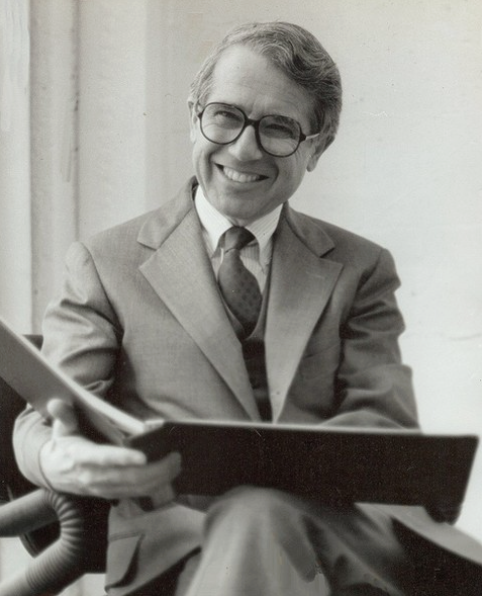
This year also sadly marked the passing of a GSD luminary, Gerald M. McCue, who was an essential presence in our midst for two decades: he came to Harvard as the Chair of Architecture in 1976, and became the GSD Dean from 1980 to 1992. His unfortunate loss also is an occasion to contemplate how far the school has come. McCue’s tenure in administration was transformational; he established the school’s three disciplinary departments and thereby reframed how architecture imagines itself here. Thanks to his contributions, our department also has become known for its signature blend of theoretical vision applied to real-world practice. The story of his impact is chronicled with thorough and sensitive appreciation by the current Gerald M. McCue Professor of Architecture, Preston Scott Cohen (MArch ’85), in a recent tribute article.
Studio Updates
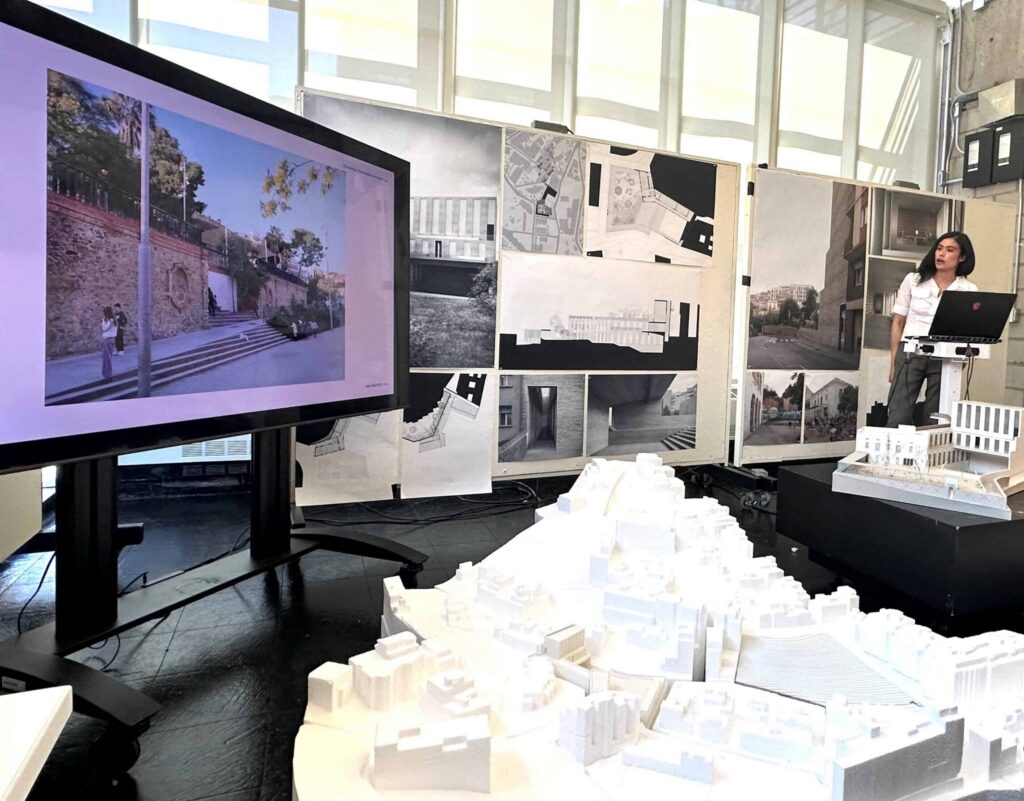
In last year’s letter, I shared thoughts on the wide range of our Core and Option Studios, which strengthen the discipline’s foundations while expanding knowledge in risk-taking directions to serve our present and future. This year, our department offered 24 of the 40 GSD Option Studios, a dazzling array of significant subjects and sites that I invite you to peruse online (here are direct links to the department’s fall and spring Option Studios). To expose students to the broadest range of concerns and environments, I have focused on seeding Option Studios in every quarter of the globe. To share a few of the subjects, the studios have investigated expanding “climate comfort” for existing buildings in Greece; reuse of abandoned school buildings in Michigan; office prototyping in Taipei; retrofitting social housing in Manhattan’s Lower East Side and in Paris; supporting micro-economies and micro-cities in Perugia; spiritual practice in New Orleans; post-rural futures in Ervy-le-Châtel; immersive, AI-forward interiors in the Rome Opera House; “permanently temporary” art infrastructure in Chicago; post-industrial transformations in Seoul; urban repair in obsolete sections of Barcelona; transformations of the vernacular shophouse in Bangkok; neighborhood evolution in Jimbochō, Tokyo; redevelopment in the San Francisco CBD; “faith parks” in Albania; a healthcare complex for a blue zone in Singapore; infrastructural urbanism for sea level rise in Miami; and cultural buildings along the Toronto waterfront. I realize that our Option Studio program is challenging to run, expensive to support, and organizationally complex, yet I believe it is a critical piece of the MArch experience. We are proud of the breadth and depth of the offerings.
Notable Faculty Awards
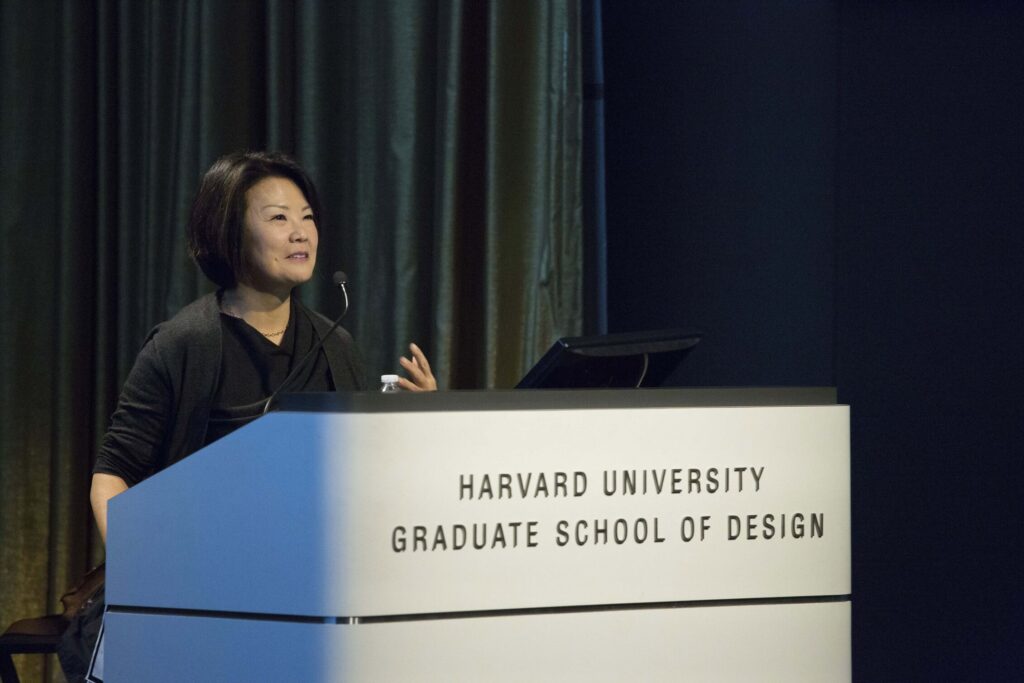
In this year’s letter, I wish to share several career-defining awards conferred upon our tenured faculty. In December, GSD Dean Sarah Whiting, Josep Lluís Sert Professor of Architecture, was awarded the 2026 AIA/ACSA Topaz Medallion for Excellence in Architectural Education, the highest honor in North America for an architectural educator. In March, K. Michael Hays, Eliot Noyes Professor of Architectural Theory and co-director of the Master in Design Studies program, was awarded an Arts and Letters Award in Architecture from the American Academy of Arts and Letters, recognizing his significant and lasting contributions to the field. And in April, the American Academy of Arts and Letters also awarded a Gold Medal—honoring lifelong artistic excellence—to Toshiko Mori (Hon. MArch ’96), Robert P. Hubbard Professor in the Practice of Architecture. She is the first woman to receive this Gold Medal since it was first awarded in 1912; notable past recipients include Frank Lloyd Wright (1953), Ludwig Mies van der Rohe (1963), and Frank O. Gehry (2002), among only a few others. We are thankful for the many boundaries Toshiko has broken, including being the first woman to chair our department (2002–2008). Toshiko will retire in July and assume the status of Professor Emerita. She has served the GSD with extraordinary dedication for over three decades, and it is difficult to imagine the department without her accomplished presence. Meanwhile, Antoine Picon, the G. Ware Travelstead Professor of the History of Architecture and Technology, will receive an honorary doctorate in August from l’Université de Montréal.
Faculty Exhibitions and Building Openings
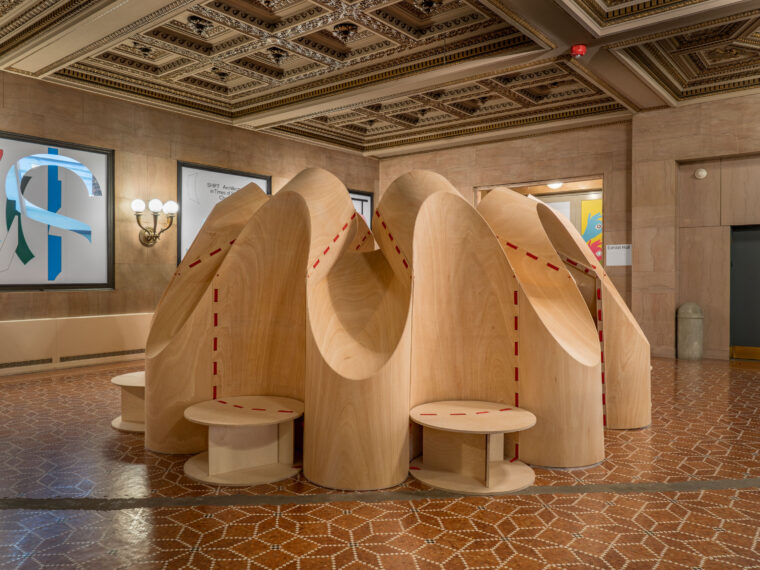
It was a year of biennials. This past summer’s 19th annual Venice Architecture Biennale, Intelligens. Natural. Artificial. Collective. curated by Carlo Ratti (and reviewed here), contained many GSD faculty and alumni affiliates. Many of us were also selected for the 2025 Chicago Biennial, SHIFT: Architecture in Times of Radical Change, where former GSD Loeb Fellow Florencia Rodriguez (LF ’13) was the artistic director, and the curatorial team included GSD alum Chana Haouzi (MArch ’14). Rodriguez joined current GSD faculty exhibitors for a PechaKucha in Piper Auditorium in October. Installations by Associate Professor of Architecture Sean Canty (MArch ’14) and Assistant Professor of Architecture Iman Fayyad (MArch ’16), as well as my own studio’s presentation, created with LA DALLMAN partner James Dallman (MArch ’92), were displayed in the primary exhibition space at the Chicago Cultural Center. Congratulations to the many alums and faculty who participated in both biennials.
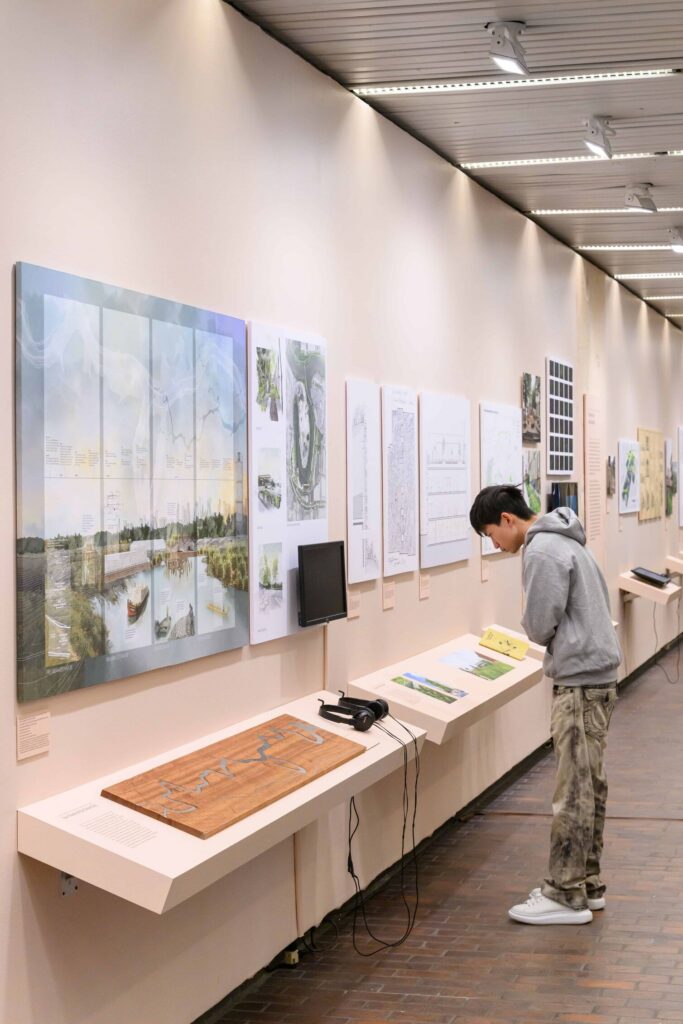
Some of our faculty members have also held exhibitions here in Gund Hall. In Fall 2025, Antoine Picon curated a stunningly comprehensive exhibition in the main Druker Gallery, Urban Natures: A Technological and Political History 1600–2030. Many of our faculty were involved in the opening night forum on how nature-based urban designs can address climate change. The Frances Loeb Library hosted two solo exhibitions in fall and spring showcasing the practices of Architecture faculty members: Models Themselves by Associate Professor of Architecture Jon Lott (MArch ’05) and Rational Form Making by Assistant Professor in Practice of Architecture Angela Pang (MArch ’02). Both spoke about their exhibitions for the department’s _positions series.
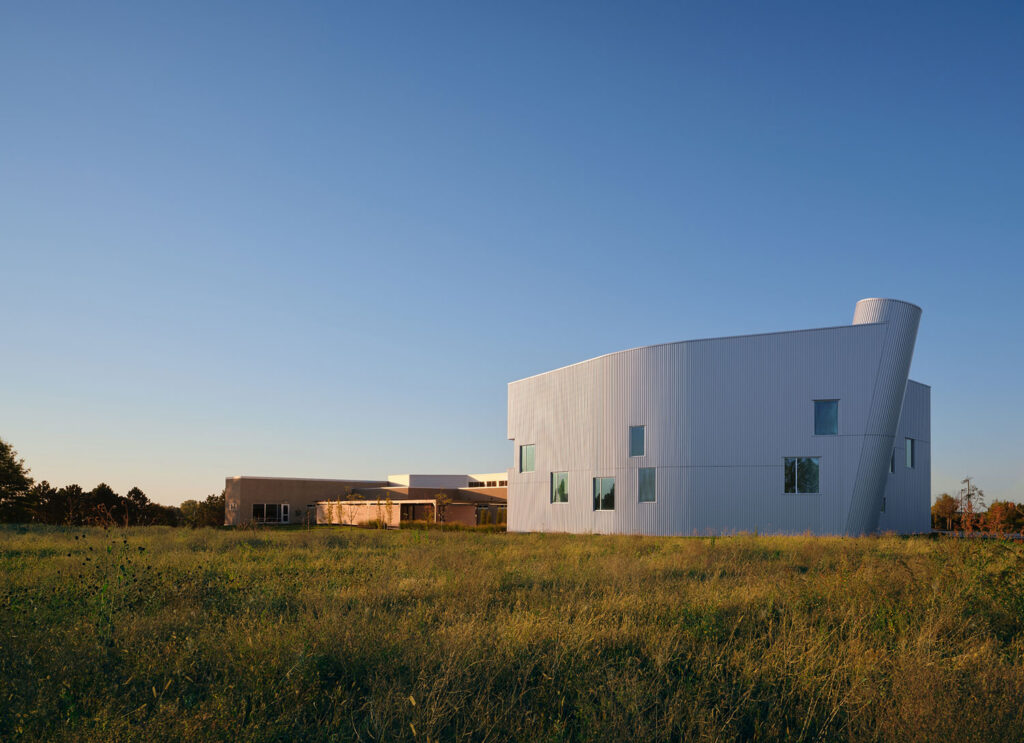
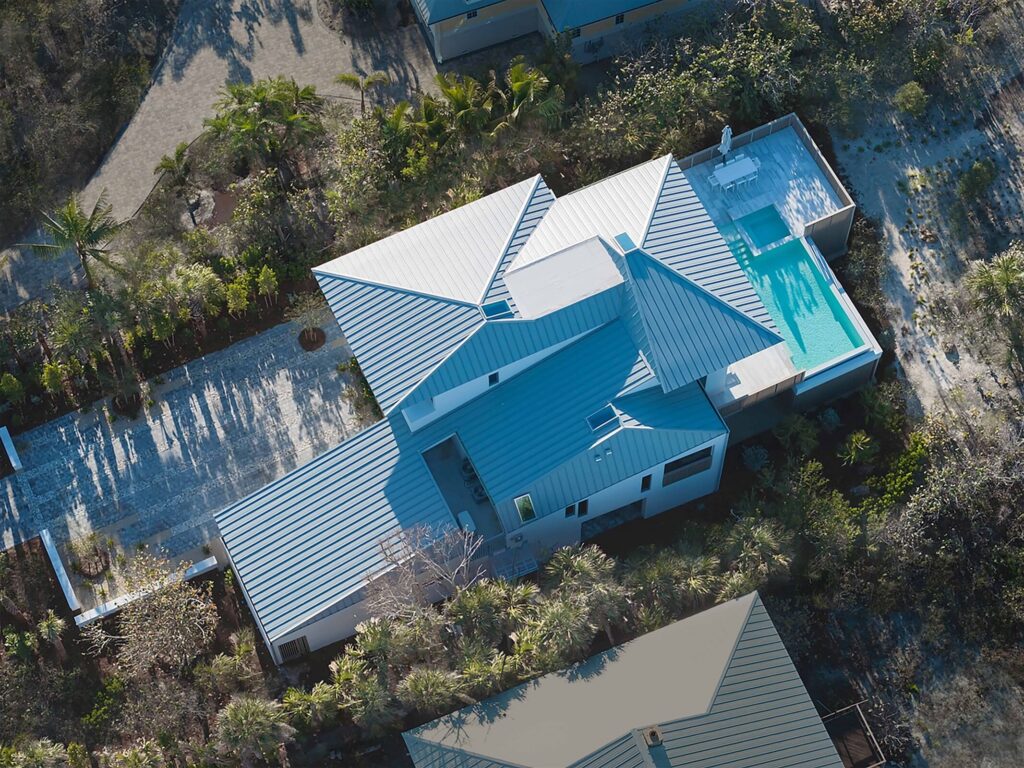
I also wish to share inspiring news of building openings among our faculty, as part of the department’s commitment to advancing the reflexive nature of practice and teaching. Our new Kajima Professor in Practice of Architecture, Jeanne Gang (MArch ’93), opened the David Rubenstein Treehouse conference center on Harvard’s Allston campus, and the department held an all-day faculty retreat in this new mass timber building. In November, Professor in Practice of Architecture Farshid Moussavi (MArch ’91) opened the nation’s first Ismaili cultural center in Houston. Her design was structurally engineered by Professor in Practice of Architectural Technology Hanif Kara, and it is surrounded by terraces whose landscaping blends Islamic design traditions with the Texas context. Professor Preston Scott Cohen (MArch ’85) and Design Critic Carl D’Apolito-Dworkin (MArch ’12) received national press coverage in December for their addition to the Congregation Beth Shalom Synagogue in Overland Park, Kansas, in collaboration with BNIM. And this spring, James Dallman (MArch ’92) and I, together with Belle Verwaay Delatour (MArch ’18), completed the Nautilus House. Designed by LA DALLMAN for a vulnerable coastal site on Sanibel Island, Florida, the house survived three hurricanes during its construction. Associate Professor of Architecture Jon Lott (MArch ’05) completed an art studio for his partner, artist Diana al-Hadid, in New York’s Hudson Valley, using unusual wood framing techniques.
Architectural Dialogues
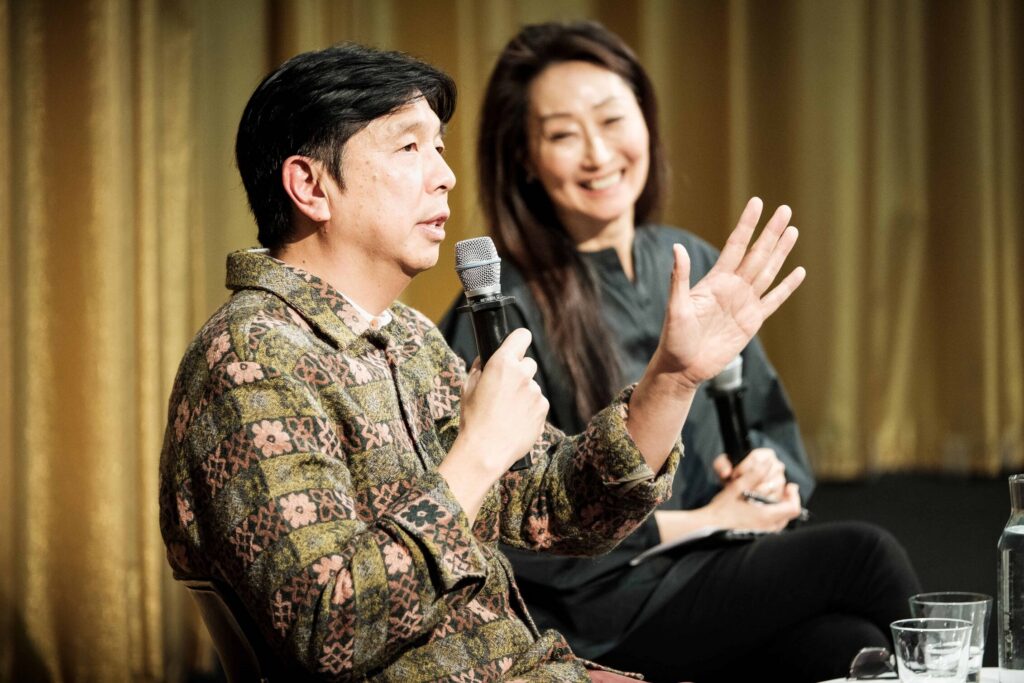
This spring marks the second round of the Core Colloquium, open for all Architecture students to evaluate issues in the discipline which enrich and expand the studio learning. Series curator Elle Gerdeman (MArch ’14) and I assemble presenters from across the GSD, from other US institutions, and from around the world. This year is also the third cycle of the department’s _positions series, spotlighting many current and visiting faculty. You can watch them at this link, except for the annual (and, I dare say, legendary) event, “First Projects,” when four architects gather around a spotlit table in Piper Auditorium and talk candidly—“unplugged and off the record”—about the projects that launched their careers. This year, “First Projects” brought together Minsuk Cho (Kenzo Tange Visiting Design Critic in Architecture), Marcelo Faiden (Dean of the Faculty of Architecture and Urban Studies at the Torcuato Di Tella University, Buenos Aires), Elizabeth Whittaker (MArch ’99 and Associate Professor in Practice of Architecture), and Betsy Williamson (MArch ’97 and Design Critic in Architecture).
I am grateful to contribute to the GSD’s public programs and have been focused on including established and emerging practitioners who expand the global reach of the school as they share their unique expertise with our community. Because you can explore all of these events online, I’ll mention just a few standout moments that highlight that vision. Last fall, Piper Auditorium had a standing-room-only crowd for alum Joshua Ramus (MArch ’96), founding principal of REX Architecture, who was also this year’s John C. Portman Design Critic in Architecture. Joshua dazzled the audience with videos of his auditoria buildings in which rooms can change shape rapidly to accommodate multiple programs. Other visiting critics who gave public lectures this fall included Yichun Liu (Kenzo Tange Visiting Chair), who came from his Atelier Deshaus in Shanghai. He spoke about his studio’s creative interventions at decaying industrial sites, as adaptive reuse has become an area of the discipline demanding increased attention.
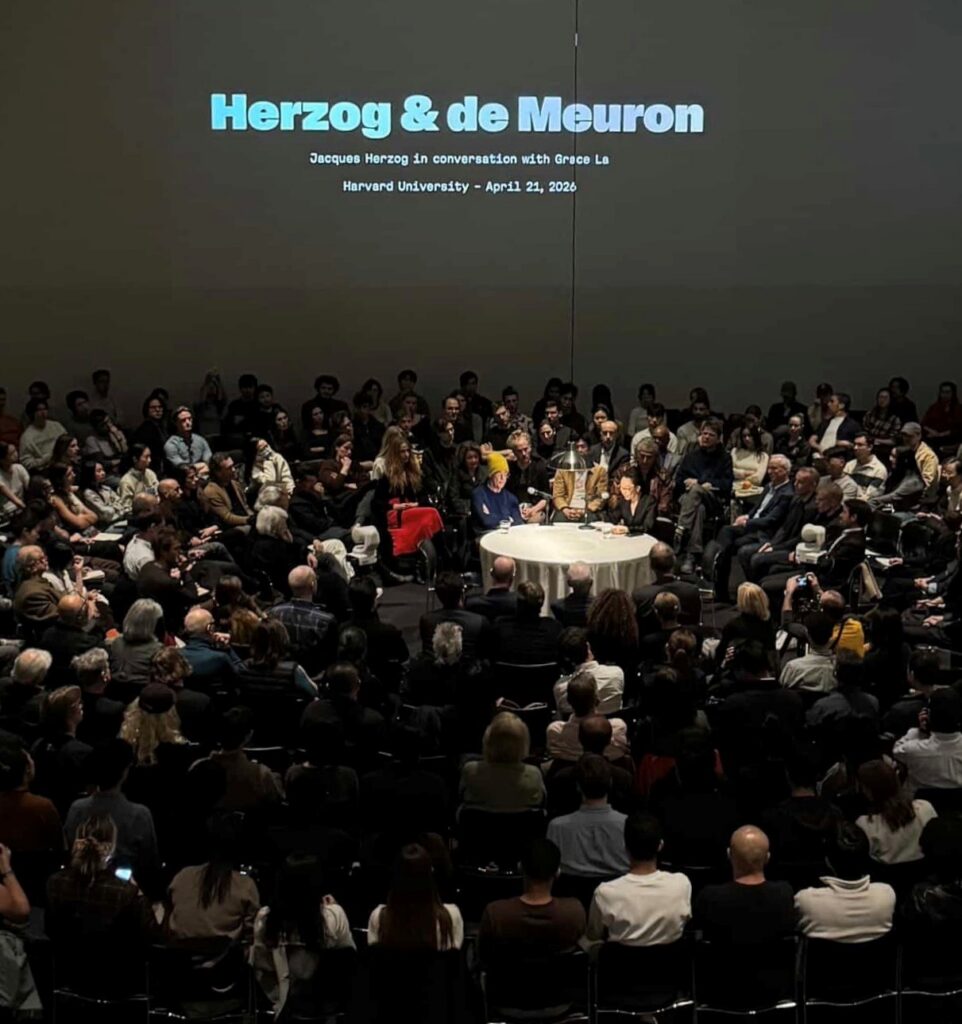
This spring, Chat Chuenrudeemol (MArch ’00) lectured on the clever use of available materials and hyperlocal methodologies to create community-based structures in his native Bangkok. The department also hosted many other public lectures and events by renowned practitioners teaching with us, among them Lap Chi Kwong (MArch ’13) and Alison Von Glinow (MArch ’13); Meriem Chabani; Fabrizio Barozzi and Alberto Veiga (Portman Visiting Design Critics, Spring ’27); and Xaveer De Geyter. A major capstone event was a dialogue between me and Jacques Herzog from Herzog & de Meuron, staged in the round and investigating three underlying themes in his oeuvre. The event drew over seven hundred attendees, and Piper Auditorium was packed with energy. It was excellent to welcome Jacques, who taught here with Pierre de Meuron from 1994 to 2014, back to the GSD, and he rose to the occasion with resounding provocations.
Future Technologies, Natural and Digital
This year the department and the GSD have hosted several initiatives and events to address urgent and exciting issues in the discipline, especially those related to the environment and the rise of AI technologies. The Harvard Center for Green Buildings and Cities (CGBC) held a symposium in April, “Designing Sustainable Solutions for a Better Built Environment,” and several of the Core Colloquium presentations dealt with innovative sustainable building technologies. This topic obviously cuts across disciplinary boundaries, as explored in a November panel on the ethics of “growth” shaped by Associate Professor in Practice of Architecture Elizabeth Bowie Christoforetti (MArch ’09), who also leads the GSD’s interdisciplinary Practice Platform. The year also brought the first Experimental Postdoctoral Fellow in sustainable architecture: Juan Pablo Ugarte (MArch ’14, DDes ’23) began working with Kumagai Professor of Architectural Technology and Academic Dean Martin Bechthold (DDes ’01) on promoting workplace wellness through building with natural materials.
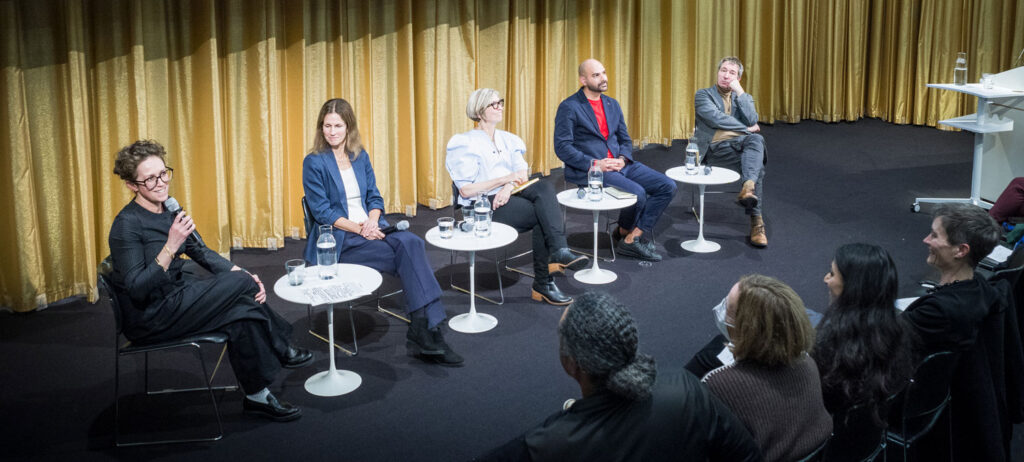
Professor Bechthold joined other professors from the department in several roundtable discussions about AI this year, including the virtual Alumni Town Hall in March. He also organized a Loeb Library forum featuring AI industry practitioners and an engineering professor along with Professor of Architectural Technology Ali Malkawi, Lecturer Panagiotis Michalatos (whose teaching this year centered on this area), and Associate Professor Elizabeth Bowie Christoforetti (MArch ’09). Professor in Practice of Architecture George Legendre and Lecturer Panagiotis Michalatos co-taught an Option Studio exploring machine learning, and Instructor Humbi Song (AB ’13, MArch ’19, DDes ’27) taught a course focusing on relationships between human creativity and AI. Michalatos’s classes on the subject included an introductory course on machine learning as well as a seminar on machine aesthetics. In addition, we offered courses involving innovative materials and biofabrication taught by Assistant Professor of Architecture Jonathan Grinham (DDes ’18) and Design Critic in Architecture Daniel Tish (DDes ’23).
That’s a wrap! I hope you will return to campus for the GSD Comeback event, September 25–26, 2026.
I look forward to our staying in touch over the coming year.
Warm regards,
Grace La (AB ’92, MArch ’95)
Professor and Chair of Architecture
Principal, LA DALLMAN